Warning: Always Read Fine Print

Crafted-to-Remove-GlutenGrains such as barley and wheat used to make beer contain gluten (although gluten-free beer can be made from grains such as sorghum, buckwheat, rice, and millet).

Can gluten be removed from traditional beer grains?  During the middle of our products liability coverage in first-year Torts, a student sent this photo of a beer carton boasting in bold capital letters “CRAFTED TO REMOVE GLUTEN.”

The beer was of interest to the student, who suffers from celiac disease.  Persons with celiac disease, an autoimmune disorder, cannot consume gluten because their bodies will mistakenly react to gluten as if it were a poison.

But then she came to the fine print at the bottom of the box, which says:

* Product fermented from grains containing gluten and crafted to remove gluten. The gluten content of this product cannot be verified, and this product may contain gluten.

Gluten - Read the Fine PrintAs the student commented, “I have no clue what the manufacturer is even trying to say.”  Given the danger gluten presents to some consumers, surely the disclaimer deserves more prominent billing on the label.

Needless to say, the student passed on buying the beer.

Spot the Tort: Another Rolling Tort on the Highway

Another Rolling TortHere’s another “rolling tort”; i.e., a dangerous condition on a road or highway.

We look at these things lightly at Lawhaha.com, but large objects that come loose from a vehicle present a substantial risk of injury or death to those traveling behind.

Other examples of Rolling Torts are here, here, and here.  Or just sift through the entries under “Spot the Tort.”

–Thanks to Larry Peters.

Beware of Tripping Alligators and Fake Warning Signs

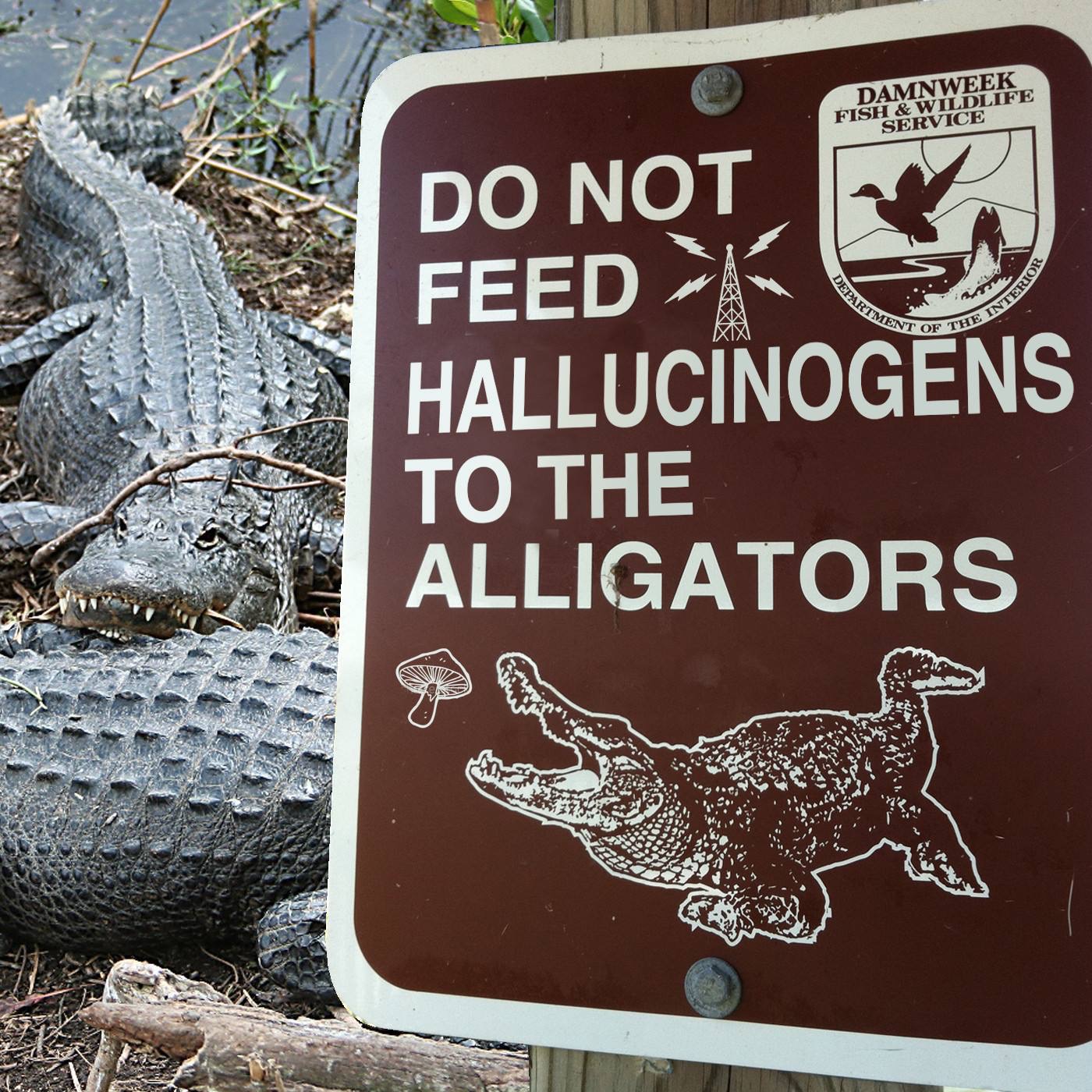
Fake warning signThis sign warning “Do Not Feed Hallucinogens to Alligators” would be amusing if it were real, but it’s not.

Complicating life at Lawhaha.com, where we love to post interesting warning labels and signs, is the proliferation of fake, Photoshopped samples.

Sometimes it’s hard to tell.  University of Memphis first-year law student George Scoville sent me the alligators picture.  It looked a bit sketchy.  Research led to a Reddit post detailing indicators that the picture is fake, including, for example, a Shutterstock watermark on the mushroom.

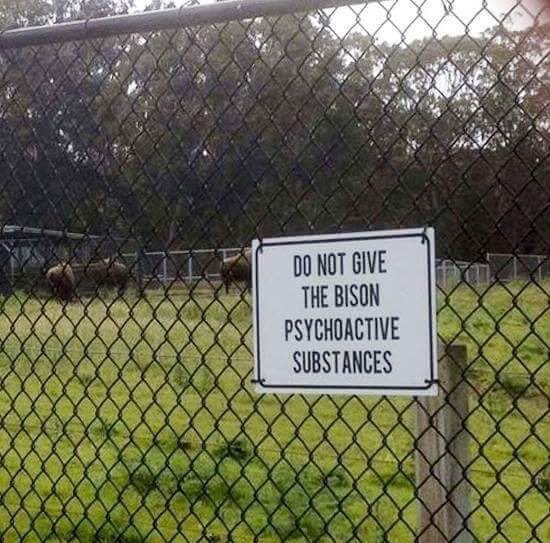
Real sign, but fake warningBut George had also sent a second similar photo: “Do Not Give the Bison Psychoactive Substances.”  This one looked real.

Determined not to be fooled twice, George, applying good legal research skills,  wrote to the San Francisco Recreation and Park Department (the bison are in Golden Gate Park), receiving a reply that explained:

“That sign was put up as a prank. We took it down as soon as we became aware of it.”

So the sign is (was) actually real.  Diabolical!  On the other hand, it is Golden Gate Park in San Francisco, home of “Hippie Hill” and neighboring Haight-Ashbury, so it’s possible a sincerely motivated animal-lover posted the sign.

Before posting anything on Facebook or otherwise, take a minute to check it out.  A quick check over at SNOPES will usually expose widely disseminated fake news, such as the recent viral Facebook post that Mark Zuckerberg was giving away $4.5 million to Facebook users who shared a thank you message.

In the meantime, signs or not, it’s not a good idea to give psychedelics to animals.

Freudian Slip By Defense Lawyer?

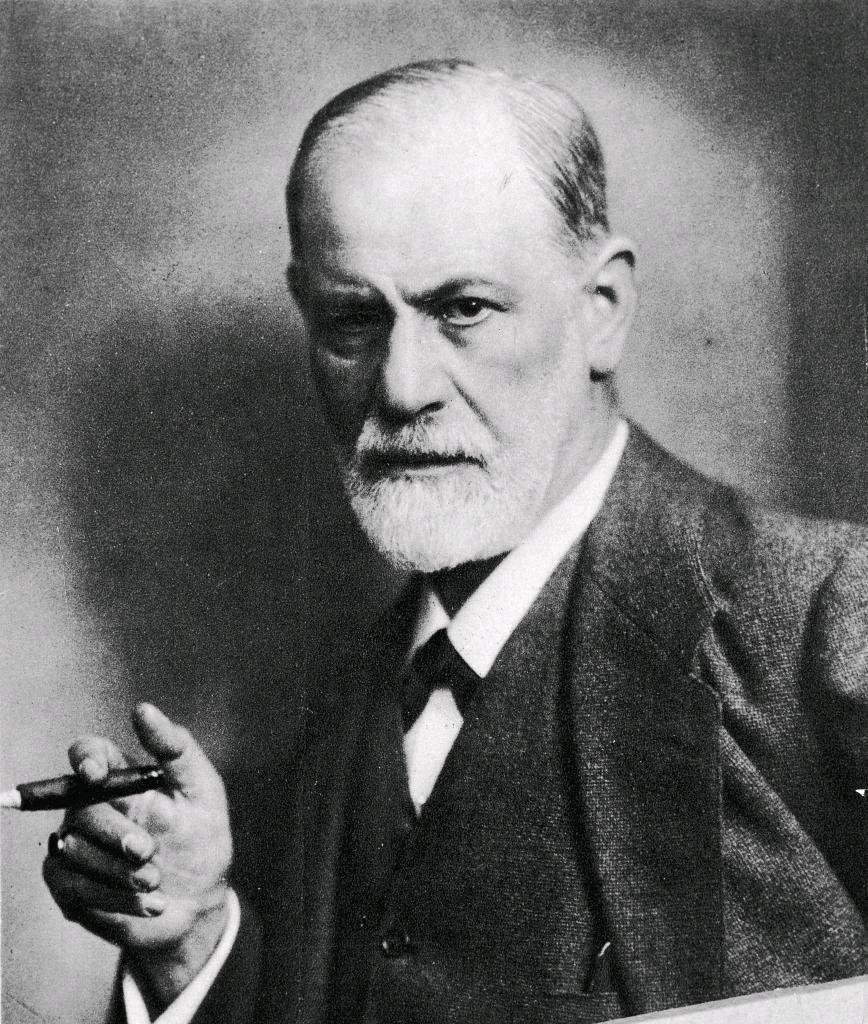
What would this guy have to say about it?

When a defense lawyer in a defective building case says “scare and kill” when he means to say “care and skill,” is that just being tongue-tied, or is it a Freudian slip?

From a judge friend comes this:

In a recent motion hearing in a multi-party construction case, the attorney for the developer of the allegedly defective building intended to refer in his argument to his client’s “care and skill” in constructing the involved building. He got a little tongue-tied, however: instead of referring to his client’s construction method as involving “care and skill,” he identified it as one involving “scare and kill.”

Simplistically, a Freudian slip is an unintentional word snafu that reveals subconscious thoughts or feelings.

No Prejudice in This Dismissal

GavelA lawyer friend in Jacksonville, FL sent along this funny story about a plaintiff who objected to his complaint being dismissed “with prejudice”:

At a mediation, a settlement agreement was reached, so the mediator formalized it in a written document.  The plaintiff’s lawyer was going over each of the terms in the document  with the plaintiff.  When they  got to the term that stated “Plaintiff will dismiss the Complaint with prejudice,” the client looked up and adamantly stated, “I will not!  I am not prejudiced, and believe everyone is equal under the eyes of God.”

For non-lawyers, “dismissed with prejudice” is a legal term of art meaning that a case cannot be re-filed.  “Dismissed without prejudice” means that case can later be re-filed.  Needless to say, for settlements and other final dispositions of cases, defendants insist that the case be dismissed with prejudice.


Supreme Court Emoji Challenge

Thinky EmojiInsurance law expert and all-around funny, clever guy Randy Maniloff has come up with a fun test for spelling out the names of 10 famous U.S. Supreme Court cases using only emoji.  How did this come about?  He explains in his latest issue of Coverage Opinions:

The other night I was out to dinner with my 9 year old daughter. As we waited for her mac & cheese to arrive I decided to give her a lesson on the Supreme Court. I figured I’d start with the basic operation of the federal judiciary. From there move on to some landmark Supreme Court cases. And by dessert we’d be discussing the Necessary and Proper Clause. But she wanted no part of it – begging me to stop.

So I took a different tack. I’d tell her about a case and then she would use my phone to find emojis to write out the case name. This idea she loved. While it didn’t last long, as dinner arrived, it gave me an idea: The Supreme Court “Emoji Challenge.”

For non-lawyers, the first takeaway from this is how geeky lawyers can be.  My own daughter grew up playing “Spot the Tort.”

I confess I fared poorly on the exam, but maybe it’s a generational issue.  Law students: Be sure to take the test. Rumor has it that several Constitutional Law professors (only at the higher-ranked schools) intend to use it on their upcoming Spring final exams.

Warning: No Standing or Sitting Allowed

No Standing or Sitting in this AreaI guess we’ll have to take this one lying down because no standing or sitting is allowed.  From a former student comes this sign at a baseball field in Burns Park, North Little Rock, Arkansas.

What is the sign really trying to convey?  No loitering in this area?  No people in this area?  Under a strict construction, could you lie down in the area and be in compliance with the sign’s directive?

–Thanks for Shayne Smith.

The Golden Mean in the Gun Debate

Howard Law Journal (002)Andrew Jay McClurg, In Search of the Golden Mean in the Gun Debate, 58 Howard Law Journal 779-809 (2015).

The American gun debate is stuck and has been for a long time. Both sides remain trapped by their own hyperbolic rhetoric and reasoning fallacies, with the result that partisans are being heard only by those who already agree with them. This essay asserts that there is such a thing as “reasonable middle ground” in the gun debate and seeks to prove it by analyzing five specific measures that have the potential to reduce gun violence without infringing legitimate Second Amendment rights:

(1) bolstering federal support for research into the causes and prevention of gun violence, which Congress has blocked since the 1990s;

(2) extending instant background checks, currently required only for sales by licensed firearms dealers, to all gun sales;

(3) requiring gun purchasers to demonstrate their knowledge of state gun laws and basic gun safety rules and also their ability to safely handle the gun they are purchasing;

(4) mandating security measures by retail gun sellers to prevent theft; and

(5) implementing microstamping technology that would enable law enforcement to trace crime guns and ammunition cartridges found at crime scenes, facilitating the apprehension and prosecution of violent criminals.

While more substantial measures would be more effective in combating gun deaths and injuries, this essay purposely selected limited measures with the hopeful goal of getting people to recognize that there may well be middle-ground or a “golden mean” in the gun debate.

Santa Strikes Back

Uh-oh, Christmas is over and  the old man in the red suit decided to retaliate over the lawsuit filed against him by the children of the world. Originally appeared in the December 2001 issue of the ABA Journal.

Harmless Error - A Truly Minority View on the Law

Santa Strikes Back

BY ANDREW J. McCLURG

Readers may recall that holiday cheer was dampened two years ago when the children of the world filed a class action against Santa Claus (Santa Suit, Jan. 2000). That action remains pending as thousands of judges who have received gifts from the defendant continue to recuse themselves. Now Mr. Claus is fighting back with his own class action:

Santa Claus, Plaintiff

vs.

Children of the World, Defendants.

Complaint

Plaintiff, Santa Claus, aka St. Nick, Kris Kringle and Father Christmas, sues John and Jane Does 1-3 billion and alleges:

1. This is an action for damages and equitable relief.

2. Plaintiff is a jolly old soul engaged in a complex enterprise of global commerce.

3. Defendants consist of the class of all kids in girl and boyland, including infants tender and mild, who have received merchandise from plaintiff over the years without compensation.

4. Recission. Throughout the fall, plaintiff and his employees have met with defendants at various shopping malls and department stores to negotiate contracts for the delivery of goods. Each negotiating session is marked by grossly unequal bargaining power as defendants literally climb on top of plaintiff to dictate their unreasonable demands. (Defendant possesses substantial photographic evidence to support this allegation.)

5. To persuade plaintiff to accede to their demands, defendants employ numerous forms of coercion and intimidation, including but not limited to pitiful pleas, doleful looks, drooling, beard pulling, and high-pitched screaming. Defendants frequently vomit on plaintiff to “seal the deal.”

6. These sessions result in billions of unconscionable contracts requiring defendant to personally deliver trillions of packages on a single evening, to wit, December 24, to every zip code in the world using a costly and inefficient shipping method. As defendants repeatedly emphasize during the negotiations, time is of the essence in performance of each contract.

7. Labor law violations. The only consideration plaintiff receives for his extraordinary services are stale cookies and spoiled 2% low-fat milk. Although he is hundreds of years past retirement age, plaintiff has no 401k plan or other retirement security.

8. Whereas defendants used to be satisfied with little tin horns and little toy drums that go rooty-toot-toot and rummy-tum-tum, they now demand expensive electronic equipment and name-brand athletic apparel. As a result, plaintiff has been forced to lay off his largely unskilled workforce of elves and spend long overtime hours assembling PlayStations® and stitching Swoosh® marks.

9. Reckless endangerment. Contrary to popular belief, it is not fun to ride in an open sleigh, especially at high altitude. It is a terrifying experience. Yet rather than support reforms to improve plaintiff’s working conditions, defendants show callous indifference by seeking to actually increase the hazards with repeated calls to “let it snow, let it snow, let it snow.”

10. Fraud. Each year, defendants induce plaintiff to deliver the subject goods by affirmatively misrepresenting their behavioral status, providing false assurances that they have been good when, in fact, they have been rotten. Upon information and belief, despite receiving ample notice that plaintiff is coming to town, defendants continue to pout, cry and shout.

WHEREFORE, plaintiff prays for damages, equitable relief, and that everyone have a merry little Christmas and happy holiday, despite the fact that he is a little ticked off right now.

Santa Suit

Santa Suit originally appeared in the January 2000 issue of the A.B.A. Journal. Caroline Kennedy selected it for inclusion in her anthology, A Family Christmas.

Harmless Error - A Truly Minority View on the Law

Santa Suit

BY ANDREW J. McCLURG

Children’s rights is a popular issue these days. One reason is that it is an impossible issue to oppose. A person can not stand up and say, “I oppose children’s rights.” Such a person would be reviled, especially by children. Of course, in our society we carry everything to extremes. Holiday cheer received a jolt yesterday with the announcement of a new lawsuit:

Children of the World, Plaintiffs

vs.

Santa Claus, Defendant.

COMPLAINT

Plaintiffs, consisting of the class of all children who on or about December 24 were hanging stockings by the chimney with care in the reasonable belief that St. Nicholas soon would be there, sue defendant and allege:

1. This is an action for an accounting, damages and injunctive relief.

2. Upon information and belief, defendant is a citizen and resident of the North Pole, where he maintains his principal place of business. The court has subject matter jurisdiction of the action pursuant to 28 U.S.C. § 1332.

3. Count I – Breach of Contract. Throughout the fall of 1999, plaintiffs met with agents of defendant at various shopping malls to negotiate the delivery of certain goods on the evening of December 24, for which plaintiffs paid valuable consideration in the form of exorbitant tie-in charges for photographs of the negotiating sessions. Plaintiffs repeatedly informed defendant, through his agents, that time was of the essence in completing such deliveries. As of this date, many of the contracted goods have not been delivered. Other goods were nonconforming and lacked batteries, rendering them of no use of plaintiffs.

4. Count II – Deceit. Defendant fraudulently induced plaintiffs to improve their conduct against their will by misrepresenting that defendant knows if plaintiffs have been bad or good, when, in fact, defendant lacks sufficient knowledge upon which to form a reasonable belief regarding such matters. In justifiable reliance upon these representations, plaintiffs invested substantial labor in not shouting, pouting or crying and at all times relevant hereto were good for goodness sakes.

5. Count III – Infliction of Emotional Distress. On the relevant night, defendant knew or should have known that plaintiffs were snug in their beds with visions of hand-held video games and name-brand athletic apparel dancing in their heads. Despite such knowledge, defendant willfully and maliciously concealed off-brand goods and inherently worthless property such as sweaters and umbrellas in packages that misrepresented their true contents. Plaintiffs suffered severe emotional shock and fright upon opening such packages.

6. Count IV – Trespass and Conversion. Defendant’s implied license to enter plaintiffs’ premises terminated upon his substantial breaches of contract, rendering all subsequent entries actionable trespasses. Once on the premises, defendant exercised substantial dominion and control over an estimated 200 tons of cookies and 44,000 gallons of milk, converting such property and depriving plaintiffs of its beneficial use.

WHEREFORE, plaintiffs demand judgment for compensatory and punitive damages, injunctive relief and an accounting.