
Distinguishing Good from Bad Law School Advice

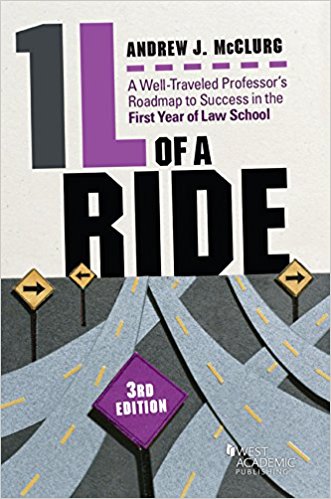
When new students arrive at law school, they receive a ton of advice from upper-level students.  2Ls and 3Ls love giving advice to new students.  If they can do it at an event where alcohol is being consumed, a state close to nirvana is achieved.  But how do incoming students distinguish between good advice and bad advice?  Here’s a tip I give in 1L of a Ride.  After mentioning that upper-level students sometimes give really good advice, I say:

But upper-level students also give some really bad advice, much of which involves ways to cut corners, so be wary of what they tell you. Although it will be socially awkward, if an upper-level student starts piling on the shortcut advice, ask the person about his or her GPA or class rank. You could phrase it like this: “Thanks for all the advice. Did it work for you?”

Last week I received an email from an incoming student at another law school.  She complimented the book and added a funny postscript referencing the above passage:

P.S.  Since your interest in humor is apparent, let me tell you a story from the second day of reading your book. I was with my parents before dinner and discussing the tips involved in your book.  My father is a practicing lawyer who went to Ole Miss Law School and graduated in 1961. I haven’t considered him much of a resource due to the changed role of technology in that intervening period.

I mentioned two conversations I’ve had with friends who are already in law programs across the country and clarified that they gave excellent advice. I repeated your recommendation that you ask any student giving bad advice or shortcuts about their GPA to help evaluate its validity.

Some time later my dad started a sentence, “What you need to know about law school is …”  When he finished I said, “Hey dad, that sounds like that really worked for you! May I ask what your GPA was?”

I’ll be listening to his fatherly advice, despite his C+/B- grade point average.  🙂  He’s more convinced than ever that repeating “You’ll go to law school and become a lawyer” beginning at the cradle was a good idea.

Love it.  Seriously, folks, I was just looking at a law school page where an incoming student was asking for advice on a specific topic.  The best answers came from the top students.  Most people will make it through law school.  If your goal is higher than that, carefully sift through all advice, from students, professors and, yes, even dads.

Legal Trivia Question: Largest Arrest in U.S. History

Just as doctors need patients, lawyers need clients.  One can surmise that local criminal defense lawyers got plenty of business during the largest mass arrest in U.S. history.  How many people were arrested and where did it occur?

  1. 140 in Peoria, Illinois
  2. 1500 in Boston, Massachusetts
  3. 12,000 in Washington, D.C.
  4. 17,500 in Los Angeles, California

ANSWER: In May 1971, more than 500,000 anti-Vietnam War protesters descended on Washington, D.C. with the intention of shutting down the federal government by blocking the streets.  As of that date, 45,000 American soldiers had died in Vietnam and more than 250,000 troops were still stationed there.  At least 12,000 protesters were arrested from May 3 through May 5, including Daniel Ellsberg.

Ellsberg, a former Defense Department analyst, had helped compile a report on the history of U.S. involvement in Vietnam from 1945–68 for Defense Secretary Robert McNamara.  The study, which became known as the “Pentagon Papers,” exposed controversial, previously hidden truths about the scope and purpose of U.S. participation in the Vietnam War.  Ellsberg leaked the Pentagon Papers to the New York Times, which began publishing them in installments.

The Nixon administration sued for an injunction, which resulted in a landmark U.S. Supreme Court case, New York Times Co. v. United States, 403 U.S. 713 (1971), where the Court ruled in favor of the newspaper by a 6-3 vote, a major victory in troubled times for the First Amendment right to free speech and a free press.  Publication of the Pentagon Papers helped turn the tide of public opinion against the war.  It took until June 2011, forty years to the day from the original publication of the Pentagon Papers by the New York Times, before the U.S. government officially declassified and released the papers.

The answer, therefore, is C.

Law Teacher Has Low Opinion of Legal Profession

–From Tony Arsenault, Laval University (Quebec), Date of event: Spring 2013

One of my friends took Legal Philosophy, a class whose teacher is known as a bit of a jerk and a little dismissive of lawyering as a profession.

They were discussing how to write the essay that was to be their final exam. Someone in the class asked: “Should we consider that the essay’s intended readers have any knowledge of law at all?”

The teacher said that they should write the essay as if a member of the Bar would read it.

The student drew a logical conclusion and asked if that meant the exam-takers should assume the readers were knowledgeable about law.

The teacher answered: “No. You should write as if your audience doesn’t know anything about law, doesn’t care about law and is probably intoxicated on various substances to boot.”

Kid Figures Out Torts, Wants Dad to Explain Why Casebook Is So Long

–From David Barman, Florida International University College of Law, Date of event: circa 2005

My son saw my first-year law school casebooks and picked up my Torts book. His first comment was: “Twelve hundred pages. That’s more than Harry Potter!”

Then he asked me, “What is Torts?” He’s a bright boy, but he is only nine. I asked him: “If you park your bike on the sidewalk, and a man hits your bike with a car, who did something wrong?” He said the man with the car. I asked why. My son answered “Because I’m allowed to put my bike on the sidewalk, but he isn’t allowed to drive on the sidewalk.” I said “Correct.”

Then I asked him: “Does the man in the car have to pay for the bike?” My son said yes. Then I said, “What if you get off your bike on the street and you leave it there just for a minute, and a man in a car hits it?” My son said, “It’s my fault.” I asked why, and he said,  “Because I shouldn’t have left it in the street.”

Then I asked him if the man in the car has to pay for the bike. My son answered, “No.” I asked him why and he repeated, “Because I shouldn’t have left it in the street.”

I told him good job, that’s what Torts is. He said, “Is that it?” I told him “Yes.” Then he looked real confused and said, “Then why does the book have twelve hundred pages?”


Avoid Soccer Outbursts in Class

–From Michael Severe, Barry University School of Law, Date of event: 2010

During a summer class in Advanced Appellate Advocacy, the eleven us who were enrolled were sitting there listening to another riveting lecture on TREAC vs. IRAC when out of the blue one of our classmates thrust both his fists into the air, pumped them up and down like he just scored the winning touchdown in the Superbowl, and hollered “YES!” As you can imagine, the rest of us were slightly bewildered, the professor included. She looked at him and haltingly asked, “Is… there… a problem?” to which he responded “Oh sorry. I’m watching the World Cup and my team just scored.”

On one hand, I give the gentleman credit. There was not even an attempt to hide the truth, although, after his display, coming up with an explanation such as “I love this TREAC stuff!” would only have insulted our intellects.

After being kindly asked by the professor to leave, he demurred, and promised to be quiet. Rather than stage a scene, and disrupt class even further, our Professor went back to her lecture. I give her credit as I’m fairly sure you would have needed to peel me off the ceiling, if I’d been in her shoes. Not surprisingly, when grades were released, there were 10 As/B+s/Bs and … 1 F. No way to know the cause, but the soccer outburst couldn’t have helped.

3L Tutors 1L in Grammar

–From Jim Pikl, Gonzaga University School of Law, Date of event: Fall 1982

When we arrived for the first day of Orientation, we got a talk from a third-year. He told us a story about when he was a first-year in which he asked a third-year student: “Can you tell me where the library is at?” The third year rudely and pompously answered: “We here at Gonzaga do not end sentences in prepositions.” So the first-year rephrased the question: “OK, can you tell where the library is at, a******?”

Penetrating Socratic Questioning

–From Erik Reverón, Florida A&M College of Law, Date of event: Fall 2006

So what does one wear under the kilt? Sometimes the lack of humour in a law school environment surprises me. Taking it upon myself as the good 1L student that I am to liven up the atmosphere, I wore my kilt around the hallowed halls of the law school.

I’m called upon in Contracts, and I stand up and give a dutiful response regarding unconscionability with all sub-elements. Silence ensues.

My professor then asks me in a completely normal voice: “So what is worn under the kilt?”

Hilarity ensues, and I respond: “Everything is in good working order this morning when I checked, Sir.” It got me a laugh, but also earned me the unrelenting attention of the rest of my professors that day.

Now every Friday, they check to make sure I’m wearing my kilt for class!

Return Deceit Requested

–From Charles Hillestad, University of Michigan Law School, Date of event: circa 1972

Back in law school, I lived in the “LAWYERS CLUB,” a dorm reserved for law students in part of the Quadrangle comprising the University of Michigan law school buildings. One of my roommates decided he needed to cash in one of his bonds and contacted the stock brokerage company back east which handled his assets. He showed me the envelope containing the check when it arrived. It was addressed to him with just his name and the words, “LIARS CLUB, Ann Arbor, Michigan.”

The most startling part was not that the brokerage company managed to screw up the address, but the post office’s apparent opinion of the legal profession in deciding it still knew the right place to deliver it.

Tune Out, Turn Off and Drop Out?

–From Jennifer Simons, University of Houston Law Center, Date of event: Fall 2003

Here’s one of the funniest law school moments I’ve had so far. It happened at University of Houston Law Center in the Fall of 2003.

Professor Doug Moll is one of our best professors. He makes even the driest of subjects interesting, and the entire class pretty much hangs on every word.

“Sale” versus “service” under Article 2 under the UCC was the topic of the day and breast implants were the vehicle for discussing it. For at least thirty minutes, we discussed and debated whether breast implants were a good or a service. Every possible argument on each side had been made and exhausted, when Professor Moll finally asked if there were any questions before we moved on.

From the middle of the classroom, a hand emerged. When called upon, the student pressed his fingers together – like a steeple – and pressed them to the bottom of his chin. In that pompous I’m-really-going-to-stump-the-professor-with-this-question tone with which we’re all too familiar, he asked, “What about … breast implants?”

Apparently, he had been so enthralled in his own thoughts after the word “breast” had first been uttered a half hour earlier, he completely tuned out the next thirty minutes of discussion. Amazingly, no one laughed until class let out. But boy did we crack up then.

Marginal Tax Rate Jokes and the Babies Who Love Them

–From Heather Antonsen, Dalhousie University Schulich School of Law (Nova Scotia), Date of event: September 2002

I was just entering my third year and my son was only three weeks old. We attended class together. In a final desperate act, I plugged in a baby monitor behind the professors so my son and I could sit outside the class and listen to the lectures. It was on one of these days that Professor Deturbide, a truly gifted tax law professor, was gently easing us into the intricacies of the Canadian Income Tax Act. Professor Deturbide made a quip about marginal tax rates. Amazingly, and exactly on cue, my new born Aleks woke up, giggled and promptly went back to sleep.

Amazed but slighted disturbed that my son’s first real laugh was in response to tax humor, I went up on break and recounted the event to our Administrations officer. She responded with, “I imagine that they were probably the only two in a class of sixty who were laughing.”

With that, Professor Deturbide popped around the corner and announced, with a hint of indignation, that his marginal tax rate line just so happens to be one of his better jokes!