Dangerous Highway Conditions: More Rolling Torts

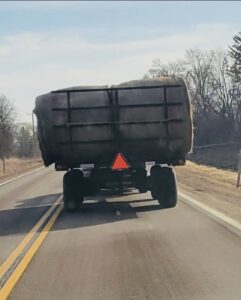
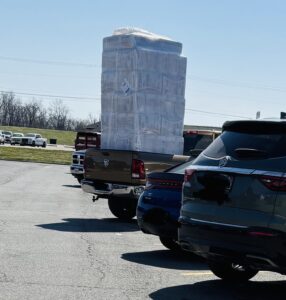
One of easiest and most common potential torts to spot if you like to play “Spot the Tort” (i.e., identify conditions around you that may present unreasonable danger of harm to persons or property) is a form of a dangerous highway condition that we at lawhaha.com call “rolling torts.”

These are ubiquitous. Why? Because people often need to move large objects, but lack the proper vehicles and/or trailers to move them down the road.  Here are couple of recent one that my Facebook friends have pointed out.

Lawhaha.com is loaded with other examples of rolling torts. Samples include this one, this one, and this one.

Tips for How NOT to Move a Washer and Dryer

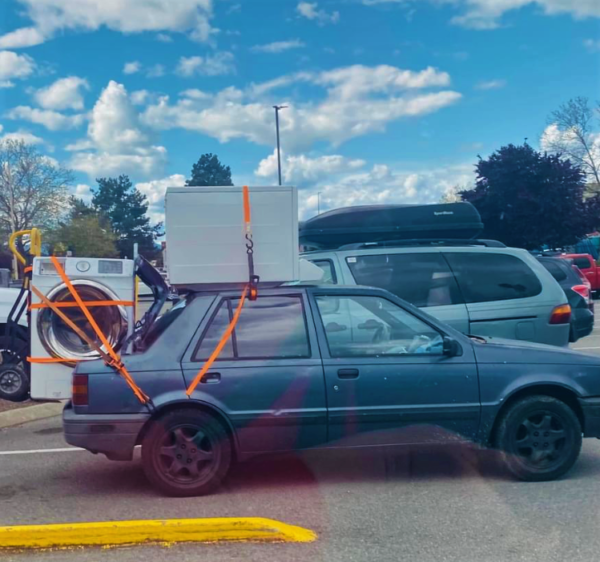
At lawhaha.com, we love what we call “rolling torts,” also known as “accidents waiting to happen.” A rolling tort consists of an effort to move large objects via a vehicle in a way that creates an unreasonable danger to other motorists.
Courtesy of a former student, here we find a valiant effort to transport a full-size washer and dryer with a compact car. To the driver’s credit, the elaborate straps show a solid effort to arrive at the destination without disaster.

More rolling torts can be found scattered through these pages, including here, here, and here.

Wet Baseball Field? No Problem. Set it on Fire.

People frequently ask me, What makes for a good lawyer?  “Problem-solving skills” is the first answer that comes to mind. Do you possess them? Take this test and see.

Problem: A high school baseball game is scheduled. Unfortunately, the field is wet from heavy rain. How do you solve this problem?

Answer choices:

(a) Play the game on the wet field because what’s the big deal with that?

(b) Recognizing that a wet field risks injury to players, make your best efforts to squeegee off or soak up the water.

(c) Recognizing that (b) would be too much freaking work, cancel the game and reschedule it for when the field is dry.

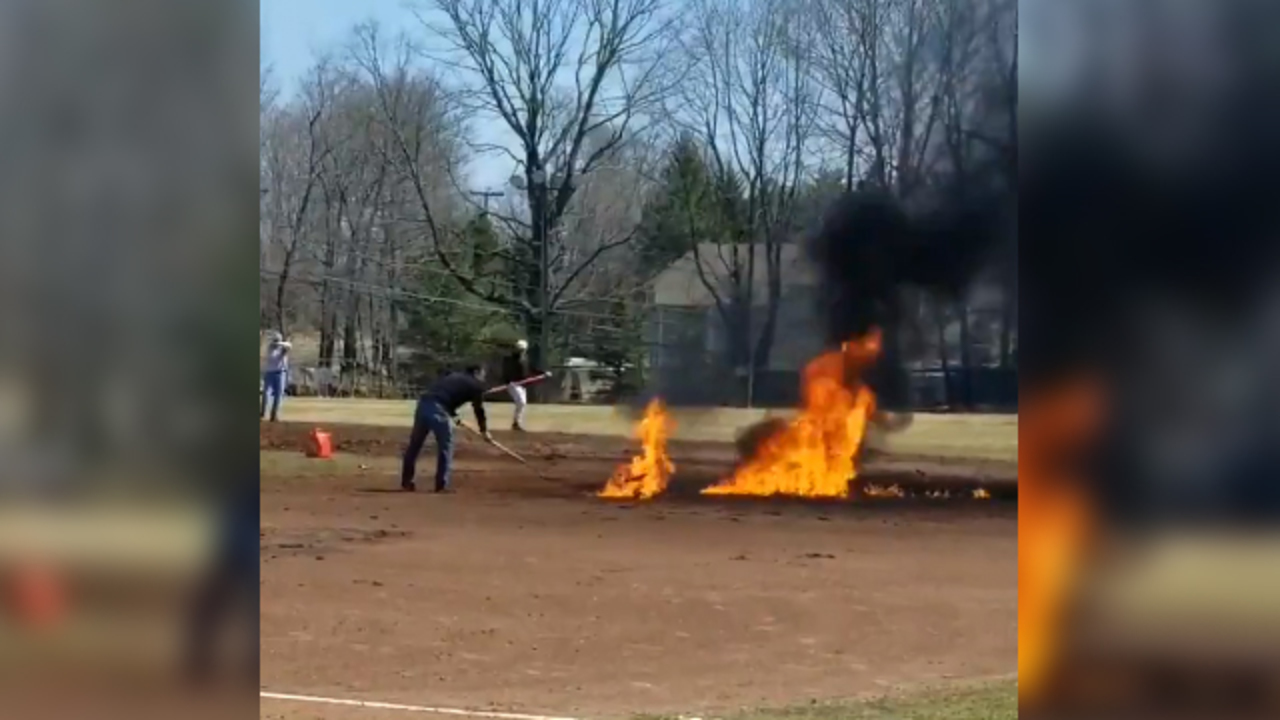
(d) Pour 24 gallons of gasoline on the field and set the damn thing on fire.

(d) was the choice made at a high school baseball field in Connecticut, turning the field into a toxic mess that will cost an estimated $50,000 to clean up. The town posted the news on its Facebook page, generously taking responsibility for the incident: “A poor decision was made … to ‘dry the field quicker’ and 24 gallons of gasoline was poured and set on fire.”

If you picked (d), congratulations! You should avoid law school (please), but have potentially positioned yourself to be an influencer for a major oil company.

Spot the Tort: The Latest in Overloaded Vehicle Torts

A rolling tort doubling as a mobile movie theater.

“Rolling Torts” is the label Lawhaha gives to overloaded vehicles presenting dangers on America’s roads and highways.  They’re everywhere.  On the one hand, you have to admire the ingenuity and ability of people to load moving-truck sized packages onto ordinary passenger vehicles.  On the other hand, if one of these items breaks loose, especially on a highway, the risk to other drivers and passengers is severe.

(Of course, technically speaking, “Spot the Tort” entries are actually potential torts.  An actual tort doesn’t occur until the risk manifests itself in injury.)

Spot the Tort: Non-Tortious Neighbors are Good Neighbors

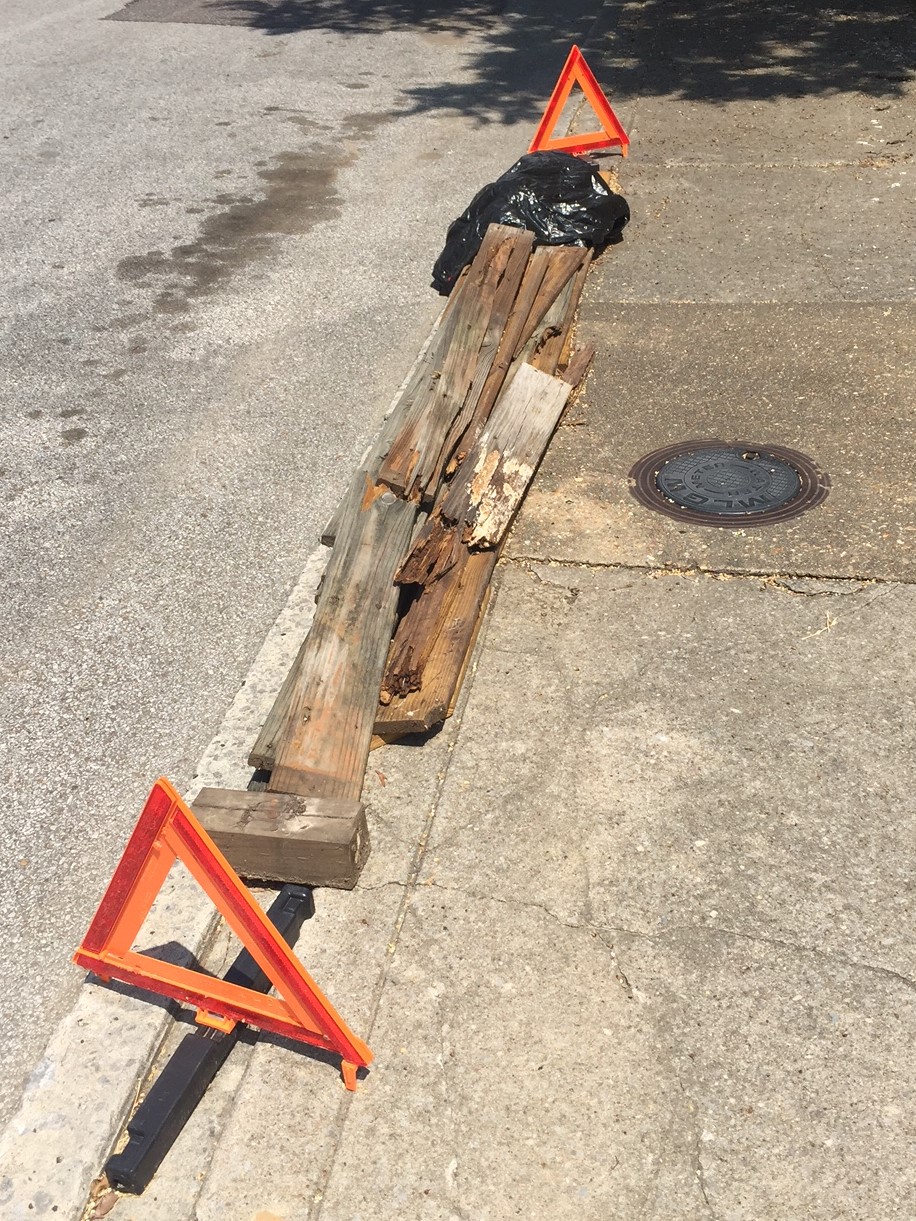
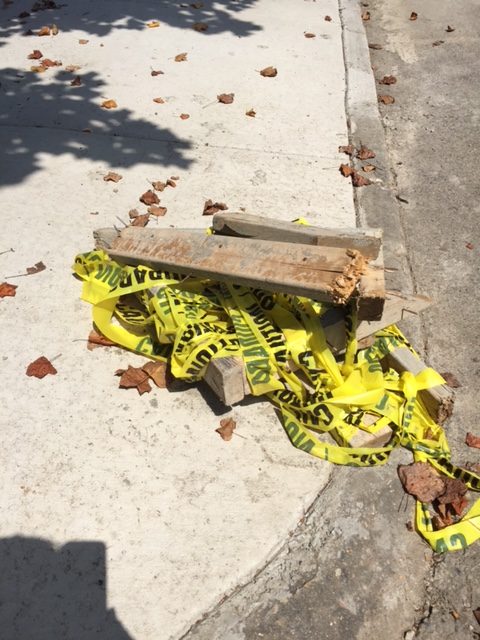
Do you ever take strolls around your neighborhood and find yourself appalled by the risky, tortious conditions residents leave on the sidewalks in front of their homes.  A couple weeks ago I passed a house with a pile of boards spilling onto the sidewalk bearing long, upward-turned rusty nails sticking out.  It’s a popular neighborhood where people like to walk, including at night.  I was tempted to knock on the door and explain duties of care and premises liability, but only had an hour, so instead just moved the worst offending boards off the sidewalk.

Then a couple days ago I came upon my new favorite neighbor’s house.  This is a thing of beauty.  Look at the reasonable care they exercised to protect sidewalk travelers, so awesome it earns Tortman’s Good Neighbor of the Month Award.  I would not be shocked if a lawyer lives there.

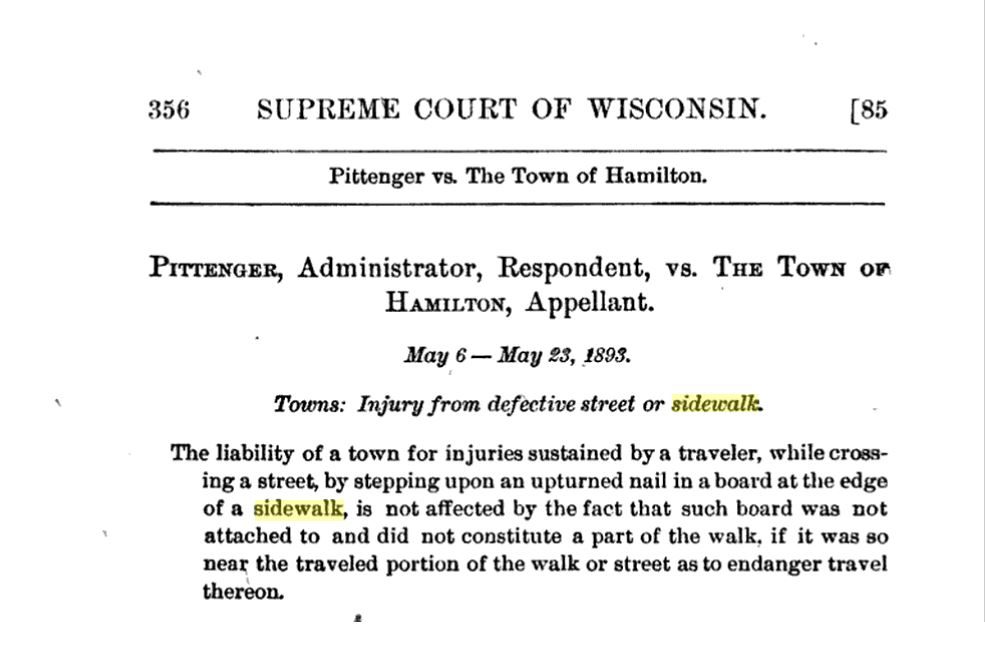
But you might be thinking, “Oh, Tortman, you’re lost in law professor land.  You worry too much.  People don’t really step on rusty nails on the sidewalk and sue people.”  In rebuttal, I refer you to Pittenger v. The Town of Hamilton, decided by the Wisconsin Supreme Court in 1833.  The court held for a plaintiff injured by an upturned nail in a board left next to a sidewalk because “it was so near the traveled portion of the walk or street as to endanger travel thereon.”

Spot the Tort: “I’m Fixing a Hole Where the Rain Gets In”

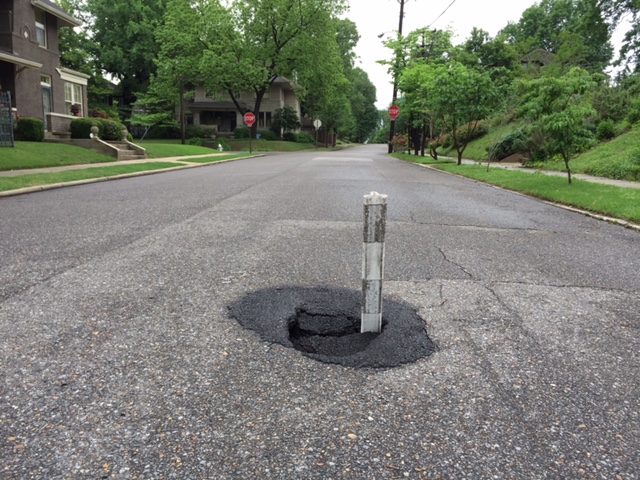
… and your foot and, if it keeps growing, your dog, child, small automobile.  Walking in Memphis is always entertaining and exciting, especially if you like to spot potential torts.

In fact, according to authentic Chamber of Commerce statistics that I am making up, there are more torts on the streets and sidewalks of Memphis than annual Graceland visitors.

I came across this interesting one taking a walk in Midtown.  The hole itself is interesting, sort of like a little sinkhole, but the pole sticking out of it what grabs one’s attention, as well as the bottom of your automobile.  As always, questions abound.  Were they trying to put a stop sign in the middle of the street?

Wacky Warning Sign: World’s Safest Road Excavation

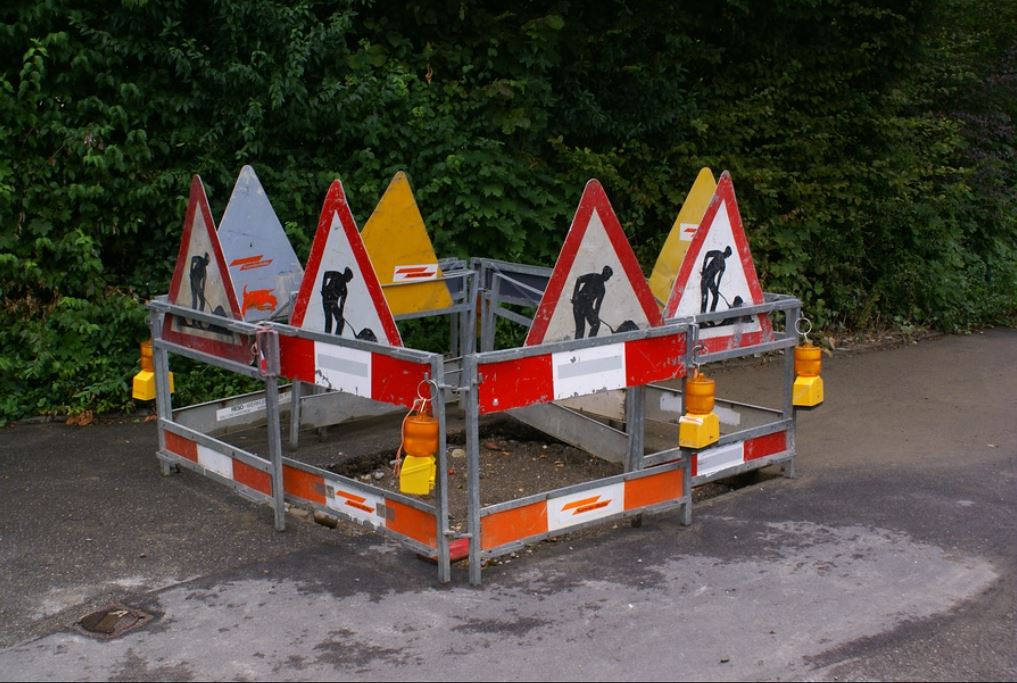
Thanks to my Swiss friend for this link to a variety of wacky warning signs in Switzerland.  The Swiss are very safe people, no doubt about it.  Look closely at what this monstrous, overdone barrier and warning contraption is protecting: what looks to be about a four-inch deep road excavation.

Compare the Swiss approach to how we handle this type of hazard in good old Memphis.

–Thanks to Pat Crowell.

Diabolical Slip and Fall Combo – Ice and Banana Peel

Thanks to a former student at the Florida International University College of Law for spotting this particularly diabolical slip and fall risk.  As if ice or banana peels weren’t risk enough by themselves, here we get a combo.

Slip and falls are no laughing matter.  According to OSHA, they cause 15 percent of all workplace deaths.

Ice is a lot more dangerous than banana peels, but people do slip on banana peels, and not just in cartoons.  One of lawhaha.com’s most visited posts is this death certificate for a poor fellow in Tennessee, noting that shortly before his death, he slipped on a banana peel.

–Thanks to Armando Torres.

Spot the Tort: Another Rolling Tort on the Highway

Another Rolling TortHere’s another “rolling tort”; i.e., a dangerous condition on a road or highway.

We look at these things lightly at Lawhaha.com, but large objects that come loose from a vehicle present a substantial risk of injury or death to those traveling behind.

Other examples of Rolling Torts are here, here, and here.  Or just sift through the entries under “Spot the Tort.”

–Thanks to Larry Peters.