Honest Is the Best Policy – Funny Deposition

Not surprisingly, not to name any names, but people frequently lie under sworn oath, including in depositions. So you have to appreciate, as did the opposing lawyer, the sincere honesty of this deponent.
[Opposing Lawyer] was deposing my 19-year-old client. Her dad died in a collision near Hope, Arkansas on I-30. He had been in and out of prison all of his life.

My opponent was asking her about her dad’s habits:

Q. Did he use drugs?

A. He smoked marijuana.

Q. Okay. You know how often?

A. After he went to report for probation.

Q. Oh, my goodness. You are one honest person, young lady.

Thanks to Jim Jackson, former student and now all-star lawyer.

Motion to file Box of Crayons

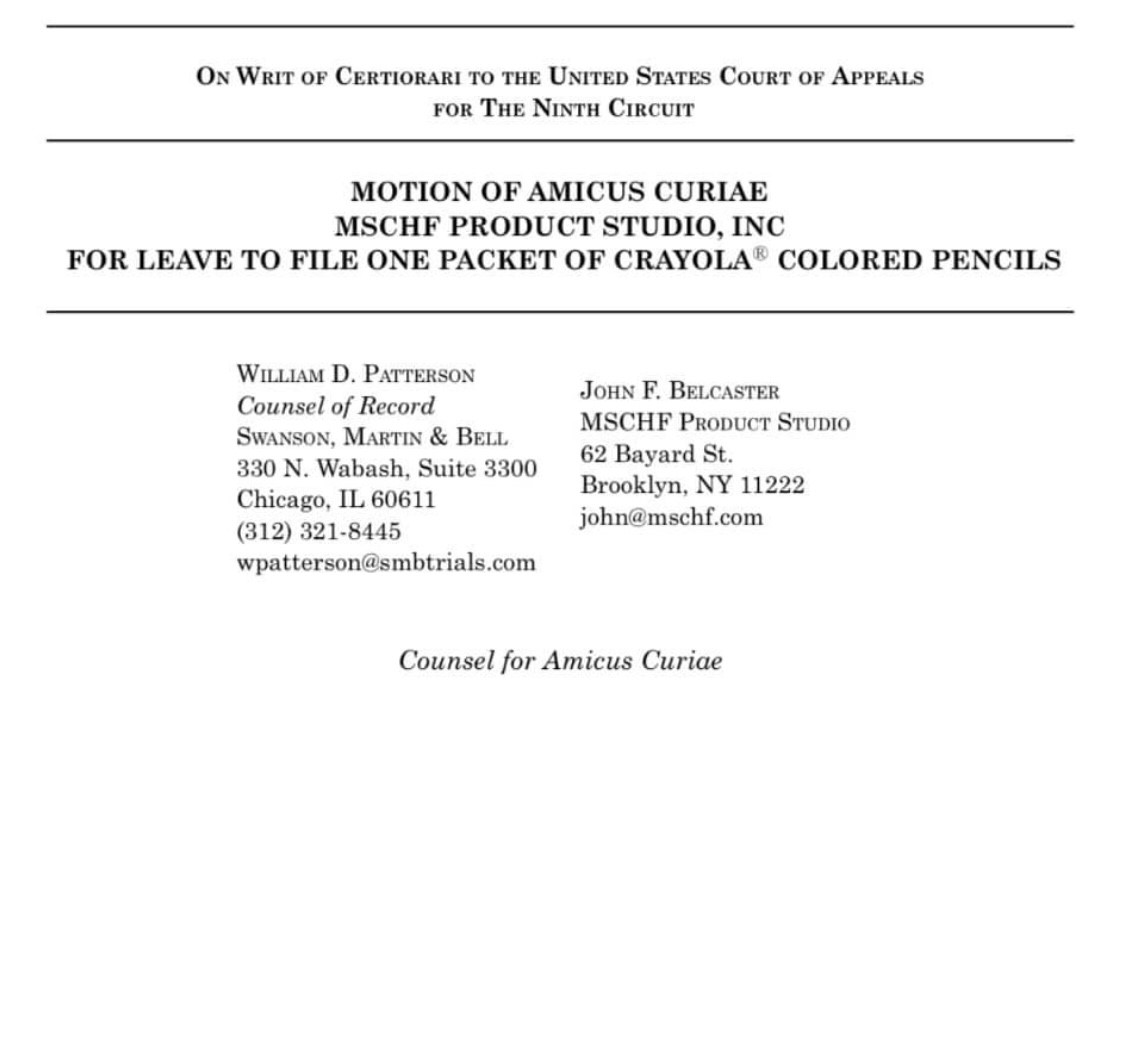
When you come across a motion to file a box of crayons in a case seeking a writ of certiorari in the U.S. Court of Appeals for the Ninth Circuit, you just have to know more.  Specifically, why are the lawyers asking “FOR LEAVE TO FILE ONE PACKET OF CRAYOLA COLORED PENCILS”?

(I borrowed this from the Facebook page of a former student of mine at the Florida International University College of Law.)

No Trial Delay for Solar Eclipse

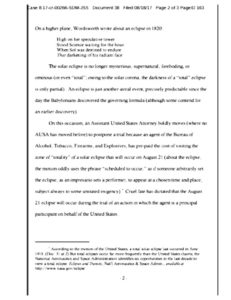
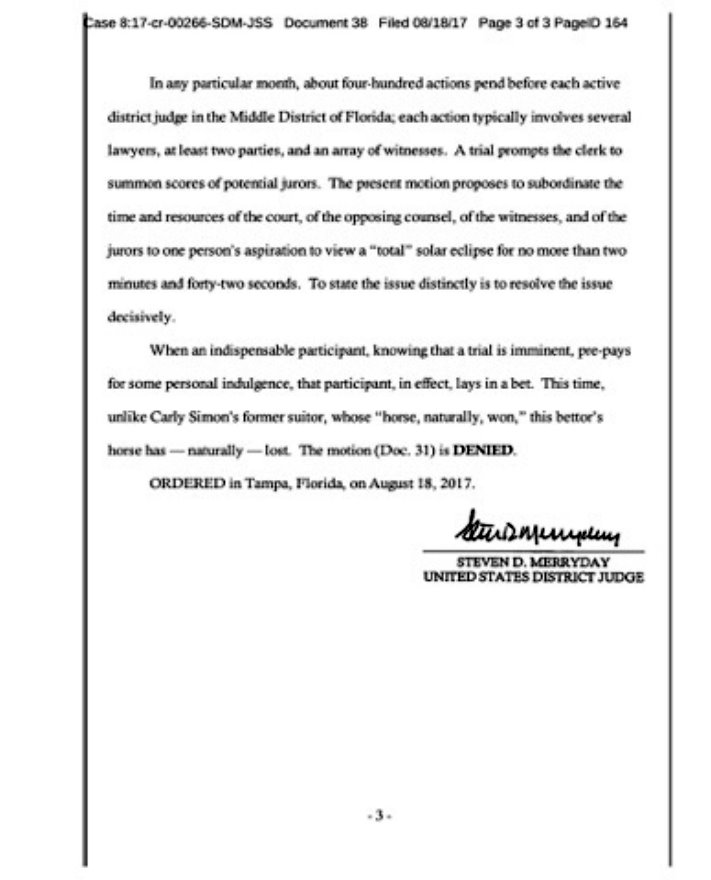
U.S. District Judge Steven “Not So” Merryday denied an Assistant U.S. Attorney’s (AUSA) motion to delay a trial because a witness employed by the Bureau of Alcohol, Tobacco, Firearms and Explosives (ATF) had prepaid for a trip to view the August 21, 2017 solar eclipse in totality.

The court reasoned that the delay would “subordinate the time and resources of the court … to one person’s aspiration to view a ‘total’ solar eclipse for no more than two minutes and forty-two seconds.”

Can’t take issue with the result, but instead of just saying that, the magistrate–perhaps seeking his own two minutes and forty-two seconds of fame–penned a silly too-cute-for-words order built around Carly Simon’s 1972 hit “You’re So Vain.”
You may recall that Simon’s anonymous, self-absorbed antagonist (suspected to be Warren Beatty) “flew [his] Learjet up to Nova Scotia to see the total eclipse of the sun.”  (Speculation has it that Carly was referring to the 1970 total eclipse that was viewable along the East Coast of the United States).

In his order denying the motion to postpone, Judge Merryday mocked the AUSA who filed the motion for “boldly mov[ing] … where no AUSA has moved before”  and for “oddly” describing the eclipse “‘scheduled to occur,’ as if someone arbitrarily set the eclipse, as an impresario sets a performer to appear at a chosen time and place.”

He unnecessarily ridiculed the witness for his prepaid “personal indulgence,” again invoking the Carly Simon song, which featured this line immediately preceding “the total eclipse of the sun” line: “Well I hear you went to Saratoga, and your horse naturally won.”

When an indispensable participant, knowing that a trial is imminent, pre-pays for some personal indulgence, that participant, in effect, lays in a bet.  This time, unlike Carly Simon’s former suitor, whose “horse, naturally won,” this bettor’s horse has–naturally–lost.

Meanwhile, he diminished the significance of a total solar eclipse as “just another astral event.”  The rare August 21 total eclipse will be the first to travel from coast to coast within the United States in nearly 100 years.

–Order, United States v. Joseph Bishop, U.S. District Court, Middle District of Florida, Tampa Div., Case No. 8:17-cr-266-T-23JSS (Aug. 18, 2017) (Thanks to David Barman.)

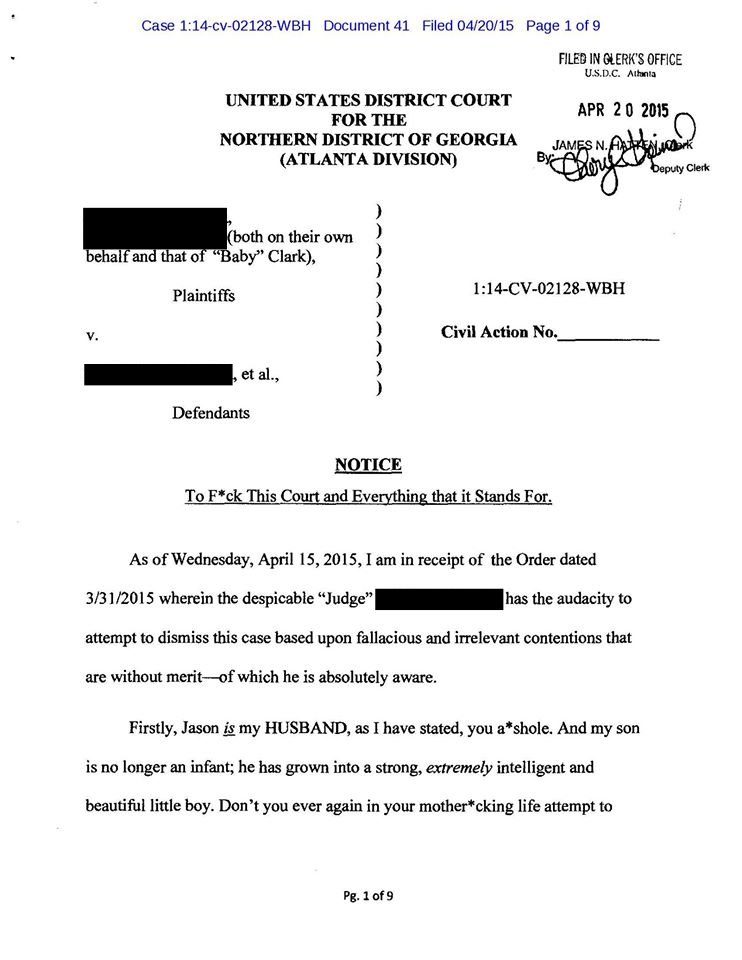
Motion to F*** This Court

Motion to F This Court… and Everything It Stands For.

As bad as the title to this motion is, the content is even worse.  I’m sure you can find the entire motion somewhere online, but Lawhaha.com, as we know, is a family friendly website.

Gee, I wonder if the motion was granted.

People Sometimes Stuck Things in Justice Breyer’s Underwear

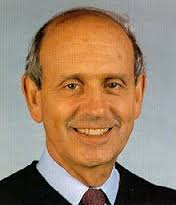
Justice Stephen Breyer

Ryan A. Malphurs conducted an interesting study of laughter in proceedings before the U.S. Supreme Court, following up on the work of Jerry Wexler for the New York Times.  His entire article is must-reading for fans of legal humor, but this attention-grabbing opening excerpt from an oral argument in Safford Unified School District v. Redding certainly stands out:

Justice Breyer: In my experience when I was 8 or 10 or 12 years old, we did take our clothes off once a day, we changed for gym, okay?  And in my experience, too, people did sometime stick things in my underwear–

(Laughter.)

Justice Breyer: Or not my underwear.  Whatever.  Whatever.  I was the one who did it?  I don’t know.

Studying all notations of “(Laughter)” appearing in the Court’s oral argument transcripts during the 2006-2007 term, Malphurs found 131 instances of ha-ha outbursts.

–Ryan A. Malphurs, “People Did Sometimes Stick Things in my Underwear”: The Function of Laughter at the U.S. Supreme Court, 10 Communication L. Rev. 48 (2010).

Great-Grandma Unhappy About Being in Court

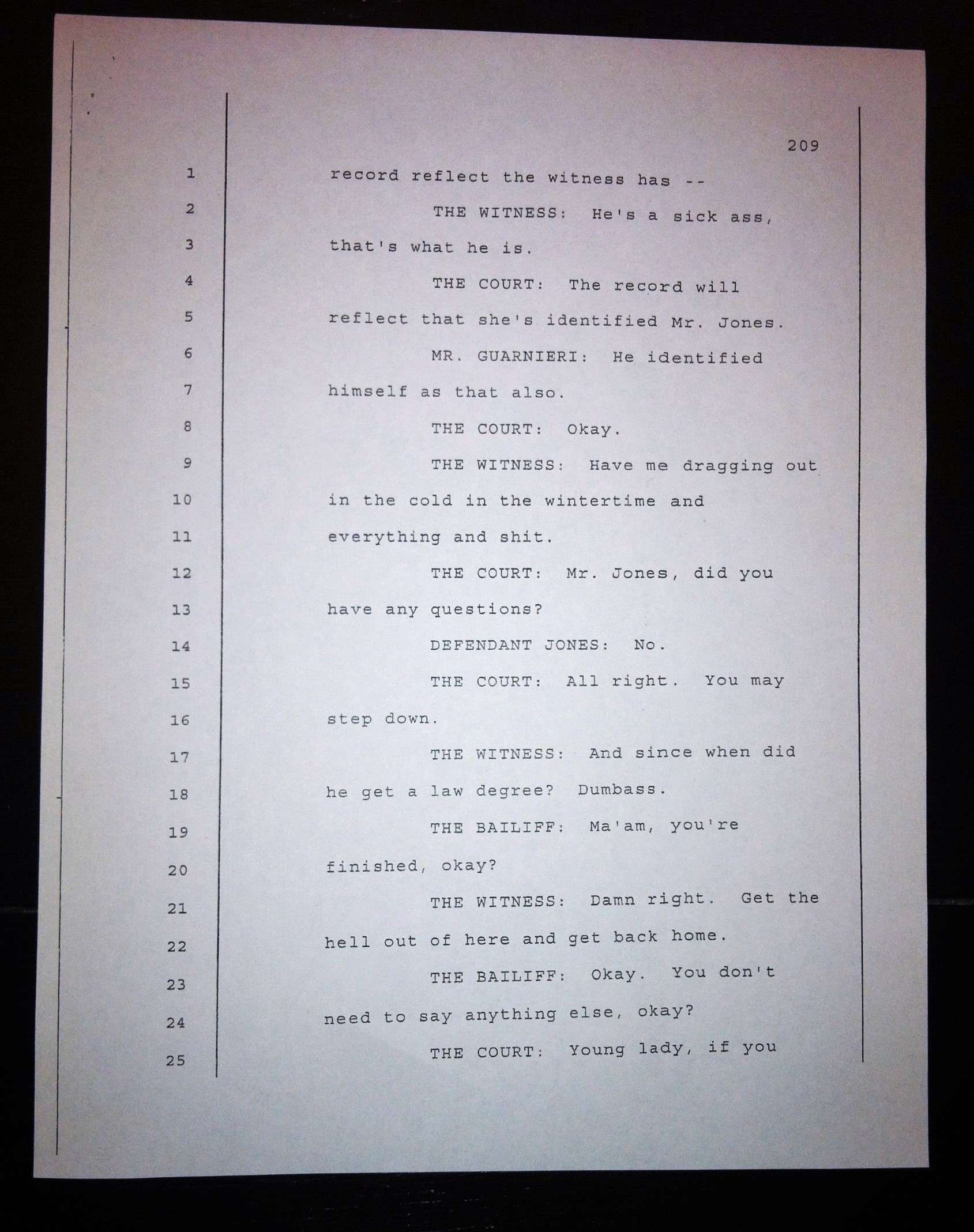
Great-granny unhappy with court appearance.A fleeing bank robber made the mistake of seeking refuge in his 94-year-old great-grandmother’s home with pursuers hot on his trail. When the police arrived, the only ones present were the accused and great-grandma. At trial, the defendant, Mr. Jones, elected to represent himself, never a good idea.

The prosecution called his great-grandma as a witness. To say she wasn’t happy about the proceedings and, in particular, the conduct of her great-grandson would understate her disenchantment with sitting in the witness box.

We’ll let her explain. Here’s the text of page 209 of the trial transcript shown in the photo, where she concludes her testimony:

 THE WITNESS: He’s a sick ass, that’s what he is.

 THE COURT: The record will reflect that she’s identified Mr. Jones.

 …

 THE WITNESS: Have me dragging out in the cold in the wintertime and everything and shit.

 THE COURT: Mr. Jones, did you have any questions?

 DEFENDANT JONES (the great-grandson): No.

 THE COURT: All right. You may step down.

 THE WITNESS: And since when did he get a law degree? Dumbass.

 THE BAILIFF: Ma’am, you’re finished, okay?

 THE WITNESS: Damn right. Get the hell out of here and get back home.

 THE BAILIFF: Okay, you don’t need to say anything else, okay?

Law degree or not, give the great-grandson credit for the smart strategy decision not to cross-examine.  Small wonder the prosecutor described the great-grandmother as “one of the most entertaining witnesses this writer has ever encountered” in the state’s appellate brief.

— Trial Transcript, State of Ohio v. Jones, Case No. 2014CA-00051, at 209 (Ohio 5th Ct. App.).  Thanks to Laura Ozak.

“Captain Justice” Responds to the Government’s Motion to Not Be Called “the Government”

Franklin, TN Lawyer Drew Justice, aka Captain Justice

This story has made the rounds but is worth repeating here if for no reason other than many of my current and former law students at the University of Memphis claim an association with Franklin, Tennessee lawyer Drew Justice, aka Captain Justice.

In a criminal case in which Mr. Justice represents the defendant, the government filed a motion in limine to prohibit the defense from referring to the prosecution as “the government,” asserting it was prejudicial.  Justice replied that such a ban would violate the first amendment, but went on to argue, that should the court agree with the government, er, the prosecution, what’s good for the goose should be good for the gander:

Should this Court disagree, and feel inclined to let the parties basically pick their own designations and ban words, then the defense has a few additional suggestions for amending the speech code. First, the Defendant no longer wants to be called “the Defendant.” This rather archaic term of art, obviously has a fairly negative connotation. It unfairly demeans, and dehumanizes Mr. Donald Powell. The word “defendant” should be banned. At trial, Mr. Powell hereby demands be addressed only by his full name, preceded by the title “Mister.” Alternatively, he may be called simply “the Citizen Accused.” This latter title sounds more respectable than the criminal “Defendant.” The designation “That innocent man” would also be acceptable.

Moreover, defense counsel does not wish to be referred to as a “lawyer,” or a “defense attorney.” Those terms are substantially more prejudicial than probative. See Tenn. R. Evid. 403. Rather, counsel for the Citizen Accused should be referred to primarily as the “Defender of the Innocent.” This title seems particularly appropriate, because every Citizen Accused is presumed innocent. Alternatively, counsel would also accept the designation “Guardian of the Realm.”

Further, the Citizen Accused humbly requests an appropriate military title for his own representative, to match that of the opposing counsel. Whenever addressed by name, the name “Captain Justice” will be appropriate. While less impressive than “General,” still, the more humble term seems suitable. After all, the Captain represents only a Citizen Accused, whereas the General represents an entire State.

Along these same lines, even the term “defense” does not sound very likeable. The whole idea of being defensive, comes across to most people as suspicious. So to prevent the jury from being unfairly misled by this ancient English terminology, the opposition to the Plaintiff hereby names itself “the Resistance.” Obviously, this terminology need only extend throughout the duration of the trial — not to any pre-trial motions. During its heroic struggle against the State, the Resistance goes on the attack, not just the defense.

WHEREFORE, Captain Justice, Guardian of the Realm and Leader of the Resistance, primarily asks that the Court deny the State’s motion, as lacking legal basis. Alternatively, the Citizen Accused moves for an order in limine modifying the speech code as aforementioned, and requiring any other euphemisms and feel-good terms as the Court finds appropriate.

Great stuff!

Captain Justice Responds to Government’s Motion to Not Be Called the Government, Tennessee v. Powell, Case No. I-CR-086639-B (Cir. Ct., Williamson County, Tenn., undated).

A First: A Comic-Strip Brief

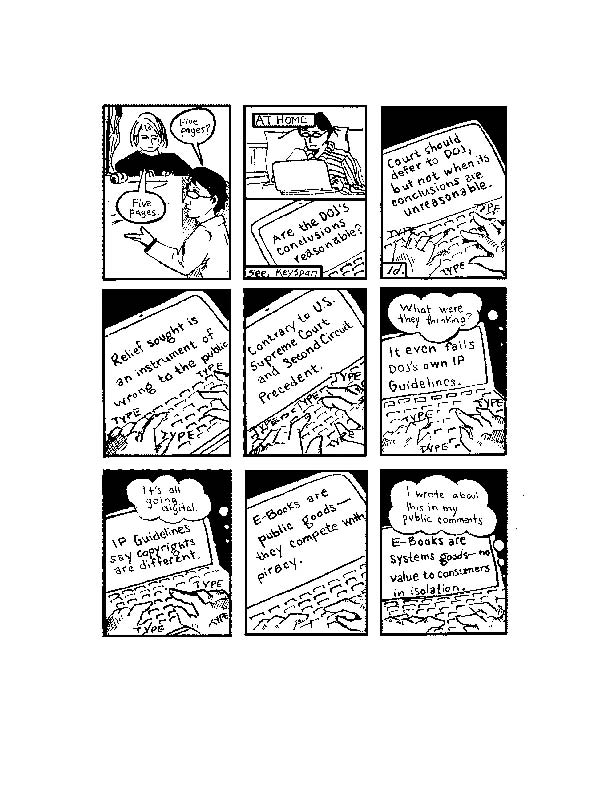
Comic Strip BriefThanks to Lawahaha.com friend Bob Van Voris of Bloomberg News for sending along a true first: an amicus brief filed in a complex intellectual property dispute in the U.S. District Court for the Southern District of New York comprising only comic strip panels.

(You can get a taste by clicking on the expandable thumbnail, but this gem deserves to be read in full.)

Limited by the court to filing a brief of five pages, Bob Kohn took out his frustration by deciding to simplify the complex arguments in comic book form.

The brief is made up largely of a cartoon-bubble conversation between a man and woman (Kohn and his daughter, according to other sources) in which the man starts out struggling “to explain why supply & demand does not operate normally in the pricing of e-books.” Fortunately–because remember he only has five pages–the woman catches on very quickly, becoming an instant expert in federal antitrust law.

Even so, and despite Kohn’s valiant, creative efforts, his principal concern proved accurate: it’s hard to articulate complex antitrust arguments such as horizontal, predatory and marginal pricing in five pages, regardless of the expression-medium. Maybe he should have just borrowed from Charles Schulz and expressed a simple “Good grief!”

The comic book/federal appellate brief ends with this colloquy:

“You should have been a lawyer,” says the male character.

“Nope. Not for me.”

“Why not?”

“I’m a novelist and it’s impossible to tell a complex story in only five pages.”

Excellent try though. Even if Kohn’s side loses, not all is lost. Maybe Marvel Comics will pick up the tale and create a new series, “Amici Man.”

More details about the underlying case and Kohn’s motivations can be found in this ABA Journal article.

Brief of Bob Kohn as Amicus Curiae, U.S. v. Apple, Inc., Civ. Action No. 12-CV-2826 (DLC), S.D.N.Y., Sept. 4, 2012. Thanks to Bob Van Voris.

Handwritten Divorce Petition Shows Fine Line Between Love and Hate

A judge friend sent me this handwritten Texas divorce petition, apparently filed back in 1985 by a Texas lawyer proceeding pro se.  It’s one of those hand-scrawled pleadings that, at first blush, looks like it was written by an inmate or perhaps a crazy person; however, closer examination shows the writing to be quite clever and amusing in places.  And the drawings are priceless.

The petitioner seems uncertain of where his heart lies, as he alternates between insulting the wife and telling the court how much he loves her.

Read the original to appreciate it, but here are some re-typed uncorrected highlights (the respondent’s name and petitioner’s address are redacted on both the copy of the original pleading and below):

I.

            This suit is brought by PAUL FRANK HENSLER, Petitioner who is Forty Six (46) years of age and who resides at XXXX.

             Respondent, XXXX, is a “Transient Person,” having her residence in a 1970 Chrysler. …

IV.

             These parties were joined together in Holy Matrimony by the Very Honorable Frances Porter, JUSTICE OF THE PEACE in Lampasus, Lampasas County, Texas on the 29th Day of March, in the year of our Lord, A.D. 1983.  They ceased living together as husband and wife on Monday January 21, 1984, when she got pissed off and hauled ass with the car, the Mastercard, $365.00 cash, her FEDERAL CIVIL RIGHTS NINE YEAR OLD EMPLOYMENT DISCRIMINATION CASE …, to which she is WELCOME, having BORED ME STIFF for 2 years about just how everybody picks on XXXX.

IV.

            This marriage has become very insupportable because of, ho-hum, conflict of personalities  between Petitioner and Respondent, but chiefly because of conflict of personalities between Respondent and Respondent that destroyed the legitimate ends of the marriage (good sex!) and prevents any reasonable expectation of reconciliation (unless she consents to having her mouth surgically closed).

 V.

             There is no child born or adopted of this marriage although Petitioner swears on oath that he did everything he could to KNOCK HER UP, but she isn’t pregnant and won’t have another CHILD, although Petitioner LOVES HER DEARLY and wants her to have his children, but she is LIBERATED now and “Feminists” don’t have children by “male chauvinist pig lawyers,” she so swears.

VI.

             Petitioner requests the Court to divide the estate of the parties by awarding their property to the party having POSSESION (in a legal sense, not the kind of “possession” by spirits you see in movies, although XXXX could pass muster for a stand-in for “Syble” or the girl in “The Exorcist.”)

VII.

             Petitioner, Paul Frank Hensler prays that CITATION and NOTICE issue as required by LAW and that the Court GRANT A DIVORCE and decree such other and further relief as requested herein, including changing Respondent’s name to BELLA ABZUG, JR. for costs of suit and for (see drawings of trumpet and drum roll).

             Stand back, its almost here – Ed McMahon on stage now — HEEEER’ES General Relief (see drawing of Rolaids man).

–Petition for Divorce, Hensler v. [Name redacted], Case No. 85-04521, Dist. Ct., Harris Cty, TX, Jan. 23, 1985.

Ill-Placed Bottle Rockets Create a “Palsgraf” for a New Generation

bottle rockets in anus lead to injuryA former student sent along the complaint below, which a friend of his suggested might be “the new Palsgraf for our generation.” Hmm, this might not be a good generational sign given the allegations.

For non-legals, Palsgraf v. Long Island Railroad is a famous tort law case all law students read involving a bizarre accident at a train station, where the court ruled that a tort defendant owes a legal duty to act with reasonable care to another only if the other is a reasonably foreseeable victim of the defendant’s conduct. More Lawhaha.com posts involving Palsgraf are here, here, here, and here.

A national Greek fraternity, Alpha Tau Omega, apparently held a “house party” at their frat house at a West Virginia university. The complaint alleges that many of the participants consumed intoxicating beverages. No surprise so far. But one of the guests  surprised at least one person (the plaintiff, allegedly) when he decided to light up–literally–the party by shooting bottle rockets from … er, I’d rather let the Complaint explain it:

Warning: Allegations are Disgusting

8. Defendant Hughes was highly intoxicated on this date and time, and decided in his drunken stupor that it would be a good idea to shoot bottle rockets out of his anus on the ATO deck, located on the back of the ATO house.

9. Upon information and belief, there were several other ATO fraternity members on the deck at the time of this incident, including one or more officers of the fraternity. Plaintiff and his girlfriend were also present on the ATO deck.

10. Defendant Hughes placed a bottle rocket in his anus, ignited the fuse, but instead of launching, the bottle rocket blew up in Defendant’s rectum, and this startled plaintiff and caused him to jump back, at which time he fell off of the ATO deck, and he became lodged between the deck and an air conditioner unit adjacent to the deck.

11. There was no railing on said deck at the time of the incident. Upon information and belief, the lack of a railing had existed for at least several months, if not years, before the incident. Upon further information and belief, the deck never had a railing when it was installed, or any time thereafter. The subject deck was approximately 3-4 feet high.

12. The subject deck was in the exclusive custody, maintenance and control of the ATO fraternity at all times relevant hereto.

Here’s your Palsgraf test: Was the plaintiff within the zone of foreseeable danger of the bottle rocket-defendant’s alleged conduct? Probably, although perhaps with some contributory negligence thrown in. Assuming the plaintiff was standing close by he could have been injured in any number of ways from someone setting off fireworks in such a dangerous, uncontrolled manner.

The more interesting question is the fraterity’s liability. Was it foreseeable to the fraternity that an intoxicated fraternity member would ignite fireworks in such a bizarre manner and cause a startled bystander to fall off the deck?  Probably not, but it is foreseeable that during social or other gatherings on a deck with no railing (which the complaint alleges violated building codes, likely making it negligence per se) someone would fall off it. Generally speaking, the precise manner in which the harm occurred need not be foreseeable so long as the same general kind of harm was foreseeable.  The injury that occurred–falling off the deck-is the risk that makes it negligent to not have a railing on a raised deck.

Just an off-the-cuff analysis of the facts as alleged.  As always, it will come down to the facts as proved–or, more likely, to a settlement.

—Complaint, Helmburg v. Alpha Tau Omega Fraternity, Case No. 12-C-57, Circuit Ct., Cabell County, West Va., filed Jan. 23, 2012.