Another Ornery Texas Judge Named Sam

What is it about Texas federal district court judges named “Sam” that makes them so ornery? First, we had the notorious U.S. District Judge Samuel Kent from San Antonio (see here, here, here, and here). Now U.S. District Judge Samuel Sparks from Austin (see here and here) comes along to fill the void.

Regrettably, while most law schools do a good job screening and training students, some students manage to graduate from and pass state bar exams who lack competent skills. Not knowing the actors, we have no basis for arguing with Judge Sparks’ evaluation of the lawyer named (we left him unnamed) in the order below, but bludgeoning him so harshly in a permanent public record seems over the top (some paragraph breaks inserted):

The Court has already turned down two extremely tempting offers to transform this case from a boring old federal lawsuit into an exciting, politically-charged media circus. As any competent attorney could have predicted, the Court declines the latest invitation as well.

However, the Court is forced to conclude [name omitted], the attorney whose signature appears on this motion, is anything but competent. A competent attorney would not have filed this motion in the first place; if he did, he certainly would not have attached exhibits that are both highly prejudicial and legally irrelevant; and if he foolishly did both things, he surely would not be so unprofessional as to file such exhibits unsealed.

A competent attorney who did those things would be deliberately disrespecting this Court and knowingly shirking his professional responsibilities, offenses for which he would be lucky to retain his bar card, much less an intact bank balance.

For [name omitted]’s sake, and because the Court has no time to hold a sanctions hearing—in part because it must take time out of deciding the actual legal issues in this case to address the self-serving entreaties of attention-seekers like [name omitted]—the Court assumes [name omitted] is as incompetent as he appears.  Rather than sanction him, the Court simply does what [name omitted] would have done if he was a competent professional, and seals attachment 7 to his motion.

I have no problem with judges dressing down lawyers in a very direct way when they deserve it. In fact, I wish more judges would do it. But putting such a personal attack in a written order that will last forever may not be the best way to go.

–Order, Texas Medical Providers Performing Abortion Services v. Lakey, Case No. A-11-Ca-486-S (W.D. Tex., Aug. 22, 2011). Thanks to Gaspar Forteza.
Posner: Expert’s Testimony had More Bloody Wounds than Julius Caesar

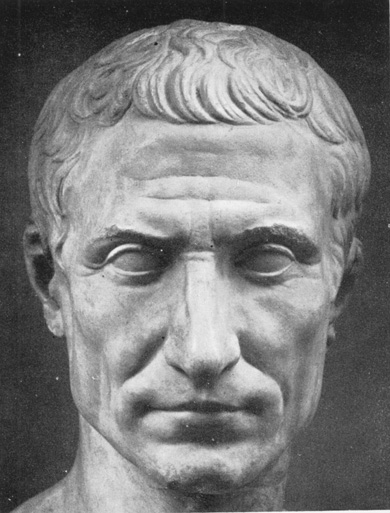
Julius Caesar
Expert's testimony had more holes in it than this guy.

In December 2011, the U.S. Seventh Circuit Court of Appeals, per Judge Richard Posner, reversed a jury verdict in favor of an airline against Fed Ex for $65,998,411, the precise amount the airline had requested in damages.

One issue was the admissibility of complex testimony regarding the damages calculations by the airline’s expert witness, a forensic accountant named Morriss. Posner was not impressed by the expert’s regression analysis testimony:

Morriss’s regression had as many bloody wounds as Julius Caesar when he was stabbed 23 times by the Roman Senators led by Brutus. We have gone on at such length about the deficiencies of the regression analysis in order to remind district judges that, painful as it may be, it is their responsibility to screen expert testimony, however technical; we have suggested aids to the discharge of that responsibility. The responsibility is especially great in a jury trial, since jurors on average have an even lower comfort level with technical evidence than judges. The examination and cross-examination of Morriss were perfunctory and must have struck most, maybe all, of the jurors as gibberish. It became apparent at the oral argument of the appeal that even ATA’s lawyer did not understand Morriss’s analysis; he could not answer our questions about it but could only refer us to Morriss’s testimony.

Posner continued, saying: “If a party’s lawyer cannot understand the testimony of the party’s own expert, the testimony should be withheld from the jury. Evidence unintelligible to the trier or triers of fact has no place in a trial.” Posner suggested the reason the jurors returned a verdict for the exact amount, to the penny, that the airline sought was because they had no clue how to compute the damages.

That all makes perfect sense, but I feel for both the trial judge and the airline’s lawyer–and, of course, the jurors.

Trial judges are required to prescreen expert testimony for reliability, but that’s often practically impossible in highly technical areas such as engineering, medicine, and, in this case, regression analyses. The lawyers aren’t in much better of a position.

Judges and lawyers are smart and have well-developed critical-thinking skills, but those qualities don’t enable them to magically master bodies of technical knowledge in which they have no training. Many scholars have proposed enlisting expert judges and juries in technical, complex cases.

Of course, in the end, Posner was right. If an expert can’t explain how he how arrived at his conclusions in a way that laypersons–including judges and lawyers–can understand, the testimony should be excluded.

ATA Airlines, Inc. v. Federal Express Corp., Case Nos. 11-1382, 11-1492, 7th Cir., Dec. 27, 2011. Thanks to Larry Buser.

Judge Orders Lawyers to Attend Kindergarten Party–Gets Hammered by Boss

U.S. District Judge Sam Sparks down in Austin, TX, peeved by the conduct of the lawyers in a pending case, chastised them for being “unable to practice law at the level of a first year law student” and ordering them to attend a kindergarten party at the courthouse. Here are the pertinent parts of his order:

You are invited to a kindergarten party … in Courtroom 2 of the United States Courthouse, … Austin, Texas.

The party will feature many exciting and informative lessons, including:

• How to telephone and communicate with a lawyer

• How to enter into reasonable agreements about deposition dates

• How to limit depositions to reasonable subject matter

• Why it is neither cute nor clever to attempt to quash a subpoena for technical failures of service when notice is reasonably given; and

• An advanced seminar on not wasting the time of a busy federal judge and his staff because you are unable to practice law at the level of a first year law student.

Invitation to this exclusive event is not RSVP. Please remember to bring a sack lunch! The United States Marshals have beds available if necessary, so you may wish to bring a toothbrush in case the party runs late.

This is the second time Judge Sparks has berated lawyers regarding their kindergarten skill-set.

Sparks’ boss, U.S. Fifth Circuit Court of Appeals Judge Edith Jones, was not amused by the “cute” order. Abovethelaw.com, via the Texas Lawyer, reported an email from Judge Jones to Judge Sparks that said in part:

It has not escaped my attention, or that of my colleagues or, I am told, nationally known blog sites that you have issued several ‘cute’ orders in the past few weeks. The order attached below is the most recent.

Frankly, this kind of rhetoric is not funny. In fact, it is so caustic, demeaning, and gratuitous that it casts more disrespect on the judiciary than on the now-besmirched reputation of the counsel. It suggests either that the judge is simply indulging himself at the expense of counsel or that he is fighting with counsel in what, as Judge Gee used to say, is surely not a fair contest. It suggests bias against counsel.

Guess we won’t be seeing any Sparks flying in Texas for a while.

— Order, Morris v. Coker, Case Nos. A-ll-MC-712-SS, A-ll-MC-713-SS, A-ll-MC-714-SS, A-ll-MC-7IS-SS, W.D. Tex., Aug. 26, 2011. Thanks to Professor Jodi Wilson, Douglas Giuliano, and others.

The Case that Turned on the Meaning of a Three-Letter French Word

You know a judicial document is going to be a great read when it is captioned:

Order Denying MAAF’s Motion to Preclude the French Phrase ”Quel Jeu Doit-on Jouer Vis-à-vis des Autorités de Californie?” From Being Translated as “What Game Must We Play With the California Authorities?”

This opinion from U.S. District Judge A. Howard Matz (C.D. Cal.) stemmed from the judge’s frustration in overseeing a series of over-litigated lawsuits arising from the collapse of a California insurance company. The motion giving rise to the order, after all, was the twentieth motion in limine the judge had addressed in recent days.

Judge Matz seemed irritated that “some of the French litigants caught up in these complicated cases are still coping with the ‘mystifying’ peculiarities of American courts. They appear to assume, for example, that no judge is capable of using common sense (and perhaps some pre-existing familiarity with French) to understand a straightforward French phrase.”

The motion turned on the meaning of the French word “jeu” in a document addressed to one of the French defendants. The document posed a question: “Quel jeu doit-on jouer vis-à-vis des autorités de Californie?” The California Insurance Commissioner’s expert asserted the question translates to: “What game must we play with the California authorities?” The defendant’s expert claimed it means: “What approach must we take with the California authorities?”

Judge Matz accused the defendant’s expert of playing games with the court (paragraph breaks inserted):

If M. Simonet [composer of the document] was not speaking about a “game,” surely Ms. Zarelli [defendant’s expert translator] is playing one. The problems with her declaration are abundant. First, she relies only on a French-to-French dictionary. Wouldn’t the fairest, most reliable way to ascertain the correct English meaning of “jeu,” as M. Simonet used it, be to consult a French to English dictionary?

That’s what the Commissioner’s expert translator does: she points to Harrap’s Shorter Dictionnaire. . . . And what does that more reliable source reveal? Zut alors! Of the many definitions and examples of how “jouer” and “jeu” are translated, almost all are perfectly consistent with how “jeu” was translated in the document that MAAF seeks to keep out: as a “game,” and often with a connotation of “trickery.” Harrap’s even translates “jouer le jeu” as “to play the game.” It translates other examples of the use of “jeu” into such familiar, straightforward English words andphrases as “all this fooling around;” “what’s your game?;” “to play into one’shands . . ..”

Moreover, as the Commissioner’s language expert points out, the definition that Ms. Zarelli happened to choose — “manière d! agir” — includes, if one bothers to take the complete entry into account, which Ms. Zarelli did not do — “manège” and “stratagème.” The connotations of those terms are hardly helpful to MAAF; they mean “ploy” or “trick.” In short, both the literal meaning and the context in which M. Simonet asked his not-so-rhetorical question “Quel jeu doit- on jouer vis-à-vis des autorités de Californie?” is entirely consistent with “What game must we play with the California authorities?”

Judge Matz must have been enjoying himself by this point because he added a closing footnote comparing the bravery and last name of the plaintiff’s lawyer—one “Ney”—to “Ney, the Duc d’Elchingen and Prince de la Moskova,” an army commander who Napoleon once called “the bravest of the brave.”

What did the lawyer do that was so brave? He had the nerve (“considerable fortitude,” as Matz put it) to file what the judge considered to be a ridiculous motion.

Garamendi v. Altus Fin. S.A., Case No. CV-99-2829 (CWx) (C.D. Cal, Feb. 10, 2005). Thanks to Michael Barclay

Letz Here it for Juge Jakeup Hurt of the Oster Disstrict of Pensylvinia!

dictionary
When one is not enough.

Wait. That’s not right. It’s Judge Jacob Hart of the Eastern District of Pennsylvania. Can’t be too careful about those typos. Just ask the plaintiff’s lawyer in Devore v. City of Philadelphia.

Judge Hart reduced his attorney’s fee award by $60,000 based on the poor quality of his written work, which, according to the judge, was “careless to the point of disrespectful.” The defendants described it even less charitably, as “vague, ambiguous, unintelligible, verbose and repetitive.” And those were the things they liked about it. Kidding.

The court noted that throughout the litigation, counsel identified the court as: “THE UNITED STATES DISTRICT COURT FOR THE EASTER [sic] DISTRICT OF PENNSYLVANIA,” adding that “[c]onsidering the religious persuasion of the presiding officer, the ‘Passover District’ would have been more appropriate.”

The priceless part (and what elevated the case into the Strange Judicial Opinions Hall of Fame) was the lawyer’s written response to the assertion that his fees should be reduced because of typos:

As for there being typos, yes there have been typos, but these errors have not detracted from the arguments or results, and the rule in this case was a victory for Mr. Devore. Further, had the Defendants not tired [sic] to paper Plaintiff’s counsel to death, some type [sic] would not have occurred. Furthermore, there have been omissions by Defendants, thus they should not case [sic] stones.

Judge Hart said that the above errors would have been “brilliant” if intentional, but that, based on the lawyer’s filings, “we know otherwise.”

Concluding that the lawyer’s filings wasted a lot of the court’s and the defendants’ time, the court halved the lawyer’s requested hourly rate from $300 per hour to $150. Non-lawyers might consider it amusing that a lawyer whose work is so poor that the court publicly disses him could still earn $150 an hour, but to be fair to the lawyer, he obtained a good result in the case for his clients. Also, the judge commended him for his in-court work.

May this case be a lesson to all law students out there who discount the value of their legal writing courses, not to mention their eighth-grade English courses. Cheers for Judge Hurt.

Devore v. City of Philadelphia, No. 00-3598, 2004 U.S. Dist. LEXIS 3635, at *7–8 (E.D. Pa., Feb. 20, 2004). Thanks to Cynthia Cohan and Professor Howard Wasserman.

Nine Lawyers Attack Pleading Filed Four Minutes–Judge Unimpressed

The Federal Rules of Civil Procedure permit any electronic document to be e-filed until midnight on the due date. Microsoft electronically filed a motion for summary judgment 4 minutes and 27 seconds late on the night of June 26, 2003.

Microsoft’s adversary in the litigation, Hyperphase Technologies, Inc., incensed by this grievous rule breach, filed a motion to strike the motion for summary judgment as untimely.

U.S. Magistrate Stephen L. Crocker, clearly annoyed, blessed us with this sarcastic order:

In a scandalous affront to this court’s deadlines, Microsoft did not file its summary judgment motion until 12:04:27 a.m. … I don’t know this personally because I was home sleeping, but that’s what the court’s computer docketing program says, so I’ll accept it as true.

Microsoft’s insouciance so flustered Hyperphase that nine of its attorneys [names omitted] promptly filed a motion to strike …. Counsel used bolded italics to make their point, a clear sign of grievous inequity by one’s foe. True, this court did enter an order … ordering the parties not to flyspeck each other, but how could such an order apply to a motion filed almost five minutes later? Microsoft’s temerity was nothing short of a frontal assault on the precept of punctuality so cherished by and vital to this court.

Wounded though this court may be by Microsoft’s four minute and twenty-seven second dereliction in duty, it will transcend the affront and forgive the tardiness. Indeed, to demonstrate the evenhandedness of its magnanimity, the court will allow Hyperphase on some future occasion in this case to e-file a motion four minutes and thirty seconds late ….

Hyperphrase Techs., Inc. v. Microsoft Corp., 56 Fed. R. Serv. 3d (Callaghan) 467 (W.D. Wis. 2003). Thanks to Cynthia Cohan.

Don’t Like Your Opponent’s Brief? Just Rewrite It.

Judge Mark Painter, Ohio First District Court of Appeals, took some lawyers to task for moving to strike their opponent’s appellate brief for exceeding the page limitations set by rule, apparently even redrafting portions of the brief in the process:

Not wishing to let stand a brief they consider too long, counsel for appellant … have moved this court to strike [appellees’ brief] … contending the brief (1) put the citations in footnotes (where they belong!); and (2) uses footnotes to “get around” the page limit. And counsel even goes so far as to redraft their opponent’s brief, inserting the jumble of letters and numbers into the paragraphs—even the references to the record. Thus bollixed up and unreadable, the brief comes out to 38.5 pages, instead of the regulation 35. Egad. …

Our dreary day has been enlivened by the thought that lawyers care about one another’s prose so much as to redraft it. And that this dispute is so close that it may turn on a few extra pages of a lawyer’s argument. We can’t wait to read the final version—or maybe we should wait for the movie.

 As to citations, they belong in footnotes. Putting goofy letters and numbers in the middle of paragraphs destroys readability. We had to do that with typewriters, just as we had to use underlining because typewriters did not have italics. No more.

Judge Painter did agree with the objectors that the other side shouldn’t have used so many speaking footnotes. He “venture[d] a guess that this court’s eventual opinion resolving this dispute will be fewer than 20 pages,” and suggested to both sides that “less is usually more” when it comes to legal drafting.

M&M Metals Int’l, Inc. v. Continental Casualty Co., 870 N.E.2d 167, 167 (Ohio Ct. App. 2006).

Alternative Dispute Resolution the Old-Fashioned Way: Rock, Paper, Scissors

rock paper scissors order
One-third of the way toward resolving lawyer disputes.

Fed up with wrangling lawyers, U.S. District Judge Gregory A. Presnell (M.D. Fla.) came up with a novel dispute resolution procedure: the game of “rock, paper, scissors.”

In what Judge Presnell called “the latest in a series of Gordian knots that the parties have been unable to untangle” without court assistance, the parties were unable to agree on a location for a deposition.

The judge directed the lawyers to convene at a neutral site, and if they couldn’t agree on even that much, to meet on the steps of the federal courthouse. He further instructed that:

Each lawyer shall be entitled to be accompanied by one paralegal who shall act as an attendant and witness. At that time and location, counsel shall engage in one (1) game of “rock, paper, scissors.” The winner of this engagement shall be entitled to select the location for the 30(b)(6) deposition ….

Actually, rock, paper, scissors resolutions are anything but novel. Although there are competing theories of the origin of the game, according to Wikipedia, the Chinese invented during the Ming dynasty, where warlords allegedly played a similar contest called shoushiling, which can be translated to “hand-command.” The warloads used the game to decide, among other things, where depositions would be held and whose head would get cut off.

So who won? It might not matter. Rumor has it the appeal will be decided by eeny, meeny, miny, moe.

Avista Mgmt., Inc. v. Wausau Underwriters Ins. Co., Case No. 6:05-cv-1430-Orl-31JGG, 2006 U.S. Dist. LEXIS 38526 (M.D. Fla., June 6, 2006). Thanks to Brian Abramson and Jeff James.

Lawyer Flunks History in Closing Argument

strange judicial opinions history lesson
Don't know much about history.

In a convoluted libel case, the defendant, a lawyer, argued on appeal that the plaintiff’s counsel delivered a prejudicial, inflammatory closing argument.

But the bigger problem was that his historically based closing argument—which invoked Jesus Christ, Julius Caesar, the Philistines and Mennonites—was off on the facts. Here’s an excerpt:

You may remember when Christ was preaching the gospel, in the Holy Roman Empire that Julius Caesar was Emperor of Rome. As Christ was making his way toward Rome, the Mennonites and the Philistines stopped him in the road and they sought to entrap him. They asked Christ: ‘Shall we continue to pay tribute unto Caesar?’ And you will remember, in the Book of St. Matthew it is written that Christ said: ‘Render ye unto Caesar the things that are Caesar’s and unto God the things that are God’s.

Inspiring perhaps, but the lawyer made a few teensy-weensy historical errors. His timeline, for example, was a off a little. Okay, a lot. Six to eight centuries. The court pointed out the faux pas:

The Holy Roman Empire did not come into existence until about 800 years after Christ. Julius Caesar, who was never Emperor of Rome, was dead before Christ was born. Christ was never on His way to Rome and the Philistines had disappeared from Palestine before the birth of Christ. The Mennonites are a devout Protestant sect that arose in the Sixteenth Century A.D.

Some good news for the lawyer though. The judge was impressed he could cram so much misinformation into one short excerpt.  As the judge said it, the argument excerpt “is noteworthy only because of the ease with which the speaker crowded into one short paragraph such an abundance of misinformation.”

Give him credit for that. If the lawyering thing doesn’t work out, he could go to work for a cable news network.

Hall v. Brookshire, 285 S.W.2d 60, 66–67 (Mo. Ct. App. 1955). Thanks to Judge James Barlow.

Texas Federal Judge Orders Lawyers to “Get a Life”

Strange Judicial Opinions Judge Sam Sparks
U.S. District Judge Sam Sparks does not enjoy lawyers he perceives as having kindergarten skill-sets.

In 2011, U.S. District Judge Sam Sparks, Western District of Texas, got in trouble with his bosses at the Fifth Circuit Court of Appeals for ordering the lawyers in a case to attend a kindergarten party.  It wasn’t the first time Judge Sparks used kindergarten references to berate lawyers.

In a 2004 case called Klein-Becker, LLC v. Stanley, Judge Sparks expressed his “disgust” with squabbling among the lawyers in a barrage that began with his expressing doubt as to whether the lawyers had ever attended kindergarten and ended by telling him them to “get a life” (some paragraph breaks inserted):

When the undersigned accepted the appointment from the President of the United States of the position now held, he was read to face the daily practice of law in federal courts with presumably competent lawyers. No one warned the undersigned that in many instances his responsibility would be the same as a person who supervised kindergarten.

Frankly, the undersigned would guess the lawyers in this case did not attend kindergarten as they never learned how to get along well with others. Notwithstanding the history of filings and antagonistic motions full of personal insults and requiring multiple discovery hearings, earning the disgust of the this Court, the lawyers continue ad infinitum.

[Court recounts current dispute in which, despite the court’s order allowing a pleading to be filed on July 23, 2004, defendants’ counsel filed a motion for reconsideration, claiming the pleading should have been filed July 19.]

The Court simply wants to scream to these lawyers, “Get a life” or “Do you have any other cases?” or “When is the last time you registered for anger management classes?”

Neither the world’s problems nor this case will be determined by a … [pleading] which is four days later, even with the approval of the presiding judge.

If the lawyers in this case do not change, immediately, their manner of practice and start conducting themselves as competent to practice in the federal court, the Court will contemplate and may enter an order requiring the parties to obtain new counsel.

Judge Sparks wrapped up by saying that if it wasn’t already clear from the tone of the order, the motion for reconsideration was denied. Hmm, I think he was pretty clear.

Klein-Becker, LLC v. Stanley, Case No. A-03-CA-871-SS, 2004 U.S. Dist. LEXIS 19107, at *4–6 (W.D. Tex. July 21, 2004). Thanks to Michael Barclay.