 One of the steepest early challenges new law students face is having to learn an entire new vocabulary.
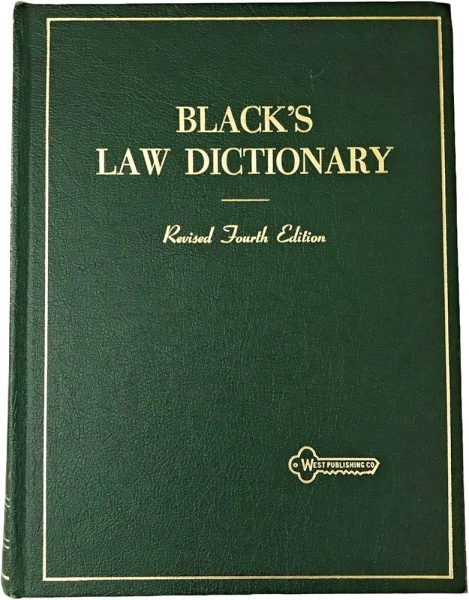
In the old days, all law students bought the hardcover version of Black’s Law Dictionary, the essential legal dictionary, 1759 pages of definitions beginning with “A,” our favorite hypothetical law school actor (as in A sues B), and ending with “zygote intrafallopian transfer.” Today, students are more likely to buy the paperback version or just look up words on the internet.
Below is a glossary focused on the basic legal and law school terminology that all prelaw and first-year students will want to know. No attempt is made to explain the law. If you have insatiable desire for knowledge about doctrines like “adverse possession” or “res ipsa loquitur” before arriving at law school, Google “Support Groups for Crazed Prelaw Students.”
ABA See American Bar Association.
Affirm A disposition or outcome of an appellate court proceeding in which the appellate court agrees with or “affirms” the lower court’s decision in the case. See also Reverse.
American Bar Association (ABA) The national professional organization of lawyers with roughly 400,000 members (membership is voluntary). The ABA is responsible for accrediting law schools pursuant to uniform standards. When people talk about “accredited” or “unaccredited” law schools, they are referring to ABA-accreditation. The organization engages in many other activities, including promulgating the body of ethical rules governing lawyers, rating federal judicial nominees, and sponsoring continuing legal education programs.
ADR See Alternative Dispute Resolution.
Alternative Dispute Resolution (ADR) A broad term referring to means of resolving legal disputes that do not involve traditional trials, such as mediation and arbitration. As more and more court systems and contracts mandate that the parties to disputes participate in mediation or arbitration, ADR courses are becoming more prominent in law schools.
Answer The defendant’s written response to a lawsuit. The answer responds to the allegatios in the plaintiff’s complaint and raises any defenses the defendant might have, as well as any counterclaims that might exist against the plaintiff. See also Complaint.
ALWD Manual A book compiled by the Association of Legal Writing Directors setting forth rules on how to cite to legal authority in written documents. The ALWD Manual competes with the much more widely used Bluebook. See also Bluebook, Citation Style.
Appeal The proceeding initiated by the loser in a lawsuit to have the case reviewed by a higher court. To bring an appeal, the party must identify a particular error or errors alleged to have occurred in the lower court proceedings. Because of the case method, law students spend most of their time studying appeals rather than trials. See also Case Method.
Appellant The party who files an appeal after receiving an adverse decision in a lower court. See also Appellee.
Appellate Brief A document submitted to an appellate court arguing the client’s position on appeal. Most first-year students write an appellate brief in the second semester of their Legal Research and Writing course, and students who participate in moot court will write additional briefs in their 2L and 3L years. The appellate brief-writing assignment is discussed in Chapter 18.
Appellate Court A court that hears appeals of lower court decisions. There are two types of appellate courts: intermediate appellate courts, which are sandwiched between trial courts and the supreme court, and the supreme courts themselves (one for each state and the U.S. Supreme Court for the federal system).
Appellee The party responding to the appellant’s appeal. While the appellant is arguing that an error was made in the lower court, the appellee is usually arguing that the lower court decision was correct and should be affirmed by the appellate court. See also Appellant.
Associate The entry-level position for a law graduate at a private law firm. See also Partner.
Authority A source of law that supports an assertion in a legal argument. Legal authority is divided into two basic categories: primary (principally judicial opinions and statutes) and secondary (treatises, law review articles, etc.). Courts are required to follow primary authority in making decisions. Secondary authority is not binding on courts, although it may be very persuasive.
Bar, The 1 Generally, a state association of lawyers. Each state has a bar to which all licensed attorneys are members. After a person takes and passes the state bar exam, they are admitted to the state’s bar. 2 A term used to refer to the legal profession as a whole, as in all lawyers are members of “the bar,” or portions thereof, such as the “personal injury bar” or “criminal defense bar.” 3 A short-hand way to refer to the state bar examination, as in: “What are you going to do now that you’ve graduated law school?” “Study for the bar, what else?”
Bar Exam The exam that law school graduates must take and pass to become licensed to practice law in a particular state. A rapidly growing majority of states have now adopted the Uniform Bar Exam, which has three components: the Multistate Bar Examination (MBE), a one day exam consisting of the 200 hardest multiple-choice questions ever written covering Civil Procedure, Contracts, Constitutional Law, Criminal Law and Procedure, Evidence, Real Property, and Torts (most of these are first-year subjects); the Multistate Essay Exam (MEE), a half-day exam consisting of six thirty-minute essay questions, each testing a different subject ; and (3) the Multistate Performance Test (MPT), which is designed to test lawyering skills, such as the ability to analyze a legal problem, rather than knowledge of substantive law. Most states also require an exam on ethical rules, taken separately from the main bar exam, called the Multistate Professional Responsibility Exam (MPRE). State bar exams are given in February for December grads and in July for May grads, which includes most students.
Bar Review An expensive course lasting six or seven weeks offered by several competing companies (e.g., BarBri, Kaplan, Themis) that most law school graduates participate in immediately after graduation in preparation to take the state bar examination.
Barristers’ Ball The annual formal or semiformal social event for the student body sponsored by the Student Government Association that usually includes cocktails, dinner, and dancing. Also called “the law school prom.”
Blackacre/Whiteacre The eternal dwelling places of legal actors in first-year Property courses. Blackacre and Whiteacre are fictional parcels of land often used by professors for in-class hypotheticals or on exams.
Black Law Students Association (BLSA) Usually referred to by its acronym, pronounced “Balsa,” the national organization of African-American law students that has chapters at most U.S. law schools. Similar organizations exist for Hispanic, Asian, and other law student groups. See also Student Organizations.
Black-Letter Law The established rules and doctrines in any given subject area of law.
Black’s Law Dictionary The most widely used legal dictionary.
Bluebook 1 The uniform guide to citation style in legal writing taught at most law schools. The Bluebook is described in Chapter 18. See also ALWD Manual, Citation style. 2 Those classic booklets of blank, lined paper with blue covers that students who handwrite exams are required to use in answering essay questions, dwindling in usage as most schools require exams be taken on computers.
Bluebooking The process of checking and correcting legal citations to conform to the Bluebook. See also Bluebook, Citation Style.
Book Brief or Book-Briefing A technique used by law students who choose not to invest the time necessary to prepare independent case briefs to capture the essential components (e.g., facts, holding, reasoning) of a judicial opinion assigned for class reading. Book-briefing involves using the margins of the casebook and various colored highlighters to brief the case in the book rather than creating a separate case brief. Case briefing is covered in Chapter 11.
Burden of Proof Simplified, a plaintiff in a civil action bears the burden of proving each element of her claims by a “preponderance of the evidence” or “more likely than not” standard, while the defendant bears a similar burden as to the elements of any defenses he raises. In criminal cases, the government has the burden of proving the defendant guilty “beyond a reasonable doubt.” Criminal defendants have no burden to prove they are innocent, but do have a burden to prove the elements of certain defenses.
CALI Acronym for “Computer-Assisted Legal Instruction.” CALI is a non-profit consortium of law professors providing free, online practice questions called “CALI exercises” to law students in most law school subjects. Many law students work “CALIs” throughout the semester, and especially before exams, to help master the material they are learning.
CALI Award See Top Paper Award.
Callback Interview The third phase in the application process for a job at a law firm, the first two being sending in a resume and sitting for the first interview, which is often held at the law school. Callback interviews generally are in-depth and lengthy, and can involve meeting all or many of the firm’s attorneys at the law firm’s offices. Receiving a callback interview is a good sign that the student is being seriously considered for the position. See also On-Campus Interview.
Case See Judicial Opinion.
Case Law See Judicial Opinion.
Case Brief A short summary of the key aspects of a judicial opinion, including the facts, procedural history, holding, and reasoning. Case-briefing is covered in Chapter 11.
Case Comment A student-written law review article, also called a Case Note, approximately 10–15 pages in length analyzing a recent noteworthy judicial opinion. Students who compete for membership on the law review will often be required to write a case comment as part of the law review’s write-on competition. See also Law Review, Write-On Competition.
Case Method The law school teaching methodology by which students learn to analyze law from reading appellate judicial opinions collected and organized into casebooks by subject matter, as distinguished from reading textbooks that explain the law in an expository fashion. The origin of the case method is attributed to Christopher Langdell, a former Harvard Law School dean. The case method works hand in hand with the Socratic method. The case method is explained in Chapter 7. See also Casebook, Socratic Method.
Casebook The thick, heavy, and expensive books you will be lugging around and poring over day and night. A casebook is a compilation of appellate judicial opinions in a particular subject matter designed to work with the case and Socratic methods of law school teaching. See also Case Method, Socratic Method.
Cause of Action See Claim.
Cert or Certiorari See Writ of Certiorari.
Circuit Court of Appeal See U.S. Circuit Court of Appeal.
Citation See Citation Style.
Citation Style All written attributions to legal authority (e.g., judicial opinions, statutes, treatises) must adhere to a uniform citation style that is most commonly derived from the Bluebook, but which may also come from the competing ALWD Manual. Citation style is designed to inform readers how to find the source (by giving, for example, the volume, page number, and date) and also to ensure the credibility of the cited source. Most assertions in legal writing require cited authority to back them up. Citation style generally is taught in first-year Legal Research and Writing courses. See also ALWD Manual, Authority, Bluebook.
Civil Law Legal System A type of legal system followed in large portions of the world such as Europe and Latin America, but not in the United States. In civil law systems, the primary source of law comes from “codes,” which are organized books of statutes written by legislatures. In common law systems, such as the United States, the primary source of law is case law or judicial precedent, although that is changing as common law systems continue to place greater emphasis on legislation and regulatory rules. See also Common Law Legal System.
Civ Pro See Civil Procedure.
Civil Procedure Required first-year course covering the rules that govern the conduct of civil (i.e., non-criminal) lawsuits, primarily the Federal Rules of Civil Procedure. The course is commonly referred to by students as “Civ Pro.” Civil Procedure is described in Chapter 5.
Claim Any assertion of law and facts that may entitle a party in a lawsuit to a legal remedy (such as money, property, or an injunction). Examples include claims alleging breach of contract or that the defendant’s negligence caused injury to the plaintiff.
CLE See Continuing Legal Education.
Clerkship See Judicial Law Clerk and Summer Clerkship.
Clinic See Legal Clinic.
Closed or Open Book Exam Law school exams may be either open book or closed book or somewhere in between. Some professors allow students to bring in any materials they wish (e.g., notes, outlines, commercial study aids) to an exam (complete open book). Some professors do not allow any outside materials (closed book). Many professors follow an in-between approach where students are permitted to bring in only certain specified materials, such as the Federal Rules of Civil Procedure for a Civ Pro exam.
Common Law See Common Law Legal System.
Common Law Legal System A legal system in which the primary source of law is judge-made law; that is, law written and developed by judges in judicial opinions. The United States operates under a common law legal system, whereas most countries follow a civil law legal system, in which law comes primarily from books of statutes known as “codes.” Students spend most of their first year studying common law. In upper-level years, students take several courses focusing on statutes, but even in those courses, students usually study judicial opinions interpreting the statutes. See also Civil Law Legal System.
Complaint Document that a plaintiff files with a court to commence a lawsuit. The complaint outlines the plaintiff’s claims and the basic factual allegations supporting the claims. See also Answer, Claim.
Computerized Legal Research Legal research used to be conducted exclusively in thick, musty books, but most modern legal research is done using computer databases. Several of these exist, but two heavyweights dominate the market: LexisNexis and Westlaw. Attorneys must pay considerable sums to use these subscription-based services. Law schools pay institutional bulk rates so that students and professors can use the services without payment. New students immediately become familiar with LexisNexis and Westlaw through their on-campus training and marketing efforts. The latter will result in your consuming a lot of free pizza and acquiring numerous trinkets bearing corporate logos (T-shirts, cups, pens, etc.).
Con Law See Constitutional Law.
Concurrence or Concurring Opinion See Judicial Opinion.
Constitutional Law Known to students as “Con Law,” a course that focuses on judicial interpretations of the U.S. Constitution by the U.S. Supreme Court. Con Law is a required course at most schools, and a required first-year course at approximately two-thirds of law schools.
Continuing Legal Education (CLE) Educational courses usually lasting one day or part of a day that are intended to keep lawyers up-to-date on the law. Most states require lawyers to earn a minimum number of CLE hours each year to maintain their licenses. Many “CLEs,” as they are called, are held at law schools, where students may be permitted to attend without payment.
Contracts Required first-year course that covers the law of contracts, including the elements of a valid contract, remedies for breach of contract, and defenses to contract enforcement. Contracts is described in Chapter 5.
Course Outline Summary in an outline format of the legal rules covered in a specific course. Most first-year students prepare course outlines for each course. Course outlines are covered in Chapter 13.
Criminal Law Required first-year course that covers substantive criminal law, including the elements of criminal offenses and defenses, sentencing, and the policies behind the administration of the criminal justice system. Criminal Law is described in Chapter 5.
Damages The monetary remedy sought by the plaintiff in a civil lawsuit. The most common type of money damages are intended to compensate the plaintiff for harm caused by the defendant. Punitive damages, which are controversial and uncommon in other nations, may be added in cases where the defendant’s conduct was particularly egregious for the purposes of punishing the defendant and deterring similar wrongful conduct.
Dissenting Opinion See Judicial Opinion.
E & E See Examples and Explanations.
Elements The components that comprise a civil claim (e.g., breach of contract) or a criminal offense (e.g., burglary), which the plaintiff or, in a criminal case, the government must prove to establish the validity of the case. First-year students must learn and are tested on the elements of dozens of claims, crimes, and defenses.
Emanuel Law Outlines A long-running brand of commercial study aid that provides concise explanations of the law in an outline format, and which is available for most traditional law school courses. See also Study Aids.
Examples & Explanations Called “E & Es” by students, a brand of commercial study aid that provides succinct descriptions of the law, followed by problem examples and analyses of the examples. E & Es are one of the most popular study aid brands, in large part because they require students to apply the same kinds of problem-solving skills required in law school classes and on exams. See also Study Aids.
Externship A for-credit student placement with a government agency, such as a prosecuting attorney’s office or public defender’s office, or a court for a semester, during which the student learns under the supervision of experienced lawyers.
Fact-Finder See Trial Court.
Flashcards A short-hand title for the “Law in a Flash” series of law student study aids. Available for a variety of law school subjects, flashcards have questions on the front and answers on the back. See also Study Aids.
Gilbert Law Summaries Referred to as “Gilberts,” one of the longest-running brands of commercial study aids, which succinctly explain the law in different subject areas. See also Study Aids.
Grade Normalization See Mandatory Curve.
Holding The primary point of a court’s ruling in a case. For many cases, the “holding of the case” will be synonymous with the “rule of the case.” One of the most common questions professors ask in using the Socratic method is, “What did the court hold?”
Hornbook Distinctive green single-volume treatises on the law of a particular subject, published by West Academic Publishing. In earlier days, hornbooks were commonly relied on as student study aids, but modern students purchase less in-depth, less-expensive study aids. Traditional hornbooks are viewed as much more authoritative than other types of study aids. For example, courts frequently cite hornbooks in their opinions, but would not be caught dead citing other types of law school study aids. See also Study Aids.
Hypo See Hypothetical.
Hypothetical Law professors’ favorite teaching tool, “hypos” consist of a short, usually fictitious set of facts described by a professor in class that requires students to apply the rules they are learning to solve legal problems. Depending on the professor, hypotheticals can be outlandish, entertaining, and thought-provoking. Students often discuss and ponder hypos outside of class with their fellow students and even at home with their loved ones.
IRAC A mnemonic that stands for “Issue, Rule, Analysis, Conclusion,” IRAC is often taught to students as the standard structure for analyzing a legal problem in a written format. A variety of more refined spin-offs exist (such as “CREAC,” which stands for “Conclusion, Rule, Explanation, Analysis, Conclusion”) that are used as formats in legal writing courses for composing the law office memoranda and appellate brief. IRAC is discussed in Chapter 16.
J.D. See Juris Doctor.
Judge Benjamin Cardozo A U.S. Circuit Court of Appeals judge and later U.S. Supreme Court Justice known for his keen intellect and excellent writing skills, Cardozo penned many famous, widely studied judicial opinions, including, in Torts, one of the most famous and memorable cases in American jurisprudential history: Palsgraf v. Long Island Railroad Co.
Judge Hand’s Formula In U.S. v. Carroll Towing Co., a famous case involving a barge that broke free and caused damage, the famous Judge Learned Hand set forth a famous algebraic economic cost-benefit formula for determining whether injury-causing conduct was reasonable or unreasonable. If reasonable, the defendant is off the hook. If unreasonable, the defendant is liable for negligence and must pay damages. The formula is B < P x L. B stands for the burden of avoiding a risk of harm, P is the probability that the risk will actually cause harm, and L stands for the severity of the harm if it occurs. The formula states that if the burden of avoiding the harm is less than the probability of the harm occurring multiplied by the severity of the potential harm, the conduct is unreasonable (i.e., negligent). Conversely, if the burden of avoiding the risk outweighs the probability times the severity of harm, the conduct is reasonable (i.e., non-negligent). See also Learned Hand.
Judicial Law Clerk An assistant to a judge who helps with legal research, order- and opinion-writing, and other matters. “Clerkships,” as they are known, are prestigious, coveted positions that many top law students seek to obtain. Clerkships are available at all levels of the state and federal judicial system, with federal clerkships being considered the most prestigious. Most clerkships last one or two years, although some judges hire permanent law clerks.
Judicial Opinion The integral component of the case method of legal study, judicial opinions issued by appellate courts are the focal point of a law student’s studies. A judicial opinion is a court’s written judgment in a case. It generally contains a review of the facts, the procedural history of the lawsuit (i.e., an explanation of the previous proceedings in the case), a statement of the applicable law, the court’s reasoning applying that law to the facts of the case, and the final outcome. If judges on an appellate court disagree, the resolution of the case may comprise more than one opinion: the “majority opinion” (the legally binding opinion endorsed by a majority of the judges who heard the case); a “concurring opinion” (written by a judge who agrees with the outcome of the case, but not with the reasoning of the majority); and a “dissenting opinion” (written by a judge who disagrees with the majority’s reasoning and result).
Judicial Precedent Previously issued judicial opinions that are relevant to the case at hand. Under the U.S. common law legal system, judicial precedent can be binding in deciding a current case depending on the similarity of the cases and the court which decided the previous case. For example, decisions of the U.S. Supreme Court constitute binding precedent on all other courts of the land. See also Common Law Legal System, Judicial Opinion.
Juris Doctor or J.D. The professional degree a law student receives upon graduating from law school.
Justice, Supreme Court Any judge who serves on a state supreme court or the U.S. Supreme Court. Judges who serve on lower courts are called “judges,” not justices.
Law Clerk See Judicial Law Clerk and Summer Clerkship.
Law Journal See Law Review.
Law Office Memorandum The major assignment in first-semester Legal Research and Writing courses. “The memo,” as it’s called, is a 5–15 page document written to a fictitious law firm partner explaining the law applicable to a client’s or potential client’s legal issues. Most schools divide the memo assignment into two parts: the “closed universe” memo and the “open universe” memo. For the former, the instructor provides students with the necessary research materials (e.g., judicial opinions, statutes), while the latter requires the students to conduct their own research. The memo assignments are described in Chapter 18.
Law Review A student-run journal that publishes scholarly legal articles written by law professors, judges, practitioners, and law students. Membership on the law review is one of law school’s highest honors. Students usually become eligible to participate on law review through a write-on competition held in the summer after their first year. Law review is discussed in Chapter 24. See also Write-on Competition.
Learned Hand An oft-quoted judge with a great name (his full name was Billings Learned Hand) who sat on the U.S. Court of Appeals for the Second Circuit, famous among law students mostly for his algebraic formula for determining when conduct is negligent under tort law. See also Judge Hand’s Formula.
Legal Authority See Authority.
Legal Clinic For-credit, limited-enrollment courses that allow upper-level students to represent real clients, usually low-income individuals or non-profit public-interest organizations, under the direct supervision of experienced attorney instructors. Some clinics are general in nature, handling a variety of different cases, while others are specialized. Depending on the law school, students may find clinics in tax law, elder law, immigration law, family law, and other areas.
Legal Research and Writing Required first-year course, which travels under a variety of names from school to school, in which students are taught legal research and written and oral communication skills. Legal Research and Writing courses are covered in Chapter 18.
Legalese Catch-all word describing all the new legal terminology you will be learning and sharing with your friends and family, much to their boredom or utter confusion.
Legalines A long-running brand of study aid offering condensed case briefs and black-letter legal principles keyed to the most popular casebooks in most core law school courses. See also Study Aids.
LexisNexis See Computerized Legal Research.
LexisNexis Web Courses Online course sites established by professors and operated by LexisNexis using the Blackboard platform. See also TWEN.
Litigation The process of bringing and carrying on a lawsuit. When a law student or lawyer says they do or want to do “litigation” as a career, they are talking about filing and defending lawsuits. Contrary to popular belief, most lawyers do not practice litigation. Rather, they engage in what is called “transactional law,” which involves handling business transactions. See also Transactional Law.
LSAC Acronym for the “Law School Admission Council,” called “L-SACK,” is the non-profit organization that provides services to law schools and prospective law students pertaining to law school admissions. Your first dealings with legal education will be through the LSAC, which administers the LSAT and processes applications for law schools. See also LSAT.
LSAT Acronym for the “Law School Admission Test,” the challenging standardized test required for law school admission. See also LSAC.
Majority Opinion See Judicial Opinion.
Mandatory Curve Another term for a grade normalization policy. Most law schools have some form of grade normalization policy requiring or recommending to professors that grades fall either into specified ranges on a percentage basis or fit within a specified mean or median.
MBE See Bar Exam.
MEE See Bar Exam
Memo, The See Law Office Memorandum.
Majority Opinion See Judicial Opinion.
Mock Trial A co-curricular activity in which student teams participate in simulated trials, often as part of a competition, either within the school or among several schools. The students act as trial lawyers, making opening statements, examining and cross-examining witnesses, admitting documentary evidence, making objections, and delivering closing arguments.
Moot Court A co-curricular activity in which student teams participate in simulated appellate court proceedings, including analyzing an appellate record, writing an appellate brief, and presenting an oral argument in front of panels of judges. Some schools have a first-year intramural moot court competition as part of their Legal Research and Writing program. Upper-level students who participate in moot court compete in regional or national competitions against other law schools. Moot court is described in Chapter 24.
MPRE See Bar Exam.
MPT See Bar Exam.
Multistate Bar Exam (MBE) See Bar Exam.
Multistate Performance Test (MPT) See Bar Exam.
Multistate Professional Responsibility Exam (MPRE) A two-hour, sixty-question multiple-choice exam, held separately from the regular bar exam, that is required for bar admission in forty-six states. The exam, known by its acronym, tests knowledge of the rules of professional responsibility (also called the “rules of ethics”) governing lawyers. At most law schools, students take a required course in the rules of professional responsibility in their second or third year.
Note, Law Review A scholarly paper that 2L law review members research and compose on a legal topic of their choosing as part of the requirements for law review membership. A typical note runs from 30–50 pages with 200 footnotes. The best notes are selected for publication in the law review. See also Law Review.
Nutshells With titles in more than 160 subjects, the largest law school study aid series. As the name suggests, the books are concise summaries of the law in particular areas. See also Study Aids.
OCI Acronym for on-campus interview. See On-Campus Interview.
Open-Book Exam See Closed- or Open-Book Exam.
On Call Rather than cold-call on random students per the traditional Socratic method, some professors, particularly in upper-level courses, designate a group of students in advance of each class who will be “on call” or “on panel” to answer questions about and analyze the reading assignments in class.
On Panel See On Call.
On-Campus Interview Called OCIs by students, the interviews legal employers hold at law schools for prospective summer clerkships or permanent associate positions. See also Associate, Callback Interview, Summer Clerkship.
Oral Argument An oral presentation to a panel of appellate court judges, usually three in number, in which a lawyer advances the legal arguments supporting the client’s case on appeal, while being required to answer questions from the judges throughout. At most schools, 1L students are required to make an oral argument in their second semester as part of their Legal Research and Writing course. The oral argument assignment is discussed in Chapter 18.
Order of the Coif A law school honor society that exists at select law schools, with membership reserved for students who graduate in the top 10 percent of their class. Graduating “Order of the Coif” is considered to be a high law school honor.
Orientation An introduction to law school typically held the week before classes begin. The length and content of orientations vary by school. Typical events include a session on how to read and brief cases, a panel discussion with upper-level students and/or faculty on how to succeed in law school, and social mixers. Upper-level students often serve as small group orientation leaders, and are a good source of information and tips to incoming students.
Outline or Outlining See Course Outline.
P.A.D. See Phi Alpha Delta.
Partner A senior position in a law firm to which associates aspire. See also Associate.
Phi Alpha Delta (P.A.D.) One of two national legal fraternities that has chapters at most law schools. See also Phi Delta Phi.
Phi Delta Phi One of two national legal fraternities that has chapters at most law schools. See also Phi Alpha Delta.
Pro Bono Meaning “for the public good” in Latin, pro bono work is legal services performed free of charge to people who cannot afford to hire a lawyer. Lawyers are expected to render pro bono services as part of their professional obligation or to contribute money to legal services organizations that provide pro bono representation. Many law schools mandate that students perform a specified number of hours of pro bono service as a graduation requirement.
Precedent See Judicial Precedent.
Property Required first-year course that covers the law governing the ownership and transfer of interests in real and personal property. Real property is land and things attached to land. Personal property is portable goods, such as this book. Property is described in Chapter 5.
Public Interest Law An umbrella term describing legal work geared toward advancing social justice and/or public welfare. Public interest law can involve working at a government agency, a non-profit organization, or representing clients on a pro bono basis. See also Pro Bono.
Quimbee A popular commercial service providing case briefs keyed to particular casebooks and other study materials for law students. Some first-year students make the mistake of relying exclusively on commercially prepared case briefs, rather than creating their own, which misses the main reason to prepare case briefs: learning how to dissect and a judicial opinion and analyze law. (On the other hand, as explained in the C.R.E.D.O. chapter, my mantra for you about case-briefing is: Brief every case, but don’t overbrief any case.).
Reasonable Person The mythical person for whom the law is always searching, particularly in the area of tort law. In the large field of liability for negligently caused harm, actors are expected to behave as a “reasonable person” would have behaved under the same circumstances. The quest for this person will consume a large portion of your Torts course.
Regulation A legally binding rule promulgated by a federal or state administrative agency, such as the Environmental Protection Agency or the Food and Drug Administration. Regulations are to be distinguished from statutes, which are passed by Congress or state legislatures. See also Statute.
Reporter A book containing a chronological collection of appellate judicial opinions from a particular court or jurisdiction, which is part of West Publishing Co.’s National Reporter System. For example, the United States Reports collects all opinions of the U.S. Supreme Court from 1759 through the present in several hundred volumes. Each individual volume is called a “reporter.” Law school libraries contain complete sets of all the relevant reporters, which consume miles of shelf space. In the past, law firm libraries also contained extensive sets of reporters, and many still do, although the availability of computerized legal research has made it easier to cut library maintenance costs and save space in law libraries of all types.
Restatements of the Law A series of influential legal treatises written and published by the American Law Institute, an organization of prominent legal scholars, including lawyers, judges, and law professors. “Restatements,” as they are called, set forth the black-letter rules of law in succinct terms. Restatements are not binding primary authority on courts, but they are a persuasive type of secondary authority. You will be hearing a lot about Restatements in courses such as Torts and Contracts. See also Authority, Black-Letter Law.
Reverse A disposition or outcome of an appellate court proceeding in which the court overturns or “reverses” the lower court, often sending the case back to the lower court for further proceedings such as a new trial. See also Affirm.
SCOTUS Acronym for the Supreme Court of the United States.
SBA Acronym for Student Bar Association. See Student Government Association.
SGA See Student Government Association.
Socratic Method The predominant law school teaching methodology in the first year, wherein professors generally cold-call on students to engage in a dialogue about a judicial opinion assigned for class reading. The Socratic method goes hand in hand with the case method of law school teaching. The Socratic and case methods are described in Chapter 7. See also Case Method.
Statute A law passed by Congress or a state legislature and signed into law by, respectively, the U.S. president or the governor of the state. Statutory law should be distinguished from case law, which is the body of judge-made law that emanates from judicial opinions. Law students spend most of their first year studying case law, but take several courses in their upper-level years that focus on statutory law.
Student Government Association (SGA) Called the Student Bar Association or SBA at many schools, the elected body of student representatives at a law school. All law schools have a SGA. The officers, elected by students, usually include a president, vice-president, treasurer, secretary, and representatives for each class, including separates representatives for each section of the first-year class.
Student Organization A term referring to any law school student-run organization, of which there are many. These include the Student Government Association, law review, moot court board, and numerous “club”-type organizations appealing to different types of students and student interests, such as the Black Law Students Association and Federalist Society. Student organizations are discussed in Chapter 24.
Study Aids Any of the many series of books intended to explain the law to students clearly and succinctly. Study aids are available for most law school courses, and most law students buy at least some study aids to help them understand the material and prepare for exams. Dozens of competing types and formats of study aids are available. A few of the more prominent study aid brands are listed in this Glossary.
Summer Associate See Summer Clerkship.
Summer Clerkship A term for a summer job at a law firm, also referred to as a summer associate position, which is to be distinguished from a “judicial clerkship.” Students sometimes just call them “summers.” Most first-year students begin vying for summer clerkships in their second semester. During summer clerkships, students primarily perform legal research, but they might also be invited to attend depositions, trials, and client interviews. Many summer clerkships lead to offers of permanent associate jobs at the firm.
Supreme Court of the United States (SCOTUS) The highest court in the United States, made up of nine justices nominated by the president and confirmed by the U.S. Senate. Decisions of the U.S. Supreme Court are the “law of the land,” binding on all other courts and under the principle of judicial review established in Marbury v. Madison, the executive and legislative branches of government. First-year students study Supreme Court opinions primarily in Civil Procedure and, if offered in the first year, Constitutional Law.
Torts Required first-year course studying the law of liability for civil wrongs other than breaches of contract. Most of the course involves claims arising from personal injury. Torts is described in Chapter 5.
Top Paper Award Symbolic of the competitive nature of law school, an award is given to the student who earns the top grade in each course. At most law schools, top paper awards (which are usually “top exam” awards) are called “CALI Awards” because they are sponsored by the CALI (Computer-Assisted Legal Instruction) organization. In the old days, top paper awards were called “Book Awards,” because the recipient received a book as a prize and some older professors still use that term, sometimes as a verb, as in: “Sarah is an excellent student. In fact, she booked my course.” Today, the person would say, “She CALI’ed my course.” Receiving the top paper award in a course is a coveted honor and good resume booster.
Transactional Law A broad term describing legal practice that does not involve litigation (i.e., handling lawsuits). Transactional law includes negotiating, structuring, drafting documents for, and otherwise handling business deals of all types. Most lawyers engage in some form of transactional law practice. See also Litigation.
Travel Team The student competition teams that represent law schools in the many moot court, mock trial, and other inter-law school competitions that are held annually throughout the country, usually comprising three upper-level students. Students chosen for the travel teams usually are those who have distinguished themselves in the particular competition genre.
Trial Court The court at the bottom of the hierarchical judicial system, either state and federal, where lawsuits originate and where pretrial and trial proceedings take place (as distinguished from appellate courts, where appeals take place). See also Appellate Court.
TWEN An acronym for “The West Education Network,” TWEN is a widely used system that allows professors to create online course sites. Depending on the professor, TWEN sites may contain course materials, discussion boards, calendars, quizzes, relevant web links, and other features. See also LexisNexis Web Courses.
UBE Acronym for Uniform Bar Exam. See Bar Exam.
UCC See Uniform Commercial Code.
Uniform Commercial Code (UCC) Usually called the “UCC,” a compilation of statutes that regulates a variety of commercial transactions, including sales, banking, and collateralized transactions. Drafted as model legislation by the National Conference of Commissioners on Uniform State Laws, all states have adopted the UCC in whole or in part as part of their state statutes. First-year students study portions of Article 2 (Sales) of the UCC in their Contracts course.
U. S. Circuit Court of Appeal One of thirteen regional appellate courts within the federal court system that hear appeals from the U.S. District Courts (the trial courts in the federal system). U.S. Circuit Courts of Appeal are the most powerful tribunals in the land below the U.S. Supreme Court.
U.S. District Court A trial court within the federal judicial system.
Westlaw See Computerized Legal Research.
Writ of Certiorari The process by which the U.S. Supreme Court decides to review most of the cases it hears. The vast majority of the cases ruled on by the U.S. Supreme Court are heard because the Court discretionarily chooses to hear them, rather than because the parties have a right of appeal to the Court. The Writ of Certiorari is the means by which the Court exercises that discretion. Perhaps because both law students and lawyers struggle to spell and pronounce the term correctly, “certiorari” is usually shortened to “cert,” as in “cert petition” and “denial of cert.” When the Court grants “cert review” and agrees to hear a case, it is an indication that the issues involved are of national significance or causing disagreement among the U.S. Circuit Courts of Appeal. Out of roughly 8,000 cert petitions filed with the Court each year, the Court agrees to review fewer than 100 cases.
Write-on Competition The competition that students participate in during the summer after their first year in an effort to gain an invitation to participate on the law review. The competition usually involves writing a summary and analysis of a recent case and a test of the student’s mastery of Bluebook citation style. Law review is discussed in Chapter 24. See also Law Review.
Writing Sample A sample of a student’s legal writing that is often required as part of a legal job application. First-year students often polish up their Legal Research and Writing law office memorandum or appellate brief to use as a writing sample when applying for their first summer job.

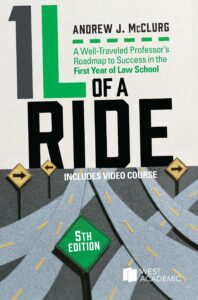 New 2025 edition includes free access to the 13-part 1L of a Ride Video Course. Available in paperback and Kindle formats.
 Many people find intentionally funny warnings labels or signs to be amusing. Take this one (verified as real), taken at an overlook at the Arkansas Grand Canyon. It’s amusing and probably effective. Poking fun at tort lawsuits and the tendency of humans to do stupid things while also making it clear that one should not climb over the railing or fence and fall to their death or severe injury.
 Karl Llewellyn, Roscoe Pound, Ronald Dworkin … McClurg?
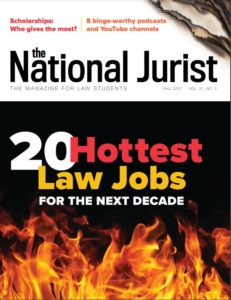 Law students spend too much time reading cases and too little time thinking or learning about what kind of legal job would be the best fit for them. In the cover story for the Fall 2021 issue of The National Jurist Magazine, I and my co-authors of
  An important rule for young lawyers to know is that it’s essential to counsel clients to wear appropriate attire to court hearings.
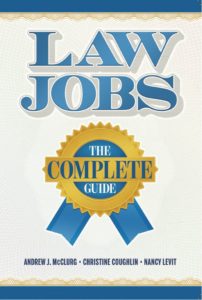 After two years of extensive research that included interviewing more than 150 lawyers, my new book (with coauthors Chris Coughlin and Nancy Levit),