
In the Beginning There Was … Zim?

lawsuit over Golden Guides
One of Zim's classics.

Remember “Golden Guides”? They were sort of the original “Dummies” series for kids, explaining a variety of scientific, geographic, and nature topics in succinct terms understandable even by 10 year olds.

Zim v. Western Pub. Co. arose out of a dispute between the guy who wrote or co-wrote many of these masterpieces—Dr. Herbert Zim—and the Golden Guides publisher, Western Publishing. Zim penned such classics as Rocks and Minerals, Reptiles and Amphibians, Trees, and my personal fav, Fishes.

Judge Goldberg of the U.S. Court of Appeals for the Fifth Circuit apparently also thinks highly of Zim, elevating him to biblical proportions:

In the beginning, Zim [Fn.1] created the concept of the Golden Guides. For the earth was dark and ignorance filled the void. And Zim said, let there be enlightenment and there was enlightenment. In the Golden Guides, Zim created the heavens (STARS) (SKY OBSERVER’S GUIDE) and the earth. (MINERALS) (ROCKS and MINERALS) (GEOLOGY).

[Fn.1] Dr. Zim is a noted science educator with a Ph.D. in science education from Columbia University. His special expertise is in the presentation of scientific subjects to popular audiences. The major focus of his efforts has been the development of a multivolume series of books on scientific subjects, the “Golden Guides.” …

And together with his publisher, Western, he brought forth in the Golden Guides knowledge of all manner of living things that spring from the earth, grass, herbs yielding seed, fruit-trees yielding fruits after their kind, (PLANT KINGDOM) (NON-FLOWERED PLANTS) (FLOWERS) (ORCHIDS) (TREES), and Zim saw that it was good. And they brought forth in the Golden Guides knowledge of all the living moving creatures that dwell in the waters, (FISHES) (MARINE MOLLUSKS) (POND LIFE), and fowl that may fly above the earth. (BIRDS) (BIRDS OF NORTH AMERICA) (GAMEBIRDS). And Zim saw that it was good. And they brought forth knowledge in the Golden Guides of the creatures that dwell on dry land, cattle, and creeping things, (INSECTS) (INSECT PESTS) (SPIDERS), and beasts of the earth after their kind. (ANIMAL KINGDOM). And Zim saw that it was very good.[Fn.4]

[Fn.4] According to Zim’s brief before this court, well over 100 million of the Golden Guide books have been printed under Zim’s name, earning him “millions of dollars” in royalties.

Then there rose up in Western a new Vice-President who knew not Zim. And there was strife and discord, anger and frustration, between them for the Golden Guides were not being published or revised in their appointed seasons. And it came to pass that Zim and Western covenanted a new covenant, calling it a Settlement Agreement. But there was no peace in the land. Verily, they came with their counselors of law into the district court for judgment and sued there upon their covenants.

And they put upon the district judge hard tasks. And the district judge listened to long testimony and received hundreds of exhibits. So Zim did cry unto the district judge that he might remember the promises of the Settlement Agreement. And the district judge heard Zim’s cry, but gave judgment for Western. Yea, the district judge gave judgment to Western on a counterclaim as well. Therefore, Zim went up out of the court of the district judge.

And Zim spake unto the Court of Appeals saying, make a sacrifice of the judgment below. And the judges, three in number, convened in orderly fashion to recount the story of the covenants and to discuss and answer the four questions which Zim brought before them …

Maybe it’s just because I loved Golden Guides, but this one goes in the Strange Judicial Opinions Hall of Fame.

Zim v. Western Pub. Co., 573 F.2d 1318, 1320–21 (5th Cir. 1978). Thanks to Professor Ken Swift.
Coming Soon to a Footnote Near You: The Famous Movie Title Opinion (Kozinski)

movie title judicial opinion kozinski
Siskel and Kozinski?

Judge Alex Kozinski, of the U.S. Court of Appeals for the Ninth Circuit, was well-known for his sparkling prose in writing opinions, but his most classic opinion was U.S. v. Syufy Enterprises, in which he weaved in more than 200 movie titles.

In Syufy, the federal government sued Las Vegas movie-chain owner Syufy for antitrust violations. In affirming the trial court’s dismissal of the antitrust charges, rumor had it that Judge Kozinski wove more than 200 movie titles into the text of his fourteen-page opinion.

But did it really happen? Was it urban legend? Bourbon legend?

It really happened. Daniel Solzman of the Tarlton Library at the University of Texas law school assembled the entire list of movies Kozinski managed to cram into Syufy as part of its Law in Popular Culture Collection. Here are the movie titles in the order they appeared:

M, Suspect, Giant, Nevada, Illegal, Monkey Business, Platoon, David, 8 1/2, The Power, The Competition, Greatest Hurdle, Gone are the Days, Popcorn, Something for Everyone, Manpower, The Producers, Formula, Splash, Shame, Stir, Titanic, Easy Money, No Holds Barred, Upper Hand, Rivals, Rocky, Until September, September, Midway, The Big Picture, Do the Right Thing, Brass Knuckles, The Accused, Humongous, Little Big Man, Chances, Vice Versa, Always, Nuts, The Seven-Ups, Big, Ordinary People, Possessed, Foul Play, The Survivors, Personal Services, Time after Time, Challenge, Testimony, Riding High, Captured, Utopia, Dark Horse, Invitation, Major League, Against all Odds, Fighting Fire with Fire, Trading Places, The End, Country, Losing Ground, Short Circuit, Lock Up, Dead Heat, Personal Best, Absolute Beginners, Staying Alive, Big Business, Network, Shopworm, Witness, High Tide, The Law, Wisdom, The Hand, Guilty, Illicit, Satisfaction, The Victim, Raw Deal, The Evil, Above the Law, Down by Law, Off Limits, The Enforcer, Fear, The Villain, The Weapon, Champion, The Natural, Deliverance, The Disappearance, The Challenge, Running, The Other, Top Gun, Players, The Trial, Paid, Head, The Squeeze, Seven Days, Cold Feet, Gambit Backfire, Contract, Cold Turkey, Lost, Plenty, After Hours, The Judge, The Trap, Leviathan, Stick, Tough Enough, Making It, Risky Business, Squeeze Play, Sitting Ducks, Boomerang, Big Trouble, The Principal, House of Cards, Tribute, America, Target, Paper Tiger, Distance, Local Hero, Being There, Fire Sale, Abandoned, The Lawyer, You and Me, Avalanche, Surrender, The First Time, Hard Choices, Showdown, Fail-Safe, The Great Race, Relentless, The Fountainhead, Out, House, Volunteers, October, 1984, Over the Top, Ran, Trapped, The Gate, Hard Times, Partners, California, Barrier, Five, Colors, Exposed, Switching Channels, Checking Out, Fame, Great Expectations, Without a Trace, Perfect, Out of Bounds, Offbeat, Critic’s Choice, The Longshot, The Sure Thing, Misunderstood, Boom Town, Static, Alien, Things Change, High Hopes, The Jackpot, Drive-in, Performance, New Faces, The Thing, The Crucible, Violated, All the Right Moves, The Creator, Interiors, Clue, Fashion, Winner Take All, Any Number Can Play, Insignificance, The Harder They Fell, Missing, Shakedown, Ruthless Predator, Dangerous, Critical Condition.

Kozinski never confirmed or denied the rumors about intentionally loading up Syufy with movie titles.

— United States v. Syufy Enterprises, Inc., 903 F.2d 659 (9th Cir. 1990); see also The Syufy Rosetta Stone, 1992 BYU L. Rev. 457 (1992).

Supreme Court Shows Why the Answer to Most Legal Questions is “It Depends”

U.S. Supreme Court
Whatever happened to “Appellant wins”?

Back in 2003, in McConnell v. Federal Election Committee, the U.S. Supreme Court cleared up a major legal dispute over campaign financing. Er, well, maybe not completely cleared up.

The basic question was whether the McCain-Feingold Act, a federal statute that imposed restrictions on political contributions, violated the First Amendment free speech rights of potential contributors.  A challenging issue no doubt, but certainly not too tough for the mighty U.S. Supreme Court to resolve, right?

With nine justices voting, the result could have been as simple as 8-1, 7-2, 6-3, or 5-4 in favor of one side or the other.  The nine wise ones chose a slightly more complicated path. Here is the Court’s actual voting lineup straight out of the case:

STEVENS and O.CONNOR, JJ., delivered the opinion of the Court with respect to BCRA Titles I and II, in which SOUTER, GINSBURG, and BREYER, JJ., joined. REHNQUIST, C. J., delivered the opinion of the Court with respect to BCRA Titles III and IV, in which O.CONNOR, SCALIA, KENNEDY, and SOUTER, JJ., joined, in which STEVENS, GINSBURG, and BREYER, JJ., joined except with respect to BCRA § 305, and in which THOMAS, J., joined with respect to BCRA §§ 304, 305, 307, 316, 319, and 403(b). BREYER, J., delivered the opinion of the Court with respect to BCRA Title V, in which STEVENS, O.CONNOR, SOUTER, and GINSBURG, JJ., joined. SCALIA, J., filed an opinion concurring with respect to BCRA Titles III and IV, dissenting with respect to BCRA Titles I and V, and concurring in the judgment in part and dissenting in part with respect to BCRA Title II. THOMAS, J., filed an opinion concurring with respect to BCRA Titles III and IV, except for BCRA §§ 311 and 318, concurring in the result with respect to BCRA § 318, concurring in the judgment in part and dissenting in part with respect to BCRA Title II, and dissenting with respect to BCRA Titles I, V, and § 311, in which opinion SCALIA, J., joined as to Parts I, II.A, and II.B. KENNEDY, J., filed an opinion concurring in the judgment in part and dissenting in part with respect to BCRA Titles I and II, in which REHNQUIST, C. J.,joined, in which SCALIA, J., joined except to the extent the opinion upholds new FECA § 323(e) and BCRA § 202, and in which THOMAS, J., joined with respect to BCRA §213. REHNQUIST, C. J., filed an opinion dissenting with respect to BCRA Titles I and V, in which SCALIA and KENNEDY, JJ., joined. STEVENS, J., filed an opinion dissenting with respect to BCRA § 305, in which GINSBURG and BREYER, JJ., joined.

Who won?  I have no idea.

For embodying in a single voting lineup the reason why the most accurate answer to most legal questions is “It depends,” this case gets into the Strange Judicial Opinions Hall of Fame.  If members of the world’s most powerful tribunal are unable to agree on what the law means, how could one expect poor law students to do so?

McConnell v. Federal Election Comm’n, 540 U.S. 93 (2003). Thanks to Elise Hendricks.

Judge Turns Triple Crown Plot Into Novella

Funny Cide
Triple Crown threat Funny Cide caught up in weird judicial opinion.

The total weirdness of Florida Court of Appeals Judge Farmer’s opinion in Funny Cide Ventures, LLC v. Miami Herald Publ’g Co. gets the case into Lawhaha.com’s Strange Judicial Opinions Hall of Fame.

Here’s a first in judicial writing: an appellate judge writes an opinion in an offbeat fiction-style based on a tune from Guys and Dolls, can’t get the other judges to go along with his approach, so decides to attach his creative opinion to the court’s per curiam opinion together with a lengthy preface explaining his unique approach to written adjudication.

Confused? Let’s back up. In 2003, Funny Cide won both the Kentucky Derby and the Preakness, one race away from the Triple Crown.

After the Kentucky Derby, the Miami Herald published an article implying that the jockey cheated by using some kind of illegal battery-powered device during the race. The Herald later admitted it made an error and retracted the story. Meanwhile, Funny Cide placed third at the Belmont, missing out on becoming only the twelfth horse in history to win the Triple Crown.

In a lawsuit for injurious falsehood against the Herald, Funny Cide’s owners claimed the article caused substantial damage, including the chance to win the Belmont because “the article caused the jockey to over-ride the horse in the Preakness in an attempt to vindicate himself.”

The defendant moved for summary judgment, which was granted on the ground that the plaintiffs had not alleged direct and immediate damages from the article. The appellate court affirmed in a brief per curiam opinion.

So far, so good.

Then the reader stumbles on Judge Farmer’s … not sure what to call it … tacked on at the end of the court’s opinion. It’s not a concurring or dissenting opinion, and is not labeled as an appendix.

His “attachment” to the majority opinion is not a dissent from the reasoning of his brethren’s opinion, but the boring way in which they expressed it.

Judge Farmer starts by assailing traditional stilted judicial opinion writing, then explains why a humanized, pot-boiler narrative approach might be better. He concludes by suggesting readers compare the two approaches–his and the majority’s–and decide which is better.

Basically, he seemed to be saying: “Hey, I labored over writing this really fun and wild opinion, but these dudes I work with on the court are too straitlaced to get it, so here it is for your reading pleasure.”

Here are excerpts, first, from his attack on traditional judicial opinion writing:

Most [judicial opinions are] … dreary and tedious. …

A surprising number are way too long. There is often a painstaking account of background and trial which turns out to be unnecessary to grasp the essential issues to be decided. Many have extended discussions of rules and principles no one really challenges, or few would dispute. Judges pile on needless details of date, time and place, modified by confusing identifying terms (appellant-cross appellee-defendant) without regard to clarity. Extended comparative quotations alternate with exposition of one sort or another. Legal issues are analyzed through mind-numbing, many-factored “tests”. Each factor is unloaded nit by nit, as though the judges actually decided the dispute in precisely that way. Arcane legal terminology is woven in and out, even though simpler, plainer words could be used. Simplicity, tone, style, voice, personality, levity-all are shunned.

Judge Farmer concedes he’s been guilty of what he describes, then sets out to change his opinion-writing ways:

From the very moment of my appointment as a judge, I have chafed under this norm for appellate opinion writing. How did it become conventional? Who made it required? Why hasn’t it been changed?

I struggled against it. There must be other styles, different tones, alternate voices. Not for every opinion. But for some.

One technique occurred to me. This idea would have an opinion in some of the forms, styles and characteristics associated with fiction. Good fiction is set in human experience. Good fiction illuminates.

***

I had decided that the style of some opinions could-and should-be unconventionally changed for greater openness to all readers. I would try to write some opinions in styles and tones calculated to make legal reasoning clearer for those without law degrees. Then came this case.

When the panel conferred after oral argument, I did not detect any disagreement. … So after thinking on the matter, I conceived of an unconventional approach. I would try a style, a tone, a voice to make apparent even to non-lawyers what I believed is the basic defect in their argument. The very style of the opinion itself would illuminate the legal analysis and outcome.

As it turns out, the other two members of the panel could not endorse the opinion or even some slightly altered version. They had concerns. Some other judges shared them. So I give this explanation for what I wrote, laying my version along side the panel’s substitute. Readers can compare a conventional opinion with an unconventional style-the pious with the impious.

Then comes the opinion. Here’s an excerpt, inspired by the opening song of Guys and Dolls, Fugue for the Tinhorns:

Then the horse won the Preakness Stakes. And it’s not even close. Wins by nearly ten lengths. The horse is so far out front, looks like he could make it past the wire and into the barn before they can take the photo. Hardly anyone asked if the horse ran out of gas for the Belmont. Are you kidding? Racing was all stirred up about the Crown. The feedbox noise grew hot.

Was it a dream, or did I hear stories about a guy who read in the paper the horse wins it all by a half? About another guy who said it was no bum steer, it was from a handicapper that’s real sincere? Even about a third guy who knew this is the horse’s time because his father’s jockey’s brother’s a friend?

Whatever. It’s a lock. Two jewels for the Crown. Make room for the third.

Only, wait a minute. Did I hear another story about this one guy who wasn’t so sure? Said it all depends if it rained last night?

For the life of me, I can’t understand why the other judges on the panel were hesitant to join in this opinion.

Funny Cide Ventures, LLC v. Miami Herald Publ’g Co., 955 So.2d 1241, 1243–47 (Fla. Dist. Ct. App. 2007). Thanks to Kevin McDowell and James Heelan.

Ornithological Expert “Thinks” a Crow Is A Bird and Insists that Seagulls Aren’t

crow flying
Bird expert "thinks" this might be a bird.

In U.S. v. Byrnes, the defendant was convicted of making false statements to a grand jury investigating illegal trafficking in exotic birds. The issue involved the materiality of statements as to whether some illegally imported swans and geese were dead or live when the defendant received them.

To bolster its case, the government called a collector of Australian parrots who testified the defendant had delivered some swans and geese to her. Defense counsel cross-examined the witness, an immigrant from Germany who had difficulty speaking English, in an apparent effort to challenge her credibility as a bird expert. Here’s the interesting colloquy:

Q. Mrs. Meffert, do you recall testifying yesterday about your definition of birds?

A. Yes.

Q. And do you recall that you said that the swans and geese were not birds?

A. Not to me.

Q. What do you mean by that, “not to me?”

A. By me, the swans are waterfowls.

Shortly thereafter, Mrs. Meffert was cross examined as follows:

Q. Are sparrows birds?

A. I think so, sure.

Q. Is a crow a bird?

A. I think so.

Q. Is a parrot a bird?

A. Not to me.

Q. How about a seagull, is that a bird?

A. To me it is a seagull, I don’t know what it is to other people.

Q. Is it a bird to you as well or not?

A. To me it is a seagull. I don’t know any other definition for it.

Q. Is an eagle a bird?

A. I guess so.

Q. Is a swallow a bird?

A. I don’t know what a swallow is, sir.

Q. Is a duck a bird?

A. Not to me, it is a duck.

Q. But not a bird.

A. No, to other people maybe.

The government stipulated that swans and geese are birds.

Because it makes me laugh every time I read it, this opinion gains entry to the Strange Judicial Opinions Hall of Fame.

United States v. Byrnes, 644 F.2d 107, 110 n.7 (2nd Cir. 1981). Thanks to Walter Fitzpatrick.

Tomatos are Vegetables as a Matter of Law, So Says the U.S. Supreme Court

Tomato
It's official. Tomatos are vegetables according to the Supreme Court.

The next time someone raises the age-old debate as to whether a tomato is a fruit or a vegetable, show off your legal acuity (or nerdiness) by informing them you have it on good authority that tomatos are vegetables. No, in fact, make that great authority. Who? The U.S. Supreme Court.

More than 100 years ago, in Nix v. Hedden, Justice Horace Gray, speaking on behalf of a unanimous Supreme Court, ruled that a tomato is a vegetable as a matter of law.

The Tariff Act of 1883 declared a 10 percent duty on all vegetables entering the country, but allowed fruit to enter duty-free. The New York Customs Collector saw an opportunity to increase revenue and declared the tomato to be a vegetable.

Angry importers sued and their case reached the Supreme Court, where Justice Gray said: “[A]lthough botanists consider the tomato a fruit, tomatoes are eaten as a principal part of a meal, like squash or peas, (and all grow on vines), so it is the court’s decision that the tomato is a vegetable.”

Nix v. Hedden, 149 U.S. 304 (1893). Thanks to Lihwei Lin.

Judge has Ex Parte Conversation with a Talking Cat

Blackie the talking cat
“Excuse me, I’d like to have a few words with you about the litter box issue.”

Miles v. City Council of Augusta, GA—starring “Blackie the Talking Cat”—is our kind of case: completely WEIRD, so weird that it qualifies for Lawhaha.com’s Strange Judicial Opinions Hall of Fame.

The plaintiffs, Carl and Elaine Mills, were an unemployed, married couple who owned Blackie, a cat who could allegedly speak English. The plaintiffs were entrepreneurs in the true American mold, making their entire living marketing Blackie’s unique vocal abilities to the public. Although the closest Blackie ever came to making the big time was a $500 appearance on “That’s Incredible” in 1980, he generated steady income for Carl and Elaine by talking to strangers on the street in return for contributions.

After receiving complaints, the Augusta Police Department warned Carl and Elaine that they needed to obtain a business license to continue peddling Blackie’s talents on the streets of Augusta. Plaintiffs sued the city, alleging the occupational license tax was unconstitutional.

The whole opinion is interesting, but the craziest part was the trial judge’s disclosure in a footnote of an ex parte street encounter with Blackie (some paragraph breaks inserted):

In ruling on the motions for summary judgment, the Court has considered only the evidence in the file. However, it should be disclosed that I have seen and heard a demonstration of Blackie’s abilities.

The point in time of the Court’s view was late summer, 1982, well after the events contended in this lawsuit. One afternoon when crossing Greene Street in an automobile, I spotted in the median a man accompanied by a cat and a woman. The black cat was draped over his shoulder. Knowing the matter to be in litigation, and suspecting the cat was Blackie, I thought twice before stopping. Observing, however, that counsel for neither side was present and that any citizen on the street could have happened by chance upon this scene, I spoke, and the man with the cat eagerly responded to my greeting.

I asked him if his cat could talk. He said he could, and if I would pull over on the side street he would show me. I did, and he did. The cat was wearing a collar, two harnesses and a leash. Held and stroked by the man Blackie said “I love you” and “I want my Mama.”

The man then explained that the cat was the sole source of income for him and his wife and requested a donation which was provided. I felt that my dollar was well spent …

I never understood why a cat that could talk didn’t become more famous.

Miles v. City Council of Augusta, Ga., 551 F. Supp. 349, 350 n.1 (S.D. Ga. 1982). Thanks to Richard McKewen.

“Hello, My Name Is … Oh, Never Mind”

A pro se litigant in Arkansas appealed a trial court decision granting custody of her child to the biological father and ordering that the child’s birth name be changed. The trial court granted the custody change and ordered the child’s name be changed to “Samuel Charles.” Not a bad name, but why order a change? Personally, I liked the original name: “Weather’By Dot Com Chanel Fourcast.”

For making us laugh out loud, this order gets into the Strange Judicial Opinions Hall of Fame.

Here’s the colloquy in which the perplexed trial judge asked the mother to explain the child’s birth name:

The Court: I simply do not understand why you named this child — his legal name is Weather’By Dot Com Chanel Fourcast Sheppard. Now, before you answer that, Mr. – the plaintiff in this action is a weatherman for a local television station?

Sheppard: Yes.

The Court: Okay. Is that why you named this child the name that you gave the child?

Sheppard: It – it stems from a lot of things.

The Court: Okay. Tell me what they are.

Sheppard: Weather’by — I’ve always heard of Weatherby as a last name and never a first name, so I thought Weatherby would be — and I’m sure you could spell it b-e-e or b-e-a or b-y. Anyway, Weatherby.

The Court: Where did you get the “Dot Com”?

Sheppard: Well, when I worked at NBC, I worked on a Teleprompter computer.

The Court: All right.

Sheppard: All right, and so that’s where the Dot Com [came from]. I just thought it was kind of cute, Dot Com, and then instead of — I really didn’t have a whole lot of names because I had nothing to work with. I don’t know family names. I don’t know any names of the Speir family, and I really had nothing to work with, and I thought “Chanel”? …

The Court: Well, where did you get “Fourcast”?

Sheppard: Fourcast? Instead of F-o-r-e, like your future forecast or your weather forecast, F-o-u, as in my fourth son, my fourth child, Fourcast. It was —

The Court: So his name is Fourcast, F-o-u-r-c-a-s-t?

Sheppard: Yes.

The Court: All right. Now, do you have some objection to him being renamed Samuel Charles?

Sheppard: Yes.

The Court: Why? You think it’s better for his name to be Weather’by Dot Com Chanel —

Sheppard: Well, the —

The Court: Just a minute for the record.

Sheppard: Sorry.

The Court: Chanel Fourcast, spelled F-o-u-r-c-a-s-t? And in response to that question, I want you to think about what he’s going to be — what his life is going to be like when he enters the first grade and has to fill out all [the] paperwork where you fill out — this little kid fills out his last name and his first name and his middle name, okay? So I just want – if your answer to that is yes, you think his name is better today than it would be with Samuel Charles, as his father would like to name him and why. Go ahead.

Sheppard: Yes, I think it’s better this way.

The Court: The way he is now?

Sheppard: Yes. He doesn’t have to use “Dot Com.” I mean, as a grown man, he can use whatever he wants.

The Court: As a grown man, what is his middle name? Dot Com Chanel Fourcast?

Sheppard: He can use Chanel, he can use the letter “C.”

The Court: And when he gives his Birth Certificate — is it on his birth certificate as you’ve stated to the Court? Does his Birth — does this child’s Birth Certificate read “Weather’by Dot com” —

Sheppard: That’s how I filled out the paperwork for his —

The Court: — Chanel Fourcast?

Sheppard: Yes, and for his Social Security card, I filled it out as Weather’by F. Sheppard.

The Court: All right.

The Arkansas court of appeals upheld the trial judge’s ruling based largely on its finding that the birth name could subject the child to embarrassment.

Sheppard v. Speir, 157 S.W.3d 583, 587–88 (Ark. Ct. App. 2004). Thanks to David Eanes.

The “Emergency Doctrine” According to Shakespeare

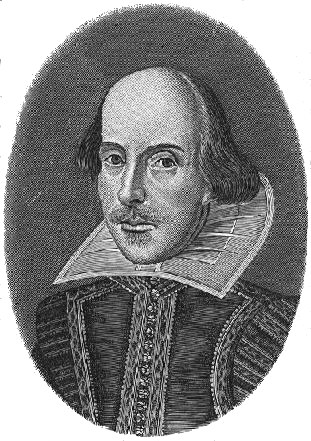
William Shakespeare
Judge Carlin LOVED this guy.

A unanimous Strange Judicial Opinions Hall of Fame opinion is Cordas v. Peerless Transportation Co., penned in 1941 by Judge Carlin (no relation to George) of the New York City Court.

The defendant was a chauffeur and the victim of an armed car-jacking by a fleeing robber who threatened to blow the chauffeur’s brains out. In fright, the chauffeur slammed on the brakes and jumped out of the vehicle, which kept moving and hit the plaintiff pedestrian and her children (fortunately, injuries were slight).

The case stands for the unremarkable principle that under the basic negligence standard of reasonable care “under the circumstances,” people aren’t expected to exercise as much care in emergency situations as in non-emergencies where they have time to weigh and deliberate. It also stands as a literary masterpiece of judicial opinion writing.

Full appreciation of this classic can come only with a full reading, but here’s how it starts:

This case presents the ordinary man–that problem child of the law–in a most bizarre setting. As a lowly chauffeur in defendant’s employ he became in a trice the protagonist in a breath-bating drama with a denouement almost tragic. It appears that a man, whose identity it would be indelicate to divulge, was feloniously relieved of his portable goods by two nondescript highwaymen in an alley near 26th Street and Third Avenue, Manhattan; they induced him to relinquish his possessions by a strong argument ad hominem couched in the convincing cant of the criminal and pressed at the point of a most persuasive pistol.

Carlin apparently was a learned Shakespeare fan. In excusing the chauffeur from liability for jumping out of the moving vehicle, Carlin said:

If the philosophic Horatio and the martial companions of his watch were ‘distilled almost to jelly with the act of fear’ when they beheld ‘in the dead vast and middle of night’ the disembodied spirit of Hamlet’s father stalk majestically by ‘with a countenance more in sorrow than in anger,’ was not the chauffeur, though unacquainted with the example of these eminent men-at-arms more amply justified in his fearsome reactions when he was more palpably confronted by a thing of flesh and blood bearing in its hand an engine of destruction which depended for its lethal purpose upon the quiver of a hair.

Translation: It’s not negligent to react in fright when a carjacker has a gun pointed at your head.

Cordas v. Peerless Transp. Co., 27 N.Y.S.2d 198, 199, 201 (City Court of N.Y. 1941). Thanks to all the folks who sent in this classic.

Justice Roberts’ Gritty Detective Drama

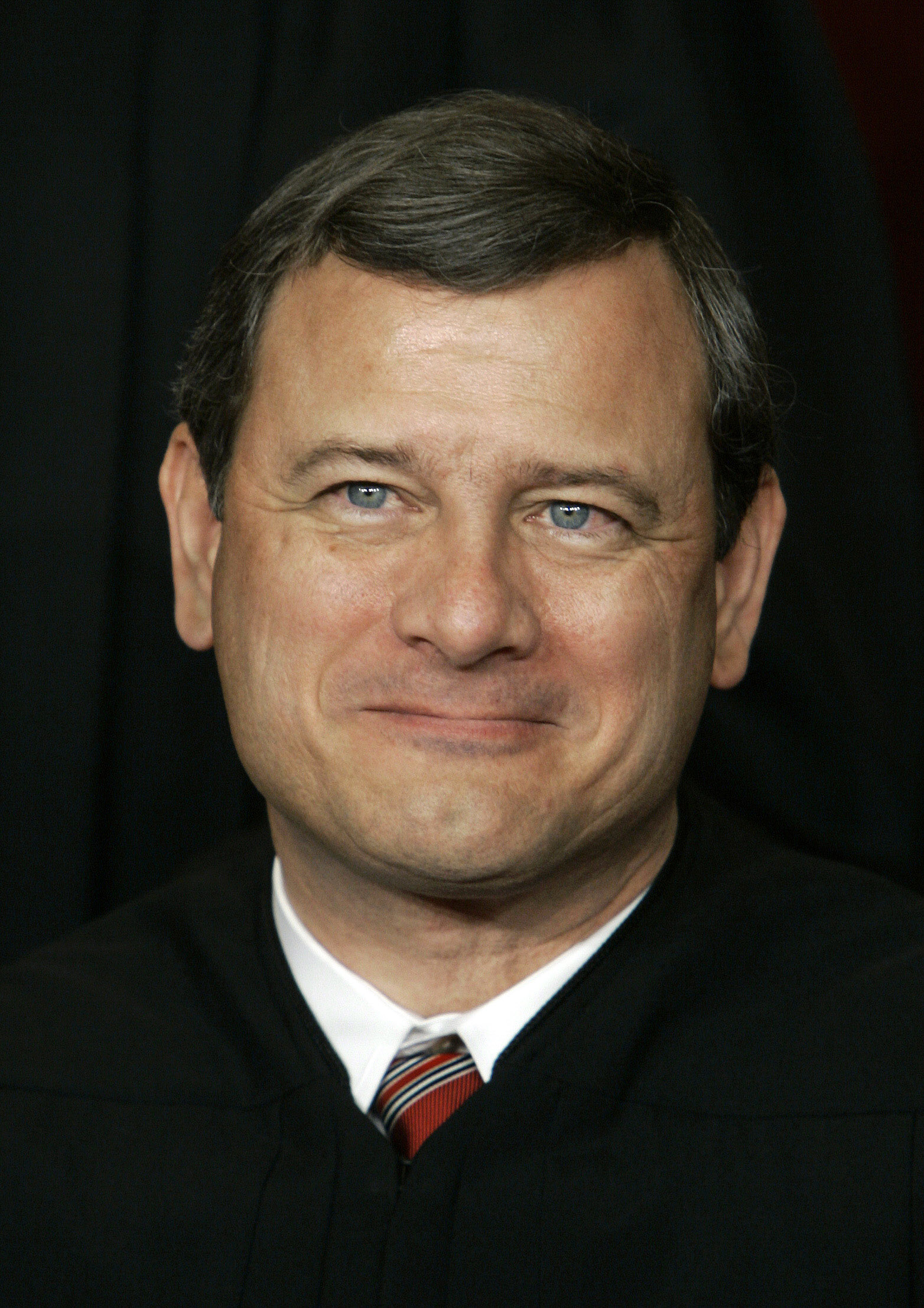
U.S. Supreme Court Chief Justice John Roberts
U.S. Supreme Court Chief Justice John Roberts let loose his inner-Raymond Chandler.

It’s not often that members of the world’s most powerful judicial tribunal have fun with their opinion-writing, but now, following in the great tradition of hard-boiled crime writers like Raymond Chandler, Dashiell Hammett, and Ross MacDonald comes … U.S. Supreme Court Justice John Roberts? Yup.

In Pennsylvania v. Dunlap, a mundane drug case, Justice Roberts, dissenting from a denial of cert review, explored his inner Joe Friday. Here’s how his dissent started out:

North Philly, May 4, 2001. Officer Sean Devlin, Narcotics Strike Force, was working the morning shift. Undercover surveillance. The neighborhood? Tough as a three dollar steak. Devlin knew. Five years on the beat, nine months with the Strike Force. He’d made fifteen, twenty drug busts in the neighborhood.

Devlin spotted him: a lone man on the corner. Another approached. Quick exchange of words. Cash handed over; small objects handed back. Each man then quickly on his own way. Devlin knew the guy wasn’t buying bus tokens. He radioed a description and Officer Stein picked up the buyer. Sure enough: three bags of crack in the guy’s pocket. Head downtown and book him. Just another day at the office.

Roberts proceeded, in a much more traditional fashion, to disagree with the Pennsylvania Supreme Court’s decision that the officer lacked probable cause to arrest the defendant.

Because it’s the only case we know of where a U.S. Supreme Court justice, a conservative one at that, had fun in an opinion, this opinion joins the Strange Judicial Opinions Hall of Fame.

Pennsylvania v. Dunlap, 129 S. Ct. 448, 448 (2008). Thanks to Joel Dipippa.