Ornithological Expert “Thinks” a Crow Is A Bird and Insists that Seagulls Aren’t

crow flying
Bird expert "thinks" this might be a bird.

In U.S. v. Byrnes, the defendant was convicted of making false statements to a grand jury investigating illegal trafficking in exotic birds. The issue involved the materiality of statements as to whether some illegally imported swans and geese were dead or live when the defendant received them.

To bolster its case, the government called a collector of Australian parrots who testified the defendant had delivered some swans and geese to her. Defense counsel cross-examined the witness, an immigrant from Germany who had difficulty speaking English, in an apparent effort to challenge her credibility as a bird expert. Here’s the interesting colloquy:

Q. Mrs. Meffert, do you recall testifying yesterday about your definition of birds?

A. Yes.

Q. And do you recall that you said that the swans and geese were not birds?

A. Not to me.

Q. What do you mean by that, “not to me?”

A. By me, the swans are waterfowls.

Shortly thereafter, Mrs. Meffert was cross examined as follows:

Q. Are sparrows birds?

A. I think so, sure.

Q. Is a crow a bird?

A. I think so.

Q. Is a parrot a bird?

A. Not to me.

Q. How about a seagull, is that a bird?

A. To me it is a seagull, I don’t know what it is to other people.

Q. Is it a bird to you as well or not?

A. To me it is a seagull. I don’t know any other definition for it.

Q. Is an eagle a bird?

A. I guess so.

Q. Is a swallow a bird?

A. I don’t know what a swallow is, sir.

Q. Is a duck a bird?

A. Not to me, it is a duck.

Q. But not a bird.

A. No, to other people maybe.

The government stipulated that swans and geese are birds.

Because it makes me laugh every time I read it, this opinion gains entry to the Strange Judicial Opinions Hall of Fame.

United States v. Byrnes, 644 F.2d 107, 110 n.7 (2nd Cir. 1981). Thanks to Walter Fitzpatrick.

Judge has Ex Parte Conversation with a Talking Cat

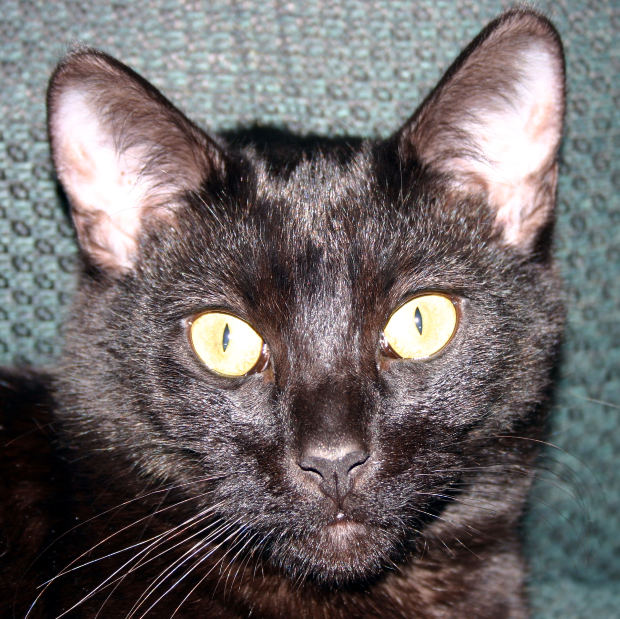
Blackie the talking cat
“Excuse me, I’d like to have a few words with you about the litter box issue.”

Miles v. City Council of Augusta, GA—starring “Blackie the Talking Cat”—is our kind of case: completely WEIRD, so weird that it qualifies for Lawhaha.com’s Strange Judicial Opinions Hall of Fame.

The plaintiffs, Carl and Elaine Mills, were an unemployed, married couple who owned Blackie, a cat who could allegedly speak English. The plaintiffs were entrepreneurs in the true American mold, making their entire living marketing Blackie’s unique vocal abilities to the public. Although the closest Blackie ever came to making the big time was a $500 appearance on “That’s Incredible” in 1980, he generated steady income for Carl and Elaine by talking to strangers on the street in return for contributions.

After receiving complaints, the Augusta Police Department warned Carl and Elaine that they needed to obtain a business license to continue peddling Blackie’s talents on the streets of Augusta. Plaintiffs sued the city, alleging the occupational license tax was unconstitutional.

The whole opinion is interesting, but the craziest part was the trial judge’s disclosure in a footnote of an ex parte street encounter with Blackie (some paragraph breaks inserted):

In ruling on the motions for summary judgment, the Court has considered only the evidence in the file. However, it should be disclosed that I have seen and heard a demonstration of Blackie’s abilities.

The point in time of the Court’s view was late summer, 1982, well after the events contended in this lawsuit. One afternoon when crossing Greene Street in an automobile, I spotted in the median a man accompanied by a cat and a woman. The black cat was draped over his shoulder. Knowing the matter to be in litigation, and suspecting the cat was Blackie, I thought twice before stopping. Observing, however, that counsel for neither side was present and that any citizen on the street could have happened by chance upon this scene, I spoke, and the man with the cat eagerly responded to my greeting.

I asked him if his cat could talk. He said he could, and if I would pull over on the side street he would show me. I did, and he did. The cat was wearing a collar, two harnesses and a leash. Held and stroked by the man Blackie said “I love you” and “I want my Mama.”

The man then explained that the cat was the sole source of income for him and his wife and requested a donation which was provided. I felt that my dollar was well spent …

I never understood why a cat that could talk didn’t become more famous.

Miles v. City Council of Augusta, Ga., 551 F. Supp. 349, 350 n.1 (S.D. Ga. 1982). Thanks to Richard McKewen.

“Hello, My Name Is … Oh, Never Mind”

A pro se litigant in Arkansas appealed a trial court decision granting custody of her child to the biological father and ordering that the child’s birth name be changed. The trial court granted the custody change and ordered the child’s name be changed to “Samuel Charles.” Not a bad name, but why order a change? Personally, I liked the original name: “Weather’By Dot Com Chanel Fourcast.”

For making us laugh out loud, this order gets into the Strange Judicial Opinions Hall of Fame.

Here’s the colloquy in which the perplexed trial judge asked the mother to explain the child’s birth name:

The Court: I simply do not understand why you named this child — his legal name is Weather’By Dot Com Chanel Fourcast Sheppard. Now, before you answer that, Mr. – the plaintiff in this action is a weatherman for a local television station?

Sheppard: Yes.

The Court: Okay. Is that why you named this child the name that you gave the child?

Sheppard: It – it stems from a lot of things.

The Court: Okay. Tell me what they are.

Sheppard: Weather’by — I’ve always heard of Weatherby as a last name and never a first name, so I thought Weatherby would be — and I’m sure you could spell it b-e-e or b-e-a or b-y. Anyway, Weatherby.

The Court: Where did you get the “Dot Com”?

Sheppard: Well, when I worked at NBC, I worked on a Teleprompter computer.

The Court: All right.

Sheppard: All right, and so that’s where the Dot Com [came from]. I just thought it was kind of cute, Dot Com, and then instead of — I really didn’t have a whole lot of names because I had nothing to work with. I don’t know family names. I don’t know any names of the Speir family, and I really had nothing to work with, and I thought “Chanel”? …

The Court: Well, where did you get “Fourcast”?

Sheppard: Fourcast? Instead of F-o-r-e, like your future forecast or your weather forecast, F-o-u, as in my fourth son, my fourth child, Fourcast. It was —

The Court: So his name is Fourcast, F-o-u-r-c-a-s-t?

Sheppard: Yes.

The Court: All right. Now, do you have some objection to him being renamed Samuel Charles?

Sheppard: Yes.

The Court: Why? You think it’s better for his name to be Weather’by Dot Com Chanel —

Sheppard: Well, the —

The Court: Just a minute for the record.

Sheppard: Sorry.

The Court: Chanel Fourcast, spelled F-o-u-r-c-a-s-t? And in response to that question, I want you to think about what he’s going to be — what his life is going to be like when he enters the first grade and has to fill out all [the] paperwork where you fill out — this little kid fills out his last name and his first name and his middle name, okay? So I just want – if your answer to that is yes, you think his name is better today than it would be with Samuel Charles, as his father would like to name him and why. Go ahead.

Sheppard: Yes, I think it’s better this way.

The Court: The way he is now?

Sheppard: Yes. He doesn’t have to use “Dot Com.” I mean, as a grown man, he can use whatever he wants.

The Court: As a grown man, what is his middle name? Dot Com Chanel Fourcast?

Sheppard: He can use Chanel, he can use the letter “C.”

The Court: And when he gives his Birth Certificate — is it on his birth certificate as you’ve stated to the Court? Does his Birth — does this child’s Birth Certificate read “Weather’by Dot com” —

Sheppard: That’s how I filled out the paperwork for his —

The Court: — Chanel Fourcast?

Sheppard: Yes, and for his Social Security card, I filled it out as Weather’by F. Sheppard.

The Court: All right.

The Arkansas court of appeals upheld the trial judge’s ruling based largely on its finding that the birth name could subject the child to embarrassment.

Sheppard v. Speir, 157 S.W.3d 583, 587–88 (Ark. Ct. App. 2004). Thanks to David Eanes.

How to Win Friends and Influence Judges

Or maybe not. A pro se litigant filed a Notice of Appeal in the U.S. District Court for the Western District of Washington stating:

I hereby am informing you that I am appealing the a****** Ronald B. Leighton’s decision in this matter.

You have been hereby served notice. You’re not getting away with this s*** that easy.

Signed this 10th day of July 2006

George C. Swinger, Jr.

Plaintiff/Pro Se

Swinger v. Cole, Case No. 3:04-CV-05348-RBL (W.D. Wash. July 12, 2006). Thanks to Scott Cole.

Federal Judge Sings the Pro Se Inmate Blues

Thanks to Oregon Circuit Judge G. Philip Arnold for sending us Franklin v. Oregon. The opinion details the plight of Oregon federal district Judge James M. Burns and a unique prison inmate named Harry Franklin back in 1983. Their longterm relationship was on the rocks when Burns penned these opening words:

This is another chapter in the Harry Franklin saga. No longer am I tempted to call it the final chapter, as desirable as that would be to me. I mention mournfully that only the finality of death—his or mine—would enable the other of us to use the term “final” in that way. And, of course, if mine comes first, I have no doubt that another judge will someday express lamentations such as these.

Franklin was a prolific inmate litigator. Burns had already dismissed 37 cases he filed, only to receive two dozen more. These were on top of 45 other lawsuits filed by the inmate, which were dealt with by a different judge.

Here are some of the claims Judge Burns had to contend with:

– A claim for $3 million damages for mental frustration suffered by Franklin when a Portland television station allegedly misidentified a “14 wheeler tractor and trailer rig” as an “18 wheeler.”

– A claim for “Harassment by Water” arising from the Oregon State Prison’s sprinkling of the prison yard during summer months, which prevented Franklin from finding a dry place to lie down.

– A claim that the Oregon State Prison wrongfully bakes its desserts in aluminum rather than stainless steel pans.

How did the inmate decide which of his claims had merit? In his words:

FN1. “The Lord spoke to me, and he told me to file these lawsuits and said, ‘You will win big in your lawsuits,’” the heavy-set, white haired convict said. “He showed me an enormous elephant. He said that the elephant represents the big, gray courts, which is the government. Anyway, I was leading this elephant through every section of this penitentiary,” he said. “I was writing on a yellow legal pad. Each place we came to I’d jot something down and slap the sheet onto the elephant. And they all stuck. The Lord told me the sheets were suits. I never could get over that monstrous elephant.”

Franklin v. Oregon, 563 F. Supp. 1310, 1316–17 & n.1 (D. Or. 1983). Thanks, Judge.

Plaintiff Sues for Loss of Psychic Powers

crystal ballA $600,000 jury verdict for losing psychic powers sounds ridiculous, and likely the grossly misunderstood McDonald’s coffee spill case, Haimes v. Temple University has been abused as a tool to whip up on trial lawyers and the tort system. But as with the McDonald’s case, Haimes got twisted in the telling.

Plaintiff Judith Richardson Haimes brought a medical malpractice action against defendant after a CT scan allegedly caused her chronic and disabling headaches and prevented her from practicing her occupation as a psychic. A jury awarded her $600,000 after a four-day trial.

Wow! But pro-tort reform accounts of the case omit two critical facts.  First, that the trial judge specifically instructed the jury it could NOT award damages for loss of her psychic abilities, and, second, that the court threw out the plaintiff’s verdict.

Having cleared that up, the most interesting part of the case was the testimony pertaining to her psychic abilities. The plaintiff presented several police officers as witnesses who testified that plaintiffs’ psychic abilities had helped them solve cases. One special agent testified that he sought plaintiff’s advice in solving five to seven homicide cases and that information provided by plaintiff proved to be 80-90 percent accurate. The opinion describes detailed information plaintiff provided to help solve a variety of cases. It’s interesting.

Haimes v. Temple University Hosp., 39 Pa. D. & C.3d 381 (Pa. Ct. Com. Pl. 1986). Thanks to Cynthia Cohan.

“Rhetorical Flourishes” in Opinion Come Back to Bite Court

Bush sued by whales
George W. Bush -- Sued by whales.

Lawhaha.com obviously has great fondness for judges who liven up their opinions with humor and other writing spice, but a case from the U.S. Court of Appeals for the Ninth Circuit shows why judges need to exercise care in stirring in these ingredients.

In a suit brought against George W. Bush and Donald Rumsfeld on behalf of all whales, dolphins, and porpoises, the Ninth Circuit had to decide whether animals have standing to sue on their own behalf under the Endangered Species Act and other federal statutes.

The plaintiff was “the Cetacean Community,” a name chosen by the Cetaceans’ self-appointed attorney for all of the world’s whales, porpoises, and dolphins. The Cetaceans challenged the U.S. Navy’s use of low frequency sonar used to detect enemy submarines because the sonar harms marine life.

Bush and Rumsfeld moved to dismiss on the ground that the animals lacked standing to bring suit. The district court agreed and dismissed the action.

The animals appealed, relying on a statement made in a previous environmental case—Palila v. Hawaii Dep’t of Land and Natural Resources—in which the Ninth Circuit had indicated that an endangered member of the honeycreeper family, the Hawaiian Palila bird, had standing to sue on its own behalf. The specific language was that the bird “has legal status and wings its way into federal court as a plaintiff in its own right.”

The court had to decide whether the Palila language was binding precedent or only loose dicta. It ruled it was the latter, calling the statements “little more than rhetorical flourishes.”

With respect to the substantive issue, the court added that “It is obvious that an animal cannot function as a plaintiff in the same manner as a juridically competent human being.” Hmm, perfect entry for making a political joke about one of the defendants, but we try to stay apolitical.

The fact that courts have held monkeys, whales, and assumely all other non-human species (along with their human champions) lack standing to seek protection from the judicial system raises a troubling question: Who’s left to look out for them?

Cetacean Cmty. v. Bush, 386 F.3d 1169 (9th Cir. 2004). Thanks to Daniel Green.

Argument Unbound by Logic or Precedent Impresses Court, But Fails

Goshgarian v. George involved warring neighbors, one of whom continually dumped dirty water from his swimming pool onto the other’s property.

The water-dumping defendant came up with the imaginative, if not quite legally sound, argument that, since the County of Fresno had an easement on the property for the drainage and disposal of water, the individual defendant should have the same right.

The court was downright astonished by the creativity of the argument (paragraph breaks inserted):

Only a mind unburdened by the ephemeral shackles of legal training and gloriously free of the stultifying pomposities of precedent and stare decisis could have formulated the epiphanous principle that what the public may do as an entity, so may individual members of the public do, acting in their individual capacities.

Appellate counsel for cross-complainants, with an imagination dulled by years of legal training, evidently lacked the audacity to appreciate cross-defendants’ argument and misinterpreted (and diminished) it as a mundane attack upon the sufficiency of the evidence to support the jury’s finding of trespass.

Not so. Cross-defendant Mr. George is on the wave front of the expanding legal universe, Prometheus unbound by the strictures of logic and reason that constrain lawyers and judges in their quotidian professional functions.

 There is just one problem. The easement is for storm drain water, not mosquito infested swimming pool effluent.

Goshgarian v. George, 161 Cal. App. 3d 1214, 1222–23 (1984). Thanks to Eli Ben-Shmuel.

Snake Nailed to Door Ruins Evening for Defendant

snake nailed to doorOhio Court of Appeals Judge Mark Painter writes some amusing opinions. He had a bit more leeway to let loose back when he was a municipal judge presented with some highly unusual fact patterns.

In State v. Kirchner, the defendant was charged with aggravated menacing and resisting arrest. It all started just because he wanted to hang out one night at home with some friends–with a five-foot dead snake nailed to his door. Read on and enjoy:

The evidence adduced presented, at the very least, a bizarre situation. Cincinnati Police Officers Randy Froehlich and Steve Means received a radio dispatch to an address … in the “Over-the-Rhine” section of Cincinnati. The reason for the dispatch was “man nailing snake to door.”

Upon the officers’ arrival … they did in fact discover a five-foot-long black snake which had been nailed through its head to the door of defendant’s apartment. Though the record is silent on the point, assumedly the snake was deceased.

Quite naturally, the officers knocked on defendant’s door, which defendant answered, and sought to question defendant concerning the snake. The officers asked if they could come in and talk with the defendant, to which he replied, “no.” The entire situation deteriorated from that point forward, resulting in the events in this court.

Quite obviously, the defendant had a right, under the Fourth Amendment to the United States Constitution, to refuse to allow the officers to enter absent a warrant or perhaps exigent circumstances, which did not exist in this case. Of course, a prudent man would have talked with the officers to resolve the situation, but the Constitution applies to both prudent and imprudent men.

Defendant testified that the snake was not his, he had not nailed it to the door, and since it was not his snake, he did not believe it to be his responsibility to remove it. Defendant believed that the caretaker of the apartment building would eventually remove the snake, which had been hanging for approximately eight hours. Defendant did not wish to converse with any police officer, because he and his friends were engaged in a social visit, involving the use of Wild Irish Rose wine.

 [A struggle ensued when the defendant stepped back and put his hands on his hips. A folding knife in a sheath was on his belt. The officers interpreted his movement as “going for” the knife. They drew their weapons, disarmed and arrested the defendant.]

The question remains as to what, if any, laws the defendant had violated. It might be noted that no charges were filed against anyone in connection with the mistreatment of the snake. Under Cincinnati Municipal Code Section 701-11, “[n]o person shall … cruelly beat, mutilate … any animal …..” An “animal” is defined … as follows: “‘[a]nimal’ shall, for the purposes of Sections 720-11 and 720-13, mean and include every living dumb creature.” The above definition would obviously include a snake, though the inartful wording might imply that it would be perfectly legitimate to torture a talking parrot. Be that as it may, since the defendant denied nailing the snake to the door, the officers were evidently not able to determine the identity of the nailor, the nailee obviously being unable to testify.

We do not find that defendant’s actions … constitute the crime of aggravated menacing. Perhaps the entire matter could be classified under “aggravated foolishness,” though there is no section in the Revised Code proscribing such conduct. If there were, our jails would be a great deal more crowded than they are presently.

 Judge Painter found sufficient evidence to support a conviction of the defendant for resisting arrest.

State v. Kirchner, 483 N.E.2d 497, 498–99 (Ohio Mun. 1984).

Paranoia Will Destroy Ya

freak out at phish concertThe Kinks got it right in their song, “Destroyer,” when they sang that paranoia will destroy ya.

It certainly did so for the defendant in a case where, after getting paranoid at a 1999 Phish concert in Oswega, NY, presumably while under the influence of an hallucinogenic drug, he became convinced the police were following him and that the band was sending him messages through the music. Fleeing the concert, he traveled 250 miles on foot and by hitch-hiking, convinced the police were after him the whole way. (He believed that every car with an “A” in the license number contained police officers.)

Some thirty-six hours later, he finally turned up at the police barracks in Westport, NY, where he told an investigator, “You know who I am.” When the cops didn’t know who he was or why he was there, he told them he was growing marijuana plants back at his home in Rochester, NH. He then consented to a search of the house.

When the cops in Rochester searched the house, they found marijuana plants and liquid acid. Though a New Hampshire Superior Court ultimately ruled that the evidence should be suppressed (because of insufficient proof the defendant received and waived his Miranda rights), the University of Memphis law student who sent me this opinion correctly opined that it should serve as “a gentle reminder to any students planning to reunite with Phish over the summer break.”

State v. Augur, Case Nos. 01-S-388, 01-S-389, 2001 N.H. Super. LEXIS 17 (N.H. Super. Ct., Oct. 22, 2001). Thanks to Adam Ragan.