Patent: Why Wait Until After Sex to Smoke?

patent for dangerous sex device
Why wait until after?

So you’re reading through the patent entries on the U.S. Patent & Trademark Office website, you know, just for fun, and come across a patent for an invention titled “Method of using a water pipe”:

Bor-ring. But wait. Not so fast. Turns out this inauspiciously titled invention is actually quite interesting:

A water pipe providing sexual stimulation includes a tube with an exit port at its upper end, an reservoir port at its lower end, and an inlet port. The inlet port is spaced from the lower end whereby the inlet port remains exposed when the lower end is inserted into a vagina. The lower end cooperates with the wall of the vagina to form a water reservoir holding water in the lower end and the vagina. A stem is received into the inlet port with an end opening submerged in the water reservoir. Suction applied at the exit port draws air through the stem to bubble through the water reservoir to generate stimulatory vibrations transmitted to the vagina. Optionally, a bowl holding combustible material communicates with the stem such that smoke bubbles through the water reservoir to simultaneously filter and cool the smoke and generate stimulatory vibrations.

 “Water pipe”? “Suction”? “Inlet port”? “Combustible material”? “Smoke”? All combined with a sensitive body part?

Is it just because I’m a Torts professor or does this sound like it fails Judge Hand’s risk-utility formula?

— U.S. Patent No. 7,122,000, issued Oct. 17, 2006. Thanks to David Barman.

Hey, Hey, We’re the Monkeys Who Lack Standing to Sue

Good news if you’re involved in a legal dispute with a monkey. The primate–not you, the other one–lacks standing to sue.

That’s the short answer in a long opinion from the 73rd Judicial District Court in Bexar County, Texas in which nine chimps and monkeys sued their keeper.

Ohio State University (OSU) entered into an agreement with Primarily Primates, Inc. (PP), a Texas entity, to transfer ownership of nine chimpanzees and three new world monkeys. In return for PP agreeing to provide lifetime care for the primates, OSU agreed to pay a substantial amount to construct a facility for them and to provide an endowment to help care for them.

After the primates were shipped to PP, two of them died and a third escaped from its cage. A couple months later, attorneys purporting to represent the remaining primates (named Sarah, Harper, Emma, Keeli, Ivy, Seba, Darrell, Rain and Ulysses) filed suit against PP alleging breach of contract.

But the court held the monkeys did not have standing to bring suit and affirmed the trial court’s dismissal of the action. Adding three humans as “interested parties” didn’t help save the monkeys’ case.

Hope those monkeys and chimps are okay.

Meanwhile, Senior Judge James Barlow, San Antonio, TX, longtime supporter of lawhaha.com, commented in a letter that he “did not think we should encourage making Texas the dumping ground for a bunch of Yankee chimps to start with.” But, he added, that was a policy question.

Sarah v. Primarily Primates, Inc., 255 S.W.3d 132, 135–36 (Tex. App. 2008). Thanks to Judge Barlow.

Live Long and Prosper, But Don’t Enact Retroactive Laws

judge invokes Star Trek
Mr. Spock for Supreme Court.

In an otherwise dry (due to subject matter), but well-written opinion involving legislative police power and retroactive laws, Texas Supreme Court Justice Don R. Willett invoked the ultimate high authority for Baby Boomers everywhere.

No, not the U.S. Supreme Court. Star Trek!

Quoting the utilitarian principle that “the needs of the many outweigh the needs of the few,” Justice Willett cites to Charles Dickens and Mr. Spock from Star Trek II: The Wrath of Khan. Here’s the footnote:

The film references several works of classic literature, none more prominently than A Tale of Two Cities. Spock gives Admiral Kirk an antique copy as a birthday present, and the film itself is bookended with the book’s opening and closing passages. Most memorable, of course, is Spock’s famous line from his moment of sacrifice: “Don’t grieve, Admiral. It is logical. The needs of the many outweigh …” to which Kirk replies, “the needs of the few.”

As Star Trek sources go, The Wrath of Khan is a good one. Definitely more authoritative than, say, The Trouble with Tribbles.

Robinson v. Crown Cork & Seal Co., 54 Tex. Sup. J. 71, 99 n.21 (Tex. 2010). Thanks to Tamara Davis by way of wired.com.

Alternative Dispute Resolution the Old-Fashioned Way: Rock, Paper, Scissors

rock paper scissors order
One-third of the way toward resolving lawyer disputes.

Fed up with wrangling lawyers, U.S. District Judge Gregory A. Presnell (M.D. Fla.) came up with a novel dispute resolution procedure: the game of “rock, paper, scissors.”

In what Judge Presnell called “the latest in a series of Gordian knots that the parties have been unable to untangle” without court assistance, the parties were unable to agree on a location for a deposition.

The judge directed the lawyers to convene at a neutral site, and if they couldn’t agree on even that much, to meet on the steps of the federal courthouse. He further instructed that:

Each lawyer shall be entitled to be accompanied by one paralegal who shall act as an attendant and witness. At that time and location, counsel shall engage in one (1) game of “rock, paper, scissors.” The winner of this engagement shall be entitled to select the location for the 30(b)(6) deposition ….

Actually, rock, paper, scissors resolutions are anything but novel. Although there are competing theories of the origin of the game, according to Wikipedia, the Chinese invented during the Ming dynasty, where warlords allegedly played a similar contest called shoushiling, which can be translated to “hand-command.” The warloads used the game to decide, among other things, where depositions would be held and whose head would get cut off.

So who won? It might not matter. Rumor has it the appeal will be decided by eeny, meeny, miny, moe.

Avista Mgmt., Inc. v. Wausau Underwriters Ins. Co., Case No. 6:05-cv-1430-Orl-31JGG, 2006 U.S. Dist. LEXIS 38526 (M.D. Fla., June 6, 2006). Thanks to Brian Abramson and Jeff James.

Patents: Drink, Drive, Get Arrested–All from the Comfort of Home

police car
These games are more fun - and much safer - to play at home.

Melanie Ware must have been in a partying mood when she did the patent research below. She’ll tell you about it:

What party would be complete without board games? Each of the priceless treasures below is a patented board game, though I’m not so sure that Milton Bradley is beating down many of the patent holders’ doors to put these things on the market. Let’s get this party started!

1. Here’s a “Board game and method for teaching responsible drinking.” U.S. Patent 6,276,686, August 21, 2001, provides in part: “Another objective is to provide a board game that teaches responsible drinking to a plurality of players.” (That’s it, share the love. Nobody wants to drink alone.) “A further objective is to provide a board game that is easy to learn and fun to play.”

2. When the “responsible drinking” goes too far, here’s a “Board game simulating drunk driving.” U.S. Patent 4,216,966, August 12, 1980. The title speaks for itself, but here is a basic overview: “The invention relates to a game board apparatus which correlates consumption of liquor and the time span during which the liquor is consumed. The game board includes a pathway of connected playing locations upon which a player token is progressed …. Adjacent some of the playing locations are stop locations where liquor and time can be obtained. With the roll of dice, the player moves toward a happening such as the theater and enroute can be moved into a liquor establishment wherein liquor is consumed over a stated period of time all evidenced on a card drawn by the player. The amount of liquor consumed and the time of consumption in the various liquor establishments are recorded on a display board. Information from the display board is transferred to a blood alcohol chart which indicates sobriety or drunkenness. If a player is shown to be drunk, the sober player token head is changed to a token head indicating drunkenness and a police car is put into play by use of a second pair of dice.”

3. Since you’ve been driving drunk, it’s only natural that you might get busted, in which case you’ll need the “Double-Standard DWI-Rules Game.” U.S. Patent 6,412,77, July 2, 2002, describes “A game for a multitude of players based on driving rules applied according to a player’s social status.” (Apparently, the game educates us on who’s most likely to get out of a DWI.) “The object of the game disclosed herein, is to provide amusement for the players while they acquaint themselves with the financial liability incurred by being arrested for driving drunk. It is also is an object of the game is to provide amusement for the players while they acquaint themselves with the behind the scene manipulations resulting in special treatment for drunk-driving offenders according to their social status.”

4. Finally, you can wend your way through the criminal justice system playing a “Board game apparatus involving criminal justice,” U.S. Patent 3,977,680, August 31, 1976. “This invention relates to an educational game which simulates the criminal justice procedure, from the initial police encounter, through Attorney selection, arraignment, the posting of bond and the selection of an appropriate jury.”

Thanks to Melanie Ware. The full text of these patents can be found by plugging in their numbers at the U.S. Trademark and Patent Office website here.

Negligence and “The Reasonable Dog”

Would a reasonably prudent dog batter a postal worker, negligently knock over a vase with a wagging tail or trespass on property to urinate or defecate?

Maybe we’ll find out, now that a court has held that a dog in a dog-bite case was to be judged by a “reasonable dog” standard.

In Kirkham v. Will, an Illinois intermediate appellate court held that, in deciding whether the defense of provocation applied in a dog-bite case, the appropriate test to apply was the “reasonable dog” standard; that is, how a reasonable dog would have reacted to the plaintiff’s presence under similar circumstances.

How a reasonably prudent person would have behaved under a given set of circumstances is one of the great imponderables of tort law that jurors, law students, lawyers, judges and law professors struggle with every day. Despite manifold attempts to define the standard, answers remain elusive.

We entrust the decision to jurors because they presumably know how reasonable people would act. Are they competent to determine how reasonable dogs would act? I can see it now, ads for expert witnesses in “Canine Behavior.”

Kirkham v. Will, 724 N.E.2d 1062, 1065 (Ill. App. Ct. 2000). Thanks to Darius Asly.

Eleventh Circuit Details Code of Conduct for Pimps

Nothing funny about U.S. v. Pipkins, a case involving RICO convictions for several “pimps,” including convictions for using underage woman as prostitutes. But it certainly qualifies as “strange,” given the Eleventh Circuit’s elaborate explanation of the complex hierarchy and jargon of pimping and prostitution, which in this case even included instructional videos for both pimps and prostitutes. Here are some excerpts:

[E]ach pimp kept a stable of prostitutes with a well-defined pecking order. At the top of each pimp’s organization was his “bottom girl,” a trusted and experienced prostitute or female associate. Next in the pimp’s chain of command was a “wife-in-law,” a prostitute with supervisory duties similar to those of the bottom girl. A pimp’s bottom girl or wife-in-law often worked the track in his stead, running interference for and collecting money from the pimp’s other prostitutes. The bottom girl also looked after the pimp’s affairs if the pimp was out of town, incarcerated, or otherwise unavailable.

The pimps also recognized a hierarchy among their own. “Popcorn pimps,” “wanna-bes,” and “hustlers” were the least respected, newer pimps. A “guerilla pimp” (as other pimps and prostitutes considered Moore) primarily used violence and intimidation to control his prostitutes. Others were regarded as “finesse pimps,” who excelled in the psychological trickery needed to deceive juvenile females and to retain their services. Finally, “players” (apparently, in this case, Pipkins) were successful, established pimps who were well-respected within the pimp brotherhood. …

 The pimping subculture in Atlanta operated under a set of rules, presented in the video called Really Really Pimpin’ in Da South. This videotape was made in Atlanta by Pipkins and Carlos Glover, a business associate. Really Really Pimpin’ in Da South featured prominent Atlanta pimps, including Pipkins, explaining the rules of the game. This video, along with its companion piece, Pimps Up Hoes Down, outlined the pimp code of conduct, and was repeatedly shown to new pimps and prostitutes alike to concisely explain what was expected of a prostitute. The origin of Pimps Up Hoes Down is unknown. In essence, these videos taught that prostitutes were required to perform sexual acts, known as “tricks” or “dates,” for money. … Despite the pimps best efforts to subjugate their prostitutes, the rules allowed a prostitute to move from one pimp to another by “choosing.” This was accomplished by the prostitute making her intentions known to the new pimp, and then presenting the new pimp with money, a practice known as “breaking bread.” The new pimp would then “serve” the former pimp by notifying him that the prostitute had entered his fold. The former pimp was bound to honor the prostitute’s decision to choose her new pimp. A prostitute who frequently moved from pimp to pimp was known as a “Choosey Susie.” And, a prostitute might “bounce” from pimp to pimp by moving among different pimps without paying for the privilege of choosing.”

The court also detailed extensive physical abuse against prostitutes as part of the “rules govern[ing] a prostitute’s conduct,” mentioned that one defendant used his prostitutes to “entertain[ ] members of a municipal police force at his home,” and noted that the pimps “operated as a price-fixing cartel” to regulate prices for prostitution services.

If you ever thought prostitution was a “victimless crime,” go read this opinion.

United States v. Pipkins, 378 F.3d 1281, 1285–86 (11th Cir. 2004). Thanks to Paul Scott.

Admiralty Law According to Simon & Garfunkel

strange judicial opinions judge quotes simon and garfunkel
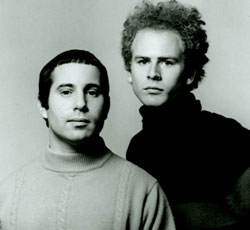
Simon and Garfunkel - Noted admiralty law experts.

In U.S. v. McPhee, the defendants were charged with conspiracy to import marijuana, after their boat, the Notty, was intercepted by Coast Guard cutters off the coast of Florida.

A key jurisdictional issue was whether the boat was intercepted within the territorial waters of the Bahamas. Defendants argued it was, on the basis that the interdiction occurred within 12 miles of Saint Vincent Rock, which defendants asserted is a Bahamian island. The government argued that Saint Vincent Rock is only a “rock” and does not qualify as an “island.”

The U.S. Court of Appeals for the Eleventh Circuit agreed with the government, although it conceded the question was not without its nuances, citing Simon & Garfunkel as authority (paragraph breaks inserted):

FN 9. The Government argued that the Notty was in international waters or on the “high seas” because “Saint Vincent Rock is a rock. If it was an island, it would be called Saint Vincent Island, not Saint Vincent Rock.” Ultimately, we must determine whether it is a rock or an island according to the statutory definitions provided by the Archipelagic Act.

We note in passing that for some purposes, the label is not altogether satisfying. Thus, for example, in the metaphysical sense, we can discern no reason why something could not be both a rock and an island at the same time.

See Paul Simon and Art Garfunkel, I am a Rock, on Sounds of Silence (Columbia 1966) (“A winter’s day, in a deep and dark December. I am alone, gazing from my window, to the streets below, on a freshly fallen silent shroud of snow. I am a rock, I am an island. I’ve built walls, a fortress deep and mighty, that none may penetrate. I have no need of friendship, friendship causes pain. It’s laughter and it’s loving I disdain. I am a rock, I am an island. Don’t talk of love. Well I’ve heard the word before. It’s sleeping in my memory. I won’t disturb the slumber of feelings that have died. If I never loved, I never would have cried. I am a rock, I am an island. I have my books and my poetry to protect me. I am shielded in my armor. Hiding in my room, safe within my womb, I touch no one and no one touches me. I am a rock, I am an island. And a rock feels no pain. And an island never cries.”).

The court did note, however, that “neither Simon nor Garfunkel has been identified as a nautical expert.”

Maybe the government could have bolstered its jurisdictional case by citing John Mellencamp and arguing that the “R.O.C.K. [was] in the U.S.A.”.

United States v. McPhee, 336 F.3d 1269, 1279 n.9 (11th Cir. 2003). Thanks to Michael Hirschkowitz.

See also United States v. Horn, 185 F. Supp. 2d 530, 551 n.37 (D. Md. 2002) (“She blinded me with science!”). Thanks to Kevin Cross for providing this Thomas Dolby-influenced citation in the same vein pop-music theme as McPhee, in proper Bluebook-form no less.

First Recorded Judicial Use of the F-Word

It turns out that the f-word holds a long pedigree in judicial opinion-writing. John Baker sent in an 1846 Missouri opinion reputed to contain the first judicial mention of the word.

In Edgar v. McCutchen, McCutchen sued Edgar for slander. The slanderous allegation was, according to the court, “carnal knowledge of a mare, and the word ‘f**k’ [asterisks added; court used unabridged version] was used to convey the imputation.” After the plaintiff received a verdict, the defendant made a motion to arrest the judgment “for the reason that the word used to convey the slander, was unknown to the English language.”

If only that were true. The court disagreed and affirmed the plaintiff’s judgment.

Follow up: Kevin McDowell wrote to confirm that:

It appears to be true that Edgar v. McCutcheon (1846) is the first case to discuss the “F” word. The Indiana Supreme Court relied on the case in Linke v. Kelley, 25 Ind. 278 (1865), finding that although the word is “not to be found in any vocabulary of the English language, [it]is as well understood as any other English word.” The court said it isn’t found in “standard lexicons” because of its “vulgarity.” This was a case of a braggart saying he (you know what) to a woman “one hundred times.” The court did it to him in turn.

Edgar v. McCutchen, 9 Mo. 768, 768 (1846). Thanks to John M. Baker and Kevin McDowell.

Warning: Law Students Are Careful

funny warning labelLaw students learn to avoid risk, in part because of what is known as the “availability heuristic”–a mental shortcut people use to unreliably evaluate the probability of risks based on whether they can remember the event ever happening before.

Law students and lawyers tend to over-estimate risk because they can always imagine a situation (an availability) in every context of life where things went wrong. In all the cases they read, things went wrong, which is why they became cases. Their constant exposure to Murphy’s Law causes them to become very adept at (even obsessive about) spotting and avoiding risks in their own lives.

Here a careful student of mine studying in the law library with her laptop took the extra-prudent precaution of posting a warning sign near to the cord and plug to avoid a tripping injury risk.