Goshgarian v. George involved warring neighbors, one of whom continually dumped dirty water from his swimming pool onto the other’s property.
The water-dumping defendant came up with the imaginative, if not quite legally sound, argument that, since the County of Fresno had an easement on the property for the drainage and disposal of water, the individual defendant should have the same right.
The court was downright astonished by the creativity of the argument (paragraph breaks inserted):
Only a mind unburdened by the ephemeral shackles of legal training and gloriously free of the stultifying pomposities of precedent and stare decisis could have formulated the epiphanous principle that what the public may do as an entity, so may individual members of the public do, acting in their individual capacities.
Appellate counsel for cross-complainants, with an imagination dulled by years of legal training, evidently lacked the audacity to appreciate cross-defendants’ argument and misinterpreted (and diminished) it as a mundane attack upon the sufficiency of the evidence to support the jury’s finding of trespass.
Not so. Cross-defendant Mr. George is on the wave front of the expanding legal universe, Prometheus unbound by the strictures of logic and reason that constrain lawyers and judges in their quotidian professional functions.
There is just one problem. The easement is for storm drain water, not mosquito infested swimming pool effluent.
— Goshgarian v. George, 161 Cal. App. 3d 1214, 1222–23 (1984). Thanks to Eli Ben-Shmuel.
Judge Mark Painter, a judge on the Ohio Court of Appeals, sent in a couple of his own funny opinions. The first one he wrote back when he was a municipal court judge. Lawhaha.com clings steadfastly to being a family friend site, but it’s not easy when a primary source of Strange Judicial Opinions is that haven for adult-oriented material known as the National Reporter System.
In State v. Parenteau, the defendant was charged with public indecency. We’ll let Judge Painter explain what happened:
Defendant was part of a “lingerie fashion show” at a nightclub named “Scandals” in western Hamilton County. The charge arose from the modeling by defendant of a lace brassiere which was alleged by the officer to be “see-through,” in that the officer testified he could observe a nipple area through the lace fabric. Defendant was apprehended after she had retired to a back room to change her clothing. The officers asked Parenteau for the clothing she was wearing, which they confiscated.
The evidence produced in court included a lace brassiere, a pair of underpants, stockings, and a small square of pantyhose fabric. The panties and stockings were not relevant, considering that the charge was not based upon anything in connection with the defendant’s lower anatomy. Defendant testified that she wore the pantyhose fabric under the bra in order to be certain that it was not transparent in the area of the nipple. Defendant further stated that she was wearing two such squares, one on each breast, during the performance, but that only one was in evidence, since she had already removed her bra when she was arrested, and the other square had dropped out and was not recovered by the officers. An additional witness testified that she saw defendant cutting pantyhose to make the squares before she dressed. Much ado was made about whether one or two squares were worn, but in the court’s view of the law, the existence or nonexistence of the pantyhose material within one side of the brassiere is not controlling.
The question presented is whether the defendant can be convicted of public indecency … for wearing a lace brassiere which totally covered her breasts, but was partially transparent, or “see through.” If so, does the insertion of pantyhose material, rendering the brassiere less “see through,” change the result?
The result turned on the meaning of “private parts” as used in the public indecency statute. Judge Painter cited numerous sources supporting the proposition that “private parts,” as used in the law, refers to the genital area only. As such, he acquitted the defendant.
— State v. Parenteau, 564 N.E.2d 505, 505 (Ohio Mun. 1990).
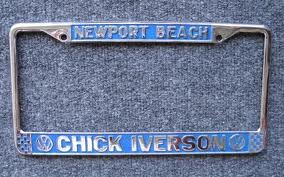
Chick Iverson left his mark in more ways than one.
California lawyer Frank Zotter sent in Iverson v. Iverson, a California divorce case in which the trial judge, in Frank’s words, “demonstrates once again the wisdom of the old saying, ‘it’s best to keep your mouth shut and have everyone think you a fool than to open it and leave no doubt.’”
The case involved the validity of a prenuptial agreement and the question of which of the parties had initiated the idea of marriage. The trial judge concluded that surely the wife had pursued the marriage. After all, the judge said, she was “lovely,” but “[h]ad nothing going for her except for her physical attractiveness.” Specifically, she “did not have much of an education, and did not have much of a background in business, and did not have much by way of material wealth.”
The judge simply couldn’t fathom the notion that the husband, Chick Iverson, would have been crazy enough to pursue marriage when “[h]e had just gone through a divorce which cost him a million dollars.” Marriage, the judge said, “would be the last thing on his mind. And why, in heaven’s name, do you buy the cow when you can get the milk free, as we used to say. And, so, he’s getting the milk free. And Cheryl is living with him in his home.”
The Court of Appeals reversed, ordering a new trial before a different judge on the basis that the trial judge’s sexist perceptions of the couple’s relationship made it impossible for the wife to have received a fair trial.
Who the hell was Chick Iverson? The case makes it sounds like he’s a big deal and he must have been because he told John Wayne he wanted The Duke to be best man at the wedding. Internet research discloses Iverson was the first Volkswagen dealer in L.A.
McClurg footnote: A source who requested anonymity sent this interesting follow-up information about the Iverson case:
Chick Iverson and John Wayne were best friends. That’s why John Wayne was the best man at his wedding to Mrs. Iverson. Mr. Iverson has since passed away and is actually buried next to John Wayne.
Chick Iverson owned the first VW dealership in Orange County, not LA. He imported the first Porsches to the west coast after WWII, and established a Volkswagen, Porsche, Rolls Royce, Audi and Chevrolet dealership in Newport Beach in the 60s which was sold in the 80s. It was the largest and best selling Volkswagen dealership in the United States.
Mr. Iverson made a hefty sum selling the wonderful bug to many a hippie. Mr. Iverson and Cheryl Iverson had a bitter divorce that would rival any Dynasty episode. The judge’s screw-up with his comments costs Mr. Iverson close to a million dollars in attorneys’ fees as he was paying for his attorney and Mrs. Iverson’s. Eventually, Mr. Iverson won and the prenuptual agreement was upheld.
Another McClurg footnote: More inside info about the colorful Chick Iverson, courtesy of Carl “Skip” Williams, a friend and former employee:
“Who the hell is Chick Iverson?” I had to laugh when I read that. You’re not from Orange County, CA. Let me add these few choice pieces to the article.
John Wayne and Chick were like Oprah and Gail. John Wayne was the Godfather to Chick’s son, who died at the age of 21 when he took a used Jaguar of the lot and ran off the cliff on his way to Laguna. Chick introduced John Wayne to his wife who worked on his ranch in South America. Chick Iverson was the executor to John Wayne’s Estate and controlled all the money for his children.
Chick Iverson was lucky in business and a genius. He was the son of immigrants. He had the largest cattle ranch in Oregon and the sixth largest in the US. He started as a salesman selling cars, with a high school education. His biggest decision was a fluke. He worked his way from salesman to general manager at a Porsche dealership in Chicago. He then opened up the first Porsche dealership in Orange County. Two years later he went looking to add another brand. His first choice was American Motors, second was Volkswagen.
When he decided to go with American Motors; he invited the representatives over to his house. One made a remark that offended his wife, so he went with Volkswagen and the rest is history.
— In re Marriage of Iverson, 11 Cal. App. 4th 1495, 1499 (1992). Thanks to Frank Zotter.
Eighth-grade math book held to be controlling authority by a federal appellate court.
You gotta love an opinion that begins:
In this appeal we are asked to determine whether “.82″ is the equivalent of “82%.” Having successfully completed grammar school, we are able to answer the question in the affirmative.
An unsuccessful bidder for an offshore oil and gas lease brought suit against the Secretary of the Interior for awarding the contract to a competitor. The plaintiff offered a royalty of “73.45689%” in its bid. A competitor offered a royalty bid of “.82165.” The Secretary construed the competitor’s bid as one for 82.165 percent, and awarded the contract to it based on it being the higher bid.
The plaintiff asserted the Secretary acted arbitrarily and capriciously in construing .82165 to be 82.165 percent. The trial court agreed and entered judgment for the plaintiff.
The U.S. Court of Appearls for the Fifth Circuit reversed, relying on as its primary source of authority an eighth-grade math book called “Growth in Arithmetic,” which the Court said asked and answered the pertinent question: “Do you know how to change a per cent to a decimal?”
— Oil & Gas Futures, Inc. of Tex. v. Andrus, 610 F.2d 287, 287–88 (5th Cir. 1980). Thanks to Frank Zotter.
Why waste words? Wouldn’t it be nice if more judges could cut to the chase like Judge J.H. Gillis of the Michigan Court of Appeals? Here’s his entire opinion in Denny v. Radar Indus., Inc.:
J.H. Gillis, Judge.
The appellant has attempted to distinguish the factual situation in this case from that in Renfroe v. Higgins Rack Coating and Manufacturing Co., Inc. (1969), 17 Mich. App. 259, 169 N.W.2d 326. He didn’t. We couldn’t.
Affirmed. Costs to appellee.
As the most succinct judicial opinion known to Lawhaha.com, Judge Gillis’ effort enters the Strange Judicial Opinions Hall of Fame.
— Denny v. Radar Indus., Inc., 184 N.W.2d 289 (Mich. App. 1970). Thanks to Richard McKewen.
Judge used Leann Rimes tunes to solve her contract dispute.
In Rimes v. Curb Records, Inc., country music sensation LeAnn Rimes sought to void a recording contract on the basis that she was a minor when she signed it. Judge Jerry Buchmeyer, one of the original legal humorists, upheld a forum selection clause in the contract and granted the defendant’s motion to transfer the case to Tennessee—and he did it all to the tune of LeAnn’s hit songs.
Here’s a sample (footnotes omitted):
STATEMENT OF FACTS
(To be sung to the tune of LeAnn Rimes, “How Do I Live.” Copr. & (R) 1997 Curb Records, Inc.)
LeAnn Rimes
A very rich and famous star
Wasn’t so rich in times afar
But what a talent she had!
Enter Curb
To sign a contract, they hoped
After her talent they scoped
They saw the cash in her eyes
But LeAnn
Who at twelve was hardly dumb herself
Wanted to retain her future wealth
Oh
If you could have seen
Baby those attorneys changed everything
But so many lines!
They missed one thing.
CHORUS #1
Why did you sign, LeAnn Rimes?
So long ago
Off on that choice of forum?
Your attorneys didn’t know?
They made lots of changes, but one thing survived …
Forum clause, to that clause, what weight do we give?
INSTRUMENTAL INTERLUDE
VERSE #3
Many times
Back and forth from judge to attorney
Both in Texas and in Tennessee
There was so much to review
And LeAnn
With a guardian to oversee
She disavowed her own minority
Oh
Now she believes
Her age will invalidate everything
She ever signed
We must decide
CHORUS #2
How do we read the forum clause?
Binding or no?
How could she see, at age twelve
Or truly know
That the Curb-Rimes relations, would never survive?
Forum clause, to that clause, how much weight do we give?
Judge Buchmeyer wrote separate lyrics for the “Legal Analysis” and “Conclusion,” making the opinion a LeAnn Rimes Greatest Hits collection.
— Rimes v. Curb Records, Inc., 129 F. Supp. 2d 984, 985–86 (N.D. Tex. 2001). Thanks to Melissa Williams.
Ohio Court of Appeals Judge Mark Painter combined humor and common sense in Gibson v. Donahue, where the plaintiff was injured being thrown from her horse, which was spooked by two Irish Setters that the defendant allowed to run free in an area restricted to equestrian use.
Talk about creative lawyering. The defendant tried to escape liability by relying on an Ohio statute intended to provide tort immunity for riding stable owners and horse show operators for injuries resulting from the inherent risks of equine activity (a statute Painter said “is noteworthy mainly for using the word ‘farrier’ ten times”).
Judge Painter observed that the case was one of first impression, “probably because no one before has been audacious enough” to try to extend the statute to a situation like this one.
Defendant did have a slim statutory leg to stand on. The statute extends immunity to “an equine activity sponsor, equine activity participant, equine professional, veterinarian, farrier, or other person.” However, Judge Painter said that for defendant’s construction to prevail, the statute would have to be read as applying to “any other person in the whole world.” Construed as defendant argued, “[a] person who negligently crashes an airplane into the crowd at an equine event would thus be immune to liability.”
By the way, a farrier is a blacksmith. Remember that if you’re a law student in Ohio. It might be on the bar exam.
— Gibson v. Donahue, 772 N.E. 2d 646, 648, 650 (Ohio Ct. App. 2002).
Ohio Court of Appeals Judge Mark Painter writes some amusing opinions. He had a bit more leeway to let loose back when he was a municipal judge presented with some highly unusual fact patterns.
In State v. Kirchner, the defendant was charged with aggravated menacing and resisting arrest. It all started just because he wanted to hang out one night at home with some friends–with a five-foot dead snake nailed to his door. Read on and enjoy:
The evidence adduced presented, at the very least, a bizarre situation. Cincinnati Police Officers Randy Froehlich and Steve Means received a radio dispatch to an address … in the “Over-the-Rhine” section of Cincinnati. The reason for the dispatch was “man nailing snake to door.”
Upon the officers’ arrival … they did in fact discover a five-foot-long black snake which had been nailed through its head to the door of defendant’s apartment. Though the record is silent on the point, assumedly the snake was deceased.
Quite naturally, the officers knocked on defendant’s door, which defendant answered, and sought to question defendant concerning the snake. The officers asked if they could come in and talk with the defendant, to which he replied, “no.” The entire situation deteriorated from that point forward, resulting in the events in this court.
Quite obviously, the defendant had a right, under the Fourth Amendment to the United States Constitution, to refuse to allow the officers to enter absent a warrant or perhaps exigent circumstances, which did not exist in this case. Of course, a prudent man would have talked with the officers to resolve the situation, but the Constitution applies to both prudent and imprudent men.
Defendant testified that the snake was not his, he had not nailed it to the door, and since it was not his snake, he did not believe it to be his responsibility to remove it. Defendant believed that the caretaker of the apartment building would eventually remove the snake, which had been hanging for approximately eight hours. Defendant did not wish to converse with any police officer, because he and his friends were engaged in a social visit, involving the use of Wild Irish Rose wine.
[A struggle ensued when the defendant stepped back and put his hands on his hips. A folding knife in a sheath was on his belt. The officers interpreted his movement as “going for” the knife. They drew their weapons, disarmed and arrested the defendant.]
The question remains as to what, if any, laws the defendant had violated. It might be noted that no charges were filed against anyone in connection with the mistreatment of the snake. Under Cincinnati Municipal Code Section 701-11, “[n]o person shall … cruelly beat, mutilate … any animal …..” An “animal” is defined … as follows: “‘[a]nimal’ shall, for the purposes of Sections 720-11 and 720-13, mean and include every living dumb creature.” The above definition would obviously include a snake, though the inartful wording might imply that it would be perfectly legitimate to torture a talking parrot. Be that as it may, since the defendant denied nailing the snake to the door, the officers were evidently not able to determine the identity of the nailor, the nailee obviously being unable to testify.
We do not find that defendant’s actions … constitute the crime of aggravated menacing. Perhaps the entire matter could be classified under “aggravated foolishness,” though there is no section in the Revised Code proscribing such conduct. If there were, our jails would be a great deal more crowded than they are presently.
Judge Painter found sufficient evidence to support a conviction of the defendant for resisting arrest.
— State v. Kirchner, 483 N.E.2d 497, 498–99 (Ohio Mun. 1984).
Baseball fans may enjoy this opinion from Ohio Court of Appeal Judge Mark Painter. In a taxpayer suit against the Cincinnati Reds and the City of Cincinnati alleging failure of the city to collect stadium rent from the Reds, Judge Painter managed to lighten up the complex legal analysis by sprinkling baseball phrases throughout the 20-page opinion.
Judge Painter offers this succinct play-by-play in the opening paragraph:
In keeping with the less than stellar history of stadium construction in Cincinnati is this lawsuit involving the Cincinnati Reds, Cincinnati, and Hamilton County. It has twisted and turned, parties have been thrown out and substituted, and none of the parties can agree on the rules of the game. The Reds, Cincinnati, Hamilton County, the taxpayer-plaintiff, and the trial court have become enmeshed in a series of procedural and legal double plays and errors. It is difficult to determine who, if anyone, is on first.
We resolve the case by calling the plaintiff out.
— City of Cincinnati ex rel. Ritter v. Cincinnati Reds, 782 N.E.2d 1225, 1229–30 (Ohio Ct. App. 2003).
How can you not love U.S. District Judge William G. Young, chief judge for the District of Massachusetts, for his candor and willingness to come clean on an error he made in a case?
Confronted with a motion for new trial based in part on his allegedly erroneous jury instructions, he stated candidly: “[D]espite case-specific guidance from the court of appeals, I botched the instructions to the jury.”
Even better, Judge Young began his opinion in Suboh v. Borgioli by setting forth the lyrics to “a derisive ditty going around the courthouse” set to the music of “Happy Together” by the Turtles.
The original version of “Happy Together,” penned by Gary Bonner and Alan Gordon, reached No. 1 on the Billboard charts the week of Mar. 25, 1967. I’m not sure this version (from a group of lawyers who call themselves the Bar and Grill Singers) poking fun at the high-mindedness of federal judges, will reach that level of success, but it’s still fun.
Here’s a taste of the song as set forth in Judge Young’s opinion:
Imagine me as God. I do.
I think about it day and night.
It feels so right
To be a federal district judge and know that I’m
Appointed forever.
…
[CHORUS]
I’m a federal judge
And I’m smarter than you
For all my life.
I can do whatever I want to do
For all my life.
Appointed Forever, Bar & Grill Singers.
— Suboh v. Borgioli, 298 F. Supp. 2d 192, 194 (D. Mass. 2004). Thanks to Michael Hirschowitz.