New Legal Cartoonist

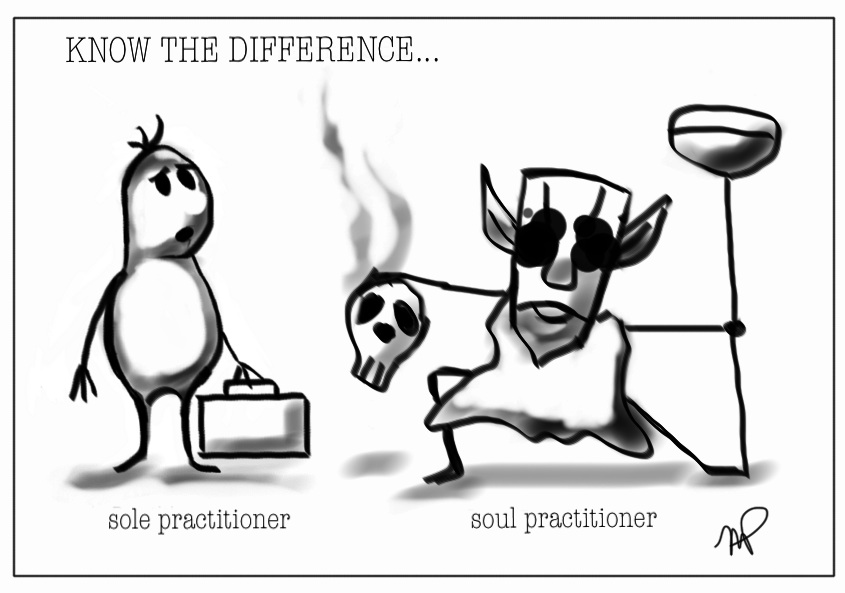
Mark Purdy cartoonFor  funny and clever legally related cartoons, there is no beating Stu Rees and wife Maddy Dodson. But we always need more legal humor. Here’s a new sample from aspiring cartoonist, legal and otherwise, Mark Purdy. What do you think?

Insurance Humor: “50 Ways to Leave No Cover”

meteor damage
Meteor damage: Coverage exclusion reason 51?

Insurance law expert Randy Maniloff shows that insurance law doesn’t have to be dry. His insurance coverage newsletter Coverage Opinions takes a light-hearted look at insurance, recently celebrating Valentine’s Day with a funny parody of a Paul Simon classic: “50 Ways To Leave No Cover,” an inventory of the many ways insurance companies manage to deny coverage. Here’s a taste:

There must be fifty ways

To leave no cover

Your notice was late Kate

And then you didn’t cooperate

That’s not an occurrence Terrence

It’s impaired property Lee

You furnished alcohol Paul

You intended that Matt

We’re just excess Bess

We reserved on Buss Gus

Your claim relates back Jack …

Randy’s a funny guy.  Check him out.

Here’s my take on insurance coverage:  Harmless Error, Insurance Deterrence, A.B.A. Journal, Mar. 2001. Still funny after all these years (Paul Simon joke).

Career Shoes for Lawyers?

Career shoes for lawyersA first-year law student in Miami isn’t rushing out to buy these “career shoes.” As she explained in an email:

I am a member of a designer overstock/discount (and probably liquidation) club and was just browsing through today’s sales when I saw a heading that said “CAREER SHOES.” I clicked on it thinking I might find a pair of designer shoes suitable for pairing with a suit.

This photo shows their idea of career shoes for the modern woman. I do love a good pair of heels, but when I think of “career shoes,” I definitely don’t picture these styles … What’s the career they had in mind when they wrote the heading for this sale? Hooker?

–Thanks to Amy Holland.

It’s No Tattoo, But A Torts-Lover Nonetheless

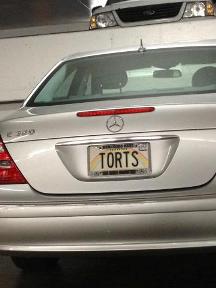
torts license plateA former student from Golden Gate law school who lives and practices in Hawaii sent this picture of a true torts-loving person’s car.

We will engage in outrageous speculation that it belongs to a plaintiffs’ personal injury lawyer.  If you think about it, who else would get a “TORTS” license plate? Maybe geeky law professors with nicknames like Tortman or pattisiers who can’t spell, but really no one else. Insurance defense lawyers wouldn’t do it because it would violate the industry position that torts do not actually exist.

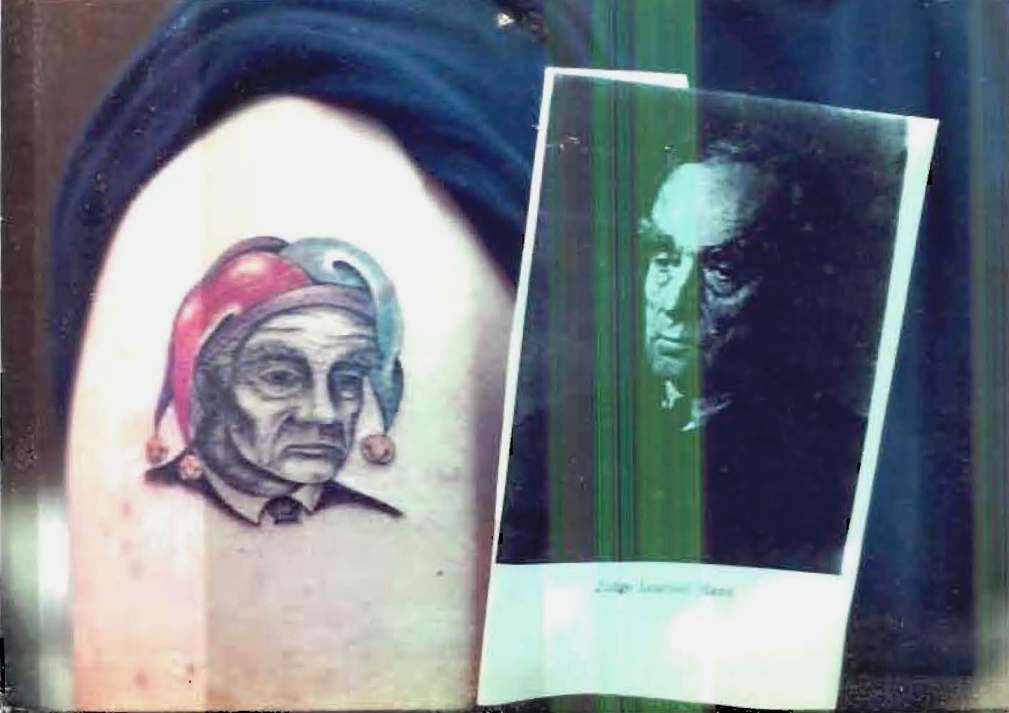
The car owner  obviously loves tort law, but any challenger to the “Most Crazy in Love with Torts” still has to contend with the guy who got Judge Learned Hand tattooed on his arm.  On the other hand, that guy may have simply loved Judge Hand or even barges.

–Thanks to Laura Ozak.

2012 Spot the Tort Contest

2012 Spot the Tort ContestYou thought “Risk” was a good game? Spotting risk is even more fun, and definitely more educational. As law students learn in Torts, the world is a dangerous place where the worst that can happen often does.

My 1Ls at the University of Memphis have been participating in a “Spot the Tort” Contest. Check out their photo entries. This is just one sample of the “accidents waiting to happen” they’ve documented in and around Memphis.

Dedicated Law Student Gets Judge Hand Tattoo

Judge Learned Hand tattooAre you in law school? Do you consider yourself to be a dedicated law student? Not sure? Measure yourself on McClurg’s simple 0-100 scale, with 0 being “I’m not totally thrilled with Judge Learned Hand” and 100 being “I aspire to be like the guy in this picture.”

Years ago, a student of mine at the University of Arkansas at Little Rock School of Law took a trip, to Philadelphia, I think. He struck up a conversation with a tattoo artist in a bar. When the artist learned he was in law school, she asked, “Have you ever heard of a judge named Learned Hand?”  “Of course!” the student replied.  All law students know and remember Judge Learned Hand.

The artist said the young man above came into her tattoo parlor with the accompanying picture of Judge Hand (the picture is from the famous Prosser, Wade & Schwartz Torts casebook used at 124 law schools) and asked to have Judge Hand, wearing a jester cap, tattooed on his arm. As proof, she followed up and sent this photograph to my student, who entrusted it to me.

For non-legals, Judge Hand was a famous judge who in a famous case–U.S. v. Carroll Towing–set forth a famous algebraic economic cost-benefit formula for determining whether injury-causing conduct was reasonable or unreasonable. If reasonable, the defendant is off the hook. If unreasonable, the defendant is liable for negligence and must pay damages. The formula is B < P x L. B stands for the burden of avoiding a risk of harm, P is the probability that the risk will actually cause harm, and L stands for the severity of the harm if it occurs. The formula states that if the burden of avoiding the harm is less than the probability of the harm occurring multiplied by the severity of the potential harm, the conduct is unreasonable (i.e., negligent). Conversely, if the burden of avoiding the risk outweighs the probability times the severity of harm, the conduct is reasonable (i.e., non-negligent).

The back of the picture is stamped with “Tattoo & Photo by Sherry Sears, Creative Images, Des Moines, IA.” So if you want to impress your professors and university’s counseling department, book a ticket to Des Moines.

New Casebook on Zombie Law

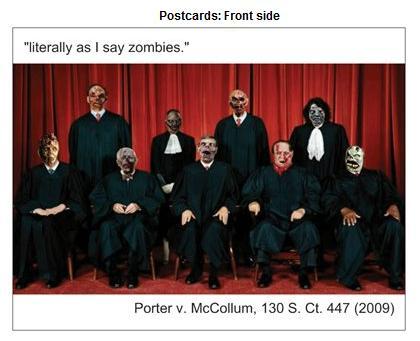
zombie supreme courtGood news for legally inclined zombie lovers.  Joshua Warren has compiled a casebook  on Zombie Law that “include[s] case opinions from  the over 300 U.S. Federal Court opinions with the word “zombie” (and “zombies”, “zombi”, “zombis”, “zombified”, “zombism”, etc..).” These include cases from the zombified Supreme Court (available as postcards, along with zombie law teeshirts and zombie flashdrives).

Warren explains that this is a “serious” project. From his promotional website:

The “zombie” in federal courts are very  interesting.  Aside from the intellectual property cases that provide  some reflection on modern zombie fiction, there are also ample  metaphoric uses of the word in these judicial writings.  Judges have referred to “zombie precedents” and “zombie  litigation”. There  are zombie corporations, zombie  criminals, a significant number are  social security cases in which people describe themselves in zombie  condition and even a recent mentions of cybernetic zombies.

Unlike other works of zombie academia, the zombies in this book are all real.  Most zombie scholarship uses hypothetical zombies as tropes to create  entertaining and extreme fact patterns that can be used to explain  complex subject matters.  This has been used effectively for  neuroscience (Schlozman, Voytek), international policy analysis (Drezner), public health (Center for Disease Control), geography (Kickstarter project: Zombie-Based Learning), survival skills (Brooks) amongst other subjects (See Zombie Research Society) including also academics who focus on the fictional character itself (Mogk, Brooks).

This Zombie Law book is different because it does not use zombies as hypotheticals to teach law. It is not conjecture about what zombies are or might be. This book is a compendium of real usages of the actual word in American jurisprudence.  This book is a collection of real legal cases that literally include “zombies” (or similar word) in US Federal Court opinions..

The basic outline of the  book will separate most cases into issues of corporations, medications, criminals and, of course intellectual property.  Major sections will be  devoted to Social Security (disability) law, corporate fraud and issues of criminal intent. There are noteworthy cases referring to post traumatic stress disorder and many recent Social Security cases regarding of fibromyalgia.  The intellectual property cases are about popular zombie fiction and also so-called “vicious zombi” patents.  In general, the idea of zombies in a mall is public domain for copyright but particular forms of zombie products are protected by trademark.

Frequently there is a sort of double meaning in the word.  In Social Security cases, the word zombie is found as a symptom of pain, depression and anxiety but also the side effect of medications prescribed for those same symptoms.  In criminal law, zombie appear in victim’s description of their assailant’s behavior but also as defense argument against criminal intent. For corporations the ironic question of corporate-personhood begs the question, ‘what is a person?’, which is often the implied question of zombie studies.

For all you law professors and other legal authors who thought there was no niche left to write about, Warren shows you just have to think outside of the box, in this case, the ones buried six feet under.

Good Legal News for Fans of HBO’s Game of Thrones

A Lannister always pays his debts.
Legal research shows no Lannister has ever filed for bankruptcy.

Good legal news if you’re a fan of HBO’s Game of Thrones series, adapted from George R.R. Martin’s medieval fantasy novel series, A Song of Ice and Fire. The series centers around the struggles of several noble families, including the Lannisters, whose unoffical motto is that “A Lannister always pays his debts.”

Now comes breaking news out of South Florida. A former student at the Florida International College of Law, a really smart one named Michael Hirschkowitz, has, through painstaking legal research, confirmed the apparent truth of the Lannister motto.

He reports: “There are 0 cases in the United States in which any individual or organization named ‘Lannister’ has undergone Chapter 11 or Chapter 7 bankruptcy.  This is strong evidence that a Lannister does, in fact, ‘always pay his debts.'”

Good job, Michael.

Note to Law Students: Don’t Forget the Families

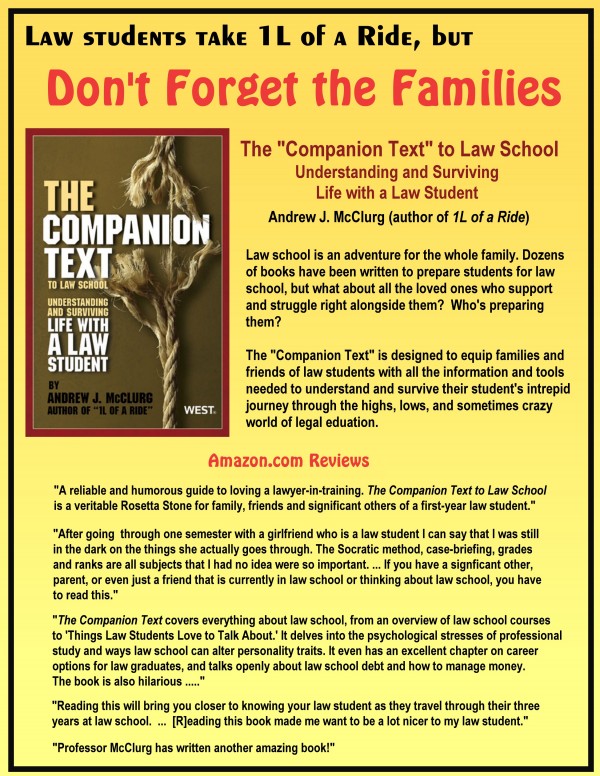
The Companion Text to Law School Flyer
Always read the fine print.

The start of another academic year is closing in quickly. If you’re going to be a new law student, you’re not the only one who needs to get ready for a wild ride.

Dozens of books have been written to prepare students for law school, but The “Companion Text” to Law School is the only book ever written to prepare the families and friends of law students for what to expect and how to deal with it.

Check out some review excerpts on this new flyer.

Intellectual Property Parody: Don’t Copy My Parental Nagging!

Thanks to Professor Laura Heymann, College of William & Mary-Marshall-Wythe School of Law, for sending along her funny parody of intellectual property law in the form of a cease and desist letter sent from one neighbor to another complaining about infringement of the offended neighbor’s parenting directive to “Eat your frisee salad.”

Laura’s satirization of overly aggressive assertions of intellectual property rights–all too common these days–brought back memories of my Harmless Error column in the ABA Journal, The© Controversy, in which the heirs of a Homo erectus Peking Man cave dweller sought to compel me to cease and desist in using the word “the.”