Sex and the Reasonable Person

lawsuit over fractured penis
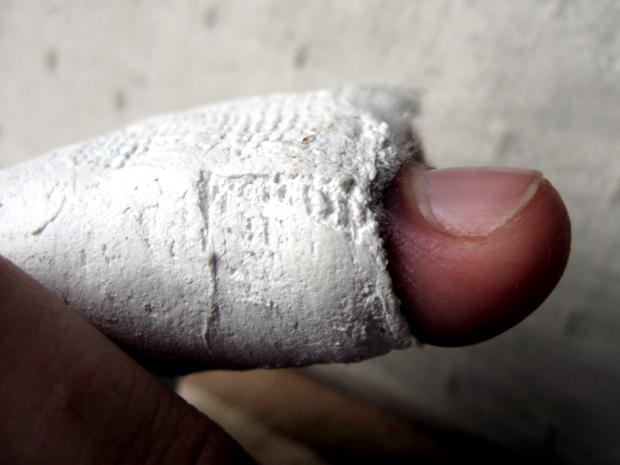
Family friendly depiction of the injury.

Doe v. Moe, a May 2005 Massachusetts appellate case, gives a whole new meaning to the idea of safe sex. A guy sued his long-time girlfriend (ex-girlfriend?) for negligence when an ill-advised change in position during consensual intercourse resulted in him suffering a fractured penis. (The opinion gives details about how the accident occurred.)

In a case of first impression, the court struggled to arrive at an appropriate and workable standard of care to apply to private consensual sexual conduct. The court noted:

There are no comprehensive legal rules to regulate consensual sexual behavior, and there are not commonly accepted customs or values that determine parameters for the intensely private and widely diverse forms of such behavior.

Accordingly, the court concluded that the general negligence standard of reasonable care under the circumstances was inappropriate for consensual sex-physical injury cases.

Instead, the court said the plaintiff needed to show conduct rising to the level of “wanton or reckless.” The court opined that while the trial record might support a finding that the defendant’s conduct exposed plaintiff to a risk of harm, it did not support a finding of wanton or reckless conduct.

The case does raise an interesting legal issue. With so many different preferences and positions and idiosyncratic fantasies and fetishes, is there such a thing as a standard of “ordinary and reasonable care” for sex?

Doe v. Moe, 827 N.E.2d 240, 245 (Mass. Ct. App. 2005). Thanks to David Keller and Professor Howard Wasserman.

Justice Scalia Nineteen Times Funnier Than Justice Ginsburg

study shows Scalia is funniest supreme court justice
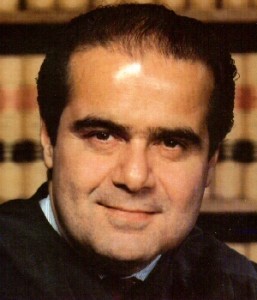
Justice Ruth Baeder Ginsburg – Not that funny according to study.

Boston University Law Professor Jay D. Wexler conducted a study of the relative funniness of U.S. Supreme Court Justices. His results were published in The Green Bag and reported in the New York Times.

Wexler’s methodology was to count and tabulate the insertions of “[Laughter]” in transcripts of oral arguments during the 2004 term, when argument transcripts began including the Justices’ names. The results include the conclusion that Justice Antonin Scalia is the Chief Comedian on the High Court, nineteen times funnier than Justice Ruth Bader Ginsburg. Scalia, the study showed, is good for at least one laugh per oral argument. On the other hand, Justice Clarence Thomas, who rarely speaks during oral arguments, received no laughs.

As the New York Times article pointed out, the baseline for laughter in the solemn Supreme Court is fairly low. It’s not likely the same comments would generate guffaws on Comedy Central.

Here are some Supreme Court rib-ticklers quoted in the New York Times article:

[After a lightbulb exploded in the courtroom:]”It’s a trick they play on new chief justices all the time,” Chief Justice John G. Roberts Jr., who joined the court that month, said of the explosion.

“[Laughter.]”

“Happy Halloween,” Justice Scalia retorted.

“[Laughter.]”

And then, the kicker. “We’re even more in the dark now than before,” Chief Justice Roberts said.

“[Laughter.]”

On the other hand, in a January argument in a statute-of-limitations case, Justice Anthony M. Kennedy made an amusing observation about the absurdity of modern life.

“Recently I lost my luggage,” Justice Kennedy said. “I had to go to the lost and found at the airline, and the lady said has my plane landed yet.”

“[Laughter.]”

That’s gold. Let’s see a sitcom based on the madcap lives of U.S. Supreme Court Justices.

— Adam Liptak, So, Guy Walks Up to the Bar, and Scalia Says …, N.Y. Times, Dec. 31, 2005.

Palsgraf Curse?

Palsgraf curse
Cardozo wrote the famous majority opinion in Palsgraf.

Several lawhaha visitors sent in Mark Fass’s article in the New York Law Journal about an alleged curse on the family of Helen Palsgraf, the most famous torts plaintiff in history. Every lawyer remembers Mrs. P from law school. To test this theory, visit an elderly, dying lawyer in a coma and shout “Palsgraf!” Immediately, he will recite: “A man carrying a box wrapped in newspaper boarded a train at the Long Island Railroad Station … cough, cough … ack.”

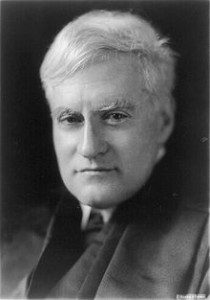
The box contained fireworks. When it was dislodged by employees of the Long Island Railroad trying to help the man on the train, the fireworks exploded, allegedly knocking a scale onto Mrs. P. Mrs. P’s saga led to the legendary, and incredibly confusing, opinions by Judge Benjamin Cardozo (that’s Cardozo in the picture–handsome fellow he was) and Judge William Andrews studied by students year in and year out at law schools great and small.

Now Fass reports that Mrs. P’s accident began a curse on the Palsgraf family, at least that’s what some of her descendants believe. One descendant fell off a ladder in 1965 and sued the manufacturer, but never made it to trial because the ladder was stolen. Another lost her thumb when a ping-pong table collapsed. A lawsuit led to a small settlement. Another descendent tripped while jogging over a broken curb, but was discouraged by lawyers from filing suit.

The most intriguing Palsfraf mishap reported by Fass involves a descendant who lost control of his truck on an icy hill in 1968. The truck slid towards the edge of cliff. Guess what saved the life of Mrs. P’s closest living relative? The truck’s wheels got caught on a track of … you guessed it, the Long Island Railroad. (Cue Twilight Zone theme.)

— Mark Fass, Palsgraf Railroad Injury Proximate Cause of Family Curse?, New York Law Journal, Dec. 10, 2004.

Mrs. Palsgraf is Alive, in the U.S. Supreme Court

PalsgrafAs a Torts prof, I loved this tidbit sent in by Elise Hendrick. Good old Mrs. Palsgraf. You can try, but you can’t keep her down.

Elise was listening to oral arguments before the U.S. Supreme Court in Exxon Co. USA v. Sofec, 116 S.Ct. 1813 (1996), and came across the following exchange between George Playdon, counsel for Sofec, and Justice Scalia. The two were engaged in a colloquy about the maritime supervening cause doctrine:

Scalia: I’m not sure that you need a “doctrine of supervening cause.” Is a doctrine of supervening cause anything other than Palsgraf? When you say, you know, that the negligence … the causality … had long since terminated. Once you say you’re out of the scope of the risk, what do you need a doctrine of supervening cause for? And isn’t that basically your case?

Playdon (chuckling): I smile—I never envisioned thirty years ago that I’d have the opportunity …

Scalia: Of arguing Palsgraf!

Playdon (stammering, laughing): Obviously, Palsgraf is a foreseeability doctrine, just like Hadley v. Baxendale is a foreseeability problem.

Elise speculates that this may have been the first time the implausible case of Mrs. P has been mentioned in court since Palsgraf was decided in 1928.

— Thanks to Elise Hendrick.