Lawn Darts for the Torts Museum

[Great News. The Torts Museum accepted my invitation. My lawn darts will be safely displayed in the museum’s “Dangerous Toys” section.]

When I first heard the news about Ralph Nader’s new American Museum of Tort Law, my first thought was, “Awesome!  A Torts Museum.”  My second thought was, “My lawn darts!  They belong there.”

In case you missed the news, the Torts Museum opened last month in Nader’s home town in Winsted, CN.  The museum offers a history of American tort law, with exhibits covering everything from the infamous McDonald’s hot coffee case to the even more infamous Ford Pinto exploding gas tank fiasco.

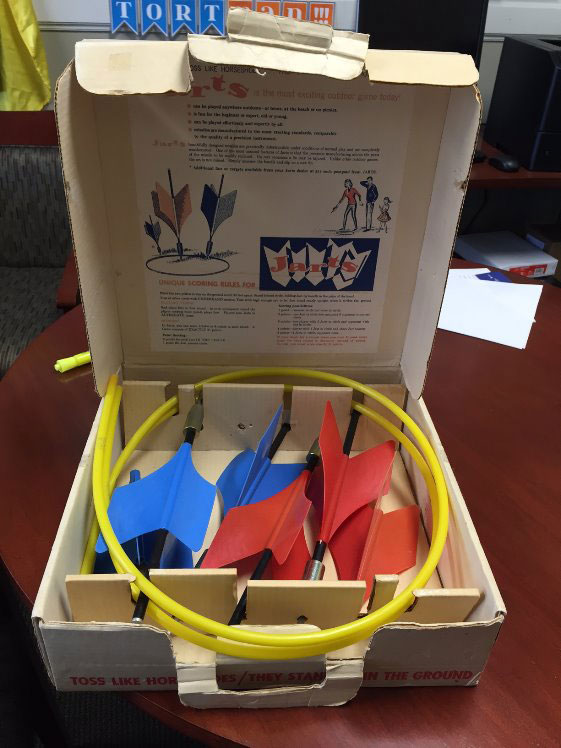
I bought my lawn darts about twenty years ago at a garage sale.  Never used.  No dirt or even bloodstains.  Pristine.  I knew it would be selfish for me to keep enjoying them, like hiding a Rembrandt in a private studio.

Lawn darts were banned by the Consumer Product Safety Commission in 1988 on the basis that their risk outweighed their social usefulness.  The Commission reported three deaths associated with lawn darts from 1970-1988 and an estimated 700 annual emergency room cases. Then-Commissioner Anne Graham explained the Commission’s risk-utility analysis (which my current first-year students will recognize as Judge Hand’s famous formula for negligence):

What limited recreational value lawn darts may have is far outweighed by the number of serious injuries and unnecessary deaths. This week another child was severely injured by a lawn dart. She is now in critical condition. There are numerous alternatives to lawn darts, and I would urge adults who have lawn darts to throw them away now.

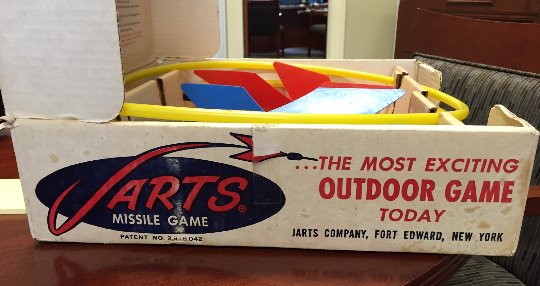
The most amazing aspect of my set of Jarts is that the packaging doesn’t include a single warning.

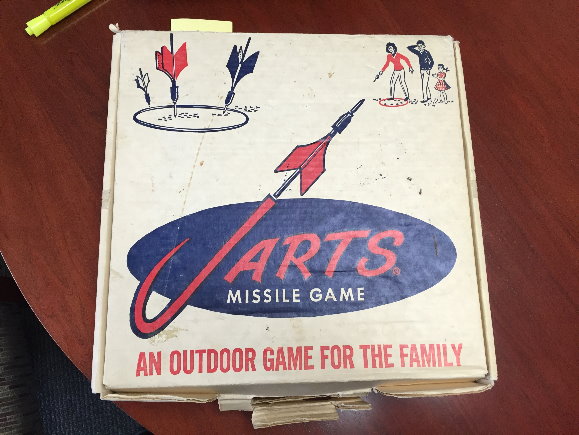
Most Exciting Outdoor Game TodayLawn Dart Headed Straight For MomTo the contrary, it touts lawn darts as “The Most Exciting Outdoor Game Today.”  No doubt.  Nothing like a screaming ambulance to liven up the neighborhood.

Best of all, it was a game for the whole family, except … oops, that missile on the cover appears headed straight for mom!

The Consumer Product Safety Commission’s original notice of the ban “urge[d] consumers to discard or destroy all lawn darts immediately” and instructed them to call the Commission’s hotline if they find any still for sale.

Warning: Do Not Touch Warning Sign

New Zealand Warning SignI’ve seen pictures like this on Facebook that were Photoshopped jokes, but this sign warning “Danger: Do Not Touch, This Sign Has Sharp Edges” is the real deal, straight from Auckland, New Zealand.

The friend who captured this image reports that she is not sure whether the sign is a joke or not because it’s attached to another large normal sign.  Weird stuff.

Thanks to Lina Lim.

Warning: “Get rid of children”

Free parenting advice - "Get rid of children"
Free parenting advice – “Get rid of children”

What to do with the kids?  It’s an eternal problem for parents.

Who knew the answer would be so simple and come, not from a parenting book, but from a product warning label on a Power Bank charger for electronic devices:

Get rid of children

We also see that it is unlikely the language of this warning will make it into the next edition of Strunk & White, Elements of Style:

Do not break,dismantling, into the fire or placed in …

What???

With all the money the goes into R & D for a new product, it’s astonishing that manufacturers do not cough up a few extra bucks to hire competent people to write their warnings.  Manufacturers, call me.

One last funny part about this whole thing is that the Power Bank chargers containing this warning were given out by the Arkansas Bar Association to every lawyer at their annual convention.

–Thanks to former student George Carder for this beaut.

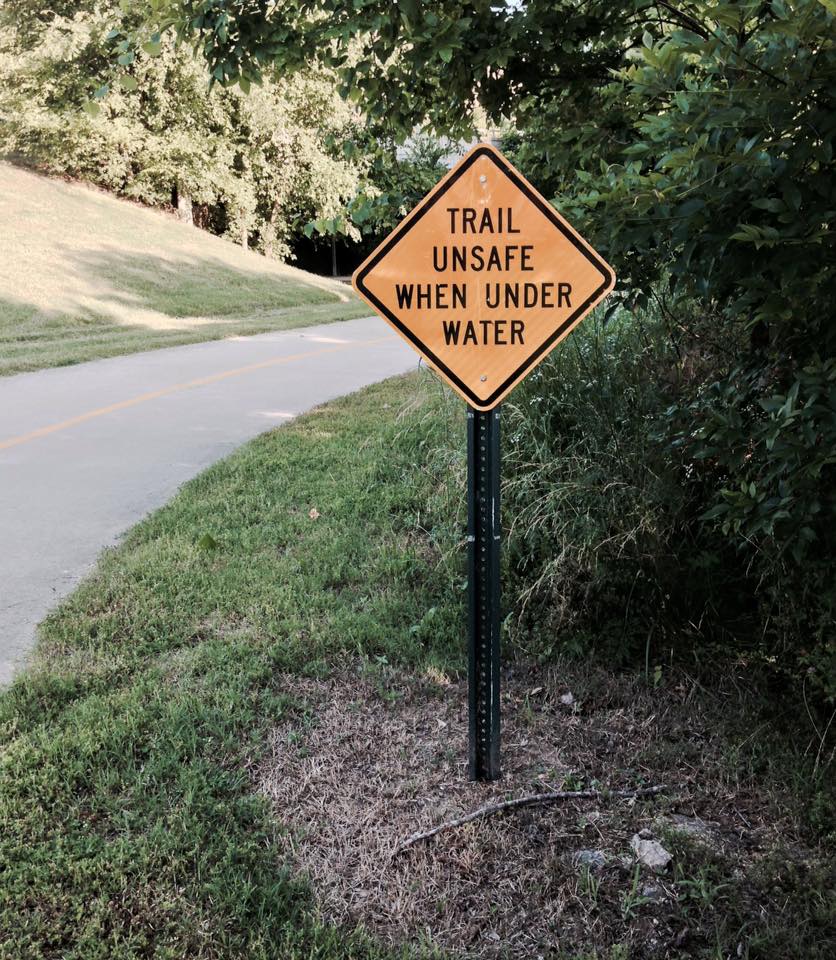
Warning: Trail Unsafe When Under Water

Trail Unsafe When Under Water Yes, it may be hard to believe, but it’s true.

This trail at the Razorback Regional Greenway in Northwest Arkansas–along with every other trail in the world–is dangerous when underwater.

Trails are also dangerous when covered with poisonous snakes, loose sticks of dynamite, large rusty spikes, and giant spiders from the planet Xenon.

Where are the warnings for those dangers?

But maybe you’re unsure whether this warning is accurate.  Maybe the trail is safe when underwater.  Maybe the sign is exaggerating, prompting unnecessary fear and caution.  Is it possible?

Nope, guess not.

–Thanks to Bill Putman.Yep, it is unsafe.


Warning: Dogs to the Left, Horses to the Right

Dogs swim left, horse rightSo sorry to see my friend and colleague move to Switzerland, but on the upside, Lawhaha.com has a great new source of pictorial instructional and warnings signs, which we love (as shown by a few examples here, here, here, here, here, here).  Remember that the goal of a pictorial warning is to advise of risks or deliver instructions to persons who cannot read or understand the written warning.

Here we have a sign at a swimming beach for dogs and horses.  That’s the first thing to note: Switzerland actually has swimming beaches for dogs and horses.  A recent worldwide survey showed the Swiss are the happiest people in the world.  The dogs and horses must be absolutely beside themselves.

As for the substance of the sign, it is instructing that dogs swim to the left and horses to the right.  For non-Swiss readers, would you have known that is what the sign is attempting to convey?

–Thanks to Pat Crowell.

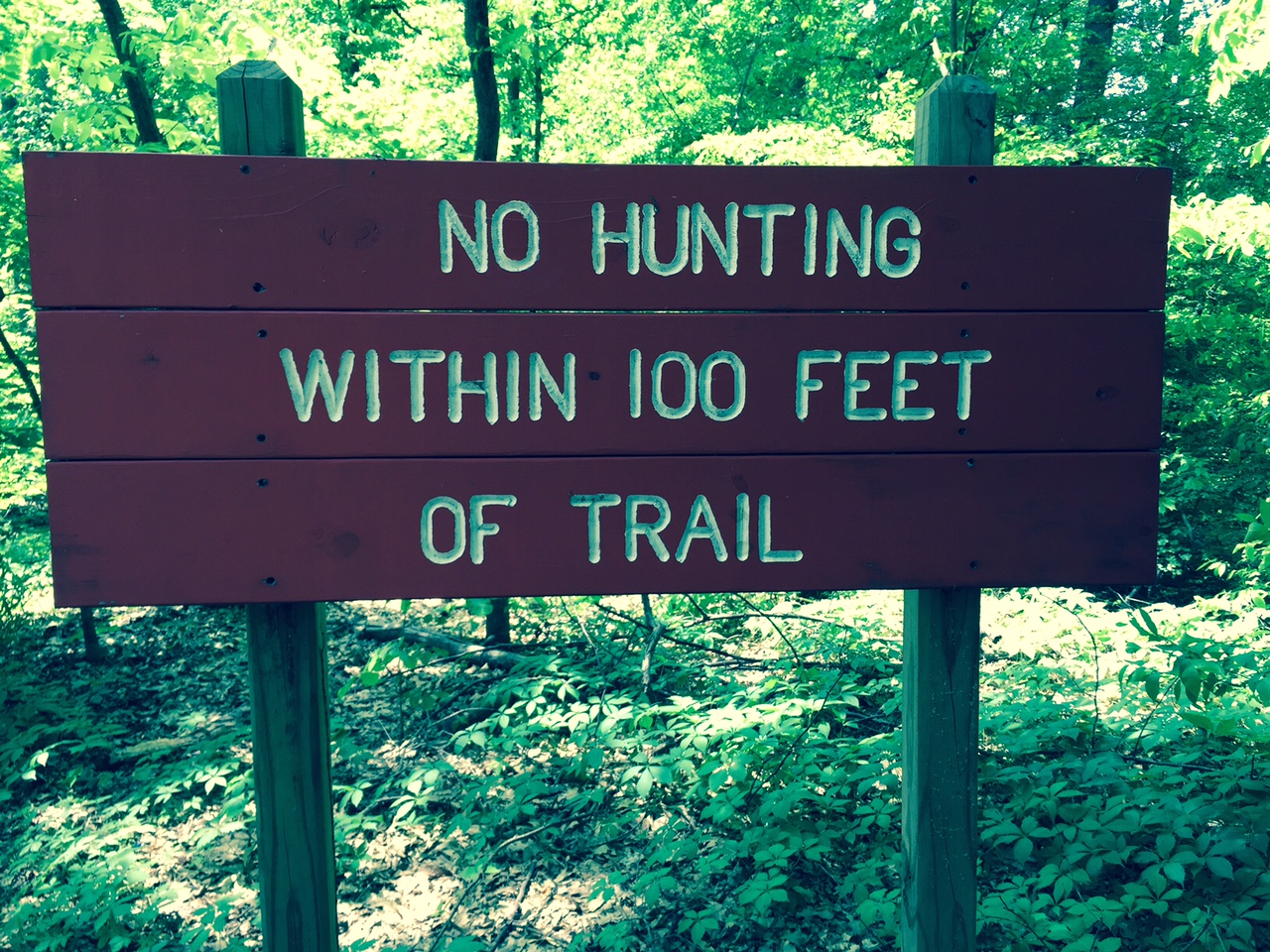
Warning: No Hunting within 100 Feet of Trail

Gun Safety in ActionWent for a wonderful hike over the weekend with a friend in a state park.  It’s a really nice park with well-maintained, well-used hiking trails.

And it was comforting to note that they take visitor safety seriously, as shown by this sign at the trail head:

NO HUNTING WITHIN 100 FEET OF TRAIL

Surely one hundred feet is a more than adequate safety margin for hunting around hikers.  After all, how far could a bullet possibly travel?

Well, that’s where there might be a problem.  A bullet fired from an average deer-hunting rifle, say a 30-06, has a maximum range of 5,675 yards–or 3.22 miles.

Pictorial Warnings from Picturesque Italy

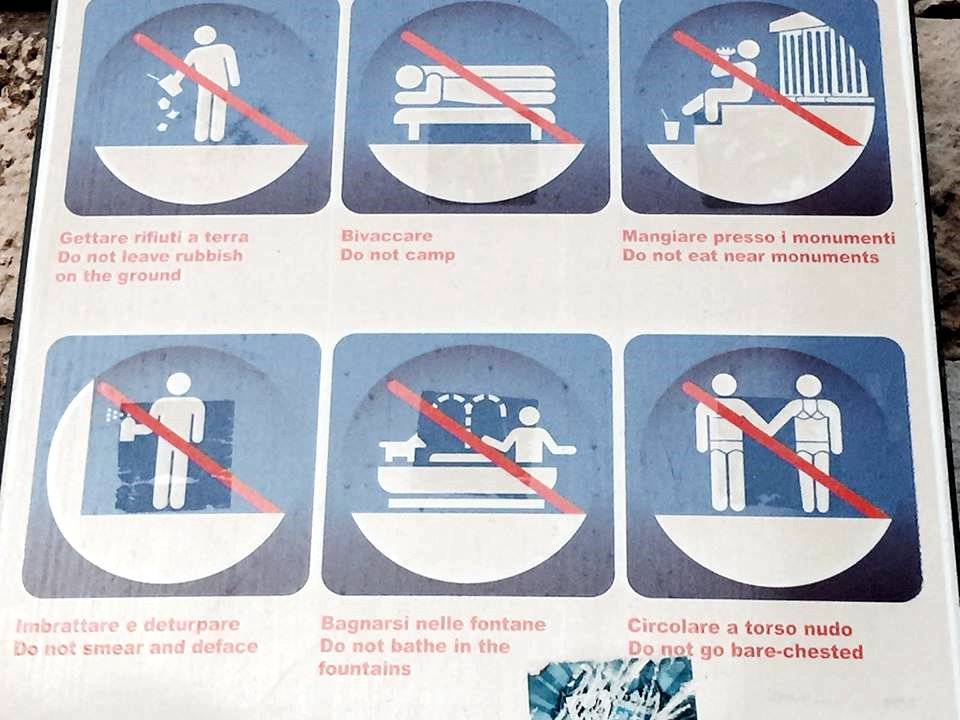
Sign from ItalyWe love pictorial warnings at Lawhaha.com, as shown here, here, here, here, here, here, and several other places.  Remember that the goal of a pictorial warning is to advise of risks or deliver instructions to persons who cannot read or understand the written warning.  So in trying to figure them out, you have to set aside the textual versions that usually accompany pictorial warnings.

Europe, with free travel among so many people of different cultures and languages, relies more heavily on pictorial warnings than the United States.

Here we have a sign from Italy with six pictorial warnings/instructions.  Which ones can you figure out without consulting the accompanying text?

Me?  Going left to right starting at the top row, I’d say:

1.  The first (no dumping trash on the ground) is reasonably clear.

2.  The second (no camping) is not clear. Maybe it could be used for “No public sex,” as it looks kind of like one person lying on top of another.  Just don’t see the camping angle.

3.  The third (no eating near monuments) may work, but it raises the question, “Why can’t you eat near monuments?”  Probably because: go back to number one.  Eaters leave trash.  But dilution of impact results with the proliferation of warnings and instructions.  The more there are, the less likely people pay attention to any of them.

4.  They could have done a better job with the fourth one (do not smear or deface).  The figure could be spraying bug repellant or air freshener or anything.  But more important, picture a person with a can of spray paint prepared to tag monuments.  He sees the sign.  Is it really going to change his mind?  “Oh, I didn’t know you weren’t allowed to deface the monuments with spray paint.  I came all the way out here for nothing.”

5.  In the fifth one (no bathing in fountains), I can’t get past laughing at the little doggie in the picture.  He’s really cute, but what is he doing there?  And the guy looks like he’s taking an actual bath.  The canine is probably there to indicate no dog-bathing in fountains, but it still cracks me up.

6.  The sixth one (do not go bare-chested in public) does not compute because the diagonal “do not ever this”-slash covers the entire image, which includes one person wearing a bathing suit top.  Looks more like “No hand-holding” or “No couples.”

So, maybe three out of six would be my scoring.  What do you think?

–Thanks to Pat Crowell.

Warning: No Protection in Texas from Dangerous Farm Animal Activities


Protection for Texas Farm Animal ProfessionalsFrom Texas comes this warning sign that:

A farm animal professional is not liable for an injury to or the death of a participant in farm animal activities resulting from the inherent risk of farm animal activities.

First, we notice the evolution of the term “professional” in modern society.  Originally, there were only three professions: clergy, lawyers, and doctors.  Over time, the number of groups laying claim to the title of a “professional” has expanded to include architects, engineers, pharmacists, et cetera.  Add to that list “farm animal professionals.”

Not sure of the history of the referenced statute, but it would be interesting to see if the dangerous “farm animal activities” that relieve farm animal professionals from death or injury is defined.  Logically, those activities would include things like mules kicking, horses rearing, bulls charging, and the like.

But what if the farm animal professional has notice of the animal’s dangerous propensity?  Does this change the result under the statute?  (It might.  I haven’t looked at it.)  Or what if, following in Gary Larson’s Far Side footsteps, the farm animals band together and decide to participate in more dangerous activities, such as racing all-terrain vehicles or shooting off fireworks?

–Thanks to Peter Dawson.

Warning: Pacemakers and Chainsaws Bad Mix

Pacemakers and Chain SawsThe highlighted warning in this image sounds like a joke, but it’s part of a real set of FAQs on a pacemaker information site.

Overall, it’s good news.  You can use a lawn mower and other power tools with a pacemaker, but not chainsaws:

Can I use a chainsaw?

Chainsaws are hard to operate at a safe distance from your chest pacemaker.  They should be avoided altogether.

Hard to argue with the factual assertion.  The user would either: (1) have to rip the pacemaker out of his chest and leave it in the house; (2) set the chainsaw up in the backyard, start it, and run like hell; or (3) tap in to Rubber Man’s secret.


Everybody’s Gone Surfing, Even the Cats

Cat sign 1So I’m taking a pleasant walk along a Florida beachfront park and encounter this sign warning that it is a crime, punishable by up to one year in prison, to abandon cats in the park.  I’m thinking, “That’s weird.”

Cat sign 2Then I get to a second sign warning it is unlawful to feed or abandon cats or other animals.  Unlawful to feed a cat?  Wait a minute.

At this point, I’m thinking, “Aren’t we engaging in some serious overkill on the cat issue?”

But then I come to a third sign and go, “Uh-oh.Cat sign 3” Did Tuggers run away to join the other cats?

Poor Tuggers.  Hope he is found.  In the meantime, if you are at the beach and come across an Orange Domestic Shorthair sunbathing or shell collecting, be felonious (or it is feline-ious) and feed the poor thing.

Meanwhile, anyone who would abandon a cat deserves a bad fate.