Warning: No Manspreading

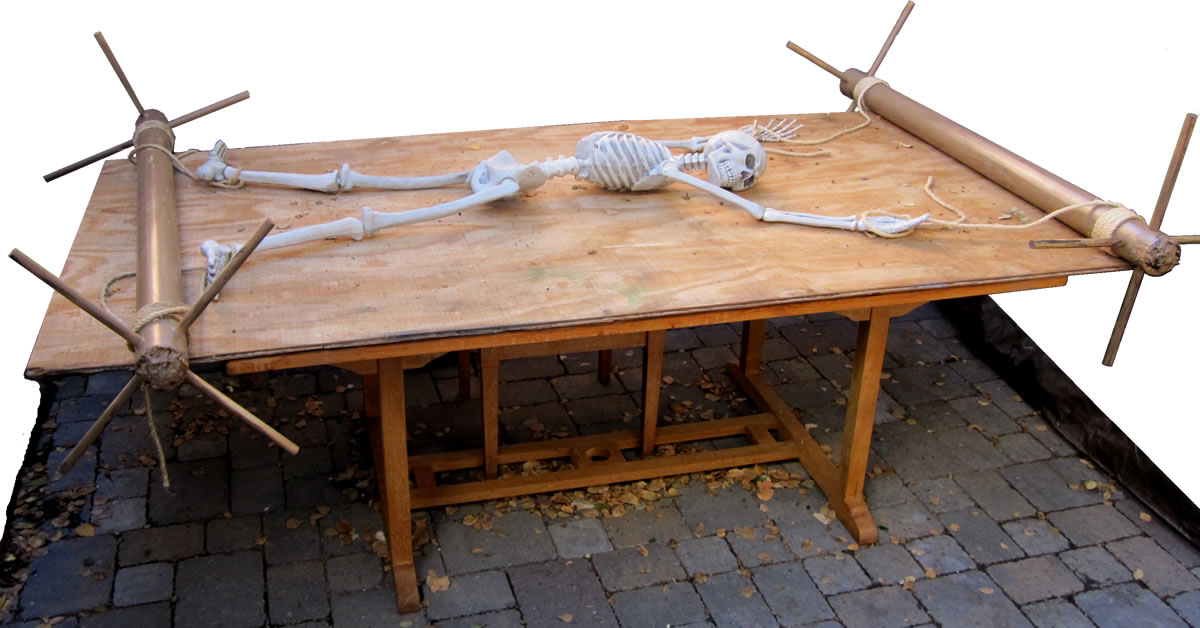
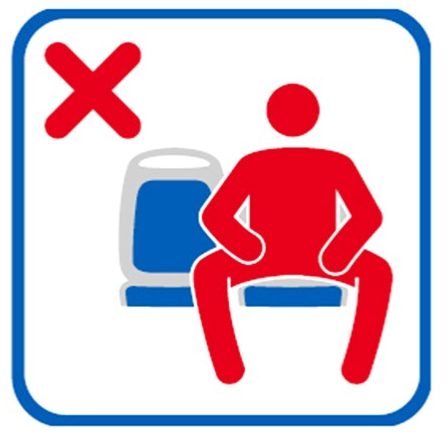
From Madrid comes a new pictorial instruction sign (not technically a “warning sign”) on public buses prohibiting “manspreading.”  I was not familiar with this term.  I thought maybe it was something like this, which I wholeheartedly agree should be banned:

But that’s not it.  It’s this:

Okay, this might be worse.  Manspreading is the practice of some men to sit with their legs spread on a bus seat, crowding people around them, particularly women, apparently.  Whether this is done to protect personal space or intentionally invade someone else’s is not clear from the article.

But as the question always arises with pictorial communicative signs, does the picture alone work to convey the intended meaning?  If you didn’t already know what manspreading was and got on a bus and saw this sign, would you know it’s saying: “Dude, don’t spread your freaking legs”?  More troubling is why people need a sign to tell them this in the first place.

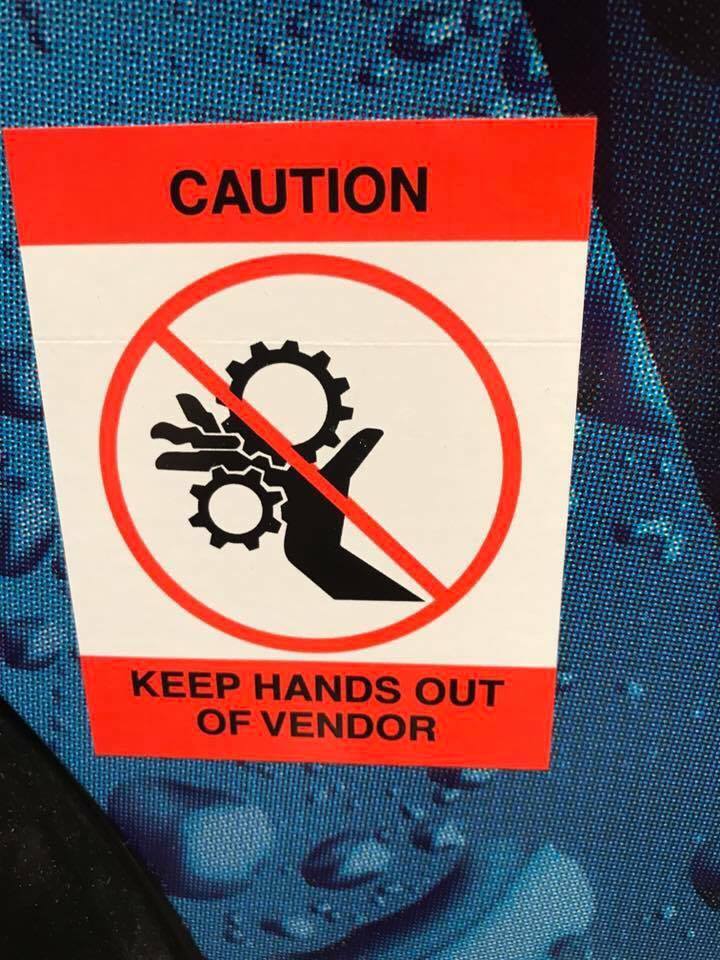
Graphic Warning: Keep Hands Out of Vendor?

Pictorial or graphic warnings are designed to be interpretable by anyone, whatever language they speak and whatever their literacy level.  The problem is it can be darn difficult to convey a product warning in a single image.

This graphic warning sticker on a soda/water machine does a good job of getting one’s attention and clearly alerts people that they should not be sticking their hand in between grinding gears.  Where those gears are remains a mystery, but I suppose it must be the exit path for the soda or water bottle.

I have a bigger issue with the verbal warning: KEEP HANDS OUT OF VENDOR.  Vendor?  That sounds more like a sexual assault warning.  The dictionary definitions of “vendor” I’ve come across are limited to persons or companies that sell products, not machines that dispense them.  How about we substitute “vending machine”?

Here, here, here and here are a few other interesting graphic or pictorial warnings for your interpretative pain or pleasure.

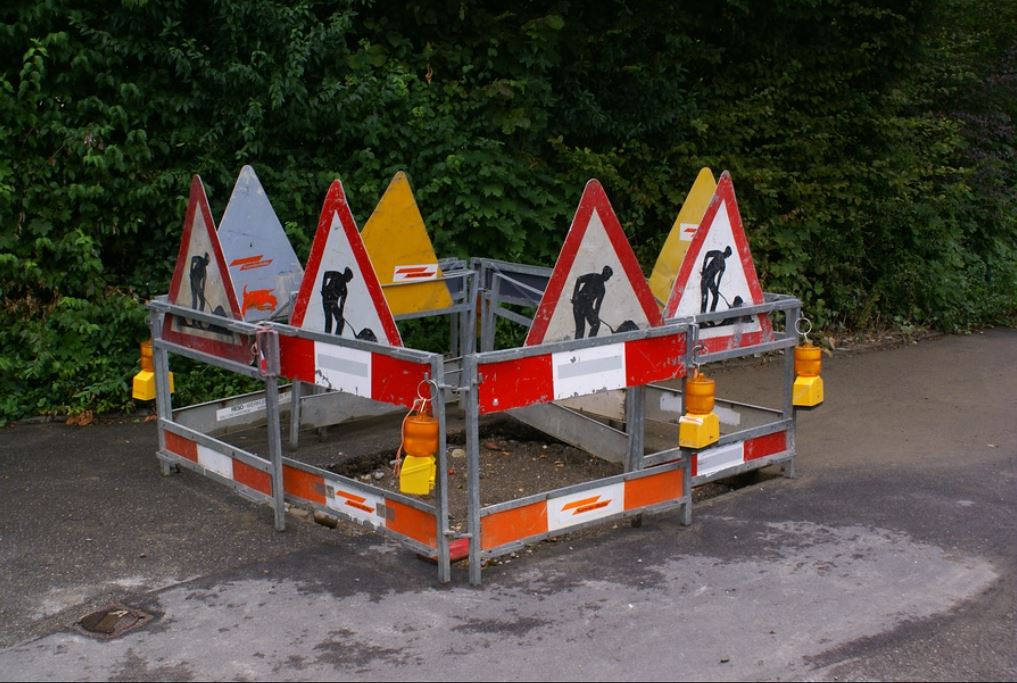
Wacky Warning Sign: World’s Safest Road Excavation

Thanks to my Swiss friend for this link to a variety of wacky warning signs in Switzerland.  The Swiss are very safe people, no doubt about it.  Look closely at what this monstrous, overdone barrier and warning contraption is protecting: what looks to be about a four-inch deep road excavation.

Compare the Swiss approach to how we handle this type of hazard in good old Memphis.

–Thanks to Pat Crowell.

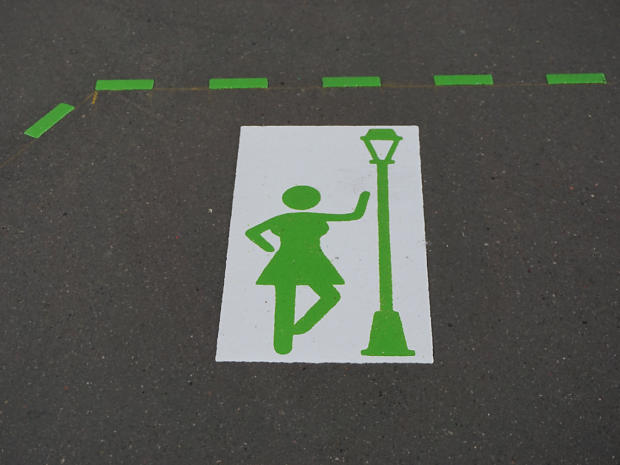
You Are About to Enter the Sex Worker Zone

Prostitution Sign in ZurichA Zurich friend sent along this sign in Kleinbasler in Basel, intended to alert sex workers of new “tolerance zones,” designed to impose more control over prostitution, which is legal in Switzerland.

According an article (link no longer available), “there has been a high turnover of prostitutes recently, mainly from EU countries in Eastern Europe, who are increasing competition, creating price falls and making it hard to convey the rules.”

The competition led to demands by locals for more restrictions. There are currently 800 sex workers in Basel. Police made 120 arrests last year for working outside of designated zones.

Thanks to Pat Crowell.

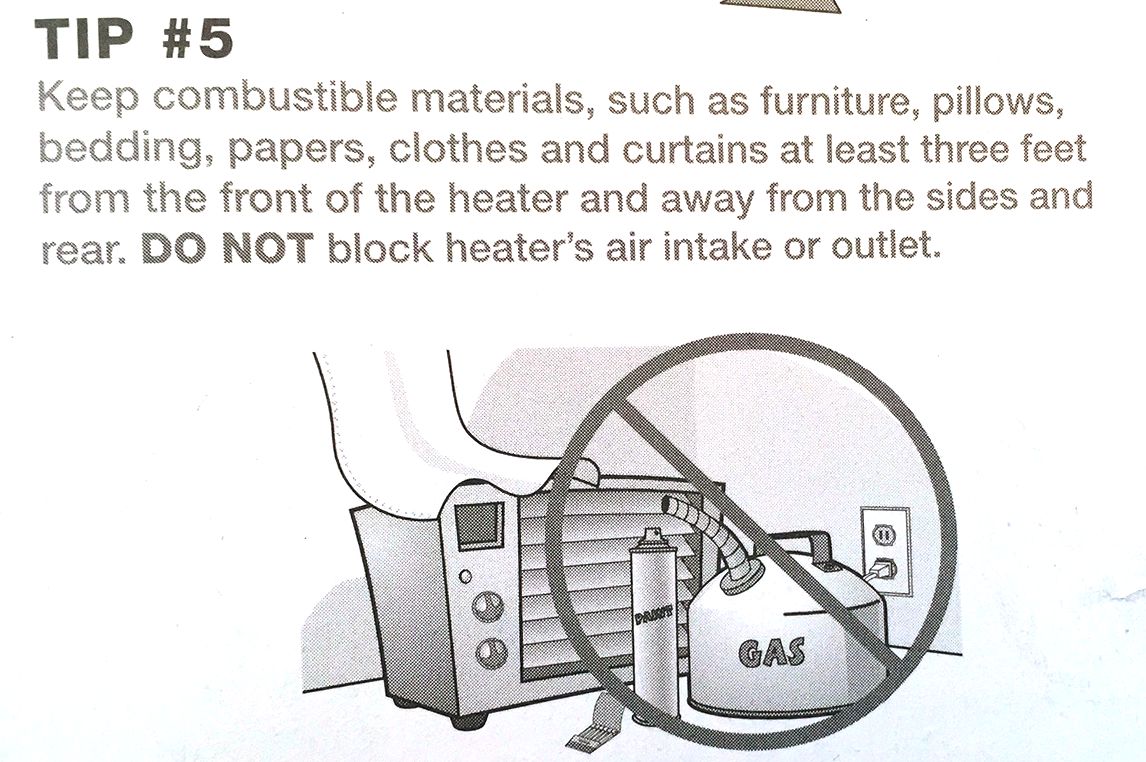
Don’t Store Explosives Next to Your Space Heater

Don't point space heaters at cans of gasoline five inches away.
Don’t point space heaters at cans of gasoline five inches away.

Well, it’s not quite that bad, but this warning in a package of instructions for a small space heater (maybe 10 by 12 inches)seems almost as obvious.  Not faulting the manufacturer. No doubt fires, probably a lot of them, have started because consumers unwisely placed heaters next to each of the listed flammable materials, probably including cans of gasoline.

U.S. products liability law does not require warnings against “obvious dangers.” But what’s obvious?  If people regularly suffer harm using a product in a dangerous way is it because the danger isn’t obvious or because product users frequently willfully or negligently overlook known dangers.

Manufacturers often get sued for failing to warn of obvious dangers. They don’t usually lose the lawsuits, but you can’t blame them for erring on the side of over-warning.  An unintended cost is the “dilution effect” of too many warnings. When instruction booklets are dominated by warnings, which they are, many of them repeated, it’s less likely consumers will read the warnings at all, or pay attention to the ones they really need to know.

But in this case, I’d agree the danger is both obvious and should be warned about because of the foreseeable grave risk.

Smoke Detector Warning Under Fire

Smoke Detector Fire AdviceNot surprisingly, the product warnings accompanying smoke detectors are extensive.  Smoke detector manufacturers have been held liable in lawsuits when the detector failed to work properly and harm resulted to residents.

I bought a replacement smoke detector last week at Home Depot and, as always, enjoyed reading the product warnings and instructions.

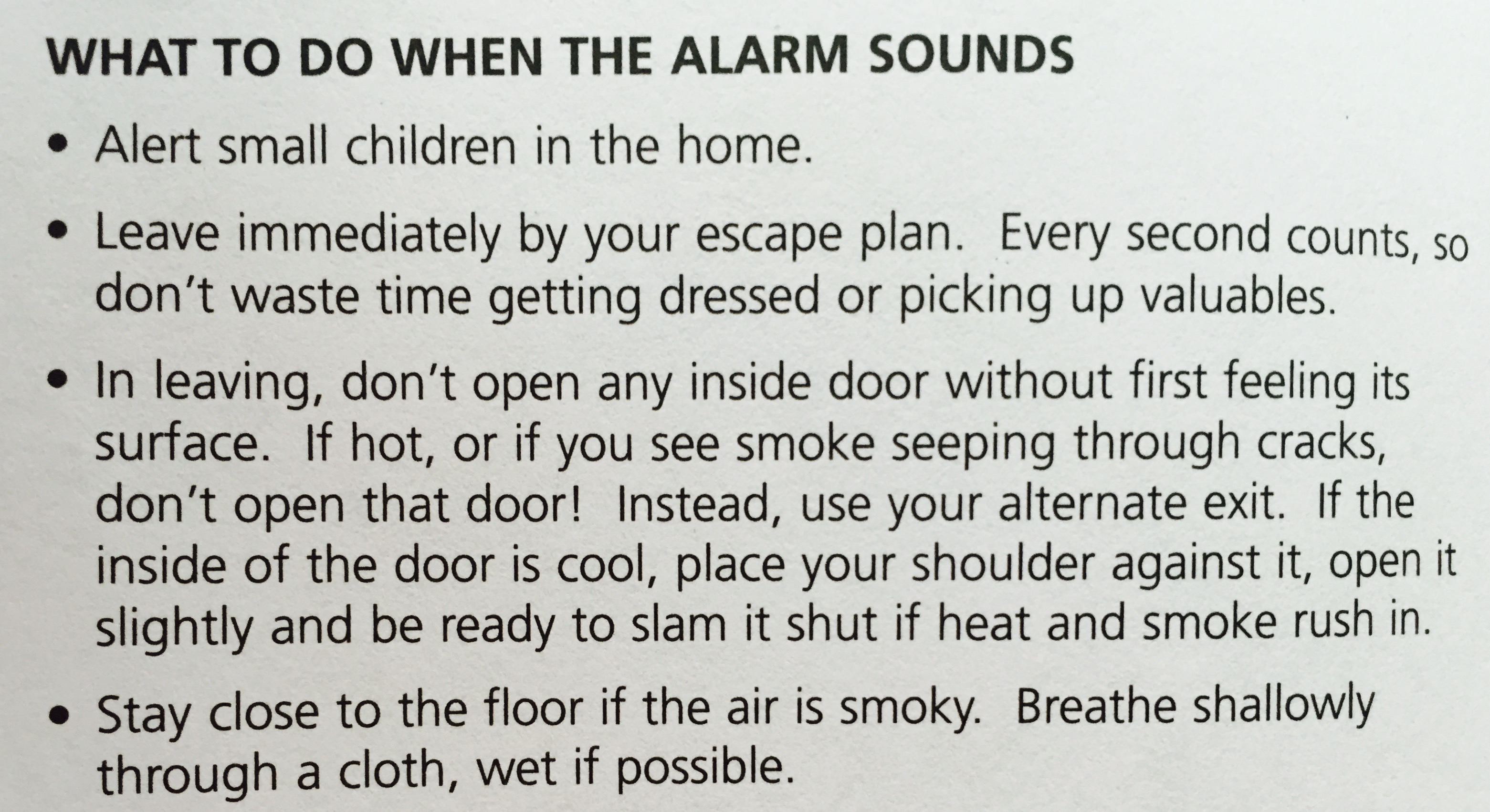
They provided a lot of good advice, but surely the first item of “WHAT TO DO WHEN THE ALARM SOUNDS” could have been worded better:

Alert small children in the home.

Maybe I’m quibbling, but I have three issues with this instruction.

First, the word “Alert” seems too unemphatic.  “Hey kids, the house is on fire.  Just wanted to let you know.”

Second, why alert only small children?  Don’t all children deserve to be alerted that the house may be on fire?

Third, why limit the alerting to children at all?  I picture the homeowner whispering: “Kids, the house is on fire.  Shhh.  Don’t wake Grandma.”

I suggest the following substitute:

WHAT TO DO WHEN THE ALARM SOUNDS  

• Scream “Everyone run for your lives!”

Just kidding.  Here’s my free, serious expert products liability/linguistics legal suggestion:

Immediately inform all persons in the house.
Warning: Always Read Fine Print

Crafted-to-Remove-GlutenGrains such as barley and wheat used to make beer contain gluten (although gluten-free beer can be made from grains such as sorghum, buckwheat, rice, and millet).

Can gluten be removed from traditional beer grains?  During the middle of our products liability coverage in first-year Torts, a student sent this photo of a beer carton boasting in bold capital letters “CRAFTED TO REMOVE GLUTEN.”

The beer was of interest to the student, who suffers from celiac disease.  Persons with celiac disease, an autoimmune disorder, cannot consume gluten because their bodies will mistakenly react to gluten as if it were a poison.

But then she came to the fine print at the bottom of the box, which says:

* Product fermented from grains containing gluten and crafted to remove gluten. The gluten content of this product cannot be verified, and this product may contain gluten.

Gluten - Read the Fine PrintAs the student commented, “I have no clue what the manufacturer is even trying to say.”  Given the danger gluten presents to some consumers, surely the disclaimer deserves more prominent billing on the label.

Needless to say, the student passed on buying the beer.

Beware of Tripping Alligators and Fake Warning Signs

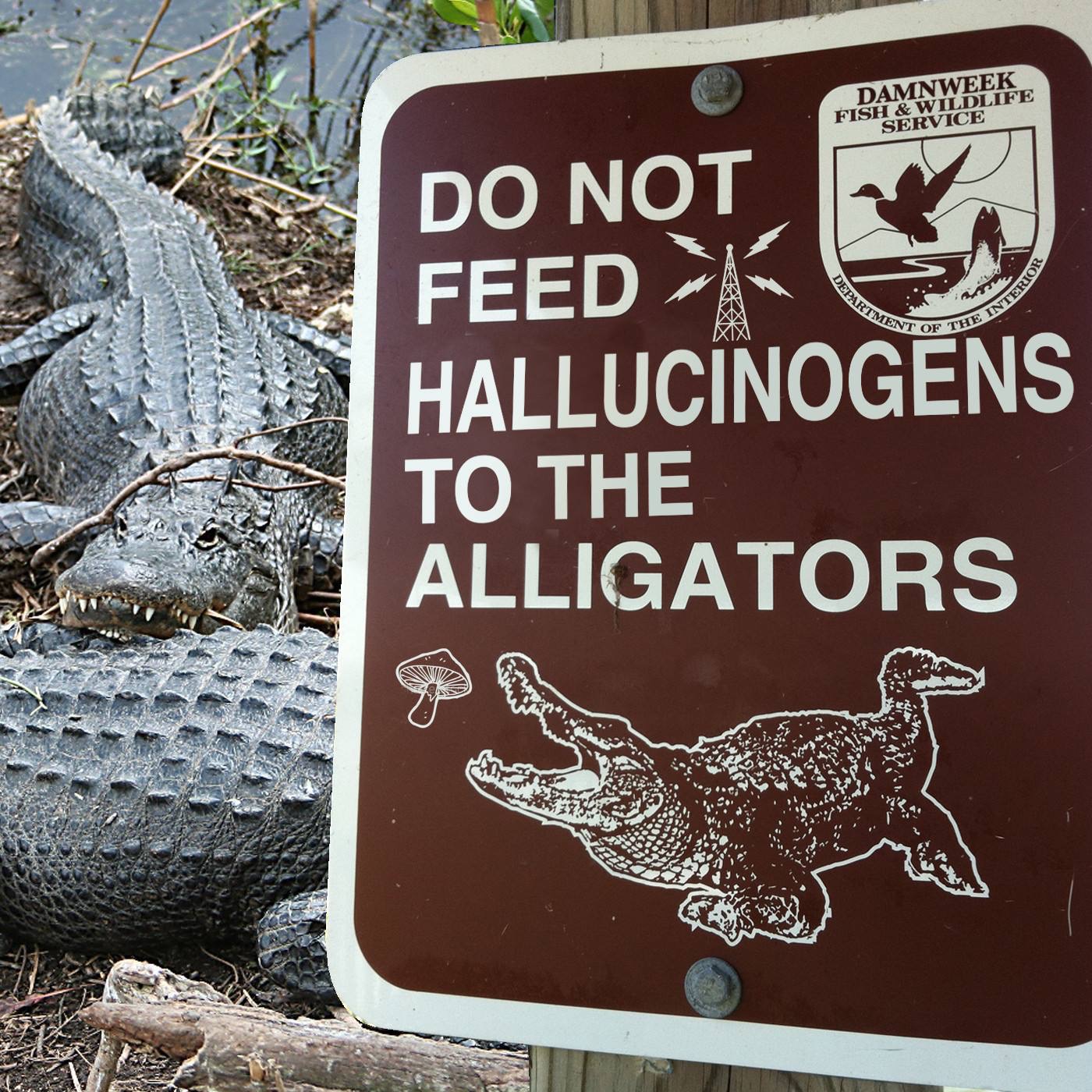
Fake warning signThis sign warning “Do Not Feed Hallucinogens to Alligators” would be amusing if it were real, but it’s not.

Complicating life at Lawhaha.com, where we love to post interesting warning labels and signs, is the proliferation of fake, Photoshopped samples.

Sometimes it’s hard to tell.  University of Memphis first-year law student George Scoville sent me the alligators picture.  It looked a bit sketchy.  Research led to a Reddit post detailing indicators that the picture is fake, including, for example, a Shutterstock watermark on the mushroom.

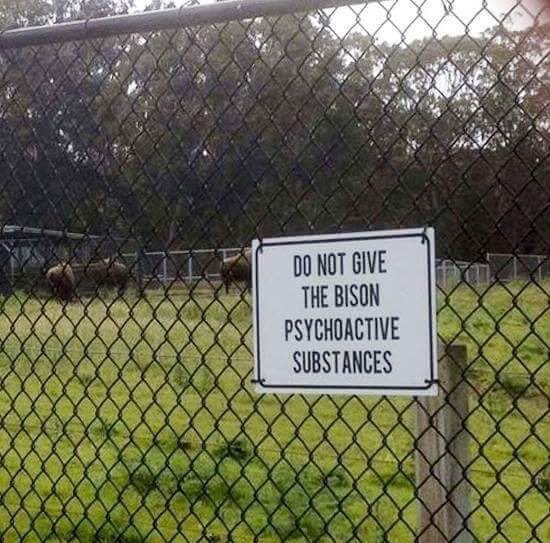
Real sign, but fake warningBut George had also sent a second similar photo: “Do Not Give the Bison Psychoactive Substances.”  This one looked real.

Determined not to be fooled twice, George, applying good legal research skills,  wrote to the San Francisco Recreation and Park Department (the bison are in Golden Gate Park), receiving a reply that explained:

“That sign was put up as a prank. We took it down as soon as we became aware of it.”

So the sign is (was) actually real.  Diabolical!  On the other hand, it is Golden Gate Park in San Francisco, home of “Hippie Hill” and neighboring Haight-Ashbury, so it’s possible a sincerely motivated animal-lover posted the sign.

Before posting anything on Facebook or otherwise, take a minute to check it out.  A quick check over at SNOPES will usually expose widely disseminated fake news, such as the recent viral Facebook post that Mark Zuckerberg was giving away $4.5 million to Facebook users who shared a thank you message.

In the meantime, signs or not, it’s not a good idea to give psychedelics to animals.

Warning: No Standing or Sitting Allowed

No Standing or Sitting in this AreaI guess we’ll have to take this one lying down because no standing or sitting is allowed.  From a former student comes this sign at a baseball field in Burns Park, North Little Rock, Arkansas.

What is the sign really trying to convey?  No loitering in this area?  No people in this area?  Under a strict construction, could you lie down in the area and be in compliance with the sign’s directive?

–Thanks for Shayne Smith.

Warning: Watch Your Head, British Style

Watch Your Head - Yanks vs BritsLow-clearance warnings can help avert unintentional head-banging (as opposed to purposeful head-banging to, say, Metallica).

In the U.S., we shout these warnings (Danger! Watch Your Head!) like we shout everything.  But the Brits take a more proper, refined approach, as shown by the sign on the right, taken in a London pub.

The only thing missing is an “Old Chap” at the end, as in “Please Do Mind Your Head, Old Chap.”

Thanks to Pat Crowell.