Plaintiff Sues for Loss of Psychic Powers

crystal ballA $600,000 jury verdict for losing psychic powers sounds ridiculous, and likely the grossly misunderstood McDonald’s coffee spill case, Haimes v. Temple University has been abused as a tool to whip up on trial lawyers and the tort system. But as with the McDonald’s case, Haimes got twisted in the telling.

Plaintiff Judith Richardson Haimes brought a medical malpractice action against defendant after a CT scan allegedly caused her chronic and disabling headaches and prevented her from practicing her occupation as a psychic. A jury awarded her $600,000 after a four-day trial.

Wow! But pro-tort reform accounts of the case omit two critical facts.  First, that the trial judge specifically instructed the jury it could NOT award damages for loss of her psychic abilities, and, second, that the court threw out the plaintiff’s verdict.

Having cleared that up, the most interesting part of the case was the testimony pertaining to her psychic abilities. The plaintiff presented several police officers as witnesses who testified that plaintiffs’ psychic abilities had helped them solve cases. One special agent testified that he sought plaintiff’s advice in solving five to seven homicide cases and that information provided by plaintiff proved to be 80-90 percent accurate. The opinion describes detailed information plaintiff provided to help solve a variety of cases. It’s interesting.

Haimes v. Temple University Hosp., 39 Pa. D. & C.3d 381 (Pa. Ct. Com. Pl. 1986). Thanks to Cynthia Cohan.
Creative Statutory Interpretation Put to Test

Ohio Court of Appeals Judge Mark Painter combined humor and common sense in Gibson v. Donahue, where the plaintiff was injured being thrown from her horse, which was spooked by two Irish Setters that the defendant allowed to run free in an area restricted to equestrian use.

Talk about creative lawyering. The defendant tried to escape liability by relying on an Ohio statute intended to provide tort immunity for riding stable owners and horse show operators for injuries resulting from the inherent risks of equine activity (a statute Painter said “is noteworthy mainly for using the word ‘farrier’ ten times”).

Judge Painter observed that the case was one of first impression, “probably because no one before has been audacious enough” to try to extend the statute to a situation like this one.

Defendant did have a slim statutory leg to stand on. The statute extends immunity to “an equine activity sponsor, equine activity participant, equine professional, veterinarian, farrier, or other person.” However, Judge Painter said that for defendant’s construction to prevail, the statute would have to be read as applying to “any other person in the whole world.” Construed as defendant argued, “[a] person who negligently crashes an airplane into the crowd at an equine event would thus be immune to liability.”

By the way, a farrier is a blacksmith. Remember that if you’re a law student in Ohio. It might be on the bar exam.

Gibson v. Donahue, 772 N.E. 2d 646, 648, 650 (Ohio Ct. App. 2002).

Negligence and “The Reasonable Dog”

Would a reasonably prudent dog batter a postal worker, negligently knock over a vase with a wagging tail or trespass on property to urinate or defecate?

Maybe we’ll find out, now that a court has held that a dog in a dog-bite case was to be judged by a “reasonable dog” standard.

In Kirkham v. Will, an Illinois intermediate appellate court held that, in deciding whether the defense of provocation applied in a dog-bite case, the appropriate test to apply was the “reasonable dog” standard; that is, how a reasonable dog would have reacted to the plaintiff’s presence under similar circumstances.

How a reasonably prudent person would have behaved under a given set of circumstances is one of the great imponderables of tort law that jurors, law students, lawyers, judges and law professors struggle with every day. Despite manifold attempts to define the standard, answers remain elusive.

We entrust the decision to jurors because they presumably know how reasonable people would act. Are they competent to determine how reasonable dogs would act? I can see it now, ads for expert witnesses in “Canine Behavior.”

Kirkham v. Will, 724 N.E.2d 1062, 1065 (Ill. App. Ct. 2000). Thanks to Darius Asly.

Sex and the Reasonable Person

lawsuit over fractured penis
Family friendly depiction of the injury.

Doe v. Moe, a May 2005 Massachusetts appellate case, gives a whole new meaning to the idea of safe sex. A guy sued his long-time girlfriend (ex-girlfriend?) for negligence when an ill-advised change in position during consensual intercourse resulted in him suffering a fractured penis. (The opinion gives details about how the accident occurred.)

In a case of first impression, the court struggled to arrive at an appropriate and workable standard of care to apply to private consensual sexual conduct. The court noted:

There are no comprehensive legal rules to regulate consensual sexual behavior, and there are not commonly accepted customs or values that determine parameters for the intensely private and widely diverse forms of such behavior.

Accordingly, the court concluded that the general negligence standard of reasonable care under the circumstances was inappropriate for consensual sex-physical injury cases.

Instead, the court said the plaintiff needed to show conduct rising to the level of “wanton or reckless.” The court opined that while the trial record might support a finding that the defendant’s conduct exposed plaintiff to a risk of harm, it did not support a finding of wanton or reckless conduct.

The case does raise an interesting legal issue. With so many different preferences and positions and idiosyncratic fantasies and fetishes, is there such a thing as a standard of “ordinary and reasonable care” for sex?

Doe v. Moe, 827 N.E.2d 240, 245 (Mass. Ct. App. 2005). Thanks to David Keller and Professor Howard Wasserman.

Divinity Student Has Bone to Pick with A Yale Dog

strange judicial opinions dog puns
It's a dog-eat-divinity student world.

A dog-bite case against the dean of the Yale Divinity School by a divinity student gave U.S. District Judge Gerard Goettel a chance to “let the dogs out” in an opinion leaving no possible wordplay on dogs unpenned or unpunned.

The main issue was whether the Yale Divinity School could be held strictly liable under the Connecticut dog-bite statute as a “keeper” of the dean’s offending canine, Rocky, a Labrador, because the dog was permitted to roam free in common areas of the divinity school residences and chapel.

The court held the dean strictly liable, but let the school off because it didn’t “control” the dog’s activities.

Here’s a compendium of Judge Goettel’s fun canine puns:

“In this dog eat dog world, anything is fair game for litigation in the federal courts.”

“As compensation for her injuries, plaintiff seeks to take a bite out of the defendants’ pocketbooks.”

“[The plaintiff], now an Episcopal priest with her own ministry, obviously has a bone to pick as her injuries required substantial medical care, and Rocky is clearly in the doghouse.”

“In dogged pursuit of damages for her trauma, she filed this suit ….”

“Hounded by Connecticut’s [dog-bite statute] ….”

“The [individual defendants] do not deny that they were keeping Rocky who apparently was not licensed to anyone but had a nose for trouble.”

 “Plaintiff’s analysis is essentially the tail wagging the dog.”

“Rocky’s having access to common areas, without more evidence indicating an intent to give refuge to the dog or to control the dog’s activities on the part of the School is not a sufficient basis to collar the Divinity School.”

As for Rocky, we don’t know his fate, but the judge did offer a weak defense for the nice face-biting doggie in a footnote:

1. There is no indication that Rocky, like the dog in Oliver Goldsmith’s Elegy on the Death of a Mad Dog, “to gain some private ends, went mad and bit the [wo]man.”

Post v. Annand, 798 F. Supp. 189, 190–91 & n.1, 192 (S.D.N.Y. 1992). Thanks to Lillian Gustilo.

Defamatory in England to Call Someone Ugly

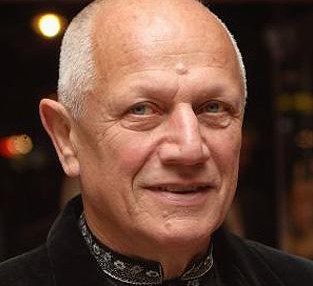
Steven Berkoff
Won a defamation judgment for being called ugly.

A 1996 English libel case reminds me of the old Rodney Dangerfield joke: “My psychiatrist told me I’m going crazy. I told him, ‘Doc, if you don’t mind I’d like a second opinion.’ He said, ‘Alright, you’re ugly too.’”

In Berkoff v. Burchill, an English court of appeals held that describing a person as ugly can constitute actionable defamation. No wonder people are flocking to England to take advantage of the country’s plaintiff-friendly libel laws. It’s highly doubtful calling someone ugly would be actionable defamation under U.S. law.

(By the way, this practice, known as “libel tourism,” resulted in enactment of a 2010 U.S. law that prohibits U.S. courts from enforcing foreign defamation judgments if they were rendered under legal protections less protective of speech than U.S. standards. Berkoff’s suit, against an English newspaper, was not a case of libel tourism.)

The English case arose from a Sunday Times article in which defendant Burchill reviewed the movie The Age of Innocence. Burchill described the film director, Steven Berkoff, as “hideous-looking.”

Nine months later, Burchill once again called Berkoff’s pulchritude into question, this time in a review of the movie Frankenstein. Describing “the Creature,” Burchill said: “It’s a very new look for the Creature—no bolts in the neck or flat-tap hairdo—and I think it works; it’s a lot like Stephen Berkoff, only marginally better-looking.”

Berkoff sued for defamation. The issue was whether calling someone hideous-looking is a defamatory statement capable of injuring a person’s reputation. The appellate court answered affirmatively.

The court said a jury could “conclude that in the context the remarks about Mr. Berkoff gave the impression that he was not merely physically unattractive but actually repulsive” and that this could injure Berkoff’s ability to make a living by “lowering his standing in the estimation of the public … [by] making him an object of ridicule.”

Is truth a defense? He looks okay in this picture (photo by Getty, borrowed from The Telegraph).

Berkoff v. Burchill, [1996] 4 All E.R. 1008 (Ct. App. 1996). Thanks to Heiner O. Mommsen.

The Encyclopedic Footnote of Pop Culture (Kozinski)

U.S. Ninth Court of Appeals Judge Alex Kozinski is well known for sprinkling pop culture references throughout his opinions, particularly in the famous Syufy opinion, which wove in the titles of more than 200 movies. (See “Coming Soon to a Footnote Near You”)

A less noticed, but just as fun pop culture-laden opinion was his dissent to an order denying rehearing en banc in White v. Samsung Electronics America, Inc., a case where the Ninth Circuit upheld a “right of publicity” claim by former game show hostess Vanna White against Samsung for using a robot resembling her game show persona in a television commercial.

Complaining that, “[u]nder the majority’s opinion, it’s now a tort for advertisers to remind the public of a celebrity,” Kozinski excoriated the court for over-extending intellectual property rights in an opinion jammed full of pop culture references.

(That’s one thing to love about Kozinski’s writing: he can be pithy, insightful, and amusing in less than twenty words.)

Pop culture ran amuck in a single footnote (footnote 6) that includes references to (in order): grunge rocker Tad Doyle, the Hell’s Angels, Marvel Comics, Breakfast at Tiffany’s, Breakfast of Champions, The Electric Kool-Aid Acid Test, Looking for Mr. Goodbar, The Coca-Cola Kid, The Kentucky Fried Movie, Harley Davidson and the Marlboro Man, The Wonder Years, Wonder Bread, Joseph and the Amazing Technicolor Dream Coat, Janis Joplin, Paul Simon, Leonard Cohen, Bruce Springsteen, Prince, dada, Monty Python, Roy Clark, Mel Tillis, the Talking Heads, Andy Warhol, REO Speedwagon, 38 Special, Jello Biafra and the Dead Kennedys.

White v. Samsung Elec. Am., Inc., 989 F.2d 1512, 1512 n.6, 1514 (9th Cir. 1993) (Kozinski, J., dissenting from order denying rehearing en banc). Thanks to Katherine Shipman.

The Never-Ending Story of Bill Clinton’s Sex Life (Kozinski)

Where do scandals go when they die? They travel upwards, of course … to a U.S. Court of Appeals. At least if they’re scandals involving the saga of President Bill Clinton’s sexcapades.

U.S. Ninth Circuit Court of Appeals Judge Alex Kozinski faced an appeal in a defamation suit filed by former lounge-singer Gennifer Flowers against Hillary Rodham Clinton, James Carville and George Stephanopoulos. With that cast of characters (including Judge K), you know it’s going to be an interesting opinion.

This is an opinion to be admired as much for its lucidity as its colorful take on the events. Here’s a taste from the opening paragraphs (some paragraph breaks inserted):

Long after the public spotlight has moved on in search of fresh intrigue, the lawyers remain. And so we find ourselves adjudicating a decade-old dispute between Gennifer Flowers and what she affectionately refers to as the “Clinton smear machine”: James Carville, George Stephanopoulos and Hillary Clinton. Flowers charges that said machine destroyed her reputation by painting her as a fraud and a liar after she dis-closed her affair with Bill Clinton. We decide whether Flowers’s claims are timely and, if so, whether they survive a motion to dismiss.

Background and Proceedings Below

In the heat of the 1992 presidential primary campaign, the Star—that ubiquitous supermarket source for celebrity scandal—ran a story claiming that Bill Clinton had carried on an affair with an Arkansas woman named Gennifer Flowers. Clinton and Flowers both denied it at first, but a few days later Flowers (doubtless realizing that honesty is the best policy after all) sold her story to the Star.

Clinton continued vigorously denying the allegations and appeared on 60 Minutes with his wife to say they weren’t true. The following day, Flowers responded by holding a press conference where she played recordings of intimate phone calls from Clinton that she’d secretly taped. Later news reports suggested that the tapes may have been selectively edited.

According to Flowers, Hillary Clinton and her two “henchmen,” George Stephanopoulos and James Carville, conspired to protect Bill Clinton’s presidential candidacy from Flowers’s damaging revelations. Flowers claims that during the 1992 campaign and in later political memoirs and interviews, Carville and Stephanopoulos defamed her and painted her in a false light by claiming that she had lied in her story to the Star and “doctored” the tape-recorded phone calls.

Hillary Clinton, the alleged mastermind of the conspiracy, not only orchestrated the defamatory exploits, but also exposed private information about Flowers and organized break-ins of her residence. Flowers claims that, as a result of all this schemery, her reputation has wilted and her blossoming career as a Las Vegas lounge singer has been nipped in the bud.

It’s like the beginning of an intriguing political spy novel you want to keep reading. In the not-as-exciting climax, the Ninth Circuit panel felt compelled under the law to reverse the district court, which had dismissed all of Flowers’ claims.

Meanwhile, Kozinski gave us another Syufy-type mystery (see “Coming Soon to a Footnote Near You!”) by burying an amusing reference in one of the citations. I won’t spoil the mystery. See if you can find it.

Flowers v. Carville, 310 F.3d 1118, 1122 (9th Cir. 2002) (Kozinski, J.). Thanks to Elise Hendrick .

Must-Read Musmanno (Musmanno)

Michael Musmanno
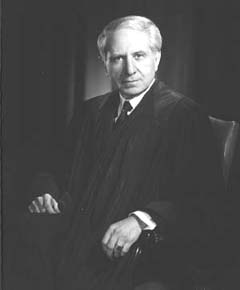
Justice Michael Musmanno, a Lawhaha.com Hall of Famer

Any fan of judicial opinion writing needs to study the opinions of the Honorable Michael A. Musmanno (1897-1968). He led a remarkable life. Before joining the Pennsylvania Supreme Court, Justice Musmanno enjoyed an illustrious career as a lawyer, U.S. Congressman and author. Highlights of his career include serving as the presiding judge at the Nuremberg war crime trials and as a defense lawyer in the Sacco & Vanzetti trial.

His opinions are marvelous concoctions of deep-hearted passion and brutal common sense, delivered in highly literate and often hilarious prose.

U.S. Ninth Circuit Court of Appeals Judge Alex Kozinski, another notable opinion-writer,  reported to Lawhaha.com that Musmanno has been his model since law school and that he consciously tries to emulate Musmanno’s writing. He laments that today’s law school graduates have never heard of Musmanno and return only blank stares when his name is mentioned.

Here are a couple samples of Musmanno’s writing sent by Chris Nace:

In Bosley v. Andrews, a woman sued a neighbor whose cows trespassed on her farmland to eat her crops. After being chased away in the morning, the “bovine buccaneers,” as Musmanno called them, returned for lunch. “This time they came, eight of them, with reinforcements. They brought along their boy friend, a 1500-pound Hereford white-faced bull.” The bull took chase after the plaintiff, causing her to suffer a heart attack.

A majority of the Pennsylvania Supreme Court rejected the woman’s claim for negligent infliction of emotional distress damages, following the traditional rule that such a claim cannot be maintained in the absence of a “physical impact” with the plaintiff (the bull never actually touched the plaintiff).

In dissent, Musmanno skewered the majority for what he saw as an unjust result, closing his opinion by stating that the majority’s approach “is unsupportable in law, logic, and elementary justice – and I shall continue to dissent from it until the cows come home.”

In Pennsylvania Society for the Prevention of Cruelty to Animals v. Bravo Enterprises, Inc., the plaintiff sought to enjoin a bullfight, but the majority held that the organization lacked standing. Musmanno began his impassioned dissent:

If there is one commodity of which there is no need for a further supply, it is violence. If there is one school that the world can afford to miss, it is one for the tutoring of methods of violence, brutality and cruelty. … [W]e can well do without a bullfight which is nothing less than an open air lyceum in the art of torturing helpless animals.

Add Justice Musmanno to your list of “four dead people with whom you would most like to have dinner.”

Bosley v. Andrews, 142 A. 2d 263, 267–68, 280 (Pa. 1958) (Musmanno, J., dissenting); Pa. Soc’y for the Prevention of Cruelty to Animals v. Bravo Enterprises, Inc., 237 A. 2d 342 (Pa. 1968) (Musmanno, J., dissenting). Thanks to Chris Nace.

Last Tango in Asparagus (Musmanno)

In a classic slip and fall case, plaintiff Joseph Rosenberg slipped on asparagus while dancing at a wedding reception with his sister-in-law and fellow plaintiff, Ruth Schwartz.

The issue was whether the defendant caterer had negligently spilled the asparagus on the dance floor. The trial judge had dismissed the lawsuit on theory that the offending asparagus could have been unwittingly transported onto the dance floor after becoming entrapped in the apparel of the dancers.

As with many of the judicial opinions posted on Lawhaha.com, brief excerpts don’t do this case justice. My favorite part is how the legendary Justice Michael Angelo Musmanno of the Pennsylvania Supreme Court bluntly and rather contemptuously rejected the trial judge’s theory of how the asparagus (which according to testimony formed a puddle three feet in diameter) got on the dance floor (some paragraph breaks inserted):

The trial judge, an ex-veteran congressman and thus a habitue of formal parties and accordingly an expert in proper wearing apparel at such functions, all of which he announced from the bench, allowed testimony as to the raiment worn by the banquetters.

All the men were attired in tuxedos, the pants of which were not mounted with cuffs which could transport asparagus and sauce to the dance floor, unwittingly to lubricate its polished surface. Ruling out the cuffs of the tuxedo pants as transporters of the asparagus, the judge suggested the asparagus, with its accompanying sauce, could have been conveyed to the dance floor by ‘women’s apparel, on men’s coats or sleeves, or by a guest as he table hopped.’

The Judge’s conclusions are as far-fetched as going to Holland for hollandaise sauce. There was no evidence in the case that anybody table hopped; it is absurd to assume that a man’s coat or sleeve could scoop up enough asparagus and sauce to inundate a dance floor to the extent of a three-foot circumference; and it is bizarre to conjecture that a woman’s dress without pockets and without excessive material could latch on to such a quantity of asparagus, carry it 20 feet (the distance from the tables to the dance floor) and still have enough dangling to her habiliments to cover the floor to such a depth as to fell a 185 pound gentleman with 35 years’ dancing experience who had never before been tackled or grounded while shuffling the light fantastic.

It can be stated as an incontrovertible legal proposition that anyone attending a dinner dance has the inalienable right to expect that, if asparagus is to be served, it will be served on the dinner table and not on the dance floor.

Judgment reversed with a procedendo.

Chief Justice Bell dissented:

 One cannot help wondering if plaintiffs had, in the alleged 35 years of dancing, ever been to any dance, let alone a wedding banquet dance. … A dancer cannot, with legal sanction, look only into the captivating eyes of his lovely partner.

 I certainly dissent.

Schwartz v. Warwick-Philadelphia Corp., 226 A.2d 484, 485–87, 488 (Pa. 1967). Thanks to Janet Heydt.