
Law Professor Exposes Phony Tort Cases

Jonathan Turley
Professor Jonathan Turley exposed phony outlandish tort cases.

Although several years old, Professor Jonathan Turley’s USA Today article exposing phony tort cases remains must-reading for anyone concerned about the tort reform movement. Why? Because people are still circulating these tall tales.

You know those crazy tort lawsuits you read about, the ones that make people indignant about the tort sytem, the ones politicians and tort reformers use to build public support for the movement, the ones that get endlessly forwarded to email inboxes?

They’re crazy, to be sure. But, one problem. A lot of the most notorious cases are fabricated, as Turley explored in his article.

The notorious–but apparently fictitious winning-plaintiffs–and their outlandish “cases” include:

• Kathleen Robertson, a woman who–imagine this–received a $780,000 jury award against a furniture store after she tripped over her own son.

• Carl Truman, who won a $74,000 judgment after his hand was run over by a neighbor. The neighbor could not see Truman because he was kneeling down while in the process of stealing the neighbor’s hubcaps.

• Terrence Dickson of Bristol, Pa., a man who received a $500,000 award against a garage-door manufacturer after he almost starved while trapped in the garage of a house he was burglarizing while the family was on vacation.

• And my personal favorite, a Mr. Grazinski, who won more than $1,750,000 against Winnebago when the RV he was driving went off the road after he put it on cruise control at 70 mph to go into the back to fix a cup of coffee.

Turley was unable to track down records showing that any of these, or several other notorious crazy lawsuits, actually existed.

It should be more than a little troubling to people that state legislatures have passed thousands of tort reform statutes throwing out 200 years of carefully considered common law (judge-made law) in part based on sound-bite reporting of cases that never happened.

— Jonathan Turley, Legal Myths: Hardly the Whole Truth, USA Today, Jan. 30, 2005.

Knocking Down Worshipper Not an “Act of God”

churchThe intersection of church and tort law is an interesting area. For the most part, courts–wisely so–have been reluctant to entangle tort law with church and religion except in cases of intentional physical batteries.  In Bass v. Aetna Ins. Co., the court had to decide whether “trotting under the Spirit of the Lord” in church, with the result of running into and injuring the plaintiff, was actionable or a protected “Act of God.”

Plaintiff attended the Shepard’s Fold Church in Louisiana, where moving or running in the aisles “in the Spirit” apparently is a common practice. During a revival, a fellow worshiper ran down the aisle where plaintiff was kneeling and praying and knocked her down, causing injury. Plaintiff sued for negligence.

At trial, the defendant testified he was “‘trotting’ under the Spirit of the Lord” and was not in control of his actions at the time of the collision. He raised “Act of God” as a defense and also asserted the plaintiff assumed the risk of the collision and was contributorily negligent. For non-legals, an Act of God under law is a harm-causing force of nature, such as a tornado or flood, the consequences of which humans generally are not held responsible for.

The trial court dismissed the case, finding that the plaintiff assumed the risk of the collision by praying in the aisle with her eyes closed, a decision affirmed by the court of appeals. But the Louisiana Supreme Court reversed.

The West headnote writers summed up the holdings succinctly:

[1] Negligence: Notwithstanding that worshiper testified he was trotting under the Spirit of the Lord, “Act of God” defense did not apply in action by worshiper who was injured while praying in the aisle against second worshiper who was running in church inasmuch as “Act of God” meant force majeure.

[14] Religious Societies: It is not contributory negligence to bow one’s head while praying in church, whether in the pew or in the aisle.

Bass v. Aetna Ins. Co., 370 So. 2d 511 (La. 1979). Thanks to a fellow Torts professor.

Palsgraf Curse?

Palsgraf curse
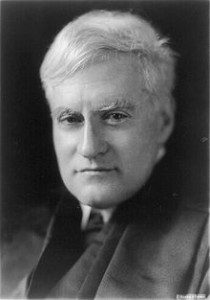
Cardozo wrote the famous majority opinion in Palsgraf.

Several lawhaha visitors sent in Mark Fass’s article in the New York Law Journal about an alleged curse on the family of Helen Palsgraf, the most famous torts plaintiff in history. Every lawyer remembers Mrs. P from law school. To test this theory, visit an elderly, dying lawyer in a coma and shout “Palsgraf!” Immediately, he will recite: “A man carrying a box wrapped in newspaper boarded a train at the Long Island Railroad Station … cough, cough … ack.”

The box contained fireworks. When it was dislodged by employees of the Long Island Railroad trying to help the man on the train, the fireworks exploded, allegedly knocking a scale onto Mrs. P. Mrs. P’s saga led to the legendary, and incredibly confusing, opinions by Judge Benjamin Cardozo (that’s Cardozo in the picture–handsome fellow he was) and Judge William Andrews studied by students year in and year out at law schools great and small.

Now Fass reports that Mrs. P’s accident began a curse on the Palsgraf family, at least that’s what some of her descendants believe. One descendant fell off a ladder in 1965 and sued the manufacturer, but never made it to trial because the ladder was stolen. Another lost her thumb when a ping-pong table collapsed. A lawsuit led to a small settlement. Another descendent tripped while jogging over a broken curb, but was discouraged by lawyers from filing suit.

The most intriguing Palsfraf mishap reported by Fass involves a descendant who lost control of his truck on an icy hill in 1968. The truck slid towards the edge of cliff. Guess what saved the life of Mrs. P’s closest living relative? The truck’s wheels got caught on a track of … you guessed it, the Long Island Railroad. (Cue Twilight Zone theme.)

— Mark Fass, Palsgraf Railroad Injury Proximate Cause of Family Curse?, New York Law Journal, Dec. 10, 2004.

Mrs. Palsgraf is Alive, in the U.S. Supreme Court

PalsgrafAs a Torts prof, I loved this tidbit sent in by Elise Hendrick. Good old Mrs. Palsgraf. You can try, but you can’t keep her down.

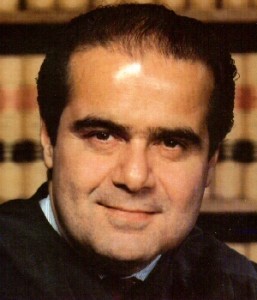
Elise was listening to oral arguments before the U.S. Supreme Court in Exxon Co. USA v. Sofec, 116 S.Ct. 1813 (1996), and came across the following exchange between George Playdon, counsel for Sofec, and Justice Scalia. The two were engaged in a colloquy about the maritime supervening cause doctrine:

Scalia: I’m not sure that you need a “doctrine of supervening cause.” Is a doctrine of supervening cause anything other than Palsgraf? When you say, you know, that the negligence … the causality … had long since terminated. Once you say you’re out of the scope of the risk, what do you need a doctrine of supervening cause for? And isn’t that basically your case?

Playdon (chuckling): I smile—I never envisioned thirty years ago that I’d have the opportunity …

Scalia: Of arguing Palsgraf!

Playdon (stammering, laughing): Obviously, Palsgraf is a foreseeability doctrine, just like Hadley v. Baxendale is a foreseeability problem.

Elise speculates that this may have been the first time the implausible case of Mrs. P has been mentioned in court since Palsgraf was decided in 1928.

— Thanks to Elise Hendrick.

Poor Poor “Poopi” the Poodle

pet malpracticePoopi the poodle and her owners sued their veterinarian after Poopi underwent anesthesia for teeth cleaning and woke up with a three-inch scar on her abdomen. The vet mistakenly tried to spay Poopi, even though she had already been spayed as a puppy.

Poopi’s owners sought emotional distress damages for themselves as well as for Poopi, including expenses for Poopi’s psychological care. Plaintiffs conceded that under Ohio law dogs are considered to be personal property, but argued that the court should “do the right thing” by distinguishing pets from inanimate objects. They quoted from a law review article that equated the death of a “companion animal” to “the wrongful killing of any other family member.”

The Ohio Court of Appeals affirmed the trial judge, which had rejected the claim, although one member of the appellate panel concurred “reluctantly” and suggested that the legislature consider allowing damages for tortious injuries to pets.

Now that the suit has been wrapped up, perhaps Poopi should consult independent counsel about the possibility of pursuing emotional distress of having to go through life named “Poopi.”

— Oberschlake v. Veterinary Assoc. Animal Hosp., 785 N.E.2d 811 (Ohio Ct. App. 2003).