Facebook is creating a quickly growing pile of novel legal issues in a variety of areas. Here’s one of the first to reach a state supreme court: Does a witness’ wishing a trial judge happy birthday on the judge’s Facebook page violate the rules on ex parte communications?
The plaintiff in Onnen v. Sioux Falls Independent School District # 49-5 worked as the registrar for Southeast Technical Institute in Sioux Falls—an entity of the Sioux Falls School District. Plaintiff was terminated from employment in August 2007 due to improprieties relating to the registrar’s duty to verify a student’s compliance with graduation requirements. Among other things, some 28 students had been improperly awarded degrees, while 40-50 students entitled to a diploma did not receive one. The plaintiff appealed the termination. The trial court affirmed the decision and the South Dakota Supreme Court affirmed the trial court’s decision.
Among the issues raised on appeal, the plaintiff argued that a “major witness” for the School District had improperly engaged in an ex parte communication with the trial judge by wishing him “Happy Birthday” on the judge’s Facebook profile page. The court held that the trial judge was not required to disqualify himself and that an uninvited and unresponded-to happy birthday greeting on Facebook does not rise to the level of an improper ex parte communication.
I’m assuming the witness (who apparently was a distant relative of the judge) was a Facebook friend of the judge to be able to post a birthday greeting. If so, is that a problem? Some states have rules prohibiting judges from being on Facebook. Is that a free speech violation? An interesting legal question raised by social networking–one of first of what is going to be a long list.
— Onnen v. Sioux Falls Independent School District, Case No. 49-5, 2011 S.D. 85 (2011). Thanks to Professor Roger Baron.
State v. Terrazas, a 1999 case out of the Texas Court of Criminal Appeals, turned on the meaning of a statement made by a state investigator to a defendant that led to the defendant confessing. The issue reminded dissenting Judge Price of a legal brainteaser from the movie Let Him Have It based on the controversial true story of a young man who was hanged for murder in 1953. Here’s Judge Price’s footnote on the matter (paragraph breaks inserted):
1. This issue calls to mind the film “Let Him Have it” which was based on the famous Derek Bentley Confession case in post-WWII England.
Two boys who were trying to break into a building were cornered on a rooftop by a policeman. One of the boys had a gun. The policeman calmly reached out his hand and asked the boy to hand over the gun.
The other boy said, “Let him have it.” The boy with the gun pulled the trigger and killed the officer.
What did the phrase, “Let him have it,” really mean? There are two possibilities: “Hand over the gun!” Or “Shoot him!” A British jury decided upon the second possibility and the boy, a retarded young man named Derek Bentley was convicted of murder and hanged.”
The legal tip from this case is that it’s always smarter to always use nouns and articles rather than pronouns when responding to police commands.
— State v. Terrazus, 4 S.W.3d 720, 729 (Tex. Crim. App. 1999) (Price, J., dissenting). Thanks to Senior Judge James Barlow.
U.S. District Judge James C. Paine – A totally awesome dude.
[U.S. District Judge James C. Paine, Southern District of Florida, passed away in 2010 after 28 years of distinguished service on the federal bench.]
In a 1992 case, U.S. District Judge James Paine (or maybe a law clerk) took pains to spice up an order rejecting federal removal jurisdiction by managing to work in several references from the movie “Wayne’s World.”
These include subheadings like “Hurling Chunks” and “NOT!”, and the observation that the attempted removal of the case from state to federal court “is untimely and is a defect deemed ‘way’ improvident.”
He concluded his trip to Wayne’s World as follows: “In short, Prime Time’s most bogus attempt at removal is ‘not worthy’ and the Defendants must ‘party on’ in state court.”
To which we say, “WHOA, Judge Paine, was, like, a totally awesome judicial dude!”
— Noble v. Bradford Marine, Inc., 789 F. Supp. 395 (S.D. Fla. 1992). Thanks to Melissa Williamson.
Prosecutor used Celine Dion's and Enya's music to soften up jury.
Salazar v. Texas was a grisly murder case involving a victim and alleged dope dealer named Jonathon. Jonathon’s cohorts turned on him and killed him by beating him with baseball bats and strangling him with wire.
At the punishment phase of the trial, over the objection of defense counsel, the state played a professionally edited video montage of Jonathon’s life, complete with music by Enya and Celine Dion!
The defendant appealed on the ground that the videotape was prejudicial. Here’s how the appellate court described the videotape (paragraph breaks inserted):
This video is an extraordinarily moving tribute to Jonathon Bishop’s life. It consists of approximately 140 still photographs, arranged in a chronological montage. Music accompanies the entire seventeen-minute video and includes such selections as “Storms in Africa” and “River” by Enya, and concludes with Celine Dion singing, “My Heart Will Go On,” from the movie Titanic.
Almost half of the approximately 140 photographs depict the victim’s infancy and early childhood. The pictures show an angelic baby, surrounded by loving parents, grandparents, unidentified relatives, and other small children. Later photographs show Jonathon as a toddler, playing the piano, frolicking at the beach with other friends, happily riding on a carousel, laughing in a field of bluebonnets, and cuddling with a puppy.
The video also includes numerous annual school pictures showing Jonathon’s progression from a cheerful child to a equally cheerful young man. It catalogs his evident and early prowess as a young soccer player and eventually as a football player. There is a picture of him and his date, presumably going to their prom, and more candid shots of the victim and his teen-age buddies. The video includes many family reunion portraits showing Jonathon’s entire extended family.
Understandably, this professional and polished production portrays Jonathon in a very positive light and it is entirely appropriate for a memorial service. The music, too, is appropriately keyed to the various visuals, sometimes soft and soothing, then swelling to a crescendo chorus. In sum, it is a masterful portrait of a baby becoming a young man. It is also extraordinarily emotional.
The court held it was reversible error to admit the videtape into evidence on the ground that its relevance was outweighed by its prejudicial value, stating:
[The] prejudicial effect is enormous because the implicit suggestion is that the appellant murdered this angelic infant; he killed this laughing, light-hearted child; he snuffed out the life of the first-grade soccer player and of the young boy hugging his blond puppy dog.
— Salazar v. State, 90 S.W.3d 330, 333–34, 337 (Tex. Crim. App. 2002). Thanks to Texas Senior Judge James Barlow.
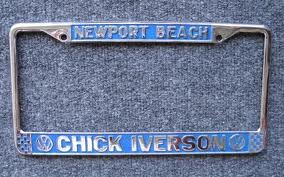
Chick Iverson left his mark in more ways than one.
California lawyer Frank Zotter sent in Iverson v. Iverson, a California divorce case in which the trial judge, in Frank’s words, “demonstrates once again the wisdom of the old saying, ‘it’s best to keep your mouth shut and have everyone think you a fool than to open it and leave no doubt.’”
The case involved the validity of a prenuptial agreement and the question of which of the parties had initiated the idea of marriage. The trial judge concluded that surely the wife had pursued the marriage. After all, the judge said, she was “lovely,” but “[h]ad nothing going for her except for her physical attractiveness.” Specifically, she “did not have much of an education, and did not have much of a background in business, and did not have much by way of material wealth.”
The judge simply couldn’t fathom the notion that the husband, Chick Iverson, would have been crazy enough to pursue marriage when “[h]e had just gone through a divorce which cost him a million dollars.” Marriage, the judge said, “would be the last thing on his mind. And why, in heaven’s name, do you buy the cow when you can get the milk free, as we used to say. And, so, he’s getting the milk free. And Cheryl is living with him in his home.”
The Court of Appeals reversed, ordering a new trial before a different judge on the basis that the trial judge’s sexist perceptions of the couple’s relationship made it impossible for the wife to have received a fair trial.
Who the hell was Chick Iverson? The case makes it sounds like he’s a big deal and he must have been because he told John Wayne he wanted The Duke to be best man at the wedding. Internet research discloses Iverson was the first Volkswagen dealer in L.A.
McClurg footnote: A source who requested anonymity sent this interesting follow-up information about the Iverson case:
Chick Iverson and John Wayne were best friends. That’s why John Wayne was the best man at his wedding to Mrs. Iverson. Mr. Iverson has since passed away and is actually buried next to John Wayne.
Chick Iverson owned the first VW dealership in Orange County, not LA. He imported the first Porsches to the west coast after WWII, and established a Volkswagen, Porsche, Rolls Royce, Audi and Chevrolet dealership in Newport Beach in the 60s which was sold in the 80s. It was the largest and best selling Volkswagen dealership in the United States.
Mr. Iverson made a hefty sum selling the wonderful bug to many a hippie. Mr. Iverson and Cheryl Iverson had a bitter divorce that would rival any Dynasty episode. The judge’s screw-up with his comments costs Mr. Iverson close to a million dollars in attorneys’ fees as he was paying for his attorney and Mrs. Iverson’s. Eventually, Mr. Iverson won and the prenuptual agreement was upheld.
Another McClurg footnote: More inside info about the colorful Chick Iverson, courtesy of Carl “Skip” Williams, a friend and former employee:
“Who the hell is Chick Iverson?” I had to laugh when I read that. You’re not from Orange County, CA. Let me add these few choice pieces to the article.
John Wayne and Chick were like Oprah and Gail. John Wayne was the Godfather to Chick’s son, who died at the age of 21 when he took a used Jaguar of the lot and ran off the cliff on his way to Laguna. Chick introduced John Wayne to his wife who worked on his ranch in South America. Chick Iverson was the executor to John Wayne’s Estate and controlled all the money for his children.
Chick Iverson was lucky in business and a genius. He was the son of immigrants. He had the largest cattle ranch in Oregon and the sixth largest in the US. He started as a salesman selling cars, with a high school education. His biggest decision was a fluke. He worked his way from salesman to general manager at a Porsche dealership in Chicago. He then opened up the first Porsche dealership in Orange County. Two years later he went looking to add another brand. His first choice was American Motors, second was Volkswagen.
When he decided to go with American Motors; he invited the representatives over to his house. One made a remark that offended his wife, so he went with Volkswagen and the rest is history.
— In re Marriage of Iverson, 11 Cal. App. 4th 1495, 1499 (1992). Thanks to Frank Zotter.
Judge used Leann Rimes tunes to solve her contract dispute.
In Rimes v. Curb Records, Inc., country music sensation LeAnn Rimes sought to void a recording contract on the basis that she was a minor when she signed it. Judge Jerry Buchmeyer, one of the original legal humorists, upheld a forum selection clause in the contract and granted the defendant’s motion to transfer the case to Tennessee—and he did it all to the tune of LeAnn’s hit songs.
Here’s a sample (footnotes omitted):
STATEMENT OF FACTS
(To be sung to the tune of LeAnn Rimes, “How Do I Live.” Copr. & (R) 1997 Curb Records, Inc.)
LeAnn Rimes
A very rich and famous star
Wasn’t so rich in times afar
But what a talent she had!
Enter Curb
To sign a contract, they hoped
After her talent they scoped
They saw the cash in her eyes
But LeAnn
Who at twelve was hardly dumb herself
Wanted to retain her future wealth
Oh
If you could have seen
Baby those attorneys changed everything
But so many lines!
They missed one thing.
CHORUS #1
Why did you sign, LeAnn Rimes?
So long ago
Off on that choice of forum?
Your attorneys didn’t know?
They made lots of changes, but one thing survived …
Forum clause, to that clause, what weight do we give?
INSTRUMENTAL INTERLUDE
VERSE #3
Many times
Back and forth from judge to attorney
Both in Texas and in Tennessee
There was so much to review
And LeAnn
With a guardian to oversee
She disavowed her own minority
Oh
Now she believes
Her age will invalidate everything
She ever signed
We must decide
CHORUS #2
How do we read the forum clause?
Binding or no?
How could she see, at age twelve
Or truly know
That the Curb-Rimes relations, would never survive?
Forum clause, to that clause, how much weight do we give?
Judge Buchmeyer wrote separate lyrics for the “Legal Analysis” and “Conclusion,” making the opinion a LeAnn Rimes Greatest Hits collection.
— Rimes v. Curb Records, Inc., 129 F. Supp. 2d 984, 985–86 (N.D. Tex. 2001). Thanks to Melissa Williams.
How can you not love U.S. District Judge William G. Young, chief judge for the District of Massachusetts, for his candor and willingness to come clean on an error he made in a case?
Confronted with a motion for new trial based in part on his allegedly erroneous jury instructions, he stated candidly: “[D]espite case-specific guidance from the court of appeals, I botched the instructions to the jury.”
Even better, Judge Young began his opinion in Suboh v. Borgioli by setting forth the lyrics to “a derisive ditty going around the courthouse” set to the music of “Happy Together” by the Turtles.
The original version of “Happy Together,” penned by Gary Bonner and Alan Gordon, reached No. 1 on the Billboard charts the week of Mar. 25, 1967. I’m not sure this version (from a group of lawyers who call themselves the Bar and Grill Singers) poking fun at the high-mindedness of federal judges, will reach that level of success, but it’s still fun.
Here’s a taste of the song as set forth in Judge Young’s opinion:
Imagine me as God. I do.
I think about it day and night.
It feels so right
To be a federal district judge and know that I’m
Appointed forever.
…
[CHORUS]
I’m a federal judge
And I’m smarter than you
For all my life.
I can do whatever I want to do
For all my life.
Appointed Forever, Bar & Grill Singers.
— Suboh v. Borgioli, 298 F. Supp. 2d 192, 194 (D. Mass. 2004). Thanks to Michael Hirschowitz.
In an otherwise dry (due to subject matter), but well-written opinion involving legislative police power and retroactive laws, Texas Supreme Court Justice Don R. Willett invoked the ultimate high authority for Baby Boomers everywhere.
No, not the U.S. Supreme Court. Star Trek!
Quoting the utilitarian principle that “the needs of the many outweigh the needs of the few,” Justice Willett cites to Charles Dickens and Mr. Spock from Star Trek II: The Wrath of Khan. Here’s the footnote:
The film references several works of classic literature, none more prominently than A Tale of Two Cities. Spock gives Admiral Kirk an antique copy as a birthday present, and the film itself is bookended with the book’s opening and closing passages. Most memorable, of course, is Spock’s famous line from his moment of sacrifice: “Don’t grieve, Admiral. It is logical. The needs of the many outweigh …” to which Kirk replies, “the needs of the few.”
As Star Trek sources go, The Wrath of Khan is a good one. Definitely more authoritative than, say, The Trouble with Tribbles.
— Robinson v. Crown Cork & Seal Co., 54 Tex. Sup. J. 71, 99 n.21 (Tex. 2010). Thanks to Tamara Davis by way of wired.com.
Simon and Garfunkel - Noted admiralty law experts.
In U.S. v. McPhee, the defendants were charged with conspiracy to import marijuana, after their boat, the Notty, was intercepted by Coast Guard cutters off the coast of Florida.
A key jurisdictional issue was whether the boat was intercepted within the territorial waters of the Bahamas. Defendants argued it was, on the basis that the interdiction occurred within 12 miles of Saint Vincent Rock, which defendants asserted is a Bahamian island. The government argued that Saint Vincent Rock is only a “rock” and does not qualify as an “island.”
The U.S. Court of Appeals for the Eleventh Circuit agreed with the government, although it conceded the question was not without its nuances, citing Simon & Garfunkel as authority (paragraph breaks inserted):
FN 9. The Government argued that the Notty was in international waters or on the “high seas” because “Saint Vincent Rock is a rock. If it was an island, it would be called Saint Vincent Island, not Saint Vincent Rock.” Ultimately, we must determine whether it is a rock or an island according to the statutory definitions provided by the Archipelagic Act.
We note in passing that for some purposes, the label is not altogether satisfying. Thus, for example, in the metaphysical sense, we can discern no reason why something could not be both a rock and an island at the same time.
See Paul Simon and Art Garfunkel, I am a Rock, on Sounds of Silence (Columbia 1966) (“A winter’s day, in a deep and dark December. I am alone, gazing from my window, to the streets below, on a freshly fallen silent shroud of snow. I am a rock, I am an island. I’ve built walls, a fortress deep and mighty, that none may penetrate. I have no need of friendship, friendship causes pain. It’s laughter and it’s loving I disdain. I am a rock, I am an island. Don’t talk of love. Well I’ve heard the word before. It’s sleeping in my memory. I won’t disturb the slumber of feelings that have died. If I never loved, I never would have cried. I am a rock, I am an island. I have my books and my poetry to protect me. I am shielded in my armor. Hiding in my room, safe within my womb, I touch no one and no one touches me. I am a rock, I am an island. And a rock feels no pain. And an island never cries.”).
The court did note, however, that “neither Simon nor Garfunkel has been identified as a nautical expert.”
Maybe the government could have bolstered its jurisdictional case by citing John Mellencamp and arguing that the “R.O.C.K. [was] in the U.S.A.”.
— United States v. McPhee, 336 F.3d 1269, 1279 n.9 (11th Cir. 2003). Thanks to Michael Hirschkowitz.
— See also United States v. Horn, 185 F. Supp. 2d 530, 551 n.37 (D. Md. 2002) (“She blinded me with science!”). Thanks to Kevin Cross for providing this Thomas Dolby-influenced citation in the same vein pop-music theme as McPhee, in proper Bluebook-form no less.
Several grounds exist for a judge denying a lawyer’s motion. Now we have a new one: incomprehensibility.
Displeased with a lawyer’s inartful motion-drafting, U.S. Bankruptcy Judge Leif M. Clark (W.D. Tex.) entered an order captioned “Order Denying Motion for Incomprehensibility.” The judge couldn’t figure out what the heck the defendant was requesting in a motion titled, “Defendant’s Motion to Discharge Response to Plaintiff’s Response to Defendant’s Response Opposing Objection to Discharge.”
Judge Clark said: “The court cannot determine the substance, in any, of the Defendant’s legal argument, nor can the court even ascertain the relief that the Defendant is requesting. The Defendant’s motion is accordingly denied for being incomprehensible.”
Perhaps worried that the defendant might miss his point, Judge Clark appended a footnote in which he invoked the following quotation from the Adam Sandler movie, Billy Madison:
Mr. Madison [Sandler’s character], what you’ve just said is one of the most insanely idiotic things I’ve ever heard. At no point in your rambling, incoherent response was there anything that could even be considered a rational thought. Everyone in this room is now dumber for having listened to it. I award you no point, and may God have mercy on your soul.