

Barbie Gets Her Day In Court (And Loses) (Kozinski)

barbie lawsuit
Barbie, looking effervescent despite lawsuit loss.

In 1997, the Danish band “Aqua” released a parody of America’s favorite thin plastic girl, Mattel’s Barbie®, called “Barbie Girl.” Mattel sued for trademark infringement and dilution. The federal district court in California granted summary judgment against the plaintiff, ruling the song was protected parody.

The U.S. Court of Appeals for the Ninth Circuit affirmed in an opinion by Judge Alex Kozinski. Judge K opened by posing the case as an epic battle between free speech and intellectual property rights. In his words, “[i]f this were a sci-fi melodrama, it might be called Speech-Zilla meets Trademark Kong.”

In ruling against Mattel, Kozinski opined that Barbie is much more than a mere product in the American conscious. She also had a more colorful past than you might realize:

Barbie was born in Germany in the 1950s as an adult collector’s item. Over the years, Mattel transformed her from a doll that resembled a “German street walker,” as she originally appeared, into a glamorous, long-legged blonde. Barbie has been labeled both the ideal American woman and a bimbo. She has survived attacks both psychic (from feminists critical of her fictitious figure) and physical (more than 500 professional makeovers). She remains a symbol of American girlhood, a public figure who graces the aisles of toy stores throughout the country and beyond. With Barbie, Mattel created not just a toy but a cultural icon.

It’s true. Barbie is a myth, a legend, and, for better or worse, represents the dreams of little girls everywhere. My daughter used to own probably a dozen Barbies. At what point, if any, can a product image become part of the public domain because it has become woven into the fabric of culture itself?

As Kozinski said in discussing Mattel’s trademark-infringement claim:

The problem arises when trademarks transcend their identifying purpose. Some trademarks enter our public discourse and become an integral part of our vocabulary. How else do you say that something’s “the Rolls Royce of its class”? What else is a quick fix, but a Band–Aid? Does the average consumer know to ask for aspirin as “acetyl salicylic acid”? Trademarks often fill in gaps in our vocabulary and add a contemporary flavor to our expressions. Once imbued with such expressive value, the trademark becomes a word in our language and assumes a role outside the bounds of trademark law.

Don’t remember Aqua’s one-hit wonder novelty song? No worries. The court attached the lyrics as an appendix. Here’s the chorus to refresh your memory:

I’m a Barbie girl, in my Barbie world

Life in plastic, it’s fantastic

You can brush my hair, undress me everywhere

Imagination, life is your creation

Come on Barbie, let’s go party!

Here’s the Official YouTube video.

Mattel, this is more humor. Don’t sue.

Mattel, Inc. v. MCA Records, Inc., 296 F.3d 894, 898, 909 (9th Cir. 2002).
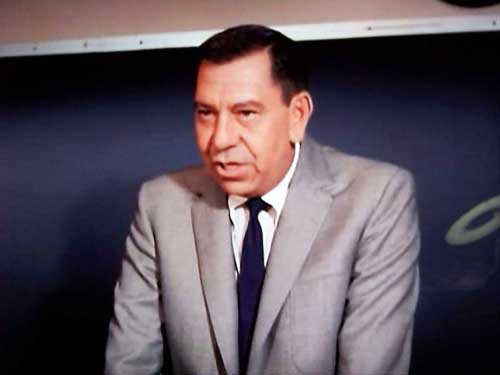
Ninth Circuit Annoyed When Drug Agents Talk Like Joe Friday

court condemns police talk
Appellate court doesn't like drug agents talking like this guy.

In suppressing evidence in a drug case, the U.S. Court of Appeals for the Ninth Circuit had some harsh words for the federal drug agents who were involved.  The Court also did not take kindly to the trial judge threatening to put one of the lawyers in jail for failing to answer phone calls from the court reporter about a disputed bill.

But first, the court’s indictment of Dragnet-ese. The court did not like the way the drug agents talked, as it explained in a footnote (paragraph breaks inserted):

1. The agents involved speak an almost impenetrable jargon. They do not get into their cars; they enter official government vehicles. They do not get out of or leave their cars, they exit them. They do not go somewhere; they proceed. They do not go to a particular place; they proceed to its vicinity. They do not watch or look; they surveille. They never see anything; they observe it. No one tells them anything; they are advised.

A person does not tell them his name; he identifies himself. A person does not say something; he indicates. They do not listen to a telephone conversation; they monitor it. People telephoning to each other do not say “hello;” they exchange greetings. An agent does not hand money to an informer to make a buy; he advances previously recorded official government funds.

To an agent, a list of serial numbers does not list serial numbers, it depicts Federal Reserve Notes. An agent does not say what an exhibit is; he says that it purports to be. The agents preface answers to simple and direct questions with “to my knowledge.” They cannot describe a conversation by saying “he said” and “I said;” they speak in conclusions. Sometimes it takes the combined efforts of counsel and the judge to get them to state who said what.

Under cross-examination, they seem unable to give a direct answer to a question; they either spout conclusions or do not understand. This often gives the prosecutor, under the guise of an objection, an opportunity to suggest an answer, which is then obligingly given.

As a side issue, the opinion contains a lengthy discussion of an incident in which the trial judge humiliated one of the defense lawyers in court and threatened to send him to jail for raising questions about the court reporter’s fee. The court reporter, who charged by the page, indented the text on each page so it began in the middle of the page, used only 25 lines of type per page instead of the standard 28, and used a font that was larger than normal. The lawyer tried to present an affidavit establishing that the transcript was twice as long as it needed to be, and thus twice as costly. The judge’s response? Here’s a snippet:

MR. LANGER (defense counsel): You say you spoke to me?

THE REPORTER: No. [TO JUDGE:] He wouldn’t even answer my phone calls.

MR. LANGER: Your Honor–

THE COURT: I know it. That is another thing. I ought to throw you in jail for not doing that, for not answering the phone calls of the reporter.

The Ninth Circuit disapproved of the trial judge’s conduct.

United States v. Marshall, 488 F.2d 1169, 1171 n.1, 1200 (9th Cir. 1973). Thanks to Frank Zotter.

25 Hidden Talking Heads References

Give credit to a sneaky law clerk to U.S. Circuit Judge Reynaldo Garza, who pulled off an adventurous Syufy-like prank all the way back in 1987. (U.S. v. Syufy is the opinion where Judge Alex Kozinski slipped in more than 200 movie titles. See “Coming Soon To A Footnote Near You.”

In United States v. Abner, a law clerk wove in twenty-five references to the names of albums and songs by the rock group Talking Heads, reportedly in an unsuccessful bid to win some concert tickets. The prank escaped the notice of Judge Garza according to a source.

United States v. Abner, 825 F.2d 835 (5th Cir. 1987).

It’s Great to be a Georgia Gator!

georgia gatorAs a University of Florida alumnus and Florida Gator fan, I couldn’t help but be tickled by Wright v. State of Georgia Dep’t of Natural Resources, from the Georgia Court of Appeals.

Few college football rivalries are as intense or long-running as that between the Florida Gators and the Georgia Bulldogs. Held in Jacksonville, FL and billed as “The World’s Largest Cocktail Party,” the Florida-Georgia game is a sacred rite of autumn in the two states. The Bulldogs ruled the series for what seemed like an eternity, inflicting untold suffering on the Gator Nation courtesy of players like Herschel Walker and Lindsay Scott. Then Coach Spurrier and Company came to the rescue, winning 10 of 11 games from 1990-2001.

Which brings us to Wright, a lawsuit in which the plaintiff claimed that certain actions by the Georgia Department of Natural Resources constituted a government “taking” of some alligators that were born and raised on plaintiff’s Georgia farm.

Judge Smith, obviously a jurist with keen political sensibilities, included this footnote:

1. Several times in this opinion, we refer to “Georgia alligators.” We do so reluctantly and soley for the sake of convenience and brevity. We recognize that for literally millions of Georgians and Floridians, the term “Georgia Gators,” or any approximation thereof, is an inherently offensive oxymoron. We apologize for any pain or distress caused by this unfamiliar and unfortunate juxtaposition.

We’ll let it slide this time, Your Honor, but if you ever happen to take up a dog-bite case involving a pug-faced nonresident defendant to the south, please don’t start talking about “Florida Bulldogs.” It would be more than we could stand.

Wright v. Georgia Dep’t of Natural Res., 562 S.E.2d 515, 517 (Ga. Ct. App. 2002). Thanks to Jessie Cranford.

One Person’s Muppet is Another Person’s Gelatinous Block of Meat

spam lawsuit over muppetsIn Hormel Corp. v. Jim Henson Productions, Inc., Hormel sued the Muppet master for infringing the trademark of its delicious product SPAM® by naming a character in the 1996 movie, Muppet Treasure Island, “Spa’am.” The U.S. District Court for the Southern District of New York rejected Hormel’s claims and the Second Circuit affirmed. Among the highlights:

• Hormel was worried that sales of SPAM would suffer if they were linked with Spa’am, the movie character, a wild boar puppet allegedly depicted as “evil in porcine form.” Not to worry. An expert in children’s literature persuaded the court that Spa’am, although not “classically handsome” and introduced as a threatening character at the beginning of the movie, ultimately becomes a positive character when he befriends the Muppets and helps them escape from the film’s villain, Long John Silver. Thank goodness we could find an expert in children’s literature to unravel that puzzle. Would that kind of testimony pass Daubert scrutiny?

• The court opined that Hormel should lighten up because, even though SPAM is a high-quality product, it is already the butt of jokes because of “the public’s unfounded suspicion that SPAM is the product of less than savory ingredients.” The court pointed out that in the television cartoon, Duckman, Duckman discovers the secret ingredient to SPAM as he gazes upon “Murray’s Incontinent Camel Farm.” The court also quoted a columnist who joked that SPAM contained all five major food groups: snouts, ears, feet, tails and brains. The court said that, given all the ribbing, “one might think Hormel would welcome the association with a genuine source of pork.”

• The court also rejected Hormel’s claim that Jim Henson Productions’ merchandising of the Spa’am character would interfere with Hormel’s own merchandising of SPAM, including its character, “SPAM-man,” a giant can of SPAM with arms and legs.

Hormel lost the case, but may have had the last laugh. It has sold more than five billion cans of SPAM . SPAM is eaten in 30 percent of American homes. I probably ate a thousand fried SPAM sandwiches when I was a kid, although I try not to think about it.

Hormel Foods Corp. v. Jim Henson Prods., Inc., 73 F.3d 497, 501–02 (2d Cir. 1996). Thanks to Lihwei Lin.