Judge Enters “Order Denying Motion for Incomprehensibility”

Several grounds exist for a judge denying a lawyer’s motion.  Now we have a new one: incomprehensibility.

Displeased with a lawyer’s inartful motion-drafting, U.S. Bankruptcy Judge Leif M. Clark (W.D. Tex.) entered an order captioned “Order Denying Motion for Incomprehensibility.” The judge couldn’t figure out what the heck the defendant was requesting in a motion titled, “Defendant’s Motion to Discharge Response to Plaintiff’s Response to Defendant’s Response Opposing Objection to Discharge.”

Judge Clark said: “The court cannot determine the substance, in any, of the Defendant’s legal argument, nor can the court even ascertain the relief that the Defendant is requesting. The Defendant’s motion is accordingly denied for being incomprehensible.”

Perhaps worried that the defendant might miss his point, Judge Clark appended a footnote in which he invoked the following quotation from the Adam Sandler movie, Billy Madison:

Mr. Madison [Sandler’s character], what you’ve just said is one of the most insanely idiotic things I’ve ever heard. At no point in your rambling, incoherent response was there anything that could even be considered a rational thought. Everyone in this room is now dumber for having listened to it. I award you no point, and may God have mercy on your soul.

— Order Denying Motion for Incomprehensibility, In re King, Case No. 05-56485-C, Feb. 21, 2006. Thanks to Sharee Moser.

Let’s Do Lunch—The Court So Orders

judge orders lawyers to do lunchIn an Arizona case, the plaintiff’s lawyer asked the defendant’s lawyer to go to lunch to discuss some pending issues. Defense counsel refused, so the plaintiff did what anyone would do when they get rejected for a lunch date: file a “Motion to Compel Acceptance of Lunch Invitation.”

Here’s what Judge Pendelton Gaines, Superior Court of Maricopa County, Arizona, had to say in granting the unusual motion:

Conversation has been called “the socializing instrument par excellence” (Jose Ortega y Gasset, Invertebrate Spain) and “one of the greatest pleasures in life” (Somerset Maugham, The Moon and Sixpence). John Dryden referred to “Sweet discourse, the banquet of the mind” (The Flower and the Leaf).

Plaintiff’s counsel extended a lunch invitation to Defendant’s counsel “to have a discussion regarding discovery and other matters.” Plaintiff’s counsel offered to “pay for lunch.” Defendant’s counsel failed to respond until the motion was filed.

Defendant’s counsel distrusts Plaintiff’s counsel’s motives and fears that Plaintiff’s counsel’s purpose is to persuade Defendant’s counsel of the lack of merit in the defense case. The Court has no doubt of Defendant’s counsel’s ability to withstand Plaintiff’s counsel’s blandishments and to respond sally for sally and barb for barb. Defendant’s counsel now makes what may be an illusory acceptance of Plaintiff’s counsel’s invitation by saying, “We would love to have lunch at Ruth’s Chris with/on . . .” Plaintiff’s counsel.[fn1]

[fn1] Everyone knows that Ruth’s Chris, while open for dinner, is not open for lunch. This is a matter of which the Court may take judicial notice.

Plaintiff’s counsel replies somewhat petulantly, criticizing Defendant’s counsel’s acceptance of the lunch invitation on the grounds that Defendant’s counsel is “now attempting to choose the location” and saying that he “will oblige,” but Defendant’s counsel “will pay for its own meal.”

There are a number of fine restaurants within easy driving distance of both counsel’s offices, e.g., [court lists fine restaurants in the Phoenix area]. Counsel may select their own venue or, if unable to agree, shall select from this list in order.

Each side may be represented by no more than two (2) lawyers of its own choosing, but the principal counsel on the pending motions must personally appear.

The cost of the lunch will be paid as follows: Total cost will be calculated by the amount of the bill including appetizers, salads, entrees and one non-alcoholic beverage per participant.[fn3]

[fn3] Alcoholic beverages may be consumed, but at the personal expense of the consumer.

[McClurg note: Alcohol and feuding lawyers? Bad idea, judge.]

A twenty percent (20%) tip will be added to the bill (which will include tax). Each side will pay its pro rata share according to number of participants. The Court may reapportion the cost on application for good cause or may treat it as a taxable cost under ARS § 12-331(5).

During lunch, counsel will confer regarding [various matters in the case]. [fn4]

[fn4] The Court suggests that serious discussion occur after counsel have eaten. The temperaments of the Court’s children always improved after a meal.

Then the judge gave the parties something to chew on by proceeding in the same order to strike the plaintiff’s proposed amended complaint.

— Rulings on Pending Motions, Physicians Choice of Arizona, Inc. v. Miller, Case No. CV2003-020242 (Ariz. Super. Ct. July 21, 2006). Thanks to Robert Greer.

Trial Judge Woes: No Submissions, No Tears, No Wigs

You don’t have to be a famous judge or blessed with a crazy case to write a Hall of Fame Strange Judicial Opinion. Here we have a low-level New Zealand trial judge trying to educate his appellate court masters about life down in the “real world” trial court-trenches, and a good-humored, self-effacing reply from the appellate court.

In New Zealand, an appeal over a $100 fine for failure to register “a handsome German Shepherd named Ben” apparently irritated the overworked trial judge. In a memorandum, the judge sought to educate the high court about the process for administering justice in his humble court at the bottom of the judicial hierarchy:

Your honour may not be familiar with the manner in which “Minor Offences” are dealt with in this Court. Notices of Prosecution . . . are surreptitiously placed in the Judge’s “In Tray” at frequent and irritating intervals, usually in his or her absence. They come in stacks and bundles … [The trial judge proceeds to describe the variety of matters crying out for his daily attention, including applications for Massage Parlor licenses, truancy notices, underage drinking citations, etc.]

The Judge peruses the mountain of files with great care and then imposes whatever he or she deems appropriate. No hearing is held. No defendant or counsel are present. No submissions are made. No tears are shed. No howls of derision are heard from the gallery. … No anxious mother suckles a fretful child. There are no sideways glances or rolling back of eyes from counsel’s table and certainly no titters are heard to run around the Court.

The Judge sits alone in his chambers and affixes his facsimile signature to the Information Sheet perhaps muttering silent curses to himself as he does so. …

I hope this short memorandum may assist Your Honour in dealing with this appeal.

High Court Justice Grant Hammond (pretty sure this is him–please correct if wrong), chragined, contrasted the trial judge’s mundane existence with the grandeur of his much more regal appellate court, describing how on the day of the hearing over the hundred-dollar appeal, “[i]n full High Court regalia we processed bewigged and black-robed through several levels” of the court building.

It was clear Justice Hammond felt awkward  about “tinkering” with the trial judge’s work. He quoted political philosopher Jeremy Bentham’s description of court systems as “a fathomless and boundless chaos, made up of fiction, tautology, technicality and inconsistency, and the administration of it a system of exquisitely contrived chicanery which maximises delay and the denial of justice.”

In the end, Hammond’s court reduced the fine to $20 because the appellant didn’t have the money to pay the higher fine.

— Lowe v. Auckland City Council (High Court, Auckland, AP44/93, 12 May 1993, Hammond, J.). Thanks to Lina Lim.

Alaska Judge a Parrot Head

strange judicial opinions volcano moves trialChanging venue because of a volcano? Sure, it sounds far-fetched, but don’t blow your stack.

It really happened in U.S. v. McDonald, a 1990 federal bribery prosecution in Alaska. Fearful that an unpredictable volcano named Mt. Redoubt would act up and disrupt the trial, Judge James M. Burns granted a motion to change venue for the trial from Fairbanks, Alaska to Tacoma, Washington.

Judge Burns noted he could find “no precedent for changing venue because of an earthquake, hurricane, tornado, flood, volcanic eruption, or other natural disaster,” but said Mt. Redoubt was “entitled to a modicum of judicial respect.”

Judge Burns might be a Jimmy Buffett fan. Usually, when you think of Buffett, you think frozen margaritas, not frozen tundra, but footnote 17 quotes the entire lyrics of the Jimmy Buffett song “Volcano,” observing that Buffett’s lyrics express feelings apropos to the circumstances of the case.

Buffett sang, “I don’t know, I don’t know where I’m a-gonna go when the volcano blow.”

Here they knew. The judge sent everyone to Tacoma.

— United States v. McDonald, 740 F. Supp. 757, 764 nn.17 & 18 (D. Alaska 1990) (Burns, J.). Thanks to Tom Gaylord.

Breaking News: Marbury v. Madison Causing Consitutional Crisis

marbury unconstitutional
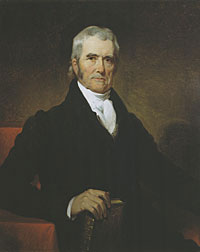
Chief Justice John Marshall, author of Marbury v. Madison.

In a 2005 opinion, an Alabama Supreme Court justice (that well-known jurisprudential heavyweight “Tom Parker”), without a trace of irony, called the U.S. Supreme Court “presumptuous” while declaring Marbury v. Madison and its progeny to be “unconstitutional.”

For non-legal types, Marbury is the landmark 1803 Supreme Court case authored by the great Chief Justice John Marshall that established the power of “judicial review”; i.e., that the Supreme Court gets the last word in disputes with the legislative and executive branches of government.

The Alabama case involved a challenge to the constitutionality of certain statutes affecting taxation and the funding of the Birmingham, Alabama civic center authority. Justice Parker included this footnote in his concurrence (italics added.):

21. . . . Despite everything in the text of the Constitution, its history, and the expressed intent of the Framers being completely contrary to the notion of judicial supremacy, the United States Supreme Court has presumptuously arrogated such a position for itself simply by declaring it so.

In Cooper v. Aaron . . . the United States Supreme Court stated: “[Marbury v. Madison, 5 U.S. (1 Cranch) 137, 2 L.Ed. 60 (1803)] declared the basic principle that the federal judiciary is supreme in the exposition of the law of the Constitution and that principle has ever since been respected by this Court and the Country as a permanent and indispensable feature of our constitutional system.” Tellingly, this proclamation of judicial supremacy was made without citation to the Constitution or any other authority. The result of this unconstitutional doctrine of judicial supremacy has been an increasing shift of the balance of powers from the elected executive and legislative branches of the federal government to the unelected judiciary, thereby emboldening federal courts to rule upon constitutional questions based upon foreign law or perceived changes in public opinion instead of the Constitution and its history. . . .

The turning away from our national compact by federal courts now threatens our country with a constitutional crisis.

There’s a constitutional crisis over Marbury?

— Birmingham-Jefferson Civic Ctr. Auth. v. City of Birmingham, 912 So.2d 204, 223 n.21 (Ala. 2005) (Parker, J., concurring). Thanks to Brian Brock.

Judge Removed Over Cell-Phone Freakout

strange judicial opinions cell phone freakout
A single ringing phone sent 46 people to jail.

Calling it “an egregious and unprecedented abuse of judicial power,” the New York State Commission on Judicial Conduct ordered the removal of Niagra Falls City Court Judge Robert M. Restaino for an incident in which he freaked out when a cell phone rang in his court. He ended up ordering 46 defendants into police custody when he couldn’t find who had the ringing phone.

It all started when a cell phone went off in the back of a crowded domestic violence courtroom in which 46 defendants were about to be released on their own recognizance. In addition to the defendants, lawyers, court personnel, and others were present—about 70 people total. The judge responded to the offending ring stating:

Now, whoever owns the instrument that is ringing, bring it to me now or everybody could take a week in jail and please don’t tell me I’m the only one that heard that …

Everyone is going to jail; every single person is going to jail in this courtroom unless I get that instrument now … You are all going.

Instead of realizing his mistake and backing off, he proceeded to threaten and badger the poor defendants for two hours to find out whose phone it was. (He didn’t question the lawyers, but, of course, lawyers NEVER have ringing cell phones.)

He berated the group repeatedly about their selfishness:

As I have indicated, this troubles me more than any of you people can understand. Because what I am really, really having a hard time with, that someone in this courtroom who is so self-absorbed, so concerned only for their own well-being, they kind of figure they’re going to be able to establish the bail and it won’t matter so screw all of the rest of you people.

The disciplinary court saw the irony in this diatribe:

It is also ironic that in repeatedly berating the “selfish” and “self-absorbed” individual who “put their interests above everybody else’s” and “[doesn’t] care what happens to anybody,” respondent failed to recognize that he was describing himself.

I feel kind of sorry for Judge Restaino. Apparently, this was the only blemish on his record. Commissioner Raoul Felder dissented as to the sanction of removal because the incident was a “total aberration from his character and demeanor as a judge for eleven years.”  Personally, I feel everyone should be entitled to at least one free unwarranted outburst in public life, sort of like the “one free bite” rule pertaining to dogbites.  Maybe we could call it the “one free oopsy sound-bite” rule.

Restaino’s initial reaction no doubt would have been forgiven. What did him in was his decision to persist for two grinding, painful hours despite repeated pleas to reconsider.

— Matter of Restaino, Determination of the New York State Commission on Judicial Conduct, Nov. 29, 2007. Thanks to Daniel Green.

Divinity Student Has Bone to Pick with A Yale Dog

strange judicial opinions dog puns
It's a dog-eat-divinity student world.

A dog-bite case against the dean of the Yale Divinity School by a divinity student gave U.S. District Judge Gerard Goettel a chance to “let the dogs out” in an opinion leaving no possible wordplay on dogs unpenned or unpunned.

The main issue was whether the Yale Divinity School could be held strictly liable under the Connecticut dog-bite statute as a “keeper” of the dean’s offending canine, Rocky, a Labrador, because the dog was permitted to roam free in common areas of the divinity school residences and chapel.

The court held the dean strictly liable, but let the school off because it didn’t “control” the dog’s activities.

Here’s a compendium of Judge Goettel’s fun canine puns:

“In this dog eat dog world, anything is fair game for litigation in the federal courts.”

“As compensation for her injuries, plaintiff seeks to take a bite out of the defendants’ pocketbooks.”

“[The plaintiff], now an Episcopal priest with her own ministry, obviously has a bone to pick as her injuries required substantial medical care, and Rocky is clearly in the doghouse.”

“In dogged pursuit of damages for her trauma, she filed this suit ….”

“Hounded by Connecticut’s [dog-bite statute] ….”

“The [individual defendants] do not deny that they were keeping Rocky who apparently was not licensed to anyone but had a nose for trouble.”

 “Plaintiff’s analysis is essentially the tail wagging the dog.”

“Rocky’s having access to common areas, without more evidence indicating an intent to give refuge to the dog or to control the dog’s activities on the part of the School is not a sufficient basis to collar the Divinity School.”

As for Rocky, we don’t know his fate, but the judge did offer a weak defense for the nice face-biting doggie in a footnote:

1. There is no indication that Rocky, like the dog in Oliver Goldsmith’s Elegy on the Death of a Mad Dog, “to gain some private ends, went mad and bit the [wo]man.”

— Post v. Annand, 798 F. Supp. 189, 190–91 & n.1, 192 (S.D.N.Y. 1992). Thanks to Lillian Gustilo.

Judge is New York Pizza Snob

new york pizzaGeoff Petis sent along this interesting case. I’ll let him tell you about it:

New York Judge Philip S. Straniere penned an opinion about “shrinkwrap” agreements—contracts that may or may not become valid upon the opening of the package. The agreements go by different names (shrinkwrap, clickwrap, etc.), but the rose still smells as sweet. Evidently, Judge Straniere—who apparently takes his pizza as seriously as his contracts — did not agree:

Before deciding the merits of this case the court must address a troubling issue. The computer industry and other courts have adopted the term “pizza box” to describe the package in which the document containing the terms and conditions of the agreement is shipped. As a matter of law in the State of New York, such a container is not a “pizza box.” No self-respecting New York pizza would be caught soggy in such a box. The container may pass as a “pizza box” in those parts of the world that think food from Domino’s, Little Caesars, Pizza Hut, and Papa John’s is pizza. In this court’s opinion such a classification cannot be recognized east of the Hudson River.

Judge Straniere, having fun with this case, goes on to quote Ira Gershwin, Mandy Patinkin, and Marie Antoinette, among others.

— Licitra v. Gateway, Inc., 734 N.Y.S.2d 389, 391 (N.Y. Civ. Ct. 2001). Thanks to Geoff Petis.

Happily, It’s Still a MAD, MAD World

Alfred E. NeumanAs a kid, I couldn’t wait to get my hands on each new issue of MAD Magazine. Alfred E. Neuman and company had a lot to do with shaping (warping) my sense of humor. One of my favorite features, and the first thing I looked at every month, was the folding back covers, which showed one picture unfolded but ingeniously formed a different, wacky picture when folded.

I’m glad to see that MAD has not been forgotten, even in the hallowed halls of justice, as shown by Cabiness v. Town of James Island, South Carolina Supreme Court case.

The case involved a third failed attempt by the Town of James Island to incorporate itself. The complicated facts aren’t important for our purposes. Suffice it to say that one of the biggest issues was the “contiguity” of certain property.

In considering this issue, the court said the most convincing evidence were the courtroom exhibits of maps, which apparently, resembling MAD fold-in back covers, showed the all-important contiguity of certain properties at issue in the case:

Perhaps the most convincing exhibits illustrated the “but for” concept of contiguity in a “MAD Magazine” style back-page folding manner, where a map of two areas alleged to be contiguous was folded in such a manner as to eliminate the previously-annexed publicly-owned property.

Perhaps worried, as I am, that this great literary device is being forgotten, Justice Hearn, in a footnote, directed readers “not familiar with this reference” to a New York Times interractive compilation of MAD Magazine fold-in covers.

— Cabiness v. Town of James Island, Opinion No. 26989, S.C. Sup. Ct, June 20, 2011. Thanks to Jim Bogle.

Defamatory in England to Call Someone Ugly

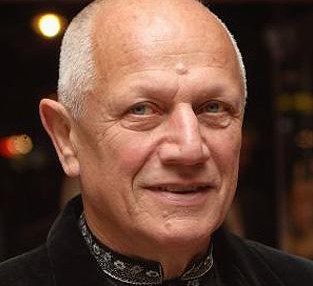
Steven Berkoff
Won a defamation judgment for being called ugly.

A 1996 English libel case reminds me of the old Rodney Dangerfield joke: “My psychiatrist told me I’m going crazy. I told him, ‘Doc, if you don’t mind I’d like a second opinion.’ He said, ‘Alright, you’re ugly too.’”

In Berkoff v. Burchill, an English court of appeals held that describing a person as ugly can constitute actionable defamation. No wonder people are flocking to England to take advantage of the country’s plaintiff-friendly libel laws. It’s highly doubtful calling someone ugly would be actionable defamation under U.S. law.

(By the way, this practice, known as “libel tourism,” resulted in enactment of a 2010 U.S. law that prohibits U.S. courts from enforcing foreign defamation judgments if they were rendered under legal protections less protective of speech than U.S. standards. Berkoff’s suit, against an English newspaper, was not a case of libel tourism.)

The English case arose from a Sunday Times article in which defendant Burchill reviewed the movie The Age of Innocence. Burchill described the film director, Steven Berkoff, as “hideous-looking.”

Nine months later, Burchill once again called Berkoff’s pulchritude into question, this time in a review of the movie Frankenstein. Describing “the Creature,” Burchill said: “It’s a very new look for the Creature—no bolts in the neck or flat-tap hairdo—and I think it works; it’s a lot like Stephen Berkoff, only marginally better-looking.”

Berkoff sued for defamation. The issue was whether calling someone hideous-looking is a defamatory statement capable of injuring a person’s reputation. The appellate court answered affirmatively.

The court said a jury could “conclude that in the context the remarks about Mr. Berkoff gave the impression that he was not merely physically unattractive but actually repulsive” and that this could injure Berkoff’s ability to make a living by “lowering his standing in the estimation of the public … [by] making him an object of ridicule.”

Is truth a defense? He looks okay in this picture (photo by Getty, borrowed from The Telegraph).

— Berkoff v. Burchill, [1996] 4 All E.R. 1008 (Ct. App. 1996). Thanks to Heiner O. Mommsen.