Was Judge Too Late in Slamming Lawyers for Trial Misconduct?

U.S. District Judge Richard P. Matsch awarded attorneys’ fees and costs in a patent infringement case against a pair of high-echelon lawyers and their clients for trial misconduct “reflecting an attitude of ‘what can I get away with?’” and a “winning is all that is important approach” to litigation. A media report estimated the fees and costs could run several million dollars. Judge Matsch had previously thrown out the plaintiffs’ $51 million verdict in the case based on the same conduct.

The case raises interesting questions about the extent of a judge’s obligation to control attorney conduct it finds objectionable during the course of a trial.

The facts are complicated and readers interested in the full story should consult the judge’s order. But basically, the judge was ticked off that the plaintiffs’ lawyers pursued a trial strategy that the judge considered legally untenable, including attempting to establish a patent infringement by showing substantial similarity between the plaintiffs’ product and the defendants’ product.

Judge Matsch opined (paragraph breaks inserted):

Upon reflection, this Court finds and concludes that the rulings on the claims construction issues adjudicated the fairly debatable issues in this case and that the manner in which plaintiffs’ counsel continued the prosecution of the claims through trial was in disregard of their obligations as officers of the court.

The fairness of the adversary system of adjudication depends upon the assumption that trial lawyers will temper zealous advocacy of their client’s cause with an objective assessment of its merit and be candid in presenting it to the court and to opposing counsel.

When that assumption has been contradicted by a trial record of conduct reflecting a winning is all that is important approach to the trial process, the court has a duty to redress this resulting harm to the opposing party.

Judge Matsch essentially took the position that the plaintiffs’ claims were frivolous. However, he had previously denied the defendants’ motion for summary judgment and the jury returned a verdict in the plaintiffs’ favor. Defendants argued that these events showed the claims had merit, but the judge disagreed.

Perhaps most interesting was the defendants’ argument that if the judge found the trial conduct to be objectionable, he should have done something about it during the trial. In the judge’s words, the plaintiff’s lawyers “argue that they should not be held responsible for what they were able to get away with during the trial presentation.”

The argument does carry some persuasive force, particularly since the judge apparently denied objections by defendants’ counsel to some of the misconduct.

But Judge Matsch took the position that counsel were already aware of the court’s admonitions regarding the trial strategy, so he didn’t have any obligation to restrain it during the trial.

— Medtronic Navigation, Inc. v. Brainlab Medizinische Computersystems GMBH, No. 98-cv-01072-RPM, 2008 WL 410413 (D. Colo. 2008).
Dr. Seuss Poet Laureate to Federal Judiciary?

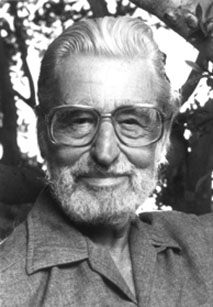
Dr. Seuss
Dr. Seuss - Most emulated poet of the American judiciary.

For reasons unexplained, a pro se inmate litigant apparently included a hard-boiled egg as part of his request for a preliminary injunction.

U.S. Magistrate James Muirhead ordered the egg destroyed. He did it in the style of Dr. Seuss, who may be on his way to being named poet laureate for the federal judiciary (see “Dr. Seuss on Bankruptcy Law” in which a federal bankruptcy judge also engages in Seussian rhyming):

No fan I am

Of the egg at hand.

Just like no ham

On the kosher plan.

This egg will rot

I kid you not.

And stink it can

This egg at hand.

There will be no eggs at court

To prove a clog in your aort.

There will be no eggs accepted.

Objections all will be rejected.

From this day forth

This court will ban

hard-boiled eggs of any brand.

And if you should not understand

The meaning of the ban at hand

Then you should contact either Dan,

the Deputy Clerk, or my clerk Jan.

I do not like eggs in the file.

I do not like them in any style.

I will not take them fried or boiled.

I will not take them poached or broiled.

I will not take them soft or scrambled

Despite an argument well-rambled.

No fan I am

Of the egg at hand.

Destroy that egg!

Today! Today!

Today I say! Without delay!

SO ORDERED (with apologies to Dr. Seuss).

Cute, although the “court”-“aort” rhyme seems a bit of a stretch.

— Wolff v. New Hampshire Dep’t of Corrections, Civil No. 06-cv-321-PB, 2007 WL 2788610 (D.N.H. Sept. 18, 2007). Thanks to everyone who sent this in.

Federal Appellate Judge Makes Soap Opera of Ordinance Dispute

strange judicial opinion detergent brands
A washing machine laughing hysterically at Judge Brown's opinion.

In 1973, the Fifth Circuit struck down a Dade County detergent labeling ordinance, finding that the ordinance, intended to reduce pollution from ingredients found in household detergents, was preempted by the Federal Hazardous Substance Labeling Act.

Chief Judge John Brown concurred, managing to work in the brand names of just about every detergent product available, becoming a humorous opinion-writing path-breaker.

Let us know if we’re wrong, but Judge Brown’s opinion–published in 1973–may be the first overtly intentional effort by a federal court of appeals judge to write a clever and funny opinion.  It’s a lot easier for a state judge to get away with being amusing than a federal judge, certainly a court of appeals judge.

So, while the opinion isn’t particularly hilarious, Judge Brown’s boldness and innovation gets this case into the Strange Judicial Opinions Hall of Fame.

Here’s a taste of his detergent-filled ruling (italics inserted):

As Proctor of this dispute … the Court holds that Congress has specifically preempted regulatory action by Dade County. Clearly, the decision represents a Gamble since we risk a Cascade of criticism from an increasing Tide of ecology-minded citizens. Yet, a contrary decision would most likely have precipitated a Niagara of complaints from an industry which justifiably seeks uniformity in the laws with which it must comply. Inspired by the legendary valor of Ajax, who withstood Hector’s lance, we have Boldly chosen the course of uniformity in reversing the lower Court’s decision upholding Dade County’s local labeling laws. And, having done so, we are Cheered by the thought that striking down the regulation by the local jurisdiction does not create a void which is detrimental to consumers ….

…

And so we hold. This is all that need be said. It is as plain as Mr. Clean the proper Action is that the Dade County Ordinance must be superseded, as All comes out in the wash.

— Chem. Specialties Mfrs. Ass’n v. Clark, 482 F.2d 325, 328–29 (5th Cir. 1973) (Brown, C.J., concurring). Thanks to Craig A. Wilson.

Better Contempt of Court than Scratching Where You Itch

Most “funny” judicial opinions aren’t ha-ha funny. They’re merely amusing or interesting. But Lawhaha.com’s scientific focus group tests showed that the colloquy below between the chastised lawyer and the judge makes people laugh out loud. For that, it’s in the SJO Hall of Fame.

In Ahmed v. Reiss Steamship Co., a federal judge held the plaintiff’s lawyer in contempt of court for failure to appear for trial. Judge Ann Aldrich (N.D. Ohio) was disturbed that the lawyer had “told two different federal district court judges that he was appearing before the other,” sort of the legal version of the old childhood stratagem for a night out in which each kid tells his parents he’s spending the night at the other’s house.

Things turned bizarre when the lawyer finally decided to explain his absence, in a way the court found to be “lacking taste and any respect for courtroom decorum”:

MR. JAQUES: I wasn’t here because I couldn’t be here. I was not here, Judge, because I had the screaming itches in the crotch. I was so badly in need of medical care that I had been in communication with my physician a lot. Judge, I wasn’t here because I would have been scratching my testicles constantly if I had been here. Judge–

THE COURT: Mr. Jaques–

MR. JAQUES: Judge, do you understand that?

THE COURT: You don’t have to be so graphic. You could have simply let the Court know that for medical reasons you were not going to be here and you could have–

MR. JAQUES: Judge, it was not a medical reason that I would have been able to frame earlier. That’s one thing.

THE COURT: It doesn’t seem awfully difficult to me. Is there anything else?

The lawyer submitted a letter from his doctor to bolster his claim:

It has been recommendation (sic) … that because of the nature, location and symptoms of this ailment he should avoid to be in public places and mainly court appearances all of which could jeopardize his professional appearance …

While the judge did not “question the intensity of [the lawyer’s] discomfort,” she held him in contempt for not notifying the court of the problem and for representing that he couldn’t attend trial because he was appearing before another judge.

— Ahmed v. Reiss S.S. Co., 580 F. Supp. 737, 742 (N.D. Ohio 1984). Thanks to Michael Slodov.

The Encyclopedic Footnote of Pop Culture (Kozinski)

U.S. Ninth Court of Appeals Judge Alex Kozinski is well known for sprinkling pop culture references throughout his opinions, particularly in the famous Syufy opinion, which wove in the titles of more than 200 movies. (See “Coming Soon to a Footnote Near You”)

A less noticed, but just as fun pop culture-laden opinion was his dissent to an order denying rehearing en banc in White v. Samsung Electronics America, Inc., a case where the Ninth Circuit upheld a “right of publicity” claim by former game show hostess Vanna White against Samsung for using a robot resembling her game show persona in a television commercial.

Complaining that, “[u]nder the majority’s opinion, it’s now a tort for advertisers to remind the public of a celebrity,” Kozinski excoriated the court for over-extending intellectual property rights in an opinion jammed full of pop culture references.

(That’s one thing to love about Kozinski’s writing: he can be pithy, insightful, and amusing in less than twenty words.)

Pop culture ran amuck in a single footnote (footnote 6) that includes references to (in order): grunge rocker Tad Doyle, the Hell’s Angels, Marvel Comics, Breakfast at Tiffany’s, Breakfast of Champions, The Electric Kool-Aid Acid Test, Looking for Mr. Goodbar, The Coca-Cola Kid, The Kentucky Fried Movie, Harley Davidson and the Marlboro Man, The Wonder Years, Wonder Bread, Joseph and the Amazing Technicolor Dream Coat, Janis Joplin, Paul Simon, Leonard Cohen, Bruce Springsteen, Prince, dada, Monty Python, Roy Clark, Mel Tillis, the Talking Heads, Andy Warhol, REO Speedwagon, 38 Special, Jello Biafra and the Dead Kennedys.

— White v. Samsung Elec. Am., Inc., 989 F.2d 1512, 1512 n.6, 1514 (9th Cir. 1993) (Kozinski, J., dissenting from order denying rehearing en banc). Thanks to Katherine Shipman.

The Never-Ending Story of Bill Clinton’s Sex Life (Kozinski)

Where do scandals go when they die? They travel upwards, of course … to a U.S. Court of Appeals. At least if they’re scandals involving the saga of President Bill Clinton’s sexcapades.

U.S. Ninth Circuit Court of Appeals Judge Alex Kozinski faced an appeal in a defamation suit filed by former lounge-singer Gennifer Flowers against Hillary Rodham Clinton, James Carville and George Stephanopoulos. With that cast of characters (including Judge K), you know it’s going to be an interesting opinion.

This is an opinion to be admired as much for its lucidity as its colorful take on the events. Here’s a taste from the opening paragraphs (some paragraph breaks inserted):

Long after the public spotlight has moved on in search of fresh intrigue, the lawyers remain. And so we find ourselves adjudicating a decade-old dispute between Gennifer Flowers and what she affectionately refers to as the “Clinton smear machine”: James Carville, George Stephanopoulos and Hillary Clinton. Flowers charges that said machine destroyed her reputation by painting her as a fraud and a liar after she dis-closed her affair with Bill Clinton. We decide whether Flowers’s claims are timely and, if so, whether they survive a motion to dismiss.

Background and Proceedings Below

In the heat of the 1992 presidential primary campaign, the Star—that ubiquitous supermarket source for celebrity scandal—ran a story claiming that Bill Clinton had carried on an affair with an Arkansas woman named Gennifer Flowers. Clinton and Flowers both denied it at first, but a few days later Flowers (doubtless realizing that honesty is the best policy after all) sold her story to the Star.

Clinton continued vigorously denying the allegations and appeared on 60 Minutes with his wife to say they weren’t true. The following day, Flowers responded by holding a press conference where she played recordings of intimate phone calls from Clinton that she’d secretly taped. Later news reports suggested that the tapes may have been selectively edited.

According to Flowers, Hillary Clinton and her two “henchmen,” George Stephanopoulos and James Carville, conspired to protect Bill Clinton’s presidential candidacy from Flowers’s damaging revelations. Flowers claims that during the 1992 campaign and in later political memoirs and interviews, Carville and Stephanopoulos defamed her and painted her in a false light by claiming that she had lied in her story to the Star and “doctored” the tape-recorded phone calls.

Hillary Clinton, the alleged mastermind of the conspiracy, not only orchestrated the defamatory exploits, but also exposed private information about Flowers and organized break-ins of her residence. Flowers claims that, as a result of all this schemery, her reputation has wilted and her blossoming career as a Las Vegas lounge singer has been nipped in the bud.

It’s like the beginning of an intriguing political spy novel you want to keep reading. In the not-as-exciting climax, the Ninth Circuit panel felt compelled under the law to reverse the district court, which had dismissed all of Flowers’ claims.

Meanwhile, Kozinski gave us another Syufy-type mystery (see “Coming Soon to a Footnote Near You!”) by burying an amusing reference in one of the citations. I won’t spoil the mystery. See if you can find it.

— Flowers v. Carville, 310 F.3d 1118, 1122 (9th Cir. 2002) (Kozinski, J.). Thanks to Elise Hendrick .

That’s Entertainment! (Gardner)

Seems as though colorful California Court of Appeals Judge Robert Gardner, a Lawhaha.com Hall-of-Famer, had to deal with more than his fair share of bawdy subjects. But to resolve them, he consistently applied his excellent writing with good old common sense, leaving memorable opinions for the rest of us to enjoy.

In People v. Sarong Gals, the owners of “Sarong Gals,” a bar featuring live nude dancers, appealed an injunction entered against them under California’s Red Light Abatement law, a 1913 statute declaring to be a public nuisance any place used for the purpose of lewdness, assignation or prostitution.

Defendant’s primary argument was that the Red Light Abatement statute can not be lawfully applied to “entertainment.”

Judge Gardner disagreed. He began his opinion with a long list of what he called “hilarious highlights” of the “entertainment” observed at Sarong Gals through police surveillance. The judge’s descriptions of these highlights are a bit too graphic for Lawhaha.com, but one of them had something to do with a customer’s sunglasses. Use your imagination or go look up the opinion for details.

With regard to defendant’s argument that the statute could not be constitutionally applied to restrict “entertainment,” Judge Gardner opined that just about any activity, including people getting devoured by lions, appeals to the “entertainment” wishes of some audience somewhere:

Lewdness is lewdness and covering it with a patina of “free expression” is a fiction which the law will not tolerate. Masturbating on stage, causing customers to openly masturbate, allowing patrons to peer into females’ innards, simulating sexual intercourse and in other ways titillating the customers sexually amounts to lewdness—even though it may be entertaining.

…

Presumably, the Romans of the First Century derived entertainment from witnessing Christians being devoured by lions. Given the right audience, the spectacle of a man committing an act of sodomy on another man would provide entertainment value. However, neither this spectacle nor the activities described in the instant case are invested with constitutionally protected values merely because they entertain viewers.

— People v. Sarong Gals, 27 Cal. App. 3d 46, 50–51 (1972). (Thanks to Frank Zotter.)

Kozinkski in Judge Gardner’s Fan Club

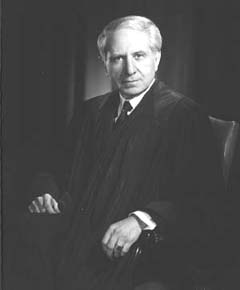
Judge Robert Gardner
Lawhaha.com Hall of Fame Judge Robert Gardner

U.S. Court of Appeals Judge Alex Kozinski, a Lawhaha.com Strange Judicial Opinions Hall-of-Famer, took time to send in his praise for another judge who dared to be different: California Court of Appeals Judge Robert Gardner.

Judge K said Gardner is one of his heroes, and included his favorite Gardner quote, from People v. Benton. Although it involves profanity, as Judge Kozinski said, it’s for a good cause:

Mrs. Barnhill and her daughter, Sainna Okeson, were seated at the kitchen table in Mrs. Barnhill’s apartment on Keel Street in Anaheim on the evening of August 2, 1976. Around midnight, a … man entered. With pistol in hand, he said, “Don’t say a word, don’t say a mother-f****** word.” [Fn.1]

[Fn.1] It is a sad commentary on contemporary culture to compare “Don’t say a word, don’t say a mother-f****** word” with “Stand and deliver,” the famous salutation of Dick Turpin and other early English highwaymen. It is true that both salutations lead to robbery. However, there is a certain rich style to “Stand and deliver.” On the other hand, “Don’t say a word, don’t say a mother-f****** word” conveys only dismal vulgarity.

The speech of the contemporary criminal culture has always been a rich source of color and vitality to any language. Yet, when one compares the “bawds,” “strumpets,” “trulls,” “cut-purses,” “knaves,” and “rascals” of Fielding and Smollett to the “hookers,” “pimps,” “Narcs,” “junkies,” and “snitches” of today’s criminal argot, one wonders just which direction we are traveling civilization’s ladder. “Hooker,” at least, has traceable historical antecedents—although the descendants of General “Fighting Joe” Hooker would probably prefer that their famous ancestor be remembered for something other than his army’s camp followers—such as the slaughter at Chancellorsville.

Judge Gardner used the full term without the asterisks, making it viscerally funnier, but Lawhaha.com tries to stay family friendly.

— People v. Benton, 77 Cal. App. 3d 322, 324 & n.1 (1978).

But Did the Defendant Come in Through the Bathroom Window?

As a member of a Memphis rock cover band that plays several Beatles songs and a huge Beatles fan, I have a special appreciation for Montana Judge Gregory R. Todd’s order in a 2007 criminal case.

After the defendant pleaded guilty to burglary, he was asked to fill out portions of a pre-sentence investigation report. In response to the question, “Give your recommendation as to what you think the Court should do in this case,” the defendant replied, “Like the Beetles say, ‘Let It Be.’”

Judge Todd took issue with both the defendant’s apparent plea for leniency and also his misspelling of the name of the Beatles, for whom Judge Todd obviously has great fondness. The judge penned a caustic sentencing memorandum, written to the defendant, that managed to work in the titles of thirty-nine Beatles songs:

Act Naturally

Baby It’s You

Bad Boy

Carry That Weight

Come Together

Day in the Life

Do You Want to Know a Secret?

Fixing a Hole

Fool on the Hill

Get Back

Hard Day’s Night

Hello Goodbye

Help

Here, There and Everywhere

Hey Jude

Honey Don’t

I Don’t Want to Spoil the Party

I Feel Fine

I Should Have Known Better

I, Me, Mine

I’ll Cry Instead

I’ll Get You

I’m a Loser

Let It Be

Long and Winding Road

Magical Mystery Tour

Misery

Mr. Moonlight

Nowhere Man

Run for Your Life

Something

Strawberry Fields Forever

The Word

Think for Yourself

Ticket to Ride

Wait

We Can Work It Out

When I’m 64

You Really Got a Hold on Me

Here’s a taste from the last paragraph of the memorandum:

Later when you thought about what you did, you may have said I’ll Cry Instead. Now you’re saying Let It Be instead of I’m A Loser. As a result of your Hard Day’s Night, you are looking at a Ticket To Ride that Long and Winding Road to Deer Lodge. Hopefully you can say both now and When I’m 64 that I Should Have Known Better.

Judge, what can I say, but Thank You Girl, er rather, Your Honor. Til There Was You, most judicial opinions were just so Yesterday. I hope we have a chance to Come Together for lunch or Something. Why? Well, just Because.

— State v. McCormack, No. DC06-0323, Montana Thirteenth Judicial District, Yellowstone County, Feb. 26, 2007. Thanks to Pat Smith.

Must-Read Musmanno (Musmanno)

Michael Musmanno
Justice Michael Musmanno, a Lawhaha.com Hall of Famer

Any fan of judicial opinion writing needs to study the opinions of the Honorable Michael A. Musmanno (1897-1968). He led a remarkable life. Before joining the Pennsylvania Supreme Court, Justice Musmanno enjoyed an illustrious career as a lawyer, U.S. Congressman and author. Highlights of his career include serving as the presiding judge at the Nuremberg war crime trials and as a defense lawyer in the Sacco & Vanzetti trial.

His opinions are marvelous concoctions of deep-hearted passion and brutal common sense, delivered in highly literate and often hilarious prose.

U.S. Ninth Circuit Court of Appeals Judge Alex Kozinski, another notable opinion-writer,  reported to Lawhaha.com that Musmanno has been his model since law school and that he consciously tries to emulate Musmanno’s writing. He laments that today’s law school graduates have never heard of Musmanno and return only blank stares when his name is mentioned.

Here are a couple samples of Musmanno’s writing sent by Chris Nace:

In Bosley v. Andrews, a woman sued a neighbor whose cows trespassed on her farmland to eat her crops. After being chased away in the morning, the “bovine buccaneers,” as Musmanno called them, returned for lunch. “This time they came, eight of them, with reinforcements. They brought along their boy friend, a 1500-pound Hereford white-faced bull.” The bull took chase after the plaintiff, causing her to suffer a heart attack.

A majority of the Pennsylvania Supreme Court rejected the woman’s claim for negligent infliction of emotional distress damages, following the traditional rule that such a claim cannot be maintained in the absence of a “physical impact” with the plaintiff (the bull never actually touched the plaintiff).

In dissent, Musmanno skewered the majority for what he saw as an unjust result, closing his opinion by stating that the majority’s approach “is unsupportable in law, logic, and elementary justice – and I shall continue to dissent from it until the cows come home.”

In Pennsylvania Society for the Prevention of Cruelty to Animals v. Bravo Enterprises, Inc., the plaintiff sought to enjoin a bullfight, but the majority held that the organization lacked standing. Musmanno began his impassioned dissent:

If there is one commodity of which there is no need for a further supply, it is violence. If there is one school that the world can afford to miss, it is one for the tutoring of methods of violence, brutality and cruelty. … [W]e can well do without a bullfight which is nothing less than an open air lyceum in the art of torturing helpless animals.

Add Justice Musmanno to your list of “four dead people with whom you would most like to have dinner.”

— Bosley v. Andrews, 142 A. 2d 263, 267–68, 280 (Pa. 1958) (Musmanno, J., dissenting); Pa. Soc’y for the Prevention of Cruelty to Animals v. Bravo Enterprises, Inc., 237 A. 2d 342 (Pa. 1968) (Musmanno, J., dissenting). Thanks to Chris Nace.