Distinguishing Good from Bad Law School Advice

When new students arrive at law school, they receive a ton of advice from upper-level students.  2Ls and 3Ls love giving advice to new students.  If they can do it at an event where alcohol is being consumed, a state close to nirvana is achieved.  But how do incoming students distinguish between good advice and bad advice?  Here’s a tip I give in 1L of a Ride.  After mentioning that upper-level students sometimes give really good advice, I say:

But upper-level students also give some really bad advice, much of which involves ways to cut corners, so be wary of what they tell you. Although it will be socially awkward, if an upper-level student starts piling on the shortcut advice, ask the person about his or her GPA or class rank. You could phrase it like this: “Thanks for all the advice. Did it work for you?”

Last week I received an email from an incoming student at another law school.  She complimented the book and added a funny postscript referencing the above passage:

P.S.  Since your interest in humor is apparent, let me tell you a story from the second day of reading your book. I was with my parents before dinner and discussing the tips involved in your book.  My father is a practicing lawyer who went to Ole Miss Law School and graduated in 1961. I haven’t considered him much of a resource due to the changed role of technology in that intervening period.

I mentioned two conversations I’ve had with friends who are already in law programs across the country and clarified that they gave excellent advice. I repeated your recommendation that you ask any student giving bad advice or shortcuts about their GPA to help evaluate its validity.

Some time later my dad started a sentence, “What you need to know about law school is …”  When he finished I said, “Hey dad, that sounds like that really worked for you! May I ask what your GPA was?”

I’ll be listening to his fatherly advice, despite his C+/B- grade point average.  🙂  He’s more convinced than ever that repeating “You’ll go to law school and become a lawyer” beginning at the cradle was a good idea.

Love it.  Seriously, folks, I was just looking at a law school page where an incoming student was asking for advice on a specific topic.  The best answers came from the top students.  Most people will make it through law school.  If your goal is higher than that, carefully sift through all advice, from students, professors and, yes, even dads.

Spot the Tort: Non-Tortious Neighbors are Good Neighbors

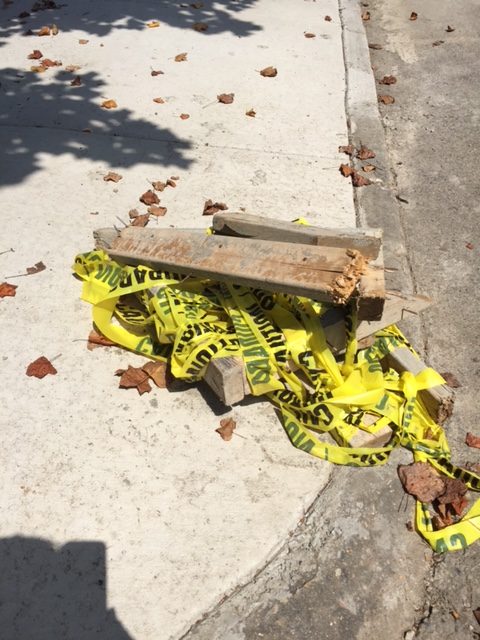
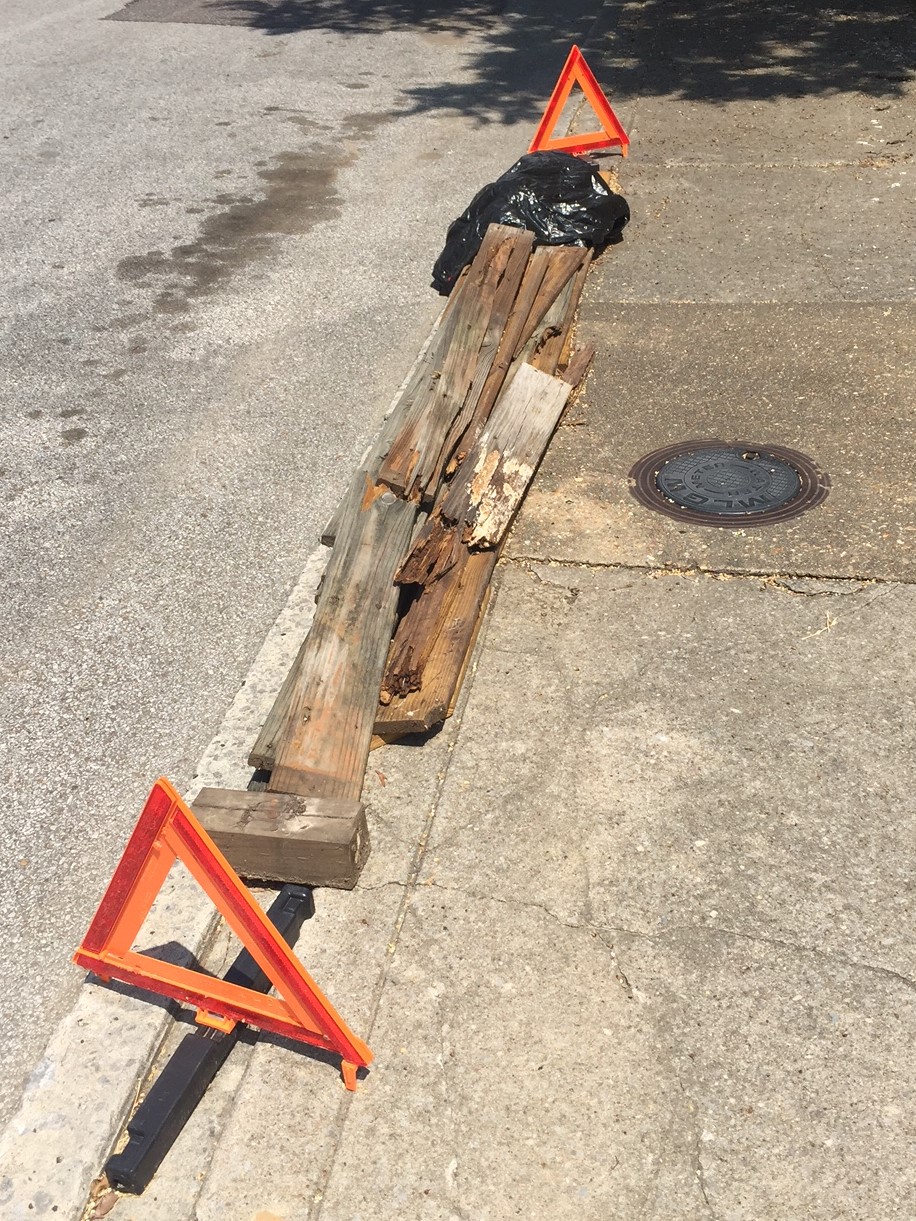
Do you ever take strolls around your neighborhood and find yourself appalled by the risky, tortious conditions residents leave on the sidewalks in front of their homes.  A couple weeks ago I passed a house with a pile of boards spilling onto the sidewalk bearing long, upward-turned rusty nails sticking out.  It’s a popular neighborhood where people like to walk, including at night.  I was tempted to knock on the door and explain duties of care and premises liability, but only had an hour, so instead just moved the worst offending boards off the sidewalk.

Then a couple days ago I came upon my new favorite neighbor’s house.  This is a thing of beauty.  Look at the reasonable care they exercised to protect sidewalk travelers, so awesome it earns Tortman’s Good Neighbor of the Month Award.  I would not be shocked if a lawyer lives there.

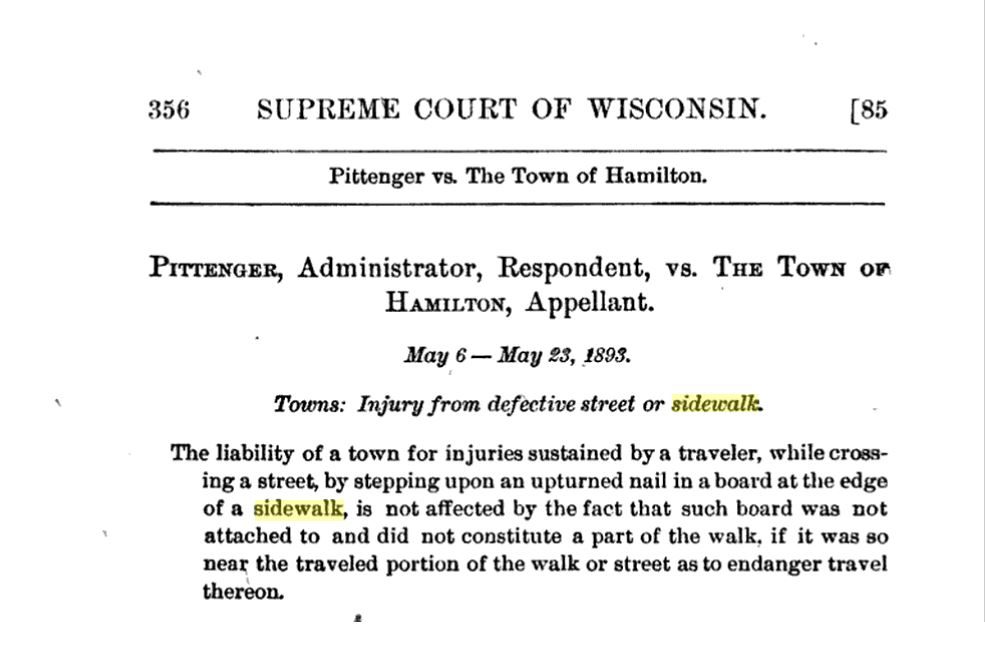
But you might be thinking, “Oh, Tortman, you’re lost in law professor land.  You worry too much.  People don’t really step on rusty nails on the sidewalk and sue people.”  In rebuttal, I refer you to Pittenger v. The Town of Hamilton, decided by the Wisconsin Supreme Court in 1833.  The court held for a plaintiff injured by an upturned nail in a board left next to a sidewalk because “it was so near the traveled portion of the walk or street as to endanger travel thereon.”

McClurg’s 1L of a Ride

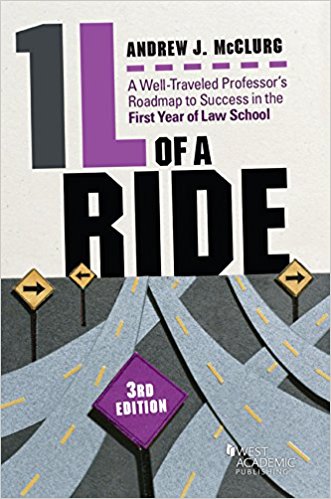
1L of a Ride: A Well-Traveled Professor’s Roadmap to Success in the First Year of Law School (West 4th ed. 2021)

Amazon.com listing

Assigned as recommended or required reading at law schools throughout the country, 1L of a Ride provides a step-by-step navigational guide to both academic and emotional success in law school’s crucial first year.

Covered topics in the newly updated fourth edition include: top student fears, the first-year curriculum, effective class participation, types of law students and professors, case-briefing, note-taking, course-outlining, legal research and writing, exam preparation, essay and multiple-choice exam strategies, stress management, the impact of law school on outside relationships, special challenges faced by part-time and nontraditional students, online learning, career planning, and much more.

Shows rather than tells with dozens of anecdotes and comments from real law students, as well as authentic samples of Socratic dialogue, exam questions, student case briefs, class notes, and course outlines.

The only law school success book that:

• Addresses each aspect of academic success.

• Includes both a professor and student perspective, with comments from real law students as they progressed through their first year from beginning to end.

• Features real samples of Socratic dialogue, student case briefs, student class notes, and exam questions and answers.

• Focuses on practical advice that can be followed by any student from day one.

• Employs a lively first-person voice, humor, and dozens of anecdotes to bring the advice to life.

• Relies on educational research to back up advice.

• Includes input from other law professors, including an interview with five professors of Legal Writing, the course that causes the most angst and complaints from first-year students.

Review Excerpts:

“As a pre-law adviser I’ve read many books about preparing for law school or what to expect in the first year. This is by far the best!”

“[As the pre-law advisor at a California university,] I’d be surprised if anyone ever writes a better book on this topic. If it’s not yet the gold standard, it will be in the near future.”

“This book should be required by law schools as a guide to success. I could not have made it through without it!”

“If you read 1L of a Ride, trust me, you will have an edge over any student who hasn’t read it. There is a reason Professor McClurg has won numerous teaching awards and other accolades from the legal community. … When reading this book, you feel like you are getting honest, personal advice from a trusted friend. Along with advice about how to manage your first year mentally and emotionally, you learn skills such as case-briefing and effective note-taking that you will need on day one. And in law school, day one counts!”

“When I asked a friend and recent law school graduate how I should prepare for law school, she laughed and said, ‘Nothing can prepare you for law school.’ She was wrong. This book is an indispensable tool for anyone considering law school or already committed to law school. I call it a tool because it really is―it is an instrument used to achieve success in law school. It is a reference guide to utilize during the entire first year.”

“This book should be required by law schools as a guide to success. I could not have made it through without it! Included in the humorous, well-crafted text is a map through the misconceptions which all law students spend too much of their valuable first year trying to correct. Most students waste thousands of dollars during the first year just trying to get acclimated to the law school experience. Spend a few bucks on this book, start a step ahead, and get more from your investment.”

“Law schools should provide a copy of this book with each acceptance letter.”

“This book is a tour de force …. If you want to do more than survive―if you want to thrive―in law school, buy this book.”

Warning: No Manspreading

From Madrid comes a new pictorial instruction sign (not technically a “warning sign”) on public buses prohibiting “manspreading.”  I was not familiar with this term.  I thought maybe it was something like this, which I wholeheartedly agree should be banned:

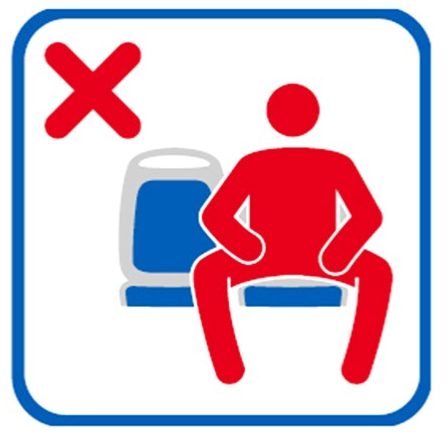
But that’s not it.  It’s this:

Okay, this might be worse.  Manspreading is the practice of some men to sit with their legs spread on a bus seat, crowding people around them, particularly women, apparently.  Whether this is done to protect personal space or intentionally invade someone else’s is not clear from the article.

But as the question always arises with pictorial communicative signs, does the picture alone work to convey the intended meaning?  If you didn’t already know what manspreading was and got on a bus and saw this sign, would you know it’s saying: “Dude, don’t spread your freaking legs”?  More troubling is why people need a sign to tell them this in the first place.

Third Edition of 1L of a Ride Released

Excited to report that after two years of work, the shiny new third edition of 1L of a Ride: A Well-Traveled Professor’s Roadmap to Success in the First Year of Law School was just released by West Publishing Company.

It’s available here on Amazon.  Check out the 148 reviews for 1L of a Ride averaging 5-stars.  1L of a Ride is assigned as required or recommended reading at law schools throughout the country. [Note: Because it just came out, it’s listed temporarily out of stock on Amazon, but that should be fixed quickly.  In the meantime, you can always order it directly from the publisher here.]

Couldn’t have done it without the help my amazing research assistants at the University of Memphis Cecil C. Humphreys School of Law and good friends at West Academic Publishing.  Thank you all!


Top Five Habits of Successful Law Students — ABA Webinar on YouTube

The American Bar Association Law Student Division posted my webinar, The Top Five Habits of Successful Law Students, on YouTube. Check it out for some good advice.

[embedyt] https://www.youtube.com/watch?v=AmsCa-3JJJc[/embedyt]

Here’s the accompanying description:

In this webinar, Professor Andrew McClurg, author of the popular law school prep book, 1L of a Ride: A Well-Traveled Professor’s Roadmap to Success in the First Year of Law School, seeks to inspire new students to “Be Excited!” about their new adventure and get them on the right track from day one by explaining his C.R.E.D.O. for law school success: the top five habits of successful law students (Consistent, Rigorous, Efficient, Diligent, and Organized). Following the C.R.E.D.O. will boost any student’s ability to maximize their potential.

This special webinar includes a Q&A session with Professor McClurg.

Spot the Tort: “I’m Fixing a Hole Where the Rain Gets In”

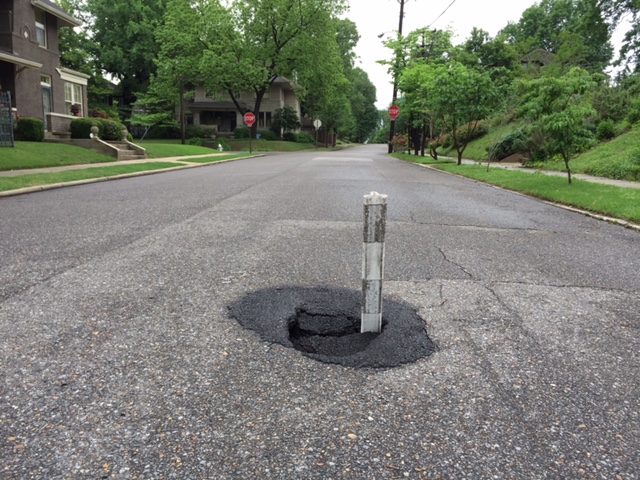
… and your foot and, if it keeps growing, your dog, child, small automobile.  Walking in Memphis is always entertaining and exciting, especially if you like to spot potential torts.

In fact, according to authentic Chamber of Commerce statistics that I am making up, there are more torts on the streets and sidewalks of Memphis than annual Graceland visitors.

I came across this interesting one taking a walk in Midtown.  The hole itself is interesting, sort of like a little sinkhole, but the pole sticking out of it what grabs one’s attention, as well as the bottom of your automobile.  As always, questions abound.  Were they trying to put a stop sign in the middle of the street?

Graphic Warning: Keep Hands Out of Vendor?

Pictorial or graphic warnings are designed to be interpretable by anyone, whatever language they speak and whatever their literacy level.  The problem is it can be darn difficult to convey a product warning in a single image.

This graphic warning sticker on a soda/water machine does a good job of getting one’s attention and clearly alerts people that they should not be sticking their hand in between grinding gears.  Where those gears are remains a mystery, but I suppose it must be the exit path for the soda or water bottle.

I have a bigger issue with the verbal warning: KEEP HANDS OUT OF VENDOR.  Vendor?  That sounds more like a sexual assault warning.  The dictionary definitions of “vendor” I’ve come across are limited to persons or companies that sell products, not machines that dispense them.  How about we substitute “vending machine”?

Here, here, here and here are a few other interesting graphic or pictorial warnings for your interpretative pain or pleasure.

Legal Trivia Question: Largest Arrest in U.S. History

Just as doctors need patients, lawyers need clients.  One can surmise that local criminal defense lawyers got plenty of business during the largest mass arrest in U.S. history.  How many people were arrested and where did it occur?

  1. 140 in Peoria, Illinois
  2. 1500 in Boston, Massachusetts
  3. 12,000 in Washington, D.C.
  4. 17,500 in Los Angeles, California

ANSWER: In May 1971, more than 500,000 anti-Vietnam War protesters descended on Washington, D.C. with the intention of shutting down the federal government by blocking the streets.  As of that date, 45,000 American soldiers had died in Vietnam and more than 250,000 troops were still stationed there.  At least 12,000 protesters were arrested from May 3 through May 5, including Daniel Ellsberg.

Ellsberg, a former Defense Department analyst, had helped compile a report on the history of U.S. involvement in Vietnam from 1945–68 for Defense Secretary Robert McNamara.  The study, which became known as the “Pentagon Papers,” exposed controversial, previously hidden truths about the scope and purpose of U.S. participation in the Vietnam War.  Ellsberg leaked the Pentagon Papers to the New York Times, which began publishing them in installments.

The Nixon administration sued for an injunction, which resulted in a landmark U.S. Supreme Court case, New York Times Co. v. United States, 403 U.S. 713 (1971), where the Court ruled in favor of the newspaper by a 6-3 vote, a major victory in troubled times for the First Amendment right to free speech and a free press.  Publication of the Pentagon Papers helped turn the tide of public opinion against the war.  It took until June 2011, forty years to the day from the original publication of the Pentagon Papers by the New York Times, before the U.S. government officially declassified and released the papers.

The answer, therefore, is C.