But Did the Defendant Come in Through the Bathroom Window?

As a member of a Memphis rock cover band that plays several Beatles songs and a huge Beatles fan, I have a special appreciation for Montana Judge Gregory R. Todd’s order in a 2007 criminal case.

After the defendant pleaded guilty to burglary, he was asked to fill out portions of a pre-sentence investigation report. In response to the question, “Give your recommendation as to what you think the Court should do in this case,” the defendant replied, “Like the Beetles say, ‘Let It Be.’”

Judge Todd took issue with both the defendant’s apparent plea for leniency and also his misspelling of the name of the Beatles, for whom Judge Todd obviously has great fondness. The judge penned a caustic sentencing memorandum, written to the defendant, that managed to work in the titles of thirty-nine Beatles songs:

Act Naturally

Baby It’s You

Bad Boy

Carry That Weight

Come Together

Day in the Life

Do You Want to Know a Secret?

Fixing a Hole

Fool on the Hill

Get Back

Hard Day’s Night

Hello Goodbye

Help

Here, There and Everywhere

Hey Jude

Honey Don’t

I Don’t Want to Spoil the Party

I Feel Fine

I Should Have Known Better

I, Me, Mine

I’ll Cry Instead

I’ll Get You

I’m a Loser

Let It Be

Long and Winding Road

Magical Mystery Tour

Misery

Mr. Moonlight

Nowhere Man

Run for Your Life

Something

Strawberry Fields Forever

The Word

Think for Yourself

Ticket to Ride

Wait

We Can Work It Out

When I’m 64

You Really Got a Hold on Me

Here’s a taste from the last paragraph of the memorandum:

Later when you thought about what you did, you may have said I’ll Cry Instead. Now you’re saying Let It Be instead of I’m A Loser. As a result of your Hard Day’s Night, you are looking at a Ticket To Ride that Long and Winding Road to Deer Lodge. Hopefully you can say both now and When I’m 64 that I Should Have Known Better.

Judge, what can I say, but Thank You Girl, er rather, Your Honor. Til There Was You, most judicial opinions were just so Yesterday. I hope we have a chance to Come Together for lunch or Something. Why? Well, just Because.

State v. McCormack, No. DC06-0323, Montana Thirteenth Judicial District, Yellowstone County, Feb. 26, 2007. Thanks to Pat Smith.

Must-Read Musmanno (Musmanno)

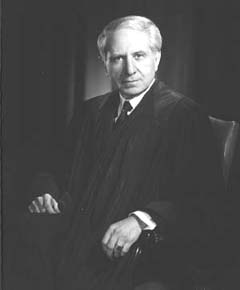
Michael Musmanno
Justice Michael Musmanno, a Lawhaha.com Hall of Famer

Any fan of judicial opinion writing needs to study the opinions of the Honorable Michael A. Musmanno (1897-1968). He led a remarkable life. Before joining the Pennsylvania Supreme Court, Justice Musmanno enjoyed an illustrious career as a lawyer, U.S. Congressman and author. Highlights of his career include serving as the presiding judge at the Nuremberg war crime trials and as a defense lawyer in the Sacco & Vanzetti trial.

His opinions are marvelous concoctions of deep-hearted passion and brutal common sense, delivered in highly literate and often hilarious prose.

U.S. Ninth Circuit Court of Appeals Judge Alex Kozinski, another notable opinion-writer,  reported to Lawhaha.com that Musmanno has been his model since law school and that he consciously tries to emulate Musmanno’s writing. He laments that today’s law school graduates have never heard of Musmanno and return only blank stares when his name is mentioned.

Here are a couple samples of Musmanno’s writing sent by Chris Nace:

In Bosley v. Andrews, a woman sued a neighbor whose cows trespassed on her farmland to eat her crops. After being chased away in the morning, the “bovine buccaneers,” as Musmanno called them, returned for lunch. “This time they came, eight of them, with reinforcements. They brought along their boy friend, a 1500-pound Hereford white-faced bull.” The bull took chase after the plaintiff, causing her to suffer a heart attack.

A majority of the Pennsylvania Supreme Court rejected the woman’s claim for negligent infliction of emotional distress damages, following the traditional rule that such a claim cannot be maintained in the absence of a “physical impact” with the plaintiff (the bull never actually touched the plaintiff).

In dissent, Musmanno skewered the majority for what he saw as an unjust result, closing his opinion by stating that the majority’s approach “is unsupportable in law, logic, and elementary justice – and I shall continue to dissent from it until the cows come home.”

In Pennsylvania Society for the Prevention of Cruelty to Animals v. Bravo Enterprises, Inc., the plaintiff sought to enjoin a bullfight, but the majority held that the organization lacked standing. Musmanno began his impassioned dissent:

If there is one commodity of which there is no need for a further supply, it is violence. If there is one school that the world can afford to miss, it is one for the tutoring of methods of violence, brutality and cruelty. … [W]e can well do without a bullfight which is nothing less than an open air lyceum in the art of torturing helpless animals.

Add Justice Musmanno to your list of “four dead people with whom you would most like to have dinner.”

Bosley v. Andrews, 142 A. 2d 263, 267–68, 280 (Pa. 1958) (Musmanno, J., dissenting); Pa. Soc’y for the Prevention of Cruelty to Animals v. Bravo Enterprises, Inc., 237 A. 2d 342 (Pa. 1968) (Musmanno, J., dissenting). Thanks to Chris Nace.

Last Tango in Asparagus (Musmanno)

In a classic slip and fall case, plaintiff Joseph Rosenberg slipped on asparagus while dancing at a wedding reception with his sister-in-law and fellow plaintiff, Ruth Schwartz.

The issue was whether the defendant caterer had negligently spilled the asparagus on the dance floor. The trial judge had dismissed the lawsuit on theory that the offending asparagus could have been unwittingly transported onto the dance floor after becoming entrapped in the apparel of the dancers.

As with many of the judicial opinions posted on Lawhaha.com, brief excerpts don’t do this case justice. My favorite part is how the legendary Justice Michael Angelo Musmanno of the Pennsylvania Supreme Court bluntly and rather contemptuously rejected the trial judge’s theory of how the asparagus (which according to testimony formed a puddle three feet in diameter) got on the dance floor (some paragraph breaks inserted):

The trial judge, an ex-veteran congressman and thus a habitue of formal parties and accordingly an expert in proper wearing apparel at such functions, all of which he announced from the bench, allowed testimony as to the raiment worn by the banquetters.

All the men were attired in tuxedos, the pants of which were not mounted with cuffs which could transport asparagus and sauce to the dance floor, unwittingly to lubricate its polished surface. Ruling out the cuffs of the tuxedo pants as transporters of the asparagus, the judge suggested the asparagus, with its accompanying sauce, could have been conveyed to the dance floor by ‘women’s apparel, on men’s coats or sleeves, or by a guest as he table hopped.’

The Judge’s conclusions are as far-fetched as going to Holland for hollandaise sauce. There was no evidence in the case that anybody table hopped; it is absurd to assume that a man’s coat or sleeve could scoop up enough asparagus and sauce to inundate a dance floor to the extent of a three-foot circumference; and it is bizarre to conjecture that a woman’s dress without pockets and without excessive material could latch on to such a quantity of asparagus, carry it 20 feet (the distance from the tables to the dance floor) and still have enough dangling to her habiliments to cover the floor to such a depth as to fell a 185 pound gentleman with 35 years’ dancing experience who had never before been tackled or grounded while shuffling the light fantastic.

It can be stated as an incontrovertible legal proposition that anyone attending a dinner dance has the inalienable right to expect that, if asparagus is to be served, it will be served on the dinner table and not on the dance floor.

Judgment reversed with a procedendo.

Chief Justice Bell dissented:

 One cannot help wondering if plaintiffs had, in the alleged 35 years of dancing, ever been to any dance, let alone a wedding banquet dance. … A dancer cannot, with legal sanction, look only into the captivating eyes of his lovely partner.

 I certainly dissent.

Schwartz v. Warwick-Philadelphia Corp., 226 A.2d 484, 485–87, 488 (Pa. 1967). Thanks to Janet Heydt.

Ode to Screwing Up (Musmanno)

The classic dilemma of the law. Which is more important: following the rules or dispensing justice? Being faithful to precedent or willing to bend technical legal rules to reach the correct result?

We struggle with these issues from the time we’re first-year law students. Rules won out in ugly fashion in In re Estate of Pavlinko.

Vasil Pavlinko and his wife, Hellen, immigrants who spoke little English, went to a lawyer to have separate wills drawn up. Both wills left their residual interest to the same person: Elias Martin, the brother of Hellen Pavlinko. Unfortunately, when it came time to sign the wills, the wills got mixed up and Vasil and Hellen each signed the other’s will.

After the couple died, Elias Martin—the sole residuary legatee under both wills—offered Vasil’s will for probate. Although conceding that the result was “unfortunate,” the Pennsylvania Supreme Court rejected Martin’s petition because Vasil had mistakenly signed Hellen’s will.

Judge Michael Angelo Musmanno, a Strange Judicial Opinions Hall of Famer for his intelligent prose, dissented, in an impassioned Ode to Screwing Up:

Everyone in this case admits that a mistake was made: an honest, innocent, unambiguous, simple mistake, the innocent, drowsy mistake of a man who sleeps all day and, on awakening, accepts the sunset for the dawn.

Nothing is more common to mankind than mistakes. Volumes, even libraries have been written on mistakes: Mistakes of law and mistakes of fact. In every phase of life, mistakes occur and there are but few people who will not attempt to lend a helping hand to the person who mistakes a step for a landing and falls, or the one who mistakes a nut for a grape and chokes, or the one who steps through a glass so clear that he does not see it. This Court, however, says that it can do nothing for the victim of the mistake in this case, a mistake which was caused through no fault of his own, nor of his intended benefactors.

 … I know that the law is founded on precedent and in many ways we are bound by the dead hand of the past. But even with obeisance to precedent, I still do not believe that the medicine of the law is incapable of curing the simple ailment here ….

We have said more times than there are tombstones in the cemetery where the Pavlinkos lie buried, that the primary rule to be followed in the interpretation of a will is to ascertain the intention of the testator. Can anyone go to the graves of the Pavlinkos and say that we do not know what they meant? They said in English and Carpathian that they wanted their property to go to Elias Martin.

 — In re Estate of Pavlinko, 148 A. 2d 528, 532 (Pa. 1959) (Musmanno, J., dissenting). Thanks to Frank Zotter.

Musmanno’s Rant on The Tropic of Cancer (Musmanno)

Anyone who appreciates great judicial opinion-writing loves Pennsylvania Supreme Court Justice Michael Musmanno, but his rant over Henry Miller’s classic novel, The Tropic of Cancer, in Commonwealth v. Rubin, was not one of his better outings.

Miller penned The Tropic of Cancer, widely hailed as one of the great novels of the 20th century, in 1934. Published in the U.S. in 1961, the book, which contains several frank sexual passages, became the focus of a number of obscenity trials.

Commonwealth v. Rubin was an action to restrain the selling of the book. The trial court granted an injunction, which a majority of the Pa. Sup. Ct. overturned on First Amendment grounds. Musmanno dissented, unleashing a flood of hyperbole for which there may be no rival in judicial opinion writing. He didn’t just think the book was obscene. He hated it. Here are some choice passages, courtesy of Lisa Lin:

‘Cancer’ is not a book. It is a cesspool, an open sewer, a pit of putrefaction, a slimy gathering of all that is rotten in the debris of human depravity. And in the center of all this waste and stench, besmearing himself with its foulest defilement, splashes, leaps, cavorts and wallows a bifurcated specimen that responds to the name of Henry Miller. One wonders how the human species could have produced so lecherous, blasphemous, disgusting and amoral a human being as Henry Miller. One wonders why he is received in polite society.

Policemen, hunters, constables and foresters could easily and quickly kill a thousand rattlesnakes but the lice, lizards, maggots and gangrenous roaches scurrying out from beneath the covers of ‘The Tropic of Cancer’ will enter into the playground, the study desks, the cloistered confines of children and immature minds to eat away moral resistance and wreak damage and harm which may blight countless lives for years and decades to come.

To say that ‘Cancer’ has no social importance is like saying that a gorilla at a lawn party picnic does not contribute to the happiness of the occasion.

The defendant would have reason to say that ‘Cancer’ is not hard-core pornography; it is, in fact, Rotten-core pornography. No decomposed apple falling apart because of its rotten core could be more nauseating as an edible than ‘Cancer’ is sickening as food for the ordinary mind. ‘Cancer’ is dirt for dirt’s sake, or, more appropriately, as Justice Frankfurter put it, dirt for money’s sake.

 …

Then the defendants say that ‘Cancer’ is entitled to immunity under the First Amendment because court decisions have declared that only worthless trash may be proscribed as obscene. To say that ‘Cancer’ is worthless trash is to pay it a compliment. ‘Cancer’ is the sweepings of the Augean stables, the stagnant bilge of the slimiest mudscow, the putrescent corruption of the most noisome dump pile, the dreggiest filth in the deepest morass of putrefaction.

Youch.

Commonwealth v. Robin, 218 A.2d 546, 557, 547, 550, 552 (Pa. 1966) (Musmanno, J., dissenting). Thanks to Lisa Lin.

1920s Judge Rules Men are “Cave Men in the Pleasures of the Bed”

In 1920, a New Jersey chancery judge was faced with a wife’s suit for marriage annulment on the ground of the husband’s alleged impotency during their five years together. The husband “vigorously protested his virility, but admitted the nonconsummation of the marriage.” The husband asserted he refrained from intercourse with his wife because he did not want to hurt her.

Interestingly, given the date, the judge thoughtfully considered whether the husband’s condition was psychological, especially since he had “submitted to an examination by one of his wife’s physicians, who testified that he was structurally a male, normal in the parts, and to all appearances capable of coition.”

The judge forged new legal ground in the U.S. by adopting from the English common law a rebuttable presumption of impotency after three years of marriage without sexual intercourse. In finding that the husband failed to overcome the presumption, the judge explained:

[T]he question comes to one of belief in his story of forbearance for five years, under most trying circumstances, simply because sexual intercourse was painful and distressing to her. I have misgivings. Such solicitude of a groom is noble, of a husband, heroic. Few have the fortitude to resist the temptations of the honeymoon. But human endurance has its limitations. When nature demands its due, youth is prodigal in the payment. Men are still cave men in the pleasures of the bed. The sex may be more temperate, but none the less passionate, and heedless of the penalty. They do not shirk the initiation nor shrink from the consequences. The husband’s plea does not inspire confidence. Common experience discredits it.

Tompkins v. Tompkins, 111 A. 599, 601 (N.J. Ch. 1920). Thanks to Senior Judge Jim Barlow.

Paranoia Will Destroy Ya

freak out at phish concertThe Kinks got it right in their song, “Destroyer,” when they sang that paranoia will destroy ya.

It certainly did so for the defendant in a case where, after getting paranoid at a 1999 Phish concert in Oswega, NY, presumably while under the influence of an hallucinogenic drug, he became convinced the police were following him and that the band was sending him messages through the music. Fleeing the concert, he traveled 250 miles on foot and by hitch-hiking, convinced the police were after him the whole way. (He believed that every car with an “A” in the license number contained police officers.)

Some thirty-six hours later, he finally turned up at the police barracks in Westport, NY, where he told an investigator, “You know who I am.” When the cops didn’t know who he was or why he was there, he told them he was growing marijuana plants back at his home in Rochester, NH. He then consented to a search of the house.

When the cops in Rochester searched the house, they found marijuana plants and liquid acid. Though a New Hampshire Superior Court ultimately ruled that the evidence should be suppressed (because of insufficient proof the defendant received and waived his Miranda rights), the University of Memphis law student who sent me this opinion correctly opined that it should serve as “a gentle reminder to any students planning to reunite with Phish over the summer break.”

State v. Augur, Case Nos. 01-S-388, 01-S-389, 2001 N.H. Super. LEXIS 17 (N.H. Super. Ct., Oct. 22, 2001). Thanks to Adam Ragan.

The Judge Who Rhymed for a Reason

In Brown v. State, Judge Randall Evans, Jr. not only wrote one of the earliest in the long line of rhyming judicial opinions, he did it for a good reason. As he explained in a footnote:

This opinion is placed in rhyme because approximately one year ago, in Savannah at a very convivial celebration, the distinguished Judge Dunbar Harrison … arose and addressed those assembled, and demanded that if [I] ever again was so presumptuous as to reverse one of his decisions, that the opinion be written in poetry.

This back story puts the opinion a cut above the usual rhyming opinion. You gotta love a judge who takes on such a challenge from a colleague after a couple of drinks (I assume that’s what “a very convivial celebration” means) and honors it.

To his further credit, Justice Evans conceded he is “not a poet, and the language used, at best, is mere doggerel” and also insisted that it’s really hard to write a rhyming judicial opinion. Here’s a taste of the opinion (several verses omitted, but I tried to keep the general thread). But the funniest part is that he wrote it at all. He even specifically mentions Judge Harrison:

 The D. A. was ready

His case was red-hot.

Defendant was present,

His witness was not.

He prayed one day’s delay

From His honor the judge.

But his plea was not granted

The Court would not budge.

So the jury was empaneled

All twelve good and true

But without his main witness

What could the twelve do?

‘What verdict, Mr. Foreman?’

The learned judge inquired.

‘Guilty, your honor.’

On Brown’s face—no smile.

‘Stand up’ said the judge,

Then quickly announced

‘Seven years at hard labor’

Thus his sentence pronounced.

‘This trial was not fair,‘

The defendant then sobbed.

‘With my main witness absent

I’ve simply been robbed.’

‘I want a new trial—

State has not fairly won.’

‘New trial denied,‘

Said Judge Dunbar Harrison.

So the case has reached us—

And now we must decide

Was the guilty verdict legal—

Or should we set it aside?

Was one day’s delay

Too much to expect?

Could the State refuse it

With all due respect?

We’ve considered this case

Through the night—

through the day.

As Judge Harrison said,

‘We must earn our poor pay.’

This case was once tried—

But should now be rehearsed

And tried one more time.

This case is reversed.

Brown v. State, 216 S.E.2d 356 (Ga. Ct. App. 1975)

Saved by a Gator with a 455 Cubic-Inch Engine

drunk driving airboat
All the horsepower without the sharp teeth or drunk-driving convictions.

Things weren’t looking good for the defendant in State v. Stagno after getting pulled over by a state trooper. With a blood alcohol level of .197 and two DUI convictions in the past ten years, he almost certainly would’ve lost his driver’s license if he’d been driving his friends to the topless bar in his car.

But thanks to a drunken bet made earlier in the evening, the defendant’s mode of transportation on this wild night out was not a car at all—it was a “fifteen-foot 1985 Air Gator airboat, powered by a 455 cubic inch Buick engine.”

Because the applicable statute allowed judges to revoke driver’s licenses only when the vehicle driven required a license, the trial court had to settle for imposing a $1,000 fine, thirty days in jail, and alcohol rehabilitation counseling.

The Alaska Court of Appeals affirmed the lower court’s ruling, agreeing that a fifteen-foot airboat is not a motor vehicle requiring a driver’s license.

State v. Stagno, 739 P.2d 198 (Alaska Ct. App. 1987)

A Kozinski DISS-sent (Kozinski)

In U.S. v. Ramirez Lopez, the defendant was convicted of smuggling aliens into the U.S. from Mexico. One died during the journey due to inclement weather. When border patrol agents interviewed fourteen members of the group, two of them said the defendant was the guide of the expedition while the other twelve exculpated him, denying he was the guide.

The government deported nine of the twelve exculpatory witnesses back to Mexico prior to trial and the trial judge denied admission of the government’s interview notes with them.

It’s fair to say Judge Kozinski was unimpressed by the fairness of the procedure. He began his dissent from the affirmance of the conviction with a satirical, fictional post-trial conversation between the defendant and his lawyer:

Lawyer: Juan, I have good news and bad news.

Ramirez-Lopez: OK, I’m ready. Give me the bad news first.

Lawyer: The bad news is that the Ninth Circuit affirmed your conviction and you’re going to spend many years in federal prison.

Ramirez-Lopez: Oh, man, that’s terrible. I’m so disappointed. But you said there’s good news too, right?

Lawyer: Yes, excellent news! I’m very excited.

Ramirez-Lopez: OK, I’m ready for some good news, let me have it.

Lawyer: Well, here it goes: You’ll be happy to know that you had a perfect trial. They got you fair and square!

[Colloquy continues in which the defendant questions the fairness of the trial and the judge explains the harmless error rule as “No harm, no foul.” The defendant takes issue with the “no harm” part, pointing out he had twelve witnesses who said he wasn’t the guide, but the government sent nine of them back to Mexico. The lawyer assures him the government talked to all of them and took good notes about what each one said.]

Ramirez-Lopez: No kidding, man. They did all that for me?

Lawyer: They sure did. Is this a great country or what?

Ramirez-Lopez: OK, I see it now, but there’s one thing that still confuses me.

Lawyer: What’s that, Juan?

Ramirez-Lopez: You see, the government took all those great notes to help me, just so we’d know what all those guys said.

Lawyer: Right, I saw them, and they were very good notes. Clear, specific, detailed. Good grammar and syntax. All told, I’d say those were some great notes.

Ramirez-Lopez: And twelve of those guys all said I wasn’t the guide.

Lawyer: Absolutely! Our government never hides the ball. The government of Iraq or Afghanistan or one of those places might do this, but not ours. If twelve guys said you weren’t the guide, everybody knows about it.

Ramirez-Lopez: Except the jury. I was there at the trial, and I remember the jury never saw the notes. And the officers who testified never told the jury that twelve of the fourteen guys that were with me said I wasn’t the guide.

Lawyer: Right.

Ramirez-Lopez: Isn’t the jury supposed to have all the facts?

Lawyer: Not all the facts. Some facts are cumulative, others are hearsay. Some facts are both cumulative and hearsay.

Ramirez-Lopez: Can you say that in plain English?

Lawyer: No.

Ramirez-Lopez: The jury was supposed to decide whether I was the guide or not, right? Don’t you think they might have had a reasonable doubt if they’d heard that twelve of the fourteen guys in my party said it wasn’t me?

Lawyer: He-he-he! You’d think that only if you didn’t go to law school. Lawyers and judges know better. It makes no difference at all to the jury whether one witness says it or a dozen witnesses say it. In fact, if you put on too many witnesses, they might get mad at you and send you to prison just for wasting their time. So the government did you a big favor by removing those nine witnesses before they could screw up your case.

Ramirez-Lopez: I see what you mean. But how about the notes? Surely the jury would have gotten a different picture if they had just seen the notes of nine guys saying I wasn’t the guide. That wouldn’t have taken too long.

Lawyer: Wrong again, Juan! Those notes were hearsay and in this country we don’t admit hearsay.

Ramirez-Lopez: How come?

Lawyer: The guys writing down what the witnesses said could have made a mistake.

Ramirez-Lopez: You mean, like maybe one of those twelve guys said, “Juan was the guide,” and the guy from Immigration made a mistake and wrote down, “Juan was not the guide”?

Lawyer: Exactly.

Ramirez-Lopez: You’re right again, it probably happened just that way. I bet those guys from Immigration wrote down, “Juan wasn’t the guide,” even when the witnesses said loud and clear I was the guide-just to be extra fair to me.

Lawyer: Absolutely, that’s the kind of guys they are.

Ramirez-Lopez: You’re very lucky to be working with guys like that.

Lawyer: Amen to that. I thank my lucky stars every Sunday in church.

Ramirez-Lopez: I feel a lot better now that you’ve explained it to me. This is really a pretty good system you have here. What do you call it?

Lawyer: Due process. We’re very proud of it.

This is the kind of intelligent humor–using humor or satire as a rhetorical device to make a point–that Lawhaha.com values, and a reason Judge K is in the Strange Judicial Opinions Hall of Fame.

United States v. Ramirez Lopez, 315 F.3d 1143, 1159–62 (9th Cir. 2003) (Kozinski, J., dissenting). Thanks to Steven Druckenmiller.