
While many law students crave the riches and prestige of Biglaw, small-town lawyering is where the real action is at. But how do you know if you really are a small-town lawyer?
The answer came to me courtesy of former student Jim Jackson, who practices tort law in Arkansas (and generously says he was inspired to pursue that area after taking my Torts and Products Liability courses at the UALR School of Law). He shared a quiz of sorts compiled by a friend named Michael who practices in Crossett, Arkansas. Crossett, on the Louisiana border, is the county seat and has a population of about six thousand. It’s the very definition or small-town, rural law practice.
Michael’s small-town lawyer test (posted on a trial lawyer’s listserv) consists of a summary of various cases he handled in 2021 (I took the liberty of editing punctuation):
Hi all,
As we begin 2022 I thought I would take a moment and reflect back on some of my more memorable cases as a small town lawyer. So, without further ado …
You might be a small town lawyer if:
1. You have ever had to explain to a client that your “dignity” would not allow you to have a hearing to determine who gets the “Texas Instrument” calculator.
2. You have ever filed a petition seeking an “emergency order of custody” for a goat, because the husband had announced his intentions of having a barbeque, featuring your client’s beloved pet, Marvin.
3. You have ever settled a divorce case by virtue of an agreement with opposing counsel that the attorneys would pitch in $100 each and buy the horse since the parties could not agree on who was going to be awarded the horse.
4. You have ever been involved in a hearing for order of protection that began when the spouse/wife declared to your client that she was going to “take his two pet service squirrels and turn them into owl shit as soon as he left the house!!!!” … and that’s when the fight started.
5. You have ever defended “your secretary” in district court for delivering an “ass” whipping to her ex-boyfriend’s current girl friend in the middle of the Walmart parking lot. Sigh. Unfortunately, the camera footage pretty well eliminated any hope of a defense. On the bright side, it was a hell of a video.
6. You have ever defended a man in district court over a battery charge that all began with a simple misunderstanding following the girlfriend’s announcement of her pregnancy.
My client took what he deemed to be the “high road” and promptly declared, “Well if it’s mine, I will help support it.” His view on this being that was an appropriate offer under the circumstances. To say that the young lady did not take his offer in the spirit with which it was intended would be a gross understatement. The best way to describe her response would be to say it was “volcanic.”
My 6-foot-tall, 250-pound client was chased out of the house in his boxers by an irate and irrational 5-foot-3, 135 pound female wielding a Ginsu kitchen knife. He lost the tip of his thumb in the scramble and had to sneak back later to get his clothes off the roof of the neighbor’s house (apparently his keys, wallet and cell phone were all in the clothes).
My argument to the court was that he had already suffered a punishment worse than anything the court could impose on him and we should let it go on a “time served” basis. The judge took the matter under advisement.
We are still awaiting a ruling. It has been 7 months.
May your 2022 be as much fun as 2021 was for me.
May you remember it’s not always about how much money we make. Sometimes it’s about how much of a difference we make in the lives of our clients who have trusted us with their problems in their times of need.
It is a blessing and an honor to be able to practice law.
Okay, Biglaw associates. The billable-hour clock is ticking. Time to get back to reviewing documents and doing due diligence. Me, I’m heading to Crossett for some excitement!
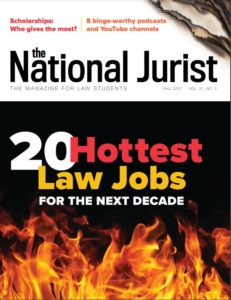 Law students spend too much time reading cases and too little time thinking or learning about what kind of legal job would be the best fit for them. In the cover story for the Fall 2021 issue of The National Jurist Magazine, I and my co-authors of
 I have a judge friend who’s a stickler for grammar. Today, she sent this little gem along: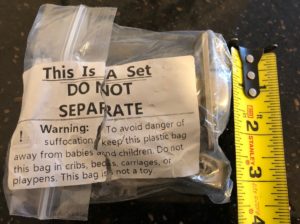
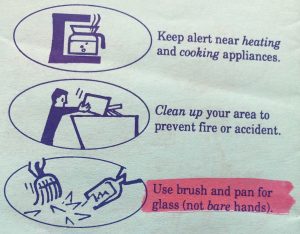 As a professor of tort and products liability law, I appreciate that manufacturers often feel the need to warn consumers of obvious risks, even though products liability law does not impose a duty to warn of obvious risks.
 An important rule for young lawyers to know is that it’s essential to counsel clients to wear appropriate attire to court hearings.
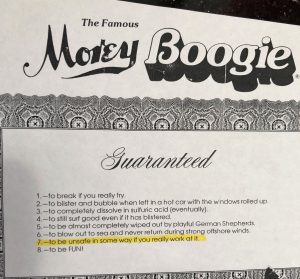 We love wacky product warnings at lawhaha.com, but as a Torts and Products Liability professor, I’ve never been a fan of product sellers trying to be funny in their product warnings or instructions. See, for example,
 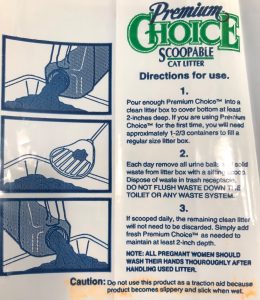 This is one of those warnings that may sound silly, but really isn’t. I wouldn’t be surprised if a whole lot of people have tried to use kitty litter as a traction aid for icy walkways: