Spot the Tort: Risky Stairway to Heaven

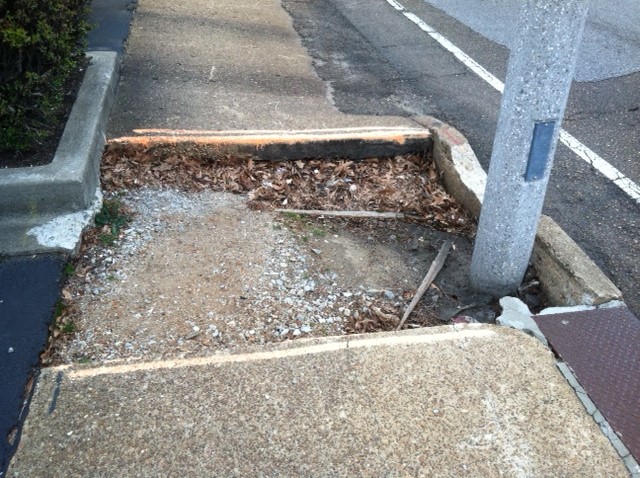
ladder riskOkay, not quite the stairway to heaven, but this long ladder could give the user a good head start. (All pics are expandable.) This picture from a University of Memphis law student makes me shudder.

Ladders are one of the most dangerous consumer products. A study published by the U.S. National Institutes of Health estimated that 2.2 million people received treatment in emergency rooms for ladder injuries during the 16-year-period from 1990-2005, an average of 136,000 cases a year.

Nearly 10% of injuries resulted in hospitalization, roughly twice that of consumer product-related injuries overall.

Other ladder injury data from the study included:

  • Men predominated over women in the percentage of injuries (76.5%).
  • Fractures were the most common type of injury (31.5%).
  • The number of ladder-related injuries increased by more than 50% from 1990 to 2005.
  • Of the cases for which locale of injury was recorded, 97.3% occurred in non-occupational settings, such as homes and farms.

Don’t underestimate the risks of ladders. Did you know that extension ladders need to be set up at a 75 and 1/2 degree angle (the “4 to 1 rule”) to minimize the risk of slipping?

Backfiring Joke in Corporations Leads to BFFs

–Law School Story from Thomas Walk, Wake Forest University School of Law, Date of event: fall 1979

Our Corporations professor had the annoying habit of ending a lot of his sentences with the phrase “All that jazz.”

Midway through the semester, my classmate who sat immediately to the left came to class with a notepad she bought at the mall. It had musical notes floating around the pages and the “All That Jazz” phrase.  She wandered to the front of the classroom before the prof arrived and put the pad on his rostrum.

The professor walked in, examined the pad with a confused look, and laid it to one side.

Later that day I was walking through the hall and saw the All That Jazz pad lying on a couch. I picked it up.

The next day of class my classmate found in her chair the pad with the following message I printed on the top sheet:

“Ms. Jones (named changed to protect the victim), please see me after class. Professor Telly.”

I let her suffer in fear for a few minutes before I confessed I was the culprit and that she had not been busted by our prof. To paraphrase Humphrey Bogart, that was the beginning of a beautiful friendship.

Some Baby Names May Be Illegal

This article from Time Newsfeed about how some governments make certain baby names illegal is reminiscent of one of our Hall of Fame Strange Judicial Opinions: “Hello, My Name Is … Oh, Never Mind.”

Meanwhile, the article warns that the following baby names have been declared illegal in New Zealand:

“Yeah Detroit”

Twins named “89”

“Sex Fruit”

Good news though! New Zealand will still allow boys to be named “Number 16 Bus Shelter.”

Warning: Stay Vigilant for Hogswarts Torts

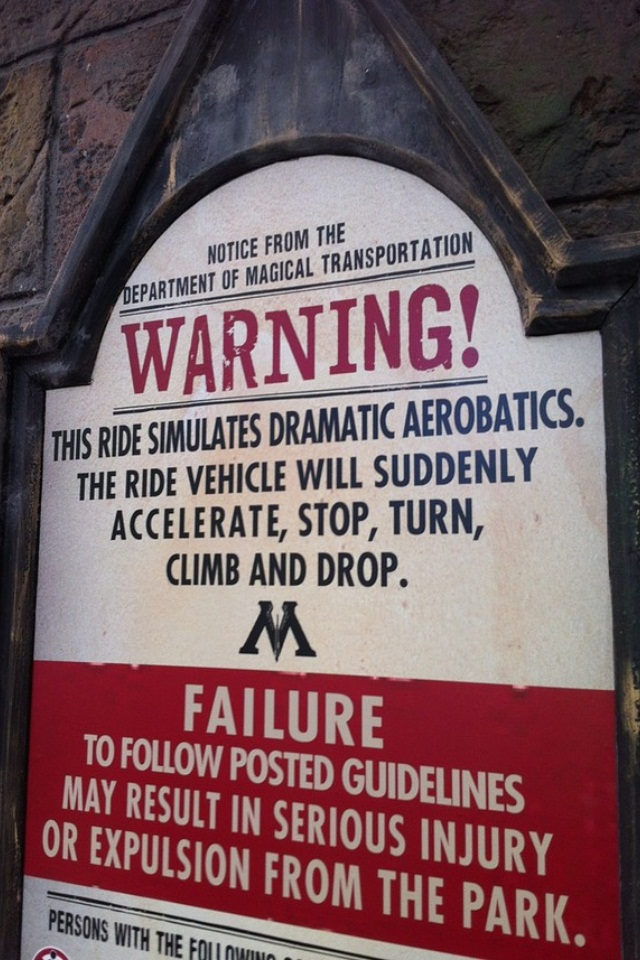
Harry Potter warningProfessor and editor of the Torts Prof blog, Bill Childs, posted this picture of a warning sign at the new Harry Potter attraction at the Islands of Adventures theme park in Orlando.  He noted that he particularly enjoyed that even the warnings are themed, as this one comes from the “Department of Magical Transportation.”

See my ABA Journal column on Hogwarts Torts, suggesting that no student in the history of education has been subjected to as many torts as poor Harry Potter.

Melodramatic Memorandum Livens Up “Chinese Drywall” Litigation

It’s almost impossible to imagine a case that sounds more boring than “In re: Chinese-Manufactured Drywall Products Liability Litigation.” In this multidistrict potboiler, the judge stayed an insurance coverage action, apparently hoping to facilitate a global settlement.

Unfortunately, nothing was moving forward, prompting the Trust to ask the court to lift the stay to get things moving. Counsel didn’t take any chances that the court might miss her point, punching up her memorandum in support of the motion to lift the stay with a dramatic journalistic touch:

Since this Court stayed the insurance coverage action ten months ago last March, no global mediation of the insurance coverage action has been held.

There is no global mediation of the insurance coverage action scheduled.

There is no global mediation of the insurance coverage action being set up.

No date. No location. No notification of participants. No contact of all global insurance coverage participants. Silence.

Since the Court stayed this insurance coverage action, policyholders have been left in a purgatory in the insurance coverage action with no action advancing a global resolution of the insurance coverage action whatsoever.

I can’t wait to see how this litigation ends … er, if it ends.

Chinese Drywall Litigation Memorandum, MDL 2047, E.D. La., Jan. 10, 2012. Thanks to Andrei Bogos.

Judge Dumps on Law Review Articles in Custody Fight Between a Birth Mother and Biological Mother

A judicial friend from Florida sent along a case of first impression involving a parental rights determination between a birth mother and a biological mother that she calls “a law professor’s dream case.” It does sound a bit like a law school exam question—a very difficult one.

The case involved two women in a committed relationship who wanted to have a child. Ova from one of the women were removed, fertilized by donated sperm, and implanted in the other woman, who then gave birth to the child. Thus, one woman was the biological mother and one was the birth mother, an unusual situation to be sure.

Only the birth mother’s name appeared on the child’s birth certificate. For years, the two women reared their child together but, when the relationship failed, the birth mother, without telling the biological mother, fled to Australia with the child.

The trial court reluctantly ruled that only the birth mother was the legal mother but invited appeal of his decision. The Florida Fifth District Court of Appeal reversed, ruling that both women had parental rights to the child.

My judicial friend pointed out that this is a case begging, and no doubt destined, for scholarly attention by law professors and law students, although Judge Thomas D. Sawaya, writing for the majority, might shiver at the thought.

Judge Sawaya was not impressed that the only authority for the birth mother’s position that only gestational mothers have maternal rights were: law review articles and a Tennessee case that relied solely on a law review article.

Regarding law review articles relied on by the birth mother, the judge commented: “We do not believe that law review articles written by students and professors establish the common law.”

About the Tennessee case, Sawaya said: “The common law does not come from law students and professors who write law review articles, and we hardly think it comes from a decision rendered by a Tennessee court that does nothing more than cite a law review article as the source.”

Hmm, I guess that depends on how one defines “the common law.” The Tennessee case is part of the body of judicial precedent that forms the common law. It might not be persuasive precedent, but isn’t it still part of the common law?  And simply because a judicial opinion relies on a law review article doesn’t remove the opinion from the realm of common law.

Courts cite law review articles frequently, including the U.S. Supreme Court, and there are innumerable instances of law review articles–including some written by students–that have turned the tide of the common law. As just one example, the products liability doctrine of market-share liability, first articulated by the California Supreme Court in Sindell v. Abbott Laboratories, was conceived from a student-written Note in the Fordham Law Review.

As an aside, my judge-friend was troubled that the majority’s analysis seemed to treat the child as a piece of property, giving no consideration to the best interests of the child, an issue the concurring opinion also focused on.

T.M.H. v. D.M.T. , Case No. 5D09-3559 (Fla. 5th DCA, Dec. 23, 2011)

Spot the Tort: Pallete Pile-On

spot the tort palletesA University of Memphis law student snapped this shot of someone trying to move way too many wood palletes in the back of a pickup truck, apparently unsecured.

Posner: Expert’s Testimony had More Bloody Wounds than Julius Caesar

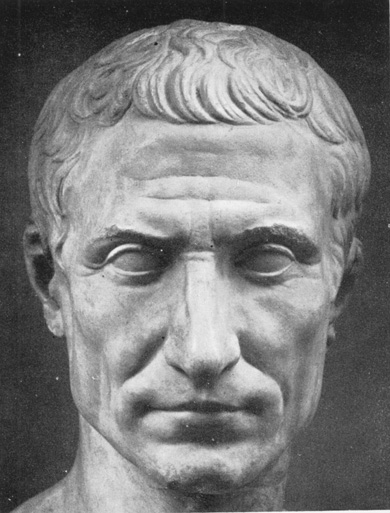
Julius Caesar
Expert's testimony had more holes in it than this guy.

In December 2011, the U.S. Seventh Circuit Court of Appeals, per Judge Richard Posner, reversed a jury verdict in favor of an airline against Fed Ex for $65,998,411, the precise amount the airline had requested in damages.

One issue was the admissibility of complex testimony regarding the damages calculations by the airline’s expert witness, a forensic accountant named Morriss. Posner was not impressed by the expert’s regression analysis testimony:

Morriss’s regression had as many bloody wounds as Julius Caesar when he was stabbed 23 times by the Roman Senators led by Brutus. We have gone on at such length about the deficiencies of the regression analysis in order to remind district judges that, painful as it may be, it is their responsibility to screen expert testimony, however technical; we have suggested aids to the discharge of that responsibility. The responsibility is especially great in a jury trial, since jurors on average have an even lower comfort level with technical evidence than judges. The examination and cross-examination of Morriss were perfunctory and must have struck most, maybe all, of the jurors as gibberish. It became apparent at the oral argument of the appeal that even ATA’s lawyer did not understand Morriss’s analysis; he could not answer our questions about it but could only refer us to Morriss’s testimony.

Posner continued, saying: “If a party’s lawyer cannot understand the testimony of the party’s own expert, the testimony should be withheld from the jury. Evidence unintelligible to the trier or triers of fact has no place in a trial.” Posner suggested the reason the jurors returned a verdict for the exact amount, to the penny, that the airline sought was because they had no clue how to compute the damages.

That all makes perfect sense, but I feel for both the trial judge and the airline’s lawyer–and, of course, the jurors.

Trial judges are required to prescreen expert testimony for reliability, but that’s often practically impossible in highly technical areas such as engineering, medicine, and, in this case, regression analyses. The lawyers aren’t in much better of a position.

Judges and lawyers are smart and have well-developed critical-thinking skills, but those qualities don’t enable them to magically master bodies of technical knowledge in which they have no training. Many scholars have proposed enlisting expert judges and juries in technical, complex cases.

Of course, in the end, Posner was right. If an expert can’t explain how he how arrived at his conclusions in a way that laypersons–including judges and lawyers–can understand, the testimony should be excluded.

ATA Airlines, Inc. v. Federal Express Corp., Case Nos. 11-1382, 11-1492, 7th Cir., Dec. 27, 2011. Thanks to Larry Buser.

Spot the Tort: Gasoline and Fireworks–Perfect Combo (for a Torts Exam)

fireworks and gasoline“Let’s see, where should we build the dangerous fireworks retail outlet?”

“How about right here next to these dangerous gasoline pumps?”

“Perfect!”

University of Memphis law student Ella Hernandez caught this funny juxtaposition on a Florida vacation. (Click on the pic to expand and fully appreciate.)

This picture has the makings of a classic Torts exam question. Just throw in some lightning and a school bus careening out of control.

Spot the Tort: Ladder Risk, But Not the Usual Kind

spot the tort ladderTaken in downtown Memphis, with the Pyramid building in the background.

I guess one of those little yellow flags at the end might help (and may required by law), but that ladder still looks too long to be taking a ride in such a short truck.

Wonder what’s holding it down inside the truck.  Whatever it is, leverage is working against it.