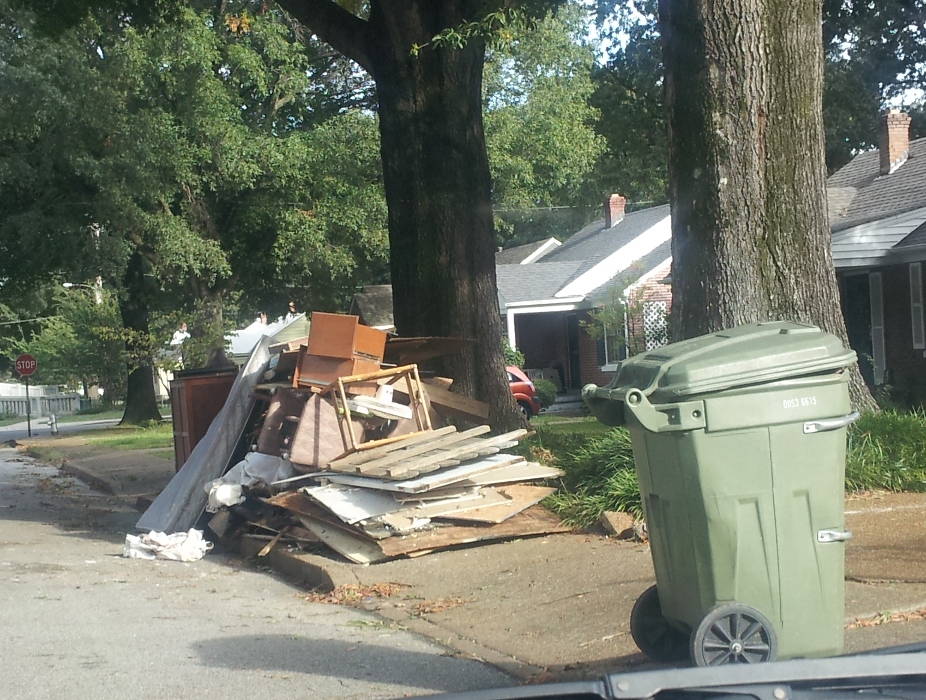
 2012 “Spot the Tort” Contest with my 1Ls at the University of Memphis law school:
I am not sure if this is a tort, but I do know the neighborhood kids thought it was a playground! — Jessica Wargo

2012 “Spot the Tort” Contest with my 1Ls at the University of Memphis law school:
I am not sure if this is a tort, but I do know the neighborhood kids thought it was a playground! — Jessica Wargo
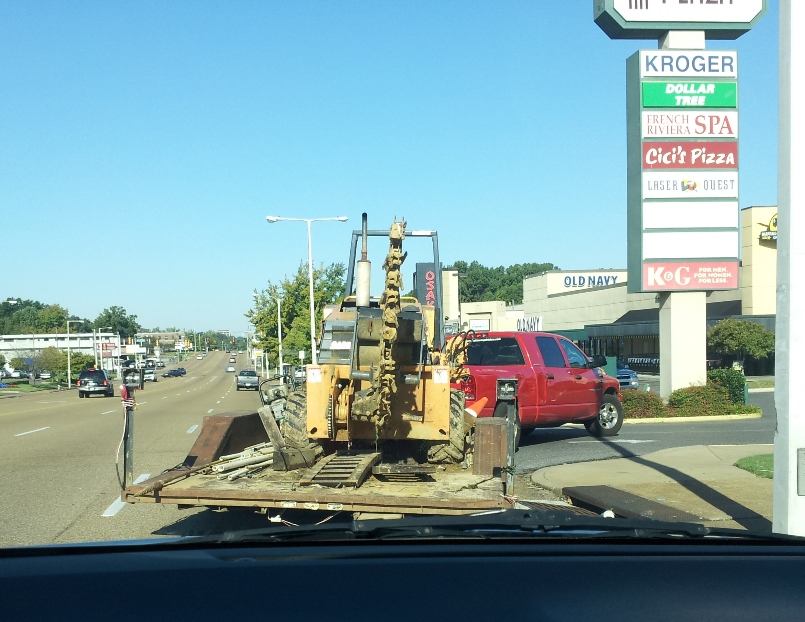 2012 “Spot the Tort” Contest with my 1Ls at the University of Memphis law school:
This truck was completely stopped and stuck on the curb, which is why I had a chance to take the picture. The quality is not the best, but the brake lights are not only broken they are smashed out. Also, nothing in the bed of the trailer is strapped down!
I was waiting for one of the plastic poles on the side to roll off. Then I noticed that the construction machine was not tied down. Then at this point I was wondering how much damage this would do if it came off the trailer. Gravity does not work miracles! — Jessica Wargo
 2012 “Spot the Tort” Contest with my 1Ls at the University of Memphis law school:
My mom took a great picture for the contest! As you can see, someone lost their favorite pet chicken, and he just happened to wander out to Gus’s Fried Chicken in Collierville. Now Gus is all about saving money and the price of chicken these days is just so high … sounds like an exam question right? Trespass to chattels? Conversion? — Stewart Hornor
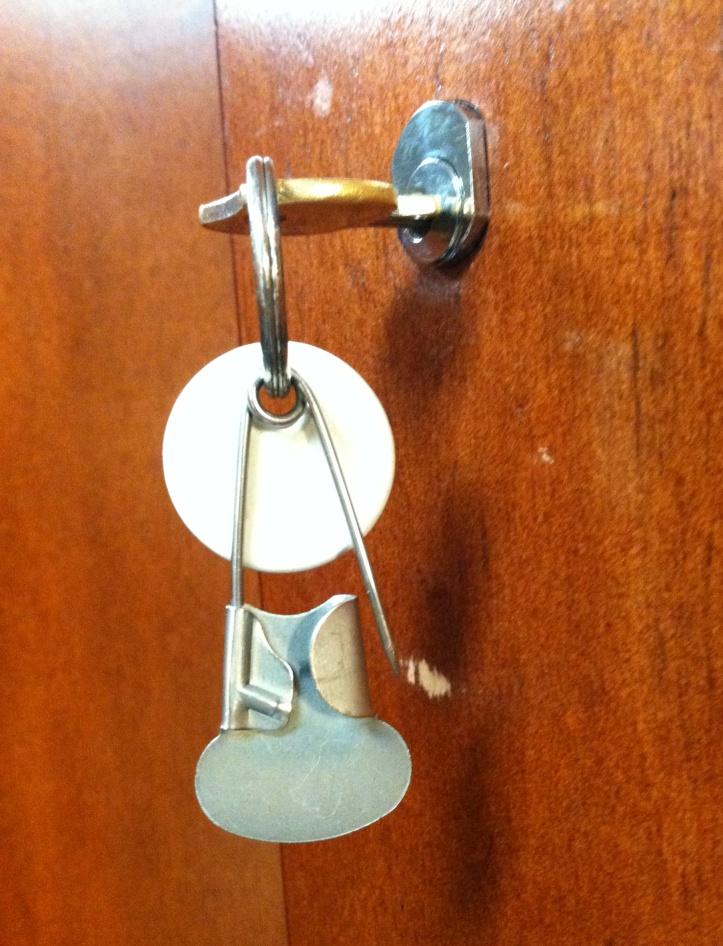 2012 “Spot the Tort” Contest with my 1Ls at the University of Memphis law school:
This is a photo of a potential tort I spotted at the gym this weekend. The negligence of failing to close this safety pin on a locker key could result in someone losing an eye or receiving an unwanted piercing. — Sheerin Mehdian
McClurg footnote: I would go further and argue this is a defective design for a locker room key ring.
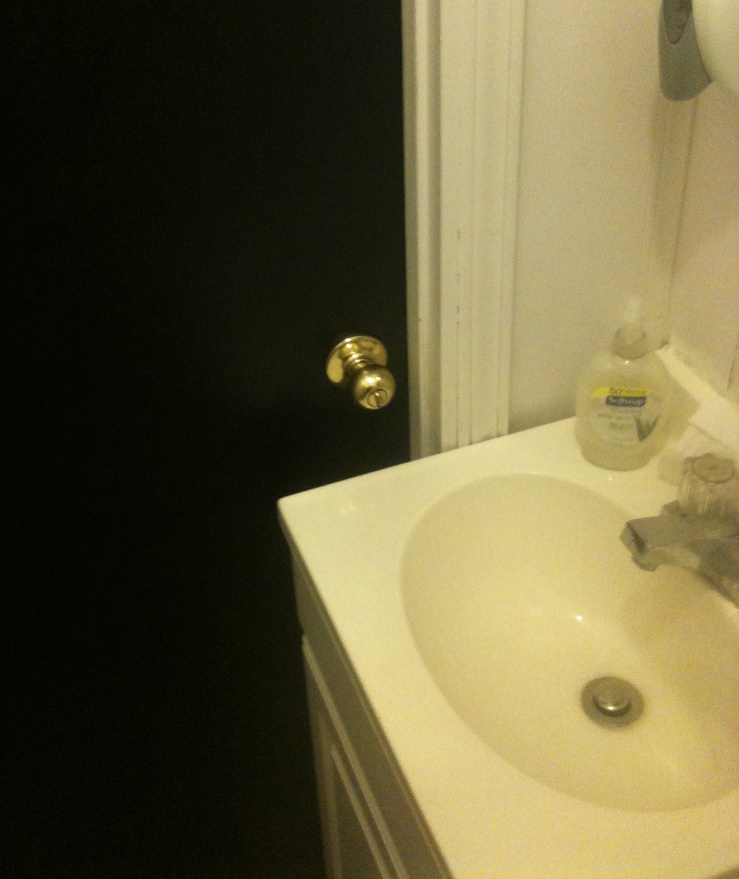 2012 “Spot the Tort” Contest with my 1Ls at the University of Memphis law school:
The size of this restroom compared to the size of its vanity in a mom and pop restaurant in my hometown of Savannah, TN, appears to me to create a danger for people who enter the restroom without paying careful attention or to those needing to get out quickly in case of a fire. — Terry VanEaton
 2012 “Spot the Tort” Contest with my 1Ls at the University of Memphis law school:
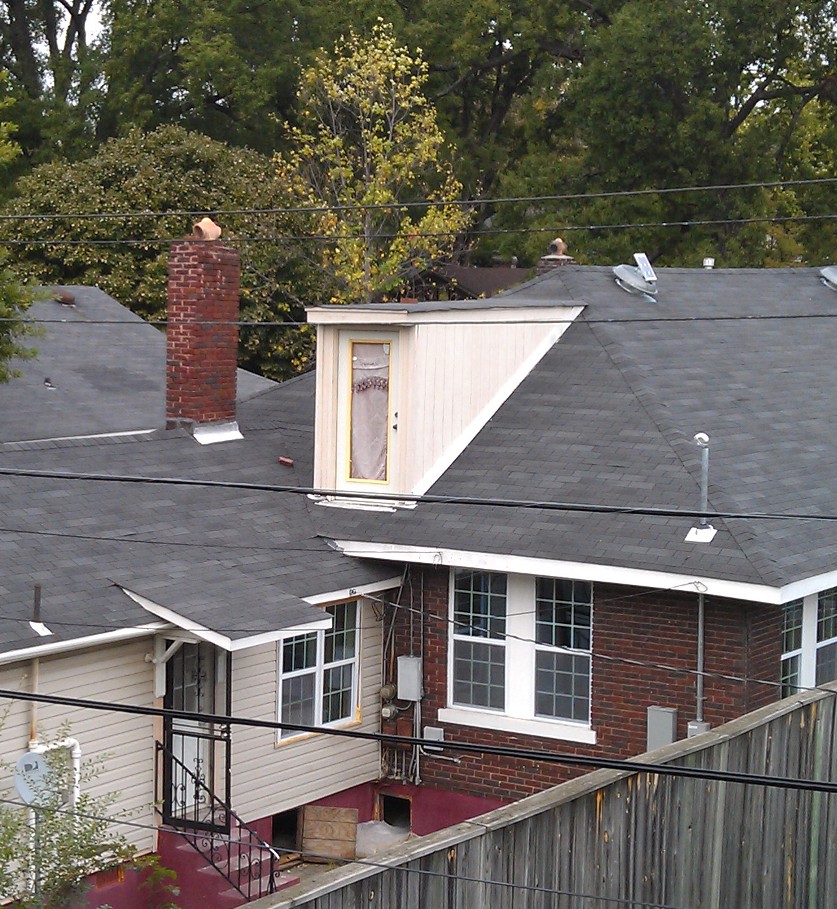
Forget Palin’s Bridge to Nowhere; here’s my neighbor’s Door to Nowhere. I haven’t been able to find out why it’s there–except to tempt small children to try to fly. — Natalie Worlow
 2012 “Spot the Tort” Contest with my 1Ls at the University of Memphis law school:
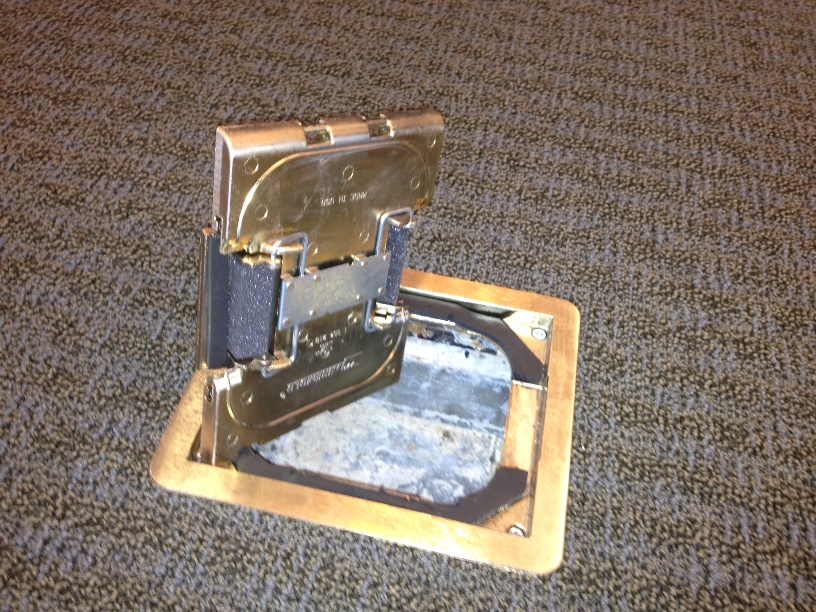
Stubbed my toe and about busted on the carpet in the 4th floor reading room of the law school because of this thing.
Now that we’re done with the memo, I’m hoping to get out this weekend to spot more torts. There will be a lot of Aggies in town for the Ole Miss game. To quote Top Gun, it’ll be a “target rich environment.” — Rob Clapper
2012 “Spot the Tort” Contest with my 1Ls at the University of Memphis law school:
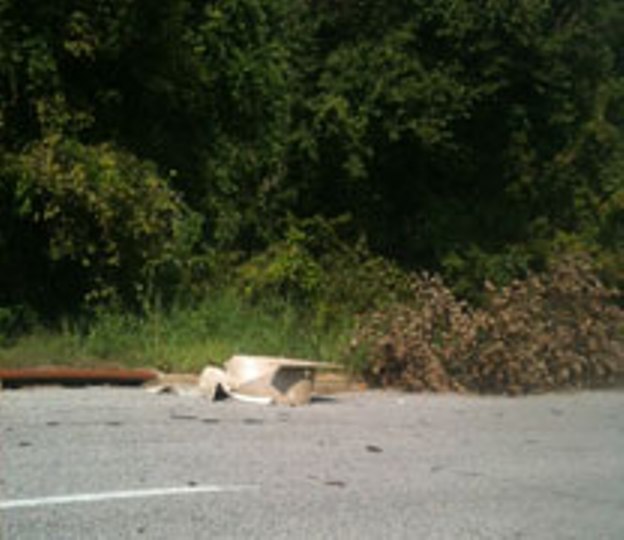
Here are a couple of (admittedly bad and small) photos of a partially fallen tree in the west bound lane of Stage-Delano Road [in Shelby County]. Hidden from the view of west bound motorist by the fallen tree, a danger in itself, was a fiberglass bathtub. The tub is visible to east bound motorists and is shown in the east bound photo. It was in the road for at least two weeks.
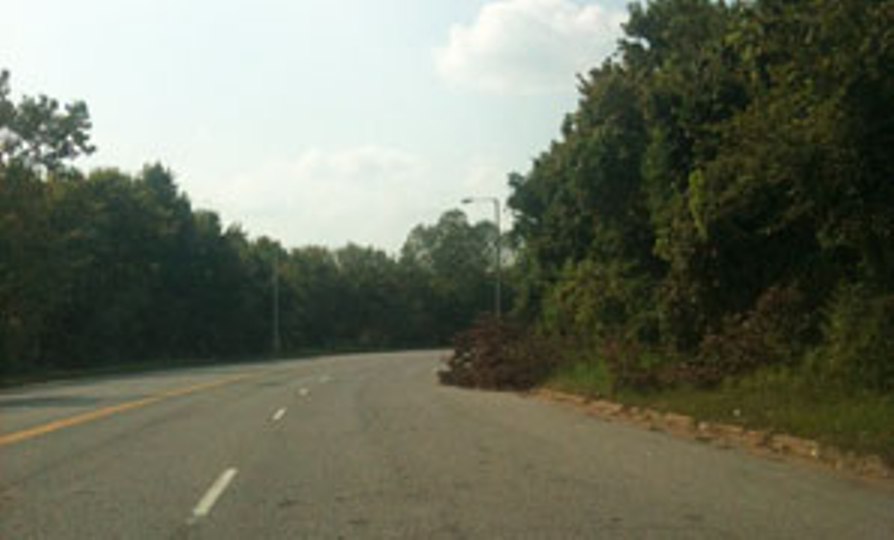
Over that course of time, I noticed that the tub appeared to have been struck at least twice. I do not know if it was struck by a passing motorist. I can attest that damage to the tub increased at least twice over the course of my observations as I passed to and from the law school over the two weeks.
I am happy to report that it appears that the right of way on the street was mowed today and the tree and tub were removed. — Terry VanEaton
 2012 “Spot the Tort” Contest with my 1Ls at the University of Memphis law school:
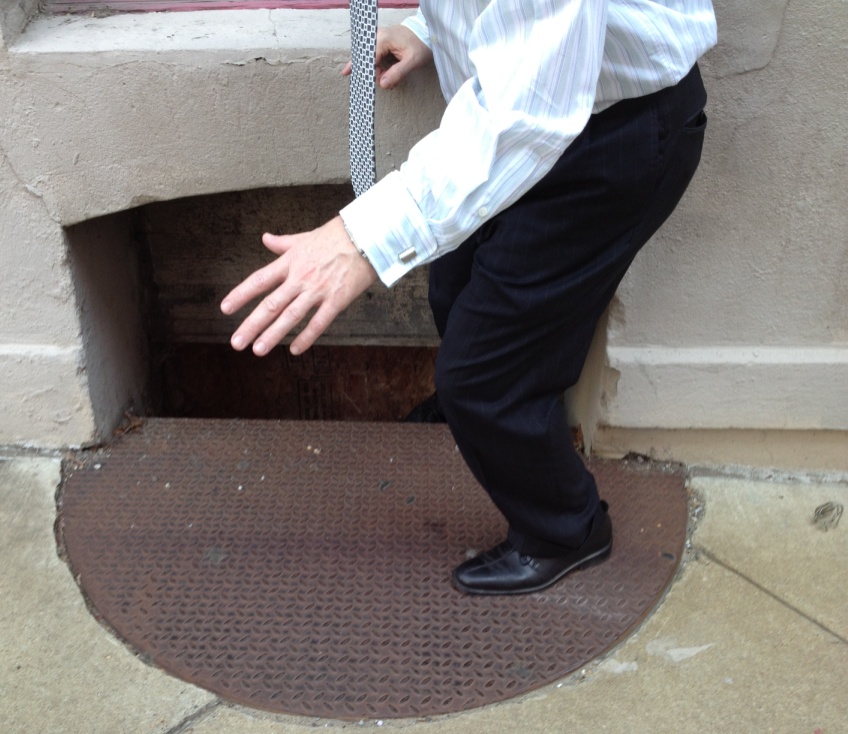
Potential tort spotted at the corner of Front and Gayoso [in downtown Memphis]. I nearly lost a Shelby County Public Defender. — Melissa Harris
 2012 “Spot the Tort” Contest with my 1Ls at the University of Memphis law school:
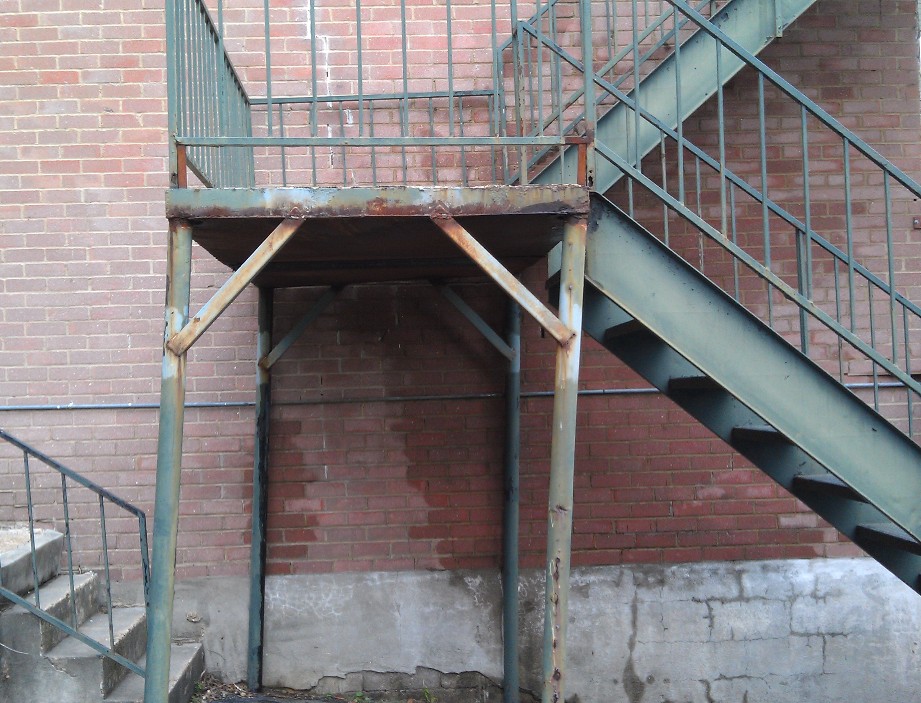
This is the outside staircase I use each and every day at my apartment. It scares the living daylights out of me. It’s hard to tell from the pic, but the poles holding it up are leaning to the right. I like to think of it as the rusted out Leaning Staircase of Memphis. Sort of like the Leaning Tower of Pisa, only much more terrifying. — Natalie Worlow