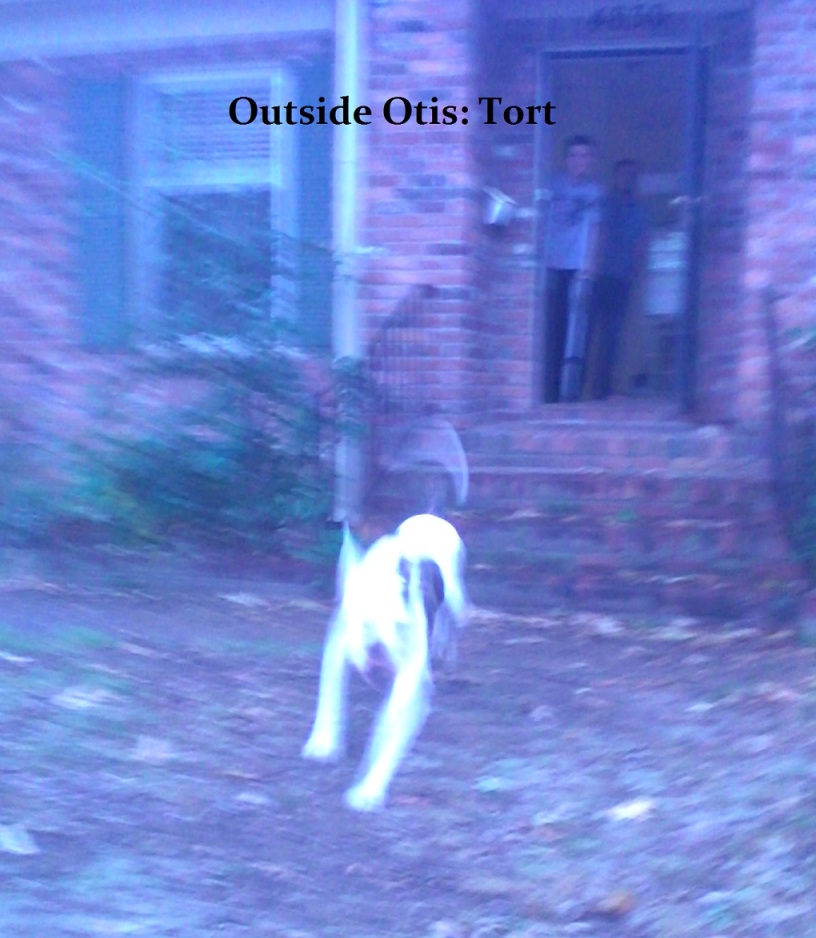
 2012 “Spot the Tort” Contest with my 1Ls at the University of Memphis law school:
Inside Otis: No Tort. Outside Otis: Tort — John McNeil
2012 “Spot the Tort” Contest with my 1Ls at the University of Memphis law school:
Inside Otis: No Tort. Outside Otis: Tort — John McNeil
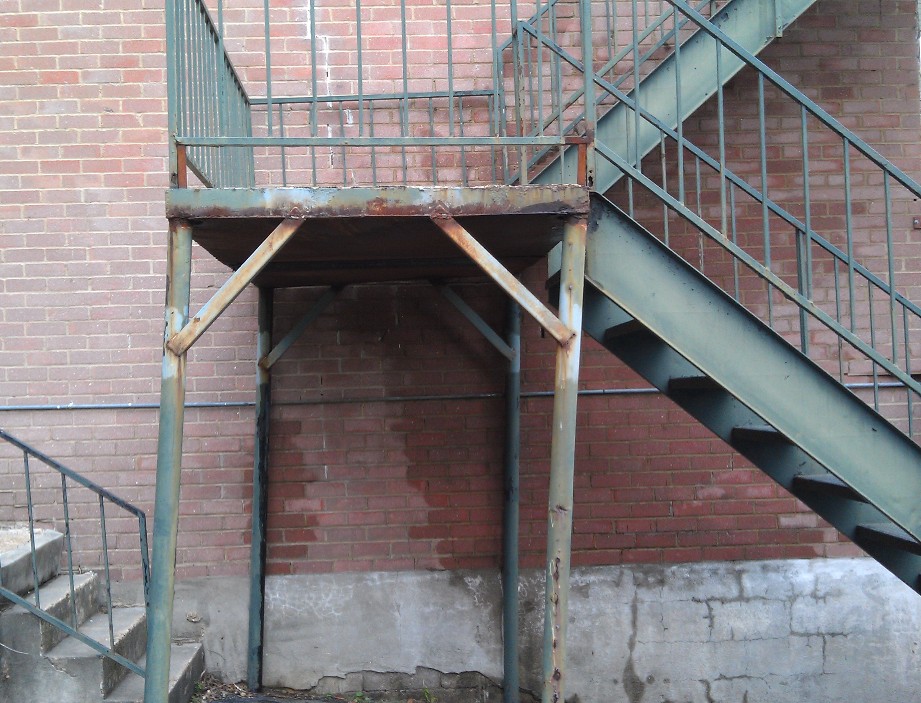 You thought “Risk” was a good game? Spotting risk is even more fun, and definitely more educational. As law students learn in Torts, the world is a dangerous place where the worst that can happen often does.
My 1Ls at the University of Memphis have been participating in a “Spot the Tort” Contest. Check out their photo entries. This is just one sample of the “accidents waiting to happen” they’ve documented in and around Memphis.
 2012 “Spot the Tort” Contest with my 1Ls at the University of Memphis law school:
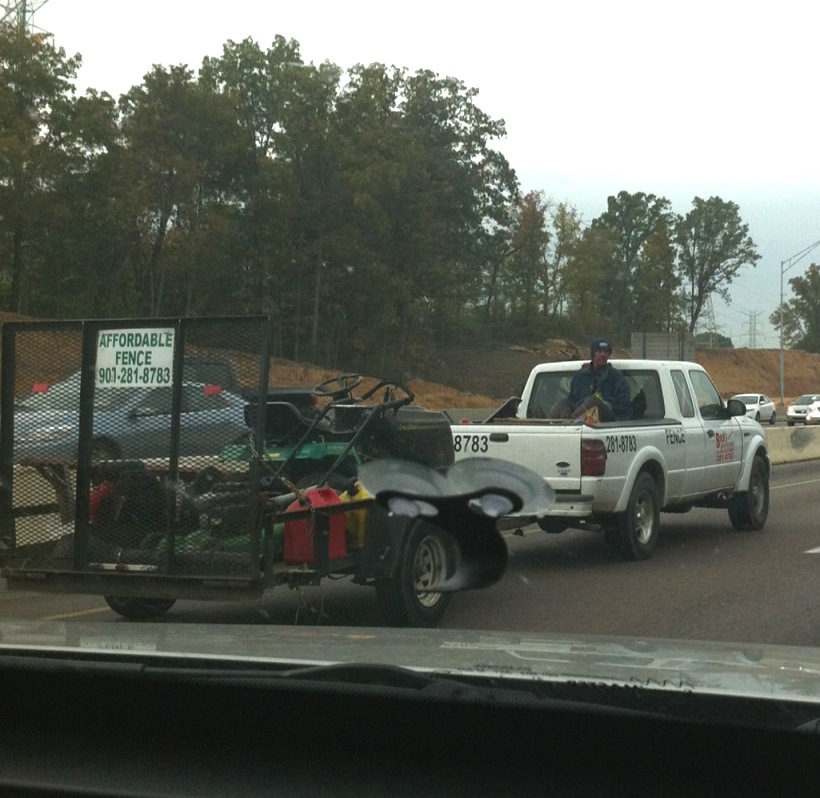
This guy was riding in the back of the truck on I-240 going 70 mph. Can’t say if he made it to his destination, but I haven’t heard anything to the contrary on the news. — Meelad Hanna
 2012 “Spot the Tort” Contest with my 1Ls at the University of Memphis law school:
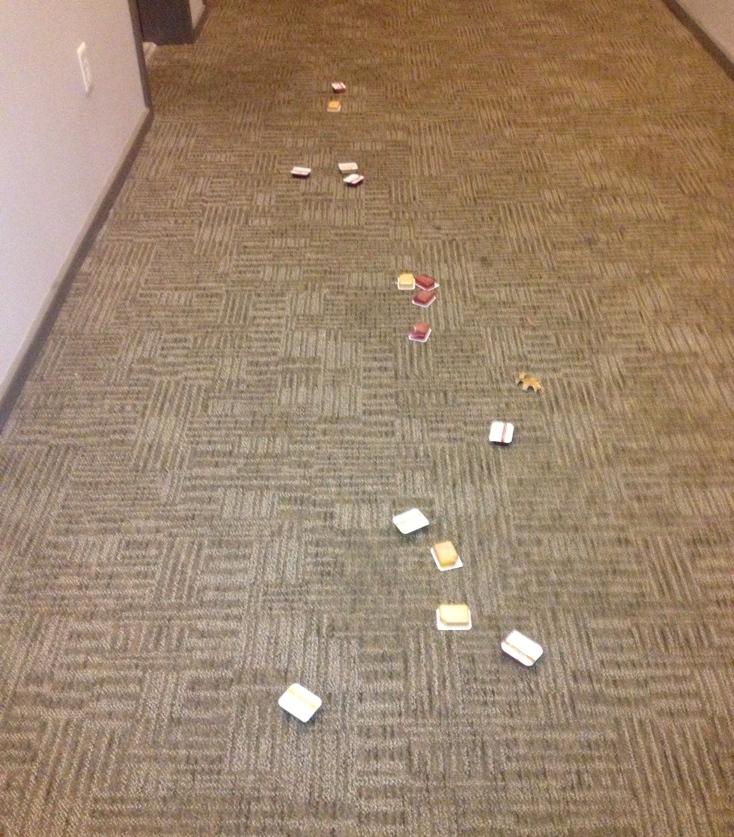
Someone at my apartment complex left a trail of Chick-fil-A sauces on the ground. You could easily slip on one of these yummy packets if you are not careful! — Courtney Sharp
 2012 “Spot the Tort” Contest with my 1Ls at the University of Memphis law school:
This tort waiting to happen has been staring me right in the face all along. This is the man-made stream that runs through my apartment complex. Lots of kids, most of them fairly young, play on the grassy area on its banks. The water’s probably not more than a foot deep, but I’ve heard kids aren’t very smart and can drown in an inch of water. — Natalie Worlow
 2012 “Spot the Tort” Contest with my 1Ls at the University of Memphis law school:
 2012 “Spot the Tort” Contest with my 1Ls at the University of Memphis law school:
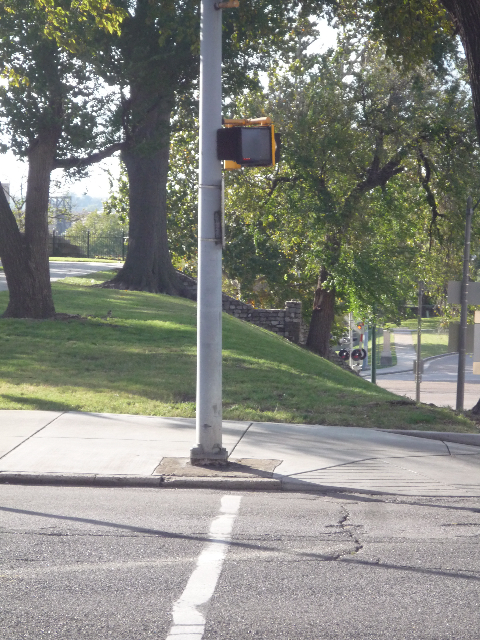
Traffic lights are out at one of busiest intersections in downtown Memphis, Danny Thomas and A.W. Willis. (The camera made the scene look brighter than it was.)
Memphis PD are sitting in the turn lanes and off to the side outside of the lit areas with all lights off, not even running lights. Instead of directing traffic at the intersection, the police were watching drivers go through the intersection then pulling them over to give them tickets. On multiple occasions I witnessed, thankfully, near misses. — Rob Clapper
 2012 “Spot the Tort” Contest with my 1Ls at the University of Memphis law school:
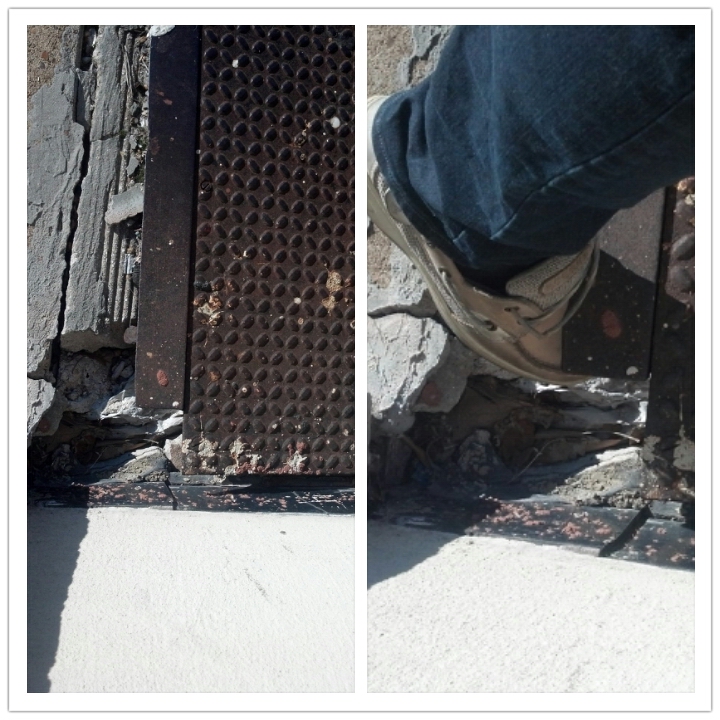
This is where two slabs on concrete meet on a sidewalk at the corner of Front Street and Union. It looks like the concrete began to buckle and someone “fixed” it by putting the metal cover so that it would be a smooth surface. The only problem is that the metal is unhinged from the sidewalk and it protruding upwards, waiting for someone to trip over it and fall face first onto the concrete. — Ariel Anthony
 2012 “Spot the Tort” Contest with my 1Ls at the University of Memphis law school:
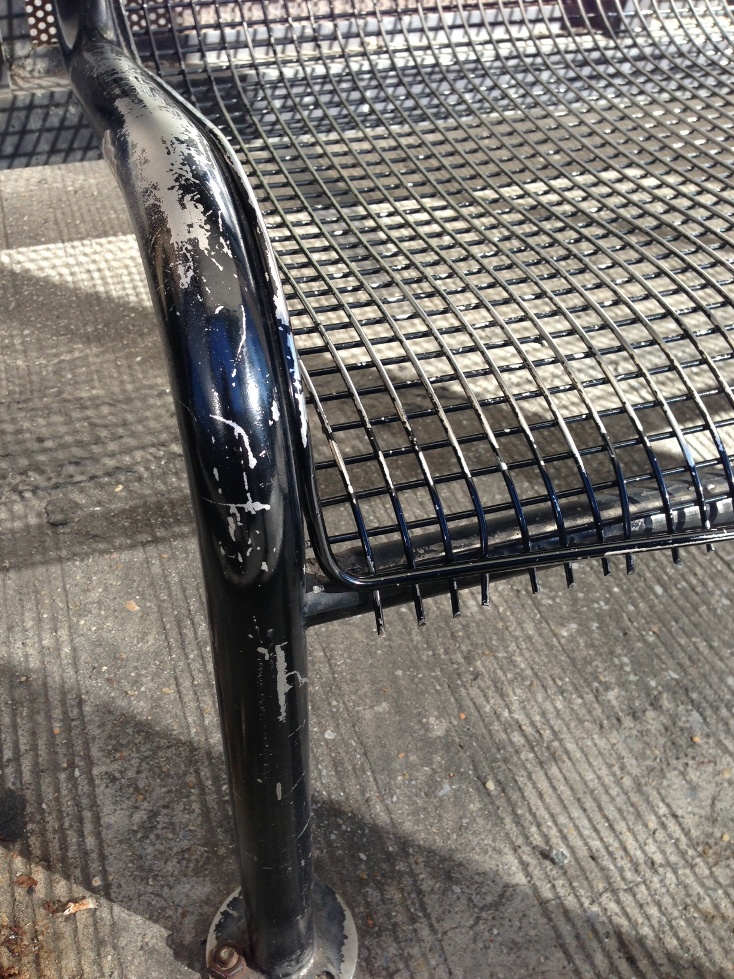
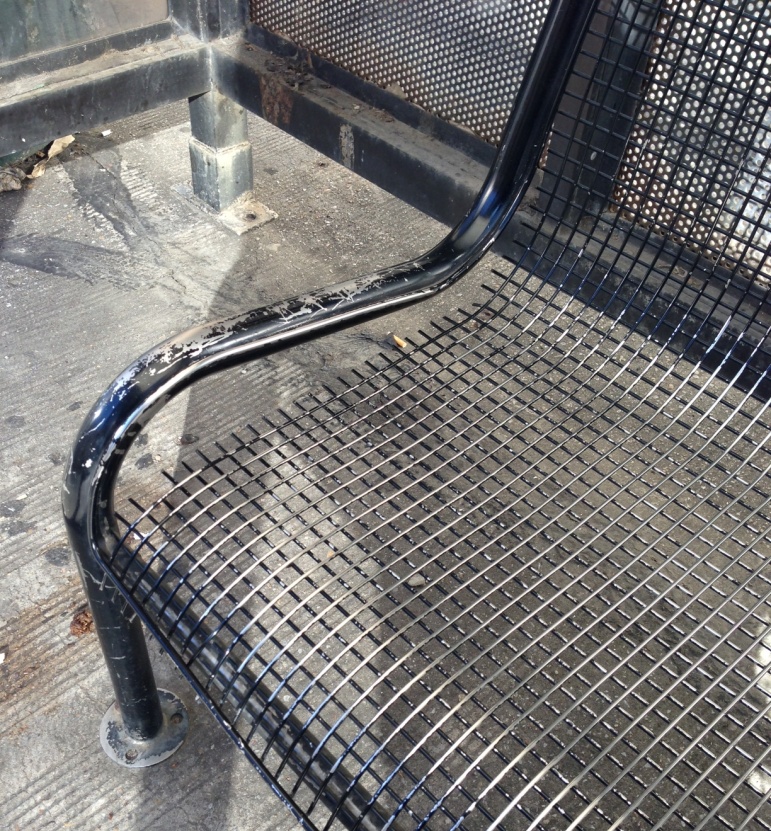
This just seems like a bad situation waiting to happen. I’m not sure if it’s a tort but it seems like someone is going to get hurt. This bench is at bus stop across from the law school. — Rachel Cade
McClurg note: Yes, I would say this is definitely a potential tort, assuming the city had actual or constructive notice of it. In fact, “a bad situation waiting to happen” is a good way to describe a potential tort.
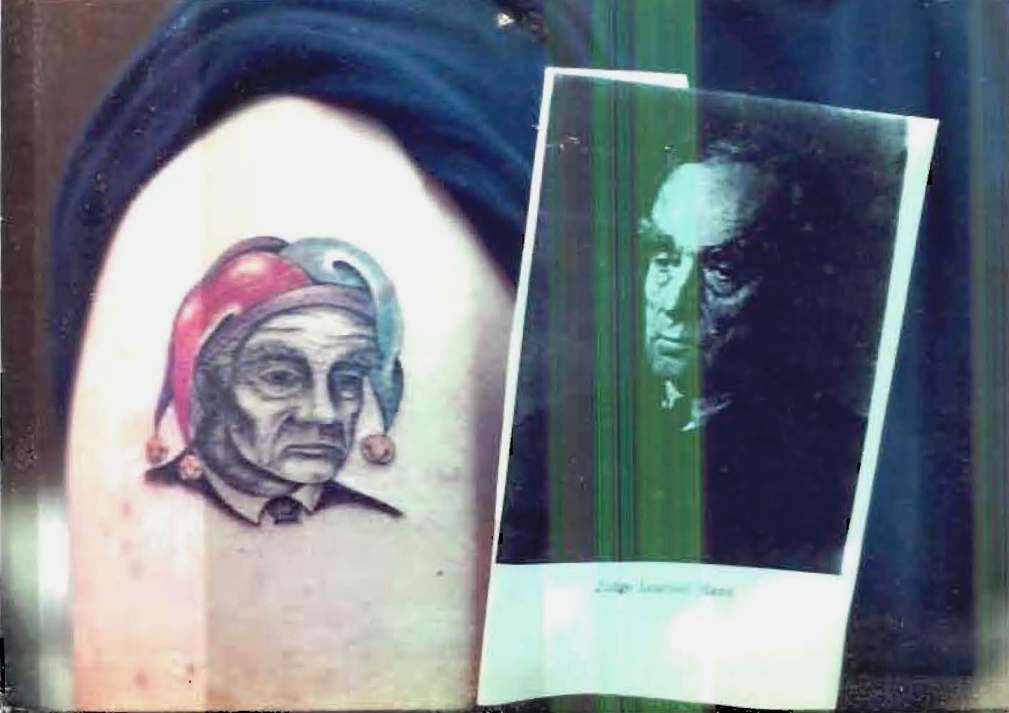 Are you in law school? Do you consider yourself to be a dedicated law student? Not sure? Measure yourself on McClurg’s simple 0-100 scale, with 0 being “I’m not totally thrilled with Judge Learned Hand” and 100 being “I aspire to be like the guy in this picture.”
Years ago, a student of mine at the University of Arkansas at Little Rock School of Law took a trip, to Philadelphia, I think. He struck up a conversation with a tattoo artist in a bar. When the artist learned he was in law school, she asked, “Have you ever heard of a judge named Learned Hand?” “Of course!” the student replied. All law students know and remember Judge Learned Hand.
The artist said the young man above came into her tattoo parlor with the accompanying picture of Judge Hand (the picture is from the famous Prosser, Wade & Schwartz Torts casebook used at 124 law schools) and asked to have Judge Hand, wearing a jester cap, tattooed on his arm. As proof, she followed up and sent this photograph to my student, who entrusted it to me.
For non-legals, Judge Hand was a famous judge who in a famous case–U.S. v. Carroll Towing–set forth a famous algebraic economic cost-benefit formula for determining whether injury-causing conduct was reasonable or unreasonable. If reasonable, the defendant is off the hook. If unreasonable, the defendant is liable for negligence and must pay damages. The formula is B < P x L. B stands for the burden of avoiding a risk of harm, P is the probability that the risk will actually cause harm, and L stands for the severity of the harm if it occurs. The formula states that if the burden of avoiding the harm is less than the probability of the harm occurring multiplied by the severity of the potential harm, the conduct is unreasonable (i.e., negligent). Conversely, if the burden of avoiding the risk outweighs the probability times the severity of harm, the conduct is reasonable (i.e., non-negligent).
The back of the picture is stamped with “Tattoo & Photo by Sherry Sears, Creative Images, Des Moines, IA.” So if you want to impress your professors and university’s counseling department, book a ticket to Des Moines.