Law School Makes Students Overly Analytical

A 1L at St. Thomas University School of Law in Miami wrote to say she enjoyed The “Companion Text” to Law School and especially connected to the chapter on the personality changes that occur in law students, specifically, becoming overly analytical. She gave a funny example:

I find it hard trying to switch gears back and forth from analytical law school mode to normal person mode.

We are trained to “think like lawyers” every waking moment of the day. But that doesn’t always work around our non-law student loved ones. It creates a kind of dissonance, I guess.

A lot of times when I try to explain law school things to friends and family and they just don’t get it, I either don’t have the energy to figure out how to communicate it accurately or the communication gap comes during a particularly stressful period—just before memos are due, for example—and I am afraid to open my mouth because I might erupt with irritable snaps or some other stream of emotion that isn’t really directed toward my loved ones but will likely end up coming out that way.

Here’s a story that could be in The “Companion Text” to Law School about the whole mental rewiring process law students go through as they work their way through law school and the confusion that ensues as family members try to figure out what the heck is going on. I called my grandpa and the conversation went like this:

Me: “What’cha doing?”

Grandpa: “Well, I just walked through the door.”

Me: “Oh. Which door?”

Grandpa: Silence…

Finally, after a long pause, he burst into laughter and said, “I just walked through the door to my house! I thought that was a given!” He laughed about it, but I could tell there was a little shock in his voice, like he thought I had lost my marbles.

I then had to explain to him that law students constantly clarify and ask questions because our brains have been trained think that way! Of course, it’s not that I lacked the common sense to assume he was implying he just got home and “walked through the door” of his house—but it’s like the law student in me had to ask just to be sure.

I have had other people make comments (half-jokingly, half seriously) about the fact that my “common sense” seems to have gone out the window since I became a law student. I’m sure I’m not the only one who experiences this—family members and friends don’t realize that lawyers and law students see factual assumptions as no-nos.

Being well-trained in critical-thinking skills–including knowing that the most accurate answer to most questions in law or life is “It depends on the facts”–is both a blessing and a curse to law students and lawyers. If you want a balanced, well-reasoned answer to a vexing question, ask a lawyer. On the other hand, law students and lawyers can drive people around them nuts by overanalyzing every word spoken.

Speaking of balanced “on the one hand, on the other hand”-thinking, here’s a judge who did it literally.


Career Shoes for Lawyers?

Career shoes for lawyersA first-year law student in Miami isn’t rushing out to buy these “career shoes.” As she explained in an email:

I am a member of a designer overstock/discount (and probably liquidation) club and was just browsing through today’s sales when I saw a heading that said “CAREER SHOES.” I clicked on it thinking I might find a pair of designer shoes suitable for pairing with a suit.

This photo shows their idea of career shoes for the modern woman. I do love a good pair of heels, but when I think of “career shoes,” I definitely don’t picture these styles … What’s the career they had in mind when they wrote the heading for this sale? Hooker?

–Thanks to Amy Holland.

Warning: No Blindfolded Kids Swinging Bats

no pinatasDuring a Torts class last semester, we were discussing various applications of Judge Learned Hand’s formula for negligence, when a student asked, “Why isn’t it negligent to hold pinata parties?” To which I replied, “It probably is!”

Judge Hand’s formula, explained in a famous case called United States v. Carroll Towing Co., is that if the burden of avoiding a risk is less than than probability of the risk resulting in harm multiplied by the potential severity of the harm, it is negligent to engage in the conduct.

As applied to pinata parties, the only burden to avoiding the risk is to choose a different, safer game to entertain kids at a party, compared to the risk that a blindfolded kid swinging a bat could whack some other kid in the head and cause serious injury.

Some students thought I was just being, as usual, overly cautious Tortman, but then I came across this sign at a picnic area while bike-riding in Shelby Farms. Vindicated.

But wait, what is up with that prohibition on metal detecting?

It’s No Tattoo, But A Torts-Lover Nonetheless

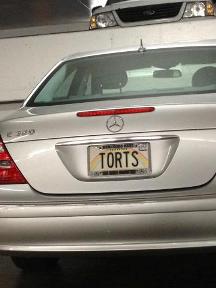
torts license plateA former student from Golden Gate law school who lives and practices in Hawaii sent this picture of a true torts-loving person’s car.

We will engage in outrageous speculation that it belongs to a plaintiffs’ personal injury lawyer.  If you think about it, who else would get a “TORTS” license plate? Maybe geeky law professors with nicknames like Tortman or pattisiers who can’t spell, but really no one else. Insurance defense lawyers wouldn’t do it because it would violate the industry position that torts do not actually exist.

The car owner  obviously loves tort law, but any challenger to the “Most Crazy in Love with Torts” still has to contend with the guy who got Judge Learned Hand tattooed on his arm.  On the other hand, that guy may have simply loved Judge Hand or even barges.

–Thanks to Laura Ozak.

Test Your Legal Trivia Knowledge: Top Lawyer Movie Heroes

Reprinted from The “Companion Text” to Law School: Understanding and Surviving Life with a Law Student (West 2012) with permission of Thomson Reuters.

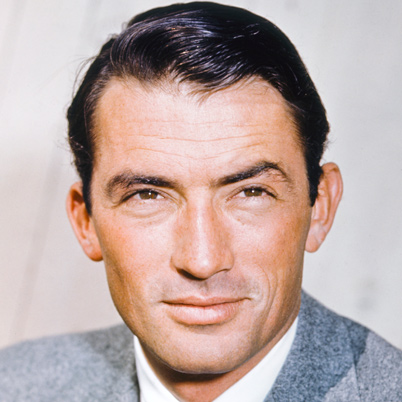
Top movie hero of all time.
Top movie hero, Atticus Finch.

Question.  In 2003, the American Film Institute (AFI) released its list of the top fifty heroes in movie history.  How many of those top fifty movie heroes were legal professionals (lawyers or lawmakers) or common citizens who used the law to achieve progressive objectives?

A.  1

B.  4

C.  8

D.  12

E.  15
Answer: C.  The eight legally inclined top fifty movie heroes include, in the number one spot, Atticus Finch (Gregory Peck), the Southern lawyer who fought for justice in a racially charged case in the screen adaptation of Harper Lee’s book, To Kill a Mockingbird.  Mahatma Gandhi, who was trained as a lawyer, came in #21 for Gandhi (Ben Kingsley).  Andrew Beckett (Tom Hanks), the AIDS-afflicted corporate lawyer from Philadelphia, made the list at #49.  Jefferson Smith (Jimmy Stewart)—the protagonist in the Frank Capra classic, Mr. Smith Goes to Washington—reached the #11 spot.  Stewart played a character appointed to fill a vacancy as a U.S. Senator, where he confronted and fought political corruption.  Erin Brockovich (Julia Roberts), a down-and-out paralegal whose sleuthing led to a class action against a toxic waste-dumping corporation in the movie of the same name, checked in at #31.  At #28 we have Juror #8 (Henry Fonda) from 12 Angry Men, the lone juror who refused to vote guilty in the trial of a teenager accused of murdering his father.  The final two characters were workers who became labor union activists fighting for fair, safer working conditions: Norma Rae Webster (Sally Field), from Norma Rae, at #15, and Karen Silkwood (Meryl Streep), from Silkwood, at #47.

Test Your Legal Trivia Knowledge: Who Rocked the Law?

Reprinted from The “Companion Text” to Law School: Understanding and Surviving Life with a Law Student (West 2012) with permission from Thomson Reuters.

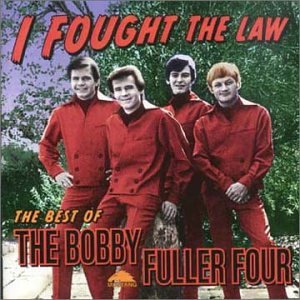
The Bobby Fuller Four
Quiz clue.

Question. While some people purport to “hate” lawyers, the public remains fascinated by them, as evidenced by all the attention the legal profession receives in the entertainment world.  Since the 1960s, more than fifty television series about lawyers have been produced.  Well over 100 “lawyer movies” have been brought to the big screen and lawyer novelists such as John Grisham sell hundreds of millions of books.  What about musical entertainment?  Which of the following is not a real song by a popular artist?

A.  I Fought the Law (and the Law Won)

B.  Lawyers in Love

C.  Sue Me, Sue You Blues

D.  My Lawyer Bit My Doctor

E.  Lawyers, Guns & Money

Answer: D.  “My Lawyer Bit My Doctor” is not a real song, although it sounds like it could be a hit.  The Bobby Fuller Four made I Fought the Law (and the Law Won) into a top 10 hit in 1964.  Sadly, Fuller was found dead in his car shortly after he tasted fame.  The death was ruled a suicide/accident, although some suspected Fuller was murdered.  John Mellencamp paid homage to Fuller in his song, R.O.C.K. in the U.S.A. (“There was Frankie Lymon, Bobby Fuller, Mitch Ryder (they were rockin’).”  Jackson Brown’s Lawyers in Love reached the Top 40 in 1983, while his album of the same name made it all the way to #8 in the charts.  The sardonic Sue Me, Sue You Blues appeared on former Beatle George Harrison’s second solo album, Living in the Material World, released in 1973.  Like many rock stars, Harrison had been embroiled in more than his fair share of litigation, including lawsuits over the breakup of the Beatles.  The song contained biting lyrics such as, “Bring your lawyer, and I’ll bring mine; get together and we could have a real bad time.”  Lawyers, Guns & Money was a typically over-the-top, hilarious tune from the late Warren Zevon that appeared on his 1978 album, Excitable Boy.  It includes the classic refrain line, “Send lawyers, guns, and money; the s*** has hit the fan.”

Warning: Canadian Coffee Seller Makes Fun of Hot Coffee Warnings

Liebeck coffee burn.
One of the milder pictures of  Stella Liebeck’s coffee burn injuries.

Any mention of lawsuits and hot coffee invariably invokes the grossly misunderstood “McDonald’s coffee spill” case of Stella Liebeck, a 79-old-woman who suffered third-degree burns after spilling a stryrofoam, takeout cup of McDonald’s coffee on her legs.

I apologize for the gruesome picture, but a large part of the misunderstanding of this case comes from people not appreciating that Ms. Liebeck suffered extremely severe injuries. There are much worse pictures of her injuries available on the internet. There is also a ton of information, and misinformation, out there about the McDonald’s case. Here (scroll down to “Public Perceptions: The McDonald’s Coffee Spill”) and here are a couple accounts of the facts. You might also want to check out the movie, Hot Coffee, which explores the McDonald’s case and, more generally, the tort reform movement.

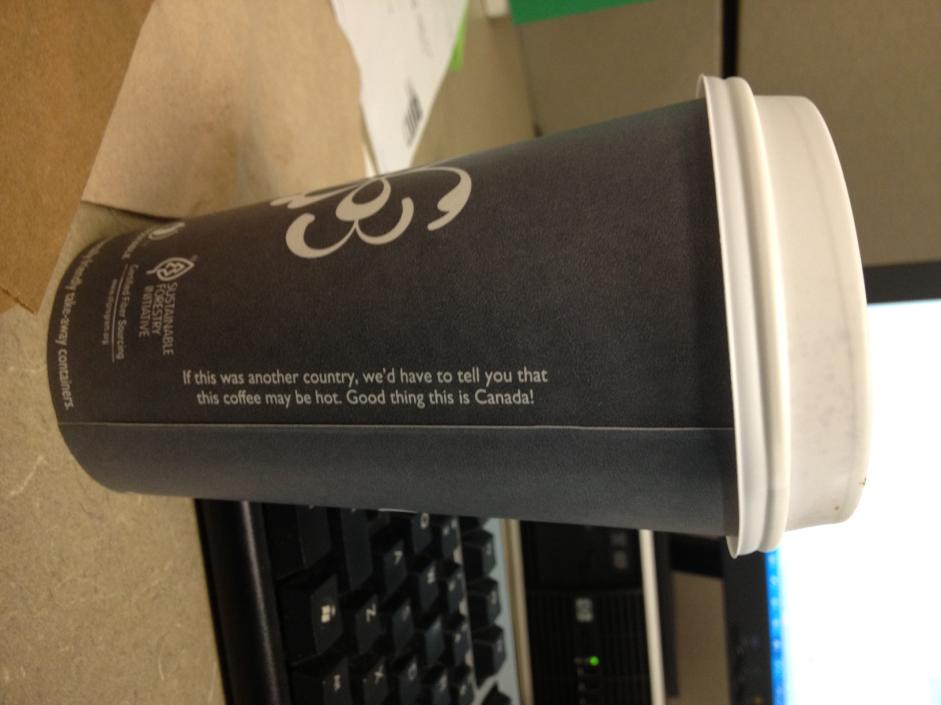
Canadian coffee cup warning
Sideways on purpose. Click to expand.

At least one Canadian coffee seller found the idea of warning consumers about hot coffee to be hilarious:

“If this was another country, we’d have to tell you this coffee may be hot. Good thing this is Canada!”

2012 Spot the Tort Contest

2012 Spot the Tort ContestYou thought “Risk” was a good game? Spotting risk is even more fun, and definitely more educational. As law students learn in Torts, the world is a dangerous place where the worst that can happen often does.

My 1Ls at the University of Memphis have been participating in a “Spot the Tort” Contest. Check out their photo entries. This is just one sample of the “accidents waiting to happen” they’ve documented in and around Memphis.

Dedicated Law Student Gets Judge Hand Tattoo

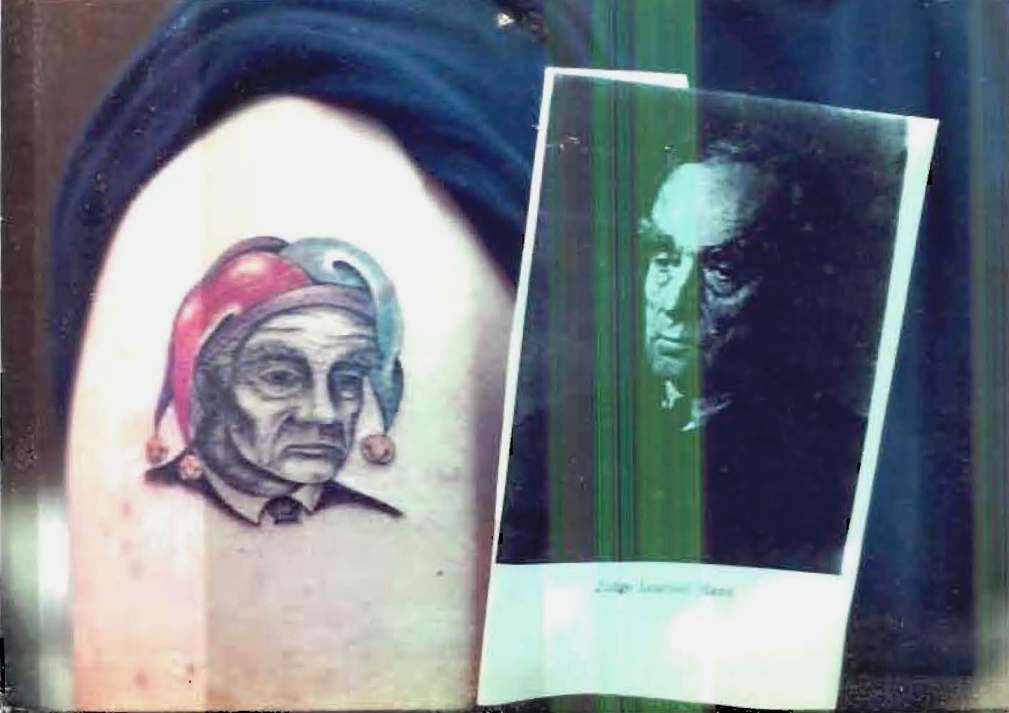
Judge Learned Hand tattooAre you in law school? Do you consider yourself to be a dedicated law student? Not sure? Measure yourself on McClurg’s simple 0-100 scale, with 0 being “I’m not totally thrilled with Judge Learned Hand” and 100 being “I aspire to be like the guy in this picture.”

Years ago, a student of mine at the University of Arkansas at Little Rock School of Law took a trip, to Philadelphia, I think. He struck up a conversation with a tattoo artist in a bar. When the artist learned he was in law school, she asked, “Have you ever heard of a judge named Learned Hand?”  “Of course!” the student replied.  All law students know and remember Judge Learned Hand.

The artist said the young man above came into her tattoo parlor with the accompanying picture of Judge Hand (the picture is from the famous Prosser, Wade & Schwartz Torts casebook used at 124 law schools) and asked to have Judge Hand, wearing a jester cap, tattooed on his arm. As proof, she followed up and sent this photograph to my student, who entrusted it to me.

For non-legals, Judge Hand was a famous judge who in a famous case–U.S. v. Carroll Towing–set forth a famous algebraic economic cost-benefit formula for determining whether injury-causing conduct was reasonable or unreasonable. If reasonable, the defendant is off the hook. If unreasonable, the defendant is liable for negligence and must pay damages. The formula is B < P x L. B stands for the burden of avoiding a risk of harm, P is the probability that the risk will actually cause harm, and L stands for the severity of the harm if it occurs. The formula states that if the burden of avoiding the harm is less than the probability of the harm occurring multiplied by the severity of the potential harm, the conduct is unreasonable (i.e., negligent). Conversely, if the burden of avoiding the risk outweighs the probability times the severity of harm, the conduct is reasonable (i.e., non-negligent).

The back of the picture is stamped with “Tattoo & Photo by Sherry Sears, Creative Images, Des Moines, IA.” So if you want to impress your professors and university’s counseling department, book a ticket to Des Moines.

New Casebook on Zombie Law

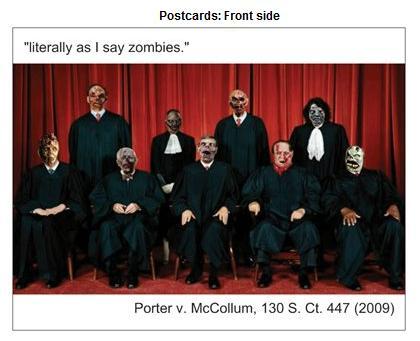
zombie supreme courtGood news for legally inclined zombie lovers.  Joshua Warren has compiled a casebook  on Zombie Law that “include[s] case opinions from  the over 300 U.S. Federal Court opinions with the word “zombie” (and “zombies”, “zombi”, “zombis”, “zombified”, “zombism”, etc..).” These include cases from the zombified Supreme Court (available as postcards, along with zombie law teeshirts and zombie flashdrives).

Warren explains that this is a “serious” project. From his promotional website:

The “zombie” in federal courts are very  interesting.  Aside from the intellectual property cases that provide  some reflection on modern zombie fiction, there are also ample  metaphoric uses of the word in these judicial writings.  Judges have referred to “zombie precedents” and “zombie  litigation”. There  are zombie corporations, zombie  criminals, a significant number are  social security cases in which people describe themselves in zombie  condition and even a recent mentions of cybernetic zombies.

Unlike other works of zombie academia, the zombies in this book are all real.  Most zombie scholarship uses hypothetical zombies as tropes to create  entertaining and extreme fact patterns that can be used to explain  complex subject matters.  This has been used effectively for  neuroscience (Schlozman, Voytek), international policy analysis (Drezner), public health (Center for Disease Control), geography (Kickstarter project: Zombie-Based Learning), survival skills (Brooks) amongst other subjects (See Zombie Research Society) including also academics who focus on the fictional character itself (Mogk, Brooks).

This Zombie Law book is different because it does not use zombies as hypotheticals to teach law. It is not conjecture about what zombies are or might be. This book is a compendium of real usages of the actual word in American jurisprudence.  This book is a collection of real legal cases that literally include “zombies” (or similar word) in US Federal Court opinions..

The basic outline of the  book will separate most cases into issues of corporations, medications, criminals and, of course intellectual property.  Major sections will be  devoted to Social Security (disability) law, corporate fraud and issues of criminal intent. There are noteworthy cases referring to post traumatic stress disorder and many recent Social Security cases regarding of fibromyalgia.  The intellectual property cases are about popular zombie fiction and also so-called “vicious zombi” patents.  In general, the idea of zombies in a mall is public domain for copyright but particular forms of zombie products are protected by trademark.

Frequently there is a sort of double meaning in the word.  In Social Security cases, the word zombie is found as a symptom of pain, depression and anxiety but also the side effect of medications prescribed for those same symptoms.  In criminal law, zombie appear in victim’s description of their assailant’s behavior but also as defense argument against criminal intent. For corporations the ironic question of corporate-personhood begs the question, ‘what is a person?’, which is often the implied question of zombie studies.

For all you law professors and other legal authors who thought there was no niche left to write about, Warren shows you just have to think outside of the box, in this case, the ones buried six feet under.