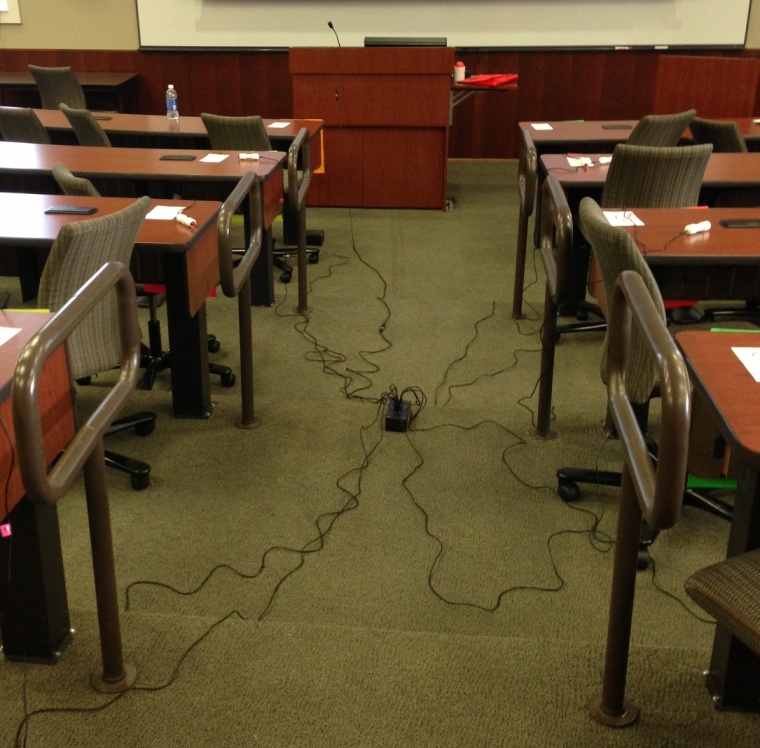
 Law schools, filled as they are with lawyers and law students, are pretty safe places, but they sometimes present their own dangerous premises issues, as here in a University of Memphis classroom where students were trying out some new technology that has not reached the wireless stage. The result: a spider web of trip and fall possibilities. Thanks to Rachel Cade.
Spot the Tort
2012 Spot the Tort Contest
 You thought “Risk” was a good game? Spotting risk is even more fun, and definitely more educational. As law students learn in Torts, the world is a dangerous place where the worst that can happen often does.
My 1Ls at the University of Memphis have been participating in a “Spot the Tort” Contest. Check out their photo entries. This is just one sample of the “accidents waiting to happen” they’ve documented in and around Memphis.
Spot the Tort: The Balcony Doors to Nowhere
 “I am just a nowhere man, falling into nowhere land, stepping through the balcony doors to nowhere.”
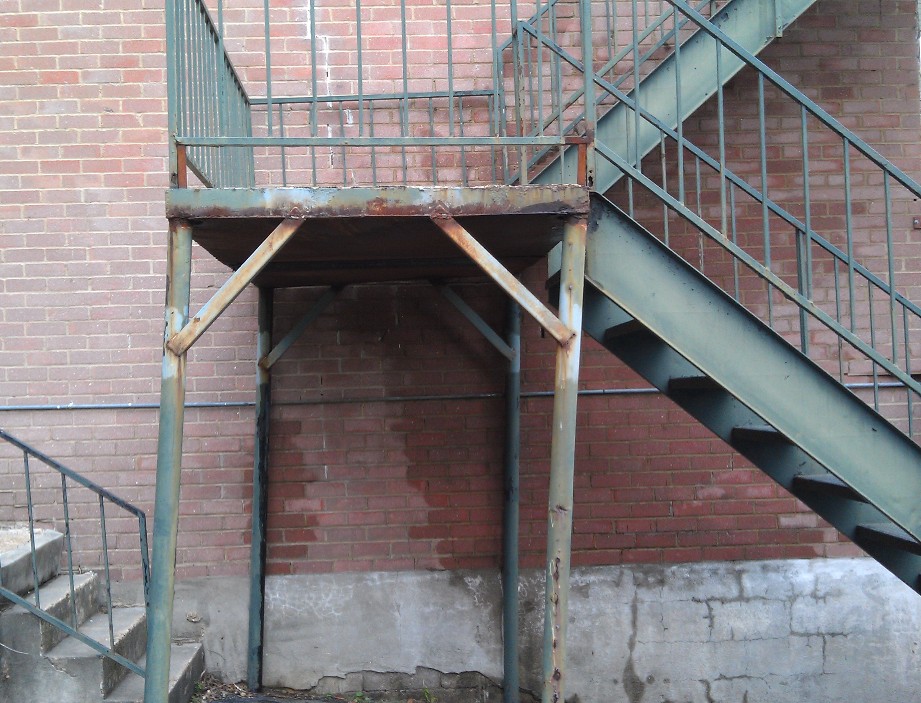
With apologies to the Beatles, that’s the tune that came to mind on receiving this picture of a second floor balcony with nowhere to go but down at a resort at Pickwick Lake in Tennessee.
The submitter said the doors open inward. While the railing no doubt helps, the open space at the bottom is still a tort waiting to happen.
Spot the Tort: Looks Like a Hogwarts Tort
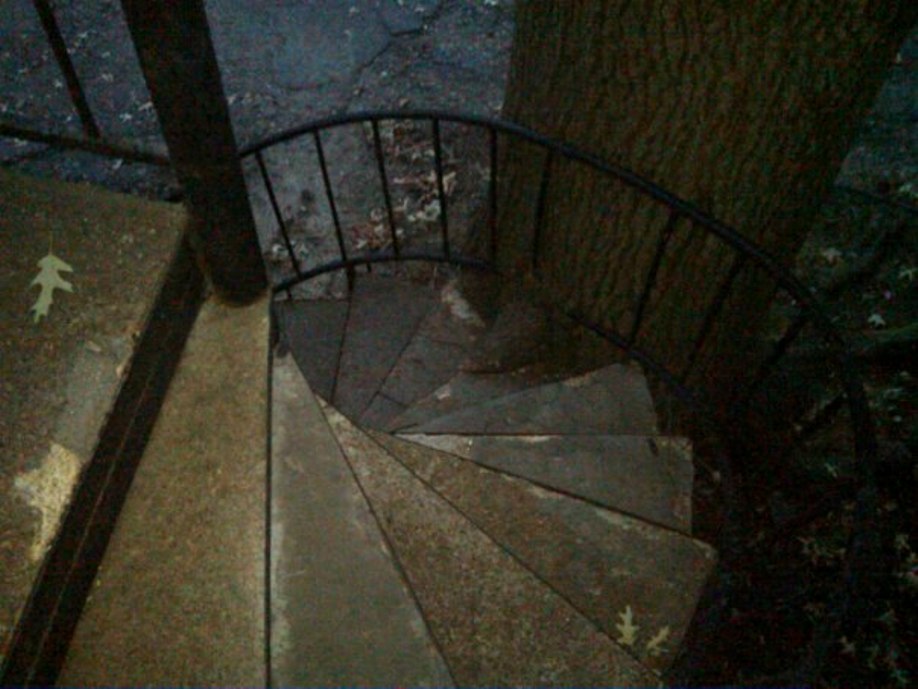 From a University of Memphis law student comes this photo of a treacherous, spiral staircase that looks like it would be a perfect set piece for a low-budget version of a Harry Potter movie. The student said the whole staircase, not just the railing, “wobbles all the way down.”
Spooky. And dangerous.
Seriously. Stairs, like ladders and any other place a person can fall from height, can be extremely perilous. One recent study found that 931,886 children under five were treated in emergency rooms for stair-related injuries from 1999 through 2008, averaging 93,189 injuries per year.
Speaking of Hogwarts Torts …
Spot the Tort: Fixing Dangerous Conditions on the Cheap
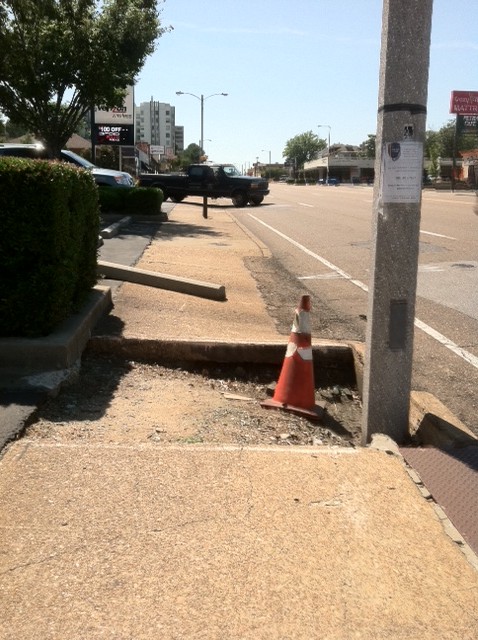
Good news! Well, kind of, sort of. Visitors might recall the treacherous sidewalk abyss adjacent to a busy Memphis street that I regularly walk on. The first attempted fix was to spray orange paint around the edge.
But maybe someone broke their leg despite that aggressive risk-reducing measure, because now the city has a new fix: an orange cone! Cement apparently is still not being considered.
But, oops, we also have a new problem a couple yards farther down: a curb stone in the middle of the sidewalk.
Spot the Tort: When Walkin’ in Memphis, Keep Feet 10 Feet Off of Beale
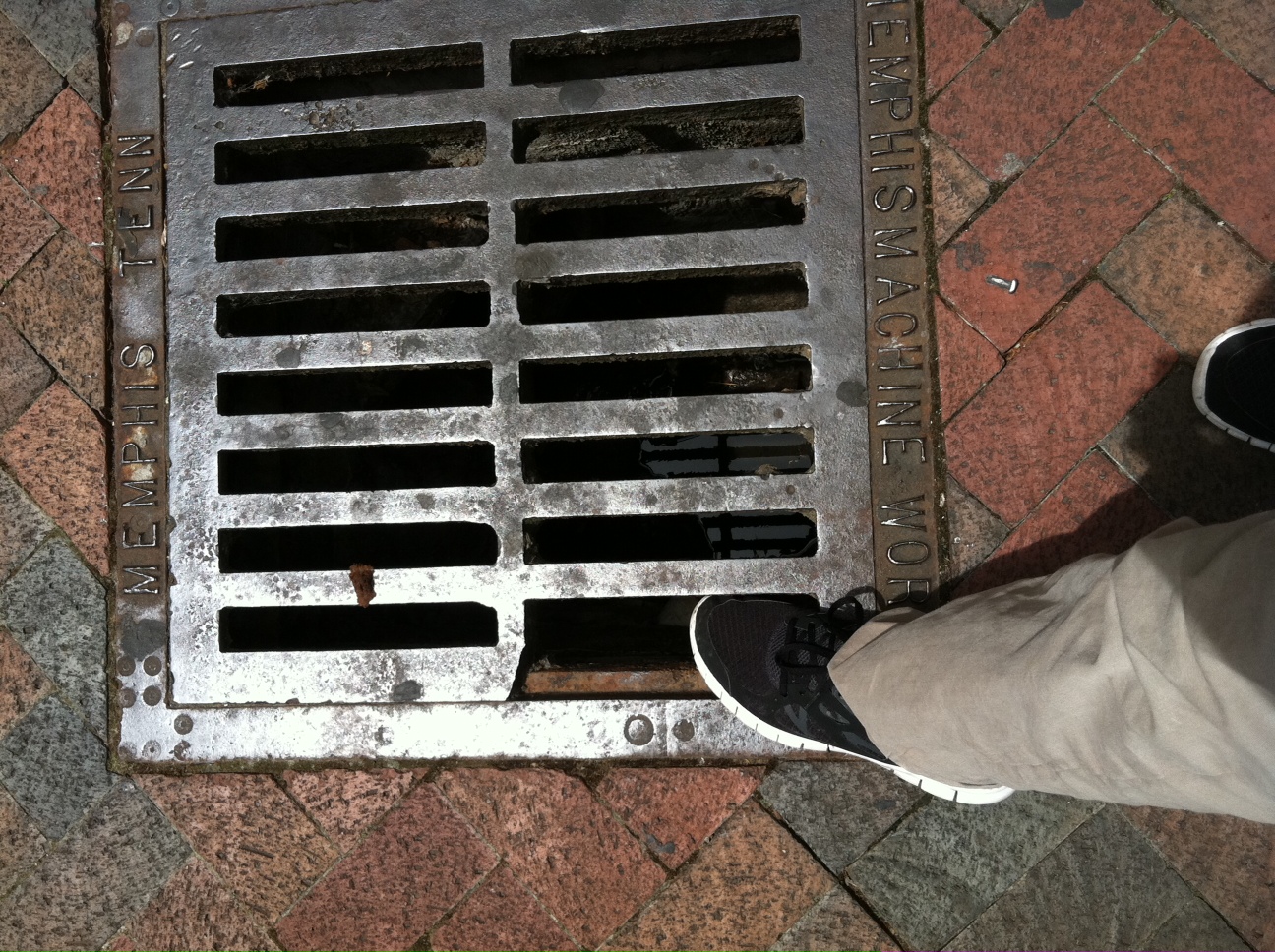 When Marc Cohn sang, “Walkin’ in Memphis, walkin’ with my feet ten feet off of Beale,” he may have been giving risk avoidance advice.
Good old Memphis, a streets-and-sidewalks tort mecca.
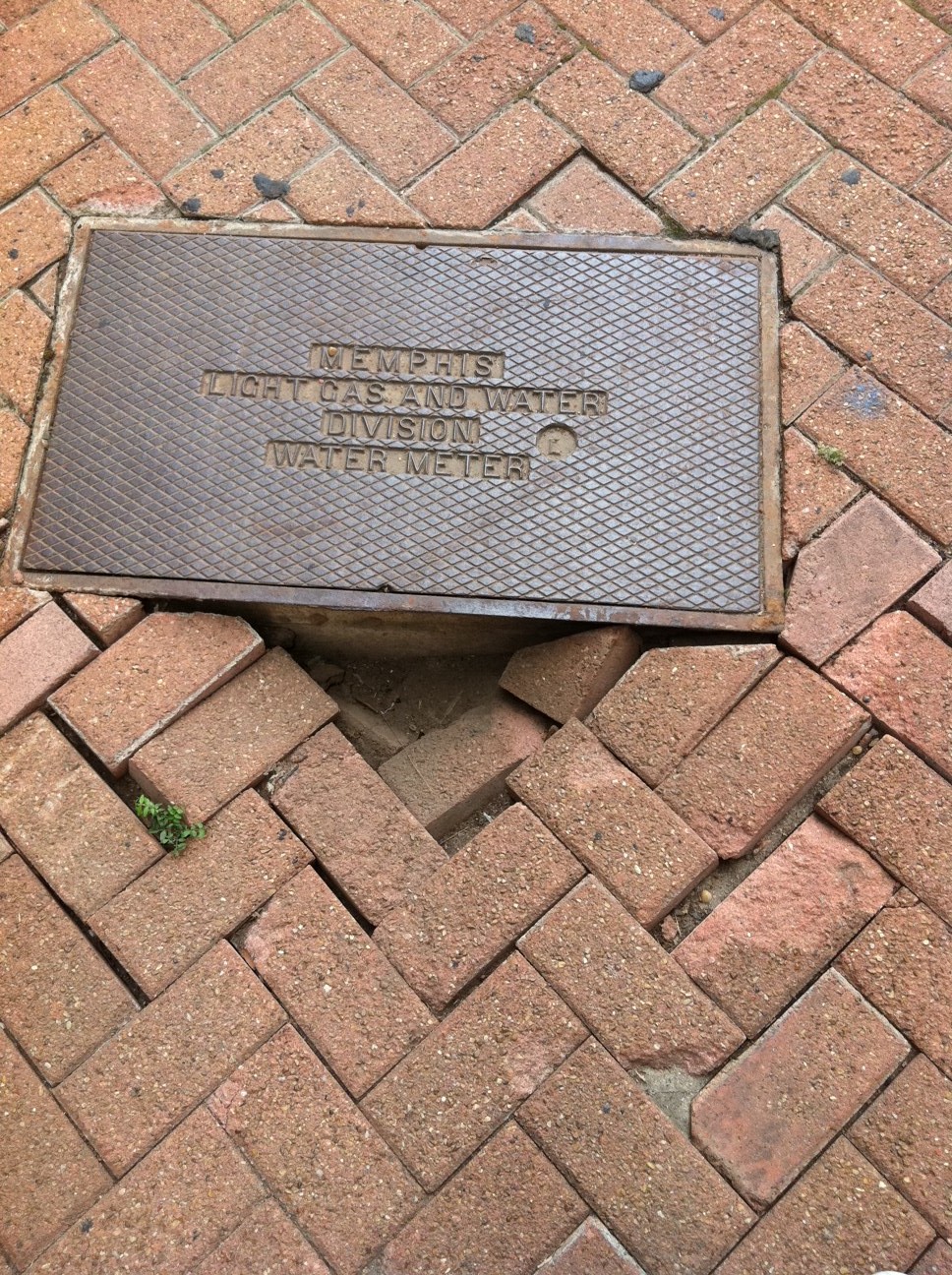 These photos were taken a couple blocks from Beale Street in downtown Memphis.
Walk a hundred steps, spot a tort. Walk another hundred steps, spot a tort. And so on.
Spot the Tort: Suspect Steps Make for Treacherous Dining
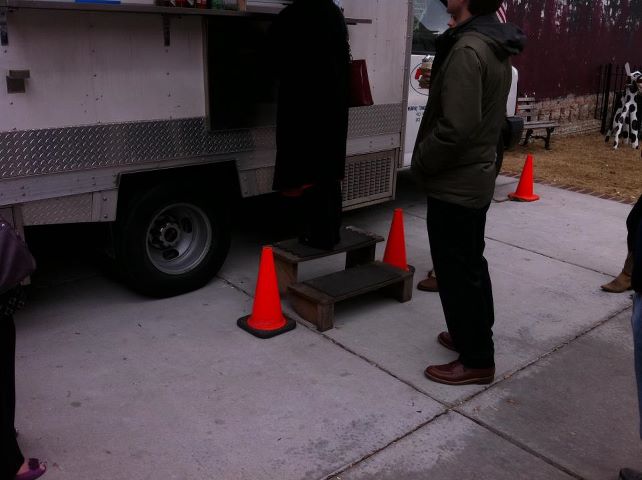 A student snapped this photo of a food vending truck in Memphis, where a customer is perched precariously on some portable steps placing an order. The steps should be both longer and wider for stability and to avoid missteps and missed steps. On the other hand, give the vendor credit for the safety cones.
Spot the Tort: Florida Law Firm Plays It
 Dang, should have trademarked, “Spot the Tort,” the family friendly game of risk reduction. A former student at the Florida International University College of Law sent along this amusing law firm advertisement. (Click to expand.)
Spot the Tort: Parking Garage Hole
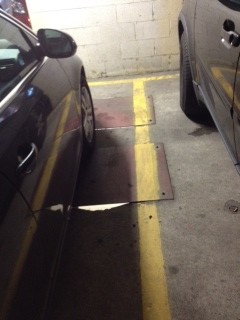 A first-year University of Memphis law student sent along this picture from the parking garage where most students park. The picture came as a follow-up to our class discussion in Torts II of the use of exculpatory clauses by, among others, parking garages.
Exculpatory clauses–which invariably appear on the back of tickets customers receive when they enter a parking garage–operate to relieve negligent actors of liability. Exculpatory clauses generally will be upheld if clearly written, so long as they do not pertain to an essential public service, such as medical care or education. Courts are split on whether parking garages qualify as essential public service within this rule.
Here the student pointed to two large holes in the concrete on one of the upper-levels where someone has attached, with small fasteners, thin sheets of metal as covers (that’s light shining from the floor below). She noted that “part of the one hole is still exposed where someone’s foot could fall through,” but said it made her even more nervous to think that large cars were depending on the thin sheets for support.
Spot the Tort: Why Waste Money on Concrete When You Have Spray Paint?
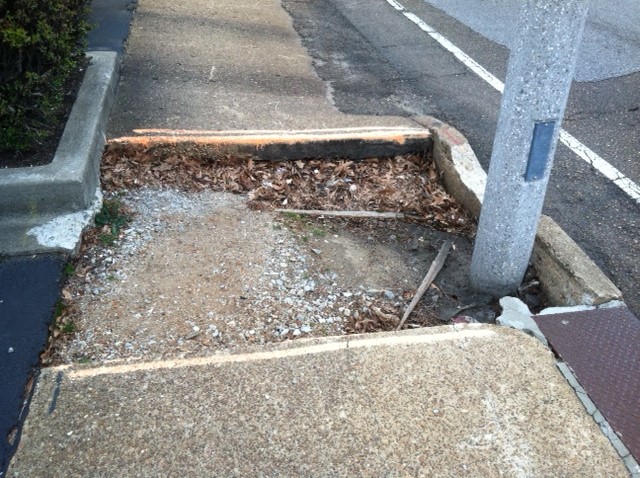 Taking a walk near my house in Memphis, I encountered this dangerous sidewalk condition.
Note that instead of filling in the chasm, the city apparently opted to leave it be and cure the problem instead by spray-painting a thin orange warning line around it.
Since the condition has been there for a quite a while (the orange paint is very faded), it appears this was considered to be an acceptable final fix.