A $600,000 jury verdict for losing psychic powers sounds ridiculous, and likely the grossly misunderstood McDonald’s coffee spill case, Haimes v. Temple University has been abused as a tool to whip up on trial lawyers and the tort system. But as with the McDonald’s case, Haimes got twisted in the telling.
Plaintiff Judith Richardson Haimes brought a medical malpractice action against defendant after a CT scan allegedly caused her chronic and disabling headaches and prevented her from practicing her occupation as a psychic. A jury awarded her $600,000 after a four-day trial.
Wow! But pro-tort reform accounts of the case omit two critical facts. First, that the trial judge specifically instructed the jury it could NOT award damages for loss of her psychic abilities, and, second, that the court threw out the plaintiff’s verdict.
Having cleared that up, the most interesting part of the case was the testimony pertaining to her psychic abilities. The plaintiff presented several police officers as witnesses who testified that plaintiffs’ psychic abilities had helped them solve cases. One special agent testified that he sought plaintiff’s advice in solving five to seven homicide cases and that information provided by plaintiff proved to be 80-90 percent accurate. The opinion describes detailed information plaintiff provided to help solve a variety of cases. It’s interesting.
— Haimes v. Temple University Hosp., 39 Pa. D. & C.3d 381 (Pa. Ct. Com. Pl. 1986). Thanks to Cynthia Cohan.
This from a judicial friend who prefers anonymity: a disciplinary action against a judge who likes to hand out acorns. Sound odd? It gets odder. The acorns contained condoms and he handed them out to women he didn’t know. Here’s the story:
A Pennsylvania magistrate judge from Intercourse, Pennsylvania (that’s right, Intercourse) attended a continuing education course in nearby Harrisburg. While there, the judge approached two women, neither of them known to him, and presented them with some acorns. He encouraged them to try them and to return the following day to let him know how they liked them.
The women subsequently cracked open the nuts and discovered that the judge had hollowed them out, inserted condoms (foil removed), and resealed the acorns. The distressed women called the police.
The police cited the judge for disorderly conduct. When questioned at the station, the judge told police he intended his actions as a joke.
The criminal charges were dismissed, but the police lodged an ethics complaint. While the Pennsylvania Court of Judicial Discipline said the conduct was “not funny” and that the judge’s preoccupation with acorns was “mystifying,” the court—made up of one judge, two lawyers and three laypersons—found that the conduct did not violate the canons of ethics by bringing the judiciary into disrepute.
Part of the court’s reasoning was “we cannot ignore … the fact that condoms are regularly given out to children by our government.”
My friend was surprised the judge wasn’t disciplined, but I also find it strange that he was arrested. Unjudicial conduct to be sure, but a crime?
— In re: Isaac H. Stoltzfus, Pa. Court Of Judicial Discipline, Case No. 4 JD 11, Aug. 17, 2010.
According to North Carolina Judge David K. Fox, General Court of Justice, Transylvania County, “Teenaged boys were created to mumble darkly whilst doing yard work to justify their existence on earth and their room and board.”
That’s just one of many pearls offered by Judge Fox in a temporary support order in a divorce case, an order as hilarious as it is skillfully articulated.
The facts are extensive, but basically, the husband, a doctor, was seeking relief from support payments to his ex-wife, who, along with her kids, was living quite well on the ex-hubby’s income while declining to seek substantial work of her own.
The wife had been a nurse, a fact not surprising to Judge Fox, who commented “[t]hat, as predictable as death and taxes, doctors marry nurses for second and subsequent unions.”
Neither the wife nor husband, according to Judge Fox, had managed to adjust their respective lifestyles in light of the doc’s substantially declining income attributable to shifts in the healthcare industry. The result, said Judge Fox, was “an ongoing mathematical economic train wreck.”
Part of the problem was that, “since separation, the Parties have undertaken to continue their relationship based upon the constitution and bylaws of the Jerry Springer Show.” The wife’s grown kids from a prior marriage weren’t helping matters either, causing Judge Fox to remark that “[i]t is a mercy that [the husband’s] children by his prior marriage are in Illinois.”
The comment about teenage boys came in response to the fact that the wife was forking out $250 a month for yard work instead of making her healthy 17-year-old son get off his duff and push a lawnmower.
While Judge Fox’s sympathies seemed to lie with the husband, the doc didn’t escape unscathed. Judge Fox described him as “rotund” and “a vessel of ill health, both actual and potential.”
But good news! The husband had “acquired a reciprocal, apparently romantic, interest in a local female (working in the health-delivery industry, of course),” causing the judge to speculate “that this relationship likely is the primary reason he has begun to address his weight problem with some increase in beneficial exercise, including the muscular effort of pushing aside the dinner plate more frequently.”
The judge granted the husband support relief and everyone else comic relief. This summary doesn’t do justice to Judge Fox’s order. The overall tone, while definitely somewhat sarcastic, is not mean-spirited. He seemed genuinely concerned about the parties’ well-being, but also frustrated by their apparent inability to grasp their economic straits.
— Order in Temporary Support, Bodie v. Bodie, Case No. 08-VVD-334 (N.C. Dist. Ct., July 11, 2006). Thanks to Andrew J. Dolson.
Judge Mark Painter, Ohio First District Court of Appeals, took some lawyers to task for moving to strike their opponent’s appellate brief for exceeding the page limitations set by rule, apparently even redrafting portions of the brief in the process:
Not wishing to let stand a brief they consider too long, counsel for appellant … have moved this court to strike [appellees’ brief] … contending the brief (1) put the citations in footnotes (where they belong!); and (2) uses footnotes to “get around” the page limit. And counsel even goes so far as to redraft their opponent’s brief, inserting the jumble of letters and numbers into the paragraphs—even the references to the record. Thus bollixed up and unreadable, the brief comes out to 38.5 pages, instead of the regulation 35. Egad. …
Our dreary day has been enlivened by the thought that lawyers care about one another’s prose so much as to redraft it. And that this dispute is so close that it may turn on a few extra pages of a lawyer’s argument. We can’t wait to read the final version—or maybe we should wait for the movie.
As to citations, they belong in footnotes. Putting goofy letters and numbers in the middle of paragraphs destroys readability. We had to do that with typewriters, just as we had to use underlining because typewriters did not have italics. No more.
Judge Painter did agree with the objectors that the other side shouldn’t have used so many speaking footnotes. He “venture[d] a guess that this court’s eventual opinion resolving this dispute will be fewer than 20 pages,” and suggested to both sides that “less is usually more” when it comes to legal drafting.
— M&M Metals Int’l, Inc. v. Continental Casualty Co., 870 N.E.2d 167, 167 (Ohio Ct. App. 2006).
In a 1963 divorce case, the wife accused the husband–a dentist–of adultery with several of his patients. The husband vigorously contested the allegations. Fifteen hundred pages of testimony later, the case made it to the New Jersey Superior Court, which had to decide whether the evidence proved adultery.
The husband had creative explanations for every bit of damning evidence. For example, when the wife produced a film she found of the husband inserting a speculum into a nude patient in his office, he said he was conducting medical research. Remember, he’s a dentist.
On another charge, the wife claimed she came into the husband’s office one day to find him having sex on his dental couch with a nude patient identified in the case as “Mrs. G.” The husband denied having sex with Mrs. G. He said he was merely carrying her to the couch because of her sudden loss of consciousness while he was removing a denture. (No explanation as to why she was nude.)
He maintained his denial even in the face of a diary entry he made on the same date with reference to Mrs. G that said “[C]aught!” He explained that this was actually a medical entry meaning that the denture “caught” in Mrs. G’s mouth tissue while he was removing it.
The opinion is jammed with other elaborate, laughable denials that make for some interesting reading.
— Lowenstein v. Lowenstein, 190 A.2d 882 (N.J. Super. Ct. 1963). Thanks to Seymour Margulies.
Lawhaha.com obviously has great fondness for judges who liven up their opinions with humor and other writing spice, but a case from the U.S. Court of Appeals for the Ninth Circuit shows why judges need to exercise care in stirring in these ingredients.
In a suit brought against George W. Bush and Donald Rumsfeld on behalf of all whales, dolphins, and porpoises, the Ninth Circuit had to decide whether animals have standing to sue on their own behalf under the Endangered Species Act and other federal statutes.
The plaintiff was “the Cetacean Community,” a name chosen by the Cetaceans’ self-appointed attorney for all of the world’s whales, porpoises, and dolphins. The Cetaceans challenged the U.S. Navy’s use of low frequency sonar used to detect enemy submarines because the sonar harms marine life.
Bush and Rumsfeld moved to dismiss on the ground that the animals lacked standing to bring suit. The district court agreed and dismissed the action.
The animals appealed, relying on a statement made in a previous environmental case—Palila v. Hawaii Dep’t of Land and Natural Resources—in which the Ninth Circuit had indicated that an endangered member of the honeycreeper family, the Hawaiian Palila bird, had standing to sue on its own behalf. The specific language was that the bird “has legal status and wings its way into federal court as a plaintiff in its own right.”
The court had to decide whether the Palila language was binding precedent or only loose dicta. It ruled it was the latter, calling the statements “little more than rhetorical flourishes.”
With respect to the substantive issue, the court added that “It is obvious that an animal cannot function as a plaintiff in the same manner as a juridically competent human being.” Hmm, perfect entry for making a political joke about one of the defendants, but we try to stay apolitical.
The fact that courts have held monkeys, whales, and assumely all other non-human species (along with their human champions) lack standing to seek protection from the judicial system raises a troubling question: Who’s left to look out for them?
— Cetacean Cmty. v. Bush, 386 F.3d 1169 (9th Cir. 2004). Thanks to Daniel Green.
Prosecutor used Celine Dion's and Enya's music to soften up jury.
Salazar v. Texas was a grisly murder case involving a victim and alleged dope dealer named Jonathon. Jonathon’s cohorts turned on him and killed him by beating him with baseball bats and strangling him with wire.
At the punishment phase of the trial, over the objection of defense counsel, the state played a professionally edited video montage of Jonathon’s life, complete with music by Enya and Celine Dion!
The defendant appealed on the ground that the videotape was prejudicial. Here’s how the appellate court described the videotape (paragraph breaks inserted):
This video is an extraordinarily moving tribute to Jonathon Bishop’s life. It consists of approximately 140 still photographs, arranged in a chronological montage. Music accompanies the entire seventeen-minute video and includes such selections as “Storms in Africa” and “River” by Enya, and concludes with Celine Dion singing, “My Heart Will Go On,” from the movie Titanic.
Almost half of the approximately 140 photographs depict the victim’s infancy and early childhood. The pictures show an angelic baby, surrounded by loving parents, grandparents, unidentified relatives, and other small children. Later photographs show Jonathon as a toddler, playing the piano, frolicking at the beach with other friends, happily riding on a carousel, laughing in a field of bluebonnets, and cuddling with a puppy.
The video also includes numerous annual school pictures showing Jonathon’s progression from a cheerful child to a equally cheerful young man. It catalogs his evident and early prowess as a young soccer player and eventually as a football player. There is a picture of him and his date, presumably going to their prom, and more candid shots of the victim and his teen-age buddies. The video includes many family reunion portraits showing Jonathon’s entire extended family.
Understandably, this professional and polished production portrays Jonathon in a very positive light and it is entirely appropriate for a memorial service. The music, too, is appropriately keyed to the various visuals, sometimes soft and soothing, then swelling to a crescendo chorus. In sum, it is a masterful portrait of a baby becoming a young man. It is also extraordinarily emotional.
The court held it was reversible error to admit the videtape into evidence on the ground that its relevance was outweighed by its prejudicial value, stating:
[The] prejudicial effect is enormous because the implicit suggestion is that the appellant murdered this angelic infant; he killed this laughing, light-hearted child; he snuffed out the life of the first-grade soccer player and of the young boy hugging his blond puppy dog.
— Salazar v. State, 90 S.W.3d 330, 333–34, 337 (Tex. Crim. App. 2002). Thanks to Texas Senior Judge James Barlow.
Goshgarian v. George involved warring neighbors, one of whom continually dumped dirty water from his swimming pool onto the other’s property.
The water-dumping defendant came up with the imaginative, if not quite legally sound, argument that, since the County of Fresno had an easement on the property for the drainage and disposal of water, the individual defendant should have the same right.
The court was downright astonished by the creativity of the argument (paragraph breaks inserted):
Only a mind unburdened by the ephemeral shackles of legal training and gloriously free of the stultifying pomposities of precedent and stare decisis could have formulated the epiphanous principle that what the public may do as an entity, so may individual members of the public do, acting in their individual capacities.
Appellate counsel for cross-complainants, with an imagination dulled by years of legal training, evidently lacked the audacity to appreciate cross-defendants’ argument and misinterpreted (and diminished) it as a mundane attack upon the sufficiency of the evidence to support the jury’s finding of trespass.
Not so. Cross-defendant Mr. George is on the wave front of the expanding legal universe, Prometheus unbound by the strictures of logic and reason that constrain lawyers and judges in their quotidian professional functions.
There is just one problem. The easement is for storm drain water, not mosquito infested swimming pool effluent.
— Goshgarian v. George, 161 Cal. App. 3d 1214, 1222–23 (1984). Thanks to Eli Ben-Shmuel.
Judge Mark Painter, a judge on the Ohio Court of Appeals, sent in a couple of his own funny opinions. The first one he wrote back when he was a municipal court judge. Lawhaha.com clings steadfastly to being a family friend site, but it’s not easy when a primary source of Strange Judicial Opinions is that haven for adult-oriented material known as the National Reporter System.
In State v. Parenteau, the defendant was charged with public indecency. We’ll let Judge Painter explain what happened:
Defendant was part of a “lingerie fashion show” at a nightclub named “Scandals” in western Hamilton County. The charge arose from the modeling by defendant of a lace brassiere which was alleged by the officer to be “see-through,” in that the officer testified he could observe a nipple area through the lace fabric. Defendant was apprehended after she had retired to a back room to change her clothing. The officers asked Parenteau for the clothing she was wearing, which they confiscated.
The evidence produced in court included a lace brassiere, a pair of underpants, stockings, and a small square of pantyhose fabric. The panties and stockings were not relevant, considering that the charge was not based upon anything in connection with the defendant’s lower anatomy. Defendant testified that she wore the pantyhose fabric under the bra in order to be certain that it was not transparent in the area of the nipple. Defendant further stated that she was wearing two such squares, one on each breast, during the performance, but that only one was in evidence, since she had already removed her bra when she was arrested, and the other square had dropped out and was not recovered by the officers. An additional witness testified that she saw defendant cutting pantyhose to make the squares before she dressed. Much ado was made about whether one or two squares were worn, but in the court’s view of the law, the existence or nonexistence of the pantyhose material within one side of the brassiere is not controlling.
The question presented is whether the defendant can be convicted of public indecency … for wearing a lace brassiere which totally covered her breasts, but was partially transparent, or “see through.” If so, does the insertion of pantyhose material, rendering the brassiere less “see through,” change the result?
The result turned on the meaning of “private parts” as used in the public indecency statute. Judge Painter cited numerous sources supporting the proposition that “private parts,” as used in the law, refers to the genital area only. As such, he acquitted the defendant.
— State v. Parenteau, 564 N.E.2d 505, 505 (Ohio Mun. 1990).
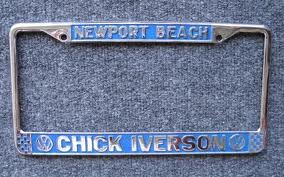
Chick Iverson left his mark in more ways than one.
California lawyer Frank Zotter sent in Iverson v. Iverson, a California divorce case in which the trial judge, in Frank’s words, “demonstrates once again the wisdom of the old saying, ‘it’s best to keep your mouth shut and have everyone think you a fool than to open it and leave no doubt.’”
The case involved the validity of a prenuptial agreement and the question of which of the parties had initiated the idea of marriage. The trial judge concluded that surely the wife had pursued the marriage. After all, the judge said, she was “lovely,” but “[h]ad nothing going for her except for her physical attractiveness.” Specifically, she “did not have much of an education, and did not have much of a background in business, and did not have much by way of material wealth.”
The judge simply couldn’t fathom the notion that the husband, Chick Iverson, would have been crazy enough to pursue marriage when “[h]e had just gone through a divorce which cost him a million dollars.” Marriage, the judge said, “would be the last thing on his mind. And why, in heaven’s name, do you buy the cow when you can get the milk free, as we used to say. And, so, he’s getting the milk free. And Cheryl is living with him in his home.”
The Court of Appeals reversed, ordering a new trial before a different judge on the basis that the trial judge’s sexist perceptions of the couple’s relationship made it impossible for the wife to have received a fair trial.
Who the hell was Chick Iverson? The case makes it sounds like he’s a big deal and he must have been because he told John Wayne he wanted The Duke to be best man at the wedding. Internet research discloses Iverson was the first Volkswagen dealer in L.A.
McClurg footnote: A source who requested anonymity sent this interesting follow-up information about the Iverson case:
Chick Iverson and John Wayne were best friends. That’s why John Wayne was the best man at his wedding to Mrs. Iverson. Mr. Iverson has since passed away and is actually buried next to John Wayne.
Chick Iverson owned the first VW dealership in Orange County, not LA. He imported the first Porsches to the west coast after WWII, and established a Volkswagen, Porsche, Rolls Royce, Audi and Chevrolet dealership in Newport Beach in the 60s which was sold in the 80s. It was the largest and best selling Volkswagen dealership in the United States.
Mr. Iverson made a hefty sum selling the wonderful bug to many a hippie. Mr. Iverson and Cheryl Iverson had a bitter divorce that would rival any Dynasty episode. The judge’s screw-up with his comments costs Mr. Iverson close to a million dollars in attorneys’ fees as he was paying for his attorney and Mrs. Iverson’s. Eventually, Mr. Iverson won and the prenuptual agreement was upheld.
Another McClurg footnote: More inside info about the colorful Chick Iverson, courtesy of Carl “Skip” Williams, a friend and former employee:
“Who the hell is Chick Iverson?” I had to laugh when I read that. You’re not from Orange County, CA. Let me add these few choice pieces to the article.
John Wayne and Chick were like Oprah and Gail. John Wayne was the Godfather to Chick’s son, who died at the age of 21 when he took a used Jaguar of the lot and ran off the cliff on his way to Laguna. Chick introduced John Wayne to his wife who worked on his ranch in South America. Chick Iverson was the executor to John Wayne’s Estate and controlled all the money for his children.
Chick Iverson was lucky in business and a genius. He was the son of immigrants. He had the largest cattle ranch in Oregon and the sixth largest in the US. He started as a salesman selling cars, with a high school education. His biggest decision was a fluke. He worked his way from salesman to general manager at a Porsche dealership in Chicago. He then opened up the first Porsche dealership in Orange County. Two years later he went looking to add another brand. His first choice was American Motors, second was Volkswagen.
When he decided to go with American Motors; he invited the representatives over to his house. One made a remark that offended his wife, so he went with Volkswagen and the rest is history.
— In re Marriage of Iverson, 11 Cal. App. 4th 1495, 1499 (1992). Thanks to Frank Zotter.

 A $600,000 jury verdict for losing psychic powers sounds ridiculous, and likely the grossly misunderstood McDonald’s coffee spill case, Haimes v. Temple University has been abused as a tool to whip up on trial lawyers and the tort system. But as with the McDonald’s case, Haimes got twisted in the telling.