From Billikens to Banana Slugs–Judge Evans’ Lesson on College Mascots (Evans)

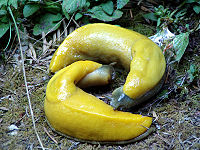
banana slugs
Banana Slugs – Mascot for U.C.-Santa Cruz

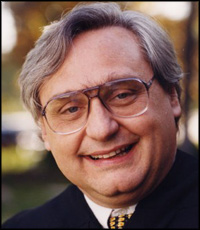
[Judge Terence T. Evans, U.S. Court of Appeals for the Seventh Circuit, passed away in 2011. Here’s a nice tribute to him on the Marquette law school (where he attended law school) faculty blog.]

In an opinion involving controversy over “Chief Illiniwek,” mascot of the University of Illinois since 1926, Judge Terence Evans of the U.S. Court of Appeals for the Seventh Circuit once again showed his dominance as the nation’s premiere judicial sports buff.

A group of students and faculty who believed the mascot degraded Native Americans brought suit against the university chancellor, seeking a declaratory judgment that the chancellor’s order banning all speech directed toward prospective student athletes without prior permission violated their First Amendment rights. The students and faculty wanted to contact prospective student athletes regarding the controversy.

The court found the policy violated the plaintiffs’ rights, but before getting to the merits, Judge Evans took a substantial detour into sports mascot trivia:

In the Seventh Circuit, some large schools–Wisconsin (Badgers), Purdue (Boilermakers), Indiana (Hoosiers), Notre Dame (The Fighting Irish), DePaul (the Blue Demons), the University of Evansville (Purple Aces), and Southern Illinois (Salukis)–have nicknames that would make any list of ones that are pretty cool. And small schools in this circuit are no slouches in the cool nickname department. One would have a hard time beating the Hustlin’ Quakers of Earlham College (Richmond, Indiana), the Little Giants of Wabash College (Crawfordsville, Indiana), the Mastodons of Indiana University-Purdue University-Fort Wayne (Fort Wayne, Indiana), and the Scarlet Hawks of the Illinois Institute of Technology.

But most schools have mundane nicknames. How can one feel unique when your school’s nickname is Tigers (43 different colleges or universities), Bulldogs (40 schools), Wildcats (33), Lions (32), Pioneers (31), Panthers or Cougars (30 each), Crusaders (28), or Knights (25)? Or how about Eagles (56 schools)? The mascots for these schools, who we assume do their best to fire up the home crowd, are pretty generic–and pretty boring.

 “Some schools adorn their nicknames with adjectives–like “Golden,” for instance. Thus, we see Golden Bears, Golden Bobcats, Golden Buffaloes, Golden Bulls, Golden Eagles (15 of them alone!), Golden Flashes, Golden Flyers, Golden Gophers, Golden Griffins, Golden Grizzlies, Golden Gusties, Golden Hurricanes, Golden Knights, Golden Lions, Golden Panthers, Golden Rams, Golden Seals, Golden Suns, Golden Tigers, and Golden Tornados cheering on their teams.

 All this makes it quite obvious that, when considering college nicknames, one must kiss a lot of frogs to get a prince. But there are a few princes. For major universities, one would be hard pressed to beat gems like The Crimson Tide (Alabama), Razorbacks (Arkansas), Billikens [Fn.2]

 [Fn.2] What in the world is a “Billiken”?

(St.Louis), Horned Frogs (TCU), and Tarheels (North Carolina). But as we see it, some small schools take the cake when it comes to nickname ingenuity. Can anyone top the Anteaters of the University of California-Irvine; the Hardrockers of the South Dakota School of Mines and Technology in Rapid City; the Humpback Whales of the University of Alaska-Southeast; the Judges (we are particularly partial to this one) of Brandeis University; the Poets of Whittier College; the Stormy Petrels of Oglethorpe University in Atlanta; the Zips of the University of Akron; or the Vixens (will this nickname be changed if the school goes coed?) of Sweet Briar College in Virginia? As wonderful as all these are, however, we give the best college nickname nod to the University of California-Santa Cruz. Imagine the fear in the hearts of opponents who travel there to face the imaginatively named “Banana Slugs”?

From this brief overview of school nicknames, we can see that they cover a lot of territory, from the very clever to the rather unimaginative. But one thing is fairly clear–although most are not at all controversial, some are. Even the Banana Slug was born out of controversy. For many years, a banana slug (ariolomax dolichophalus to the work of science) was only the unofficial mascot at UC-Santa Cruz. In 1981, the chancellor named the “Sea Lion” as the school’s official mascot. But some students would have none of that. Arguing that the slug represented some of the strongest elements of the campus, like flexibility and nonagressiveness, the students pushed for and funded a referendum which resulted in a landslide win for the Banana Slug over the Sea Lion. And so it became the official mascot.

Not all mascot controversies are “fought” out as simply as was the dispute over the Banana Slug. Which brings us to the University of Illinois where its nickname is the “Fighting Illini,” a reference to a loose confederation of Algonquin Indian Tribes that inhabited the upper Mississippi Valley area when French explorers first journeyed there from Canada in the early seventeenth century. The university’s mascot, to mirror its nickname–or to some its symbol–is “Chief Illiniwek.” Chief Illiniwek is controversial. And the controversy remains unresolved today. …”

Even if you’re not a sports fan, you have to appreciate a federal appellate judge who uses phrases like “pretty cool” and “pretty boring” in his opinions. I wonder if he talked like that during oral arguments. “Counselor, that was a pretty cool motion you filed the other day, but it was pretty boring.”

R.I.P. Judge Evans. You are missed.

— Crue v. Aiken, 370 F.3d 668, 671–72 & n.2 (7th Cir. 2004). Thanks to Professor Howard Wasserman, a decent sports trivia buff in his own right.

In the Beginning There Was … Zim?

lawsuit over Golden Guides
One of Zim's classics.

Remember “Golden Guides”? They were sort of the original “Dummies” series for kids, explaining a variety of scientific, geographic, and nature topics in succinct terms understandable even by 10 year olds.

Zim v. Western Pub. Co. arose out of a dispute between the guy who wrote or co-wrote many of these masterpieces—Dr. Herbert Zim—and the Golden Guides publisher, Western Publishing. Zim penned such classics as Rocks and Minerals, Reptiles and Amphibians, Trees, and my personal fav, Fishes.

Judge Goldberg of the U.S. Court of Appeals for the Fifth Circuit apparently also thinks highly of Zim, elevating him to biblical proportions:

In the beginning, Zim [Fn.1] created the concept of the Golden Guides. For the earth was dark and ignorance filled the void. And Zim said, let there be enlightenment and there was enlightenment. In the Golden Guides, Zim created the heavens (STARS) (SKY OBSERVER’S GUIDE) and the earth. (MINERALS) (ROCKS and MINERALS) (GEOLOGY).

[Fn.1] Dr. Zim is a noted science educator with a Ph.D. in science education from Columbia University. His special expertise is in the presentation of scientific subjects to popular audiences. The major focus of his efforts has been the development of a multivolume series of books on scientific subjects, the “Golden Guides.” …

And together with his publisher, Western, he brought forth in the Golden Guides knowledge of all manner of living things that spring from the earth, grass, herbs yielding seed, fruit-trees yielding fruits after their kind, (PLANT KINGDOM) (NON-FLOWERED PLANTS) (FLOWERS) (ORCHIDS) (TREES), and Zim saw that it was good. And they brought forth in the Golden Guides knowledge of all the living moving creatures that dwell in the waters, (FISHES) (MARINE MOLLUSKS) (POND LIFE), and fowl that may fly above the earth. (BIRDS) (BIRDS OF NORTH AMERICA) (GAMEBIRDS). And Zim saw that it was good. And they brought forth knowledge in the Golden Guides of the creatures that dwell on dry land, cattle, and creeping things, (INSECTS) (INSECT PESTS) (SPIDERS), and beasts of the earth after their kind. (ANIMAL KINGDOM). And Zim saw that it was very good.[Fn.4]

[Fn.4] According to Zim’s brief before this court, well over 100 million of the Golden Guide books have been printed under Zim’s name, earning him “millions of dollars” in royalties.

Then there rose up in Western a new Vice-President who knew not Zim. And there was strife and discord, anger and frustration, between them for the Golden Guides were not being published or revised in their appointed seasons. And it came to pass that Zim and Western covenanted a new covenant, calling it a Settlement Agreement. But there was no peace in the land. Verily, they came with their counselors of law into the district court for judgment and sued there upon their covenants.

And they put upon the district judge hard tasks. And the district judge listened to long testimony and received hundreds of exhibits. So Zim did cry unto the district judge that he might remember the promises of the Settlement Agreement. And the district judge heard Zim’s cry, but gave judgment for Western. Yea, the district judge gave judgment to Western on a counterclaim as well. Therefore, Zim went up out of the court of the district judge.

And Zim spake unto the Court of Appeals saying, make a sacrifice of the judgment below. And the judges, three in number, convened in orderly fashion to recount the story of the covenants and to discuss and answer the four questions which Zim brought before them …

Maybe it’s just because I loved Golden Guides, but this one goes in the Strange Judicial Opinions Hall of Fame.

— Zim v. Western Pub. Co., 573 F.2d 1318, 1320–21 (5th Cir. 1978). Thanks to Professor Ken Swift.

Coming Soon to a Footnote Near You: The Famous Movie Title Opinion (Kozinski)

movie title judicial opinion kozinski
Siskel and Kozinski?

Judge Alex Kozinski, of the U.S. Court of Appeals for the Ninth Circuit, was well-known for his sparkling prose in writing opinions, but his most classic opinion was U.S. v. Syufy Enterprises, in which he weaved in more than 200 movie titles.

In Syufy, the federal government sued Las Vegas movie-chain owner Syufy for antitrust violations. In affirming the trial court’s dismissal of the antitrust charges, rumor had it that Judge Kozinski wove more than 200 movie titles into the text of his fourteen-page opinion.

But did it really happen? Was it urban legend? Bourbon legend?

It really happened. Daniel Solzman of the Tarlton Library at the University of Texas law school assembled the entire list of movies Kozinski managed to cram into Syufy as part of its Law in Popular Culture Collection. Here are the movie titles in the order they appeared:

M, Suspect, Giant, Nevada, Illegal, Monkey Business, Platoon, David, 8 1/2, The Power, The Competition, Greatest Hurdle, Gone are the Days, Popcorn, Something for Everyone, Manpower, The Producers, Formula, Splash, Shame, Stir, Titanic, Easy Money, No Holds Barred, Upper Hand, Rivals, Rocky, Until September, September, Midway, The Big Picture, Do the Right Thing, Brass Knuckles, The Accused, Humongous, Little Big Man, Chances, Vice Versa, Always, Nuts, The Seven-Ups, Big, Ordinary People, Possessed, Foul Play, The Survivors, Personal Services, Time after Time, Challenge, Testimony, Riding High, Captured, Utopia, Dark Horse, Invitation, Major League, Against all Odds, Fighting Fire with Fire, Trading Places, The End, Country, Losing Ground, Short Circuit, Lock Up, Dead Heat, Personal Best, Absolute Beginners, Staying Alive, Big Business, Network, Shopworm, Witness, High Tide, The Law, Wisdom, The Hand, Guilty, Illicit, Satisfaction, The Victim, Raw Deal, The Evil, Above the Law, Down by Law, Off Limits, The Enforcer, Fear, The Villain, The Weapon, Champion, The Natural, Deliverance, The Disappearance, The Challenge, Running, The Other, Top Gun, Players, The Trial, Paid, Head, The Squeeze, Seven Days, Cold Feet, Gambit Backfire, Contract, Cold Turkey, Lost, Plenty, After Hours, The Judge, The Trap, Leviathan, Stick, Tough Enough, Making It, Risky Business, Squeeze Play, Sitting Ducks, Boomerang, Big Trouble, The Principal, House of Cards, Tribute, America, Target, Paper Tiger, Distance, Local Hero, Being There, Fire Sale, Abandoned, The Lawyer, You and Me, Avalanche, Surrender, The First Time, Hard Choices, Showdown, Fail-Safe, The Great Race, Relentless, The Fountainhead, Out, House, Volunteers, October, 1984, Over the Top, Ran, Trapped, The Gate, Hard Times, Partners, California, Barrier, Five, Colors, Exposed, Switching Channels, Checking Out, Fame, Great Expectations, Without a Trace, Perfect, Out of Bounds, Offbeat, Critic’s Choice, The Longshot, The Sure Thing, Misunderstood, Boom Town, Static, Alien, Things Change, High Hopes, The Jackpot, Drive-in, Performance, New Faces, The Thing, The Crucible, Violated, All the Right Moves, The Creator, Interiors, Clue, Fashion, Winner Take All, Any Number Can Play, Insignificance, The Harder They Fell, Missing, Shakedown, Ruthless Predator, Dangerous, Critical Condition.

Kozinski never confirmed or denied the rumors about intentionally loading up Syufy with movie titles.

— United States v. Syufy Enterprises, Inc., 903 F.2d 659 (9th Cir. 1990); see also The Syufy Rosetta Stone, 1992 BYU L. Rev. 457 (1992).

LOL, U.S. Court of Appeals Says B4N to Lawyers Who Used Too Many Acronyms

Maybe there should be an opposite abbreviation to TMI such as NEI (not enough information).

In a case involving a challenge to nuclear waste fees at a site intended to replace the Yucca Mountain disposal site, brought to our attention by way of The BLT: The Blog of LegalTimes, the U.S. Court of Appeals for the District of Columbia admonished the lawyers – in the attention-stealing first footnote no less – for using too many acronyms:

1. We also remind the parties that our Handbook of Practice and Internal Procedures states that “parties are strongly urged to limit the use of acronyms” and “should avoid using acronyms that are not widely known.” Brief-writing, no less than “written English, is full of bad habits which spread by imitation and which can be avoided if one is willing to take the necessary trouble.” George Orwell, “Politics and the English Language,” 13 Horizon 76 (1946). Here, both parties abandoned any attempt to write in plain English, instead abbreviating every conceivable agency and statute involved, familiar or not, and littering their briefs with references to “SNF,” “HLW,” “NWF,” “NWPA,” and “BRC” – shorthand for “spent nuclear fuel,” “highlevel radioactive waste,” the “Nuclear Waste Fund,” the Nuclear Waste Policy Act,” and the “Blue Ribbon Commission.”

Who knew there was a written court rule against acronyms or that George Orwell gave legal-writing advice?

— Nat’l Ass’n of Regulatory Utility Commissioners v. U.S. Dep’t of Energy, Case No. 11-1066 (D.C. Cir., June 1, 2012)


Supreme Court Shows Why the Answer to Most Legal Questions is “It Depends”

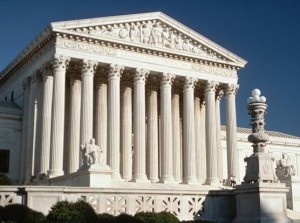
U.S. Supreme Court
Whatever happened to “Appellant wins”?

Back in 2003, in McConnell v. Federal Election Committee, the U.S. Supreme Court cleared up a major legal dispute over campaign financing. Er, well, maybe not completely cleared up.

The basic question was whether the McCain-Feingold Act, a federal statute that imposed restrictions on political contributions, violated the First Amendment free speech rights of potential contributors.  A challenging issue no doubt, but certainly not too tough for the mighty U.S. Supreme Court to resolve, right?

With nine justices voting, the result could have been as simple as 8-1, 7-2, 6-3, or 5-4 in favor of one side or the other.  The nine wise ones chose a slightly more complicated path. Here is the Court’s actual voting lineup straight out of the case:

STEVENS and O.CONNOR, JJ., delivered the opinion of the Court with respect to BCRA Titles I and II, in which SOUTER, GINSBURG, and BREYER, JJ., joined. REHNQUIST, C. J., delivered the opinion of the Court with respect to BCRA Titles III and IV, in which O.CONNOR, SCALIA, KENNEDY, and SOUTER, JJ., joined, in which STEVENS, GINSBURG, and BREYER, JJ., joined except with respect to BCRA § 305, and in which THOMAS, J., joined with respect to BCRA §§ 304, 305, 307, 316, 319, and 403(b). BREYER, J., delivered the opinion of the Court with respect to BCRA Title V, in which STEVENS, O.CONNOR, SOUTER, and GINSBURG, JJ., joined. SCALIA, J., filed an opinion concurring with respect to BCRA Titles III and IV, dissenting with respect to BCRA Titles I and V, and concurring in the judgment in part and dissenting in part with respect to BCRA Title II. THOMAS, J., filed an opinion concurring with respect to BCRA Titles III and IV, except for BCRA §§ 311 and 318, concurring in the result with respect to BCRA § 318, concurring in the judgment in part and dissenting in part with respect to BCRA Title II, and dissenting with respect to BCRA Titles I, V, and § 311, in which opinion SCALIA, J., joined as to Parts I, II.A, and II.B. KENNEDY, J., filed an opinion concurring in the judgment in part and dissenting in part with respect to BCRA Titles I and II, in which REHNQUIST, C. J.,joined, in which SCALIA, J., joined except to the extent the opinion upholds new FECA § 323(e) and BCRA § 202, and in which THOMAS, J., joined with respect to BCRA §213. REHNQUIST, C. J., filed an opinion dissenting with respect to BCRA Titles I and V, in which SCALIA and KENNEDY, JJ., joined. STEVENS, J., filed an opinion dissenting with respect to BCRA § 305, in which GINSBURG and BREYER, JJ., joined.

Who won?  I have no idea.

For embodying in a single voting lineup the reason why the most accurate answer to most legal questions is “It depends,” this case gets into the Strange Judicial Opinions Hall of Fame.  If members of the world’s most powerful tribunal are unable to agree on what the law means, how could one expect poor law students to do so?

— McConnell v. Federal Election Comm’n, 540 U.S. 93 (2003). Thanks to Elise Hendricks.

Justice Eugene F. Black: The Dissing Dissenter (Black)

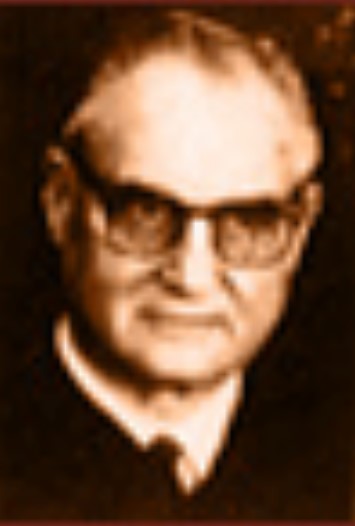
Justice Eugene F. Black
Former Michigan Supreme Court Justice Eugene F. Black

Thanks to Graham Bateman for turning Lawhaha.com on to a real character: Justice Eugene F. Black, a judge whose inflammatory dissent-writing makes caustic U.S. Supreme Court Justice Antonin Scalia’s dissents read like love letters in comparison.

Black regularly lashed out at his colleagues on the Michigan Supreme Court, on which he served from 1956-72, holding their feet to the fire when he saw their actions as reckless, destructive, deceptive, partisan, or willful.

For being so outrageous in his outrage, and for having such a sharp, articulate poison pen, Justice Black lands in the Strange Judicial Opinions Hall of Fame.

Black was a judge who took to heart the words of Benjamin Cardozo’s famous ode to dissent-writing, which Black quoted in Guilmet v. Campbell, 188 N.W.2d 601, 611 (Mich. 1971):

Comparatively speaking at least, the dissenter is irresponsible. The spokesman of the court is cautious, timid, fearful of the vivid word, the heightened phrase … Not so, however, the dissenter. He has laid aside the role of the hierophant, which he will be only too glad to resume when the chances of war make him the spokesman of the majority. For the moment, he is the gladiator making a last stand among the lions. (From Selected Writings of Benjamin Nathan Cardozo 353 (Fallon Publications 1947))

Justice Black may have been a gladiator, but I suspect his colleagues had a few other names for him. He wasn’t satisfied to simply disagree in his dissents. He liked to rip his colleagues to shreds in the process. Guilmet provides a good example. The majority held in favor of the plaintiff in a breach of contract action against a surgeon. Black’s dissent began like this:

In these early weeks of 1971 an exuberant new majority of a once great appellate court prepares to launch an unwarned, unprecedented, wholly gratuitous and destructively witless war of “contract liability” upon a brother profession ….

He was just getting warmed up. A little later, he said:

As against this there is no pretense of proffered authority or precedent. My Brothers five just say “This is the law.” That they do with an arrantly dixitized vengeance, for all of the skilled research clerks of Lansing, working with no surcease and without food or drink, never could come up with any kind of respectable or even plausible authority [for the court’s holding].

And then later:

Thus far there appears to the writer still another like bushment the Court should see but does not see, or perhaps is too absorbed to see, dead ahead.

Other examples of Justice Black’s unique style of brethrenly love include:

In re Apportionment of State Legislature, 197 N.W.2d 249, 262 (Mich. 1972) (Black, J., dissenting) (“[T]oo much of that heady stuff known as partisan politics has been steamed into the present proceeding and … this partisan-nominated Court should disqualify itself ….”)

Plumley v. Klein, 199 N.W.2d 169, 173 (Mich. 1972) (Black, J., dissenting) (“The Court has chosen the sleaziest of pleaded causes as opportune for the nullification of [a prior case.] … I cannot hold still before this latest judicial monster.”)

Jones v. Bloom, 200 N.W.2d 196, 207–08 (Mich. 1971) (“[O]ur majority must have labored, conferred, caucused and searched … to find some or any colorable way to overrule [jury’s verdict] … Our reports … are on the shelves of thousands of lawyers and judges. They bear now undeniable witness of both a profaning and deplorable fact; that this temporally seated and largely fledgling Court is bent purposefully upon progressive destruction of all or near all of the great canons and precedential precept which the nationally revered Cooley Court, and the succeeding Fellows Court, have bequeathed to Michigan.”)

Don’t know the merits of any of these cases, but in a day of cautious and tepid judges, you gotta love a judge who was willing to tell it like is (at least as he saw it).

— Citations included in text above. Thanks to Graham Bateman.

Judge Turns Triple Crown Plot Into Novella

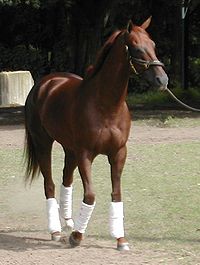
Funny Cide
Triple Crown threat Funny Cide caught up in weird judicial opinion.

The total weirdness of Florida Court of Appeals Judge Farmer’s opinion in Funny Cide Ventures, LLC v. Miami Herald Publ’g Co. gets the case into Lawhaha.com’s Strange Judicial Opinions Hall of Fame.

Here’s a first in judicial writing: an appellate judge writes an opinion in an offbeat fiction-style based on a tune from Guys and Dolls, can’t get the other judges to go along with his approach, so decides to attach his creative opinion to the court’s per curiam opinion together with a lengthy preface explaining his unique approach to written adjudication.

Confused? Let’s back up. In 2003, Funny Cide won both the Kentucky Derby and the Preakness, one race away from the Triple Crown.

After the Kentucky Derby, the Miami Herald published an article implying that the jockey cheated by using some kind of illegal battery-powered device during the race. The Herald later admitted it made an error and retracted the story. Meanwhile, Funny Cide placed third at the Belmont, missing out on becoming only the twelfth horse in history to win the Triple Crown.

In a lawsuit for injurious falsehood against the Herald, Funny Cide’s owners claimed the article caused substantial damage, including the chance to win the Belmont because “the article caused the jockey to over-ride the horse in the Preakness in an attempt to vindicate himself.”

The defendant moved for summary judgment, which was granted on the ground that the plaintiffs had not alleged direct and immediate damages from the article. The appellate court affirmed in a brief per curiam opinion.

So far, so good.

Then the reader stumbles on Judge Farmer’s … not sure what to call it … tacked on at the end of the court’s opinion. It’s not a concurring or dissenting opinion, and is not labeled as an appendix.

His “attachment” to the majority opinion is not a dissent from the reasoning of his brethren’s opinion, but the boring way in which they expressed it.

Judge Farmer starts by assailing traditional stilted judicial opinion writing, then explains why a humanized, pot-boiler narrative approach might be better. He concludes by suggesting readers compare the two approaches–his and the majority’s–and decide which is better.

Basically, he seemed to be saying: “Hey, I labored over writing this really fun and wild opinion, but these dudes I work with on the court are too straitlaced to get it, so here it is for your reading pleasure.”

Here are excerpts, first, from his attack on traditional judicial opinion writing:

Most [judicial opinions are] … dreary and tedious. …

A surprising number are way too long. There is often a painstaking account of background and trial which turns out to be unnecessary to grasp the essential issues to be decided. Many have extended discussions of rules and principles no one really challenges, or few would dispute. Judges pile on needless details of date, time and place, modified by confusing identifying terms (appellant-cross appellee-defendant) without regard to clarity. Extended comparative quotations alternate with exposition of one sort or another. Legal issues are analyzed through mind-numbing, many-factored “tests”. Each factor is unloaded nit by nit, as though the judges actually decided the dispute in precisely that way. Arcane legal terminology is woven in and out, even though simpler, plainer words could be used. Simplicity, tone, style, voice, personality, levity-all are shunned.

Judge Farmer concedes he’s been guilty of what he describes, then sets out to change his opinion-writing ways:

From the very moment of my appointment as a judge, I have chafed under this norm for appellate opinion writing. How did it become conventional? Who made it required? Why hasn’t it been changed?

I struggled against it. There must be other styles, different tones, alternate voices. Not for every opinion. But for some.

One technique occurred to me. This idea would have an opinion in some of the forms, styles and characteristics associated with fiction. Good fiction is set in human experience. Good fiction illuminates.

***

I had decided that the style of some opinions could-and should-be unconventionally changed for greater openness to all readers. I would try to write some opinions in styles and tones calculated to make legal reasoning clearer for those without law degrees. Then came this case.

When the panel conferred after oral argument, I did not detect any disagreement. … So after thinking on the matter, I conceived of an unconventional approach. I would try a style, a tone, a voice to make apparent even to non-lawyers what I believed is the basic defect in their argument. The very style of the opinion itself would illuminate the legal analysis and outcome.

As it turns out, the other two members of the panel could not endorse the opinion or even some slightly altered version. They had concerns. Some other judges shared them. So I give this explanation for what I wrote, laying my version along side the panel’s substitute. Readers can compare a conventional opinion with an unconventional style-the pious with the impious.

Then comes the opinion. Here’s an excerpt, inspired by the opening song of Guys and Dolls, Fugue for the Tinhorns:

Then the horse won the Preakness Stakes. And it’s not even close. Wins by nearly ten lengths. The horse is so far out front, looks like he could make it past the wire and into the barn before they can take the photo. Hardly anyone asked if the horse ran out of gas for the Belmont. Are you kidding? Racing was all stirred up about the Crown. The feedbox noise grew hot.

Was it a dream, or did I hear stories about a guy who read in the paper the horse wins it all by a half? About another guy who said it was no bum steer, it was from a handicapper that’s real sincere? Even about a third guy who knew this is the horse’s time because his father’s jockey’s brother’s a friend?

Whatever. It’s a lock. Two jewels for the Crown. Make room for the third.

Only, wait a minute. Did I hear another story about this one guy who wasn’t so sure? Said it all depends if it rained last night?

For the life of me, I can’t understand why the other judges on the panel were hesitant to join in this opinion.

— Funny Cide Ventures, LLC v. Miami Herald Publ’g Co., 955 So.2d 1241, 1243–47 (Fla. Dist. Ct. App. 2007). Thanks to Kevin McDowell and James Heelan.

Ornithological Expert “Thinks” a Crow Is A Bird and Insists that Seagulls Aren’t

crow flying
Bird expert "thinks" this might be a bird.

In U.S. v. Byrnes, the defendant was convicted of making false statements to a grand jury investigating illegal trafficking in exotic birds. The issue involved the materiality of statements as to whether some illegally imported swans and geese were dead or live when the defendant received them.

To bolster its case, the government called a collector of Australian parrots who testified the defendant had delivered some swans and geese to her. Defense counsel cross-examined the witness, an immigrant from Germany who had difficulty speaking English, in an apparent effort to challenge her credibility as a bird expert. Here’s the interesting colloquy:

Q. Mrs. Meffert, do you recall testifying yesterday about your definition of birds?

A. Yes.

Q. And do you recall that you said that the swans and geese were not birds?

A. Not to me.

Q. What do you mean by that, “not to me?”

A. By me, the swans are waterfowls.

Shortly thereafter, Mrs. Meffert was cross examined as follows:

Q. Are sparrows birds?

A. I think so, sure.

Q. Is a crow a bird?

A. I think so.

Q. Is a parrot a bird?

A. Not to me.

Q. How about a seagull, is that a bird?

A. To me it is a seagull, I don’t know what it is to other people.

Q. Is it a bird to you as well or not?

A. To me it is a seagull. I don’t know any other definition for it.

Q. Is an eagle a bird?

A. I guess so.

Q. Is a swallow a bird?

A. I don’t know what a swallow is, sir.

Q. Is a duck a bird?

A. Not to me, it is a duck.

Q. But not a bird.

A. No, to other people maybe.

The government stipulated that swans and geese are birds.

Because it makes me laugh every time I read it, this opinion gains entry to the Strange Judicial Opinions Hall of Fame.

— United States v. Byrnes, 644 F.2d 107, 110 n.7 (2nd Cir. 1981). Thanks to Walter Fitzpatrick.

Judge Evan’s “Rap” Sheet (Evans)

U.S. Seventh Circuit Court of Appeals Judge Terence T. Evans, who passed away in 2011, was well-known for his opinions jammed with sports trivia (see here and here).

But in a criminal case involving witness tampering and “too many Murphys” (the defendant, his son and the trial judge were all named Murphy), Judge Evans mined a different pop culture-vein in an opening footnote necessitated by a court reporting error in the trial transcript:

1. The trial transcript quotes Ms. Hayden as saying Murphy called her a snitch bitch “hoe.” A “hoe,” of course, is a tool used for weeding and gardening. We think the court reporter, unfamiliar with rap music (perhaps thankfully so), misunderstood Hayden’s response. We have taken the liberty of changing “hoe” to “ho,” a staple of rap music vernacular as, for example, when Ludacris raps “You doin’ ho activities with ho tendencies.”

Give credit to Ludacris. Cited as authority by the distinguished U.S. Court of Appeals for the Seventh Circuit. Maybe his next release will be a hornbook.

— United States v. Murphy, 406 F.3d 857, 859 n.1 (7th Cir. 2005). Thanks to the several folks who sent this opinion.

Tomatos are Vegetables as a Matter of Law, So Says the U.S. Supreme Court

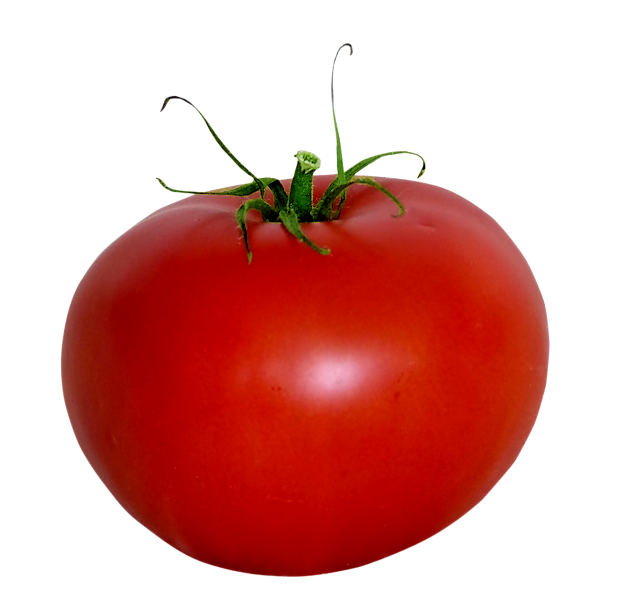
Tomato
It's official. Tomatos are vegetables according to the Supreme Court.

The next time someone raises the age-old debate as to whether a tomato is a fruit or a vegetable, show off your legal acuity (or nerdiness) by informing them you have it on good authority that tomatos are vegetables. No, in fact, make that great authority. Who? The U.S. Supreme Court.

More than 100 years ago, in Nix v. Hedden, Justice Horace Gray, speaking on behalf of a unanimous Supreme Court, ruled that a tomato is a vegetable as a matter of law.

The Tariff Act of 1883 declared a 10 percent duty on all vegetables entering the country, but allowed fruit to enter duty-free. The New York Customs Collector saw an opportunity to increase revenue and declared the tomato to be a vegetable.

Angry importers sued and their case reached the Supreme Court, where Justice Gray said: “[A]lthough botanists consider the tomato a fruit, tomatoes are eaten as a principal part of a meal, like squash or peas, (and all grow on vines), so it is the court’s decision that the tomato is a vegetable.”

— Nix v. Hedden, 149 U.S. 304 (1893). Thanks to Lihwei Lin.