Defamatory in England to Call Someone Ugly

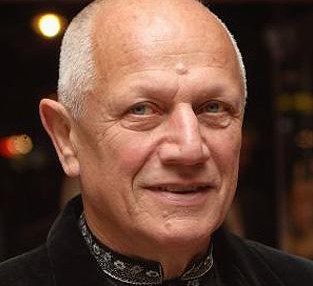
Steven Berkoff
Won a defamation judgment for being called ugly.

A 1996 English libel case reminds me of the old Rodney Dangerfield joke: “My psychiatrist told me I’m going crazy. I told him, ‘Doc, if you don’t mind I’d like a second opinion.’ He said, ‘Alright, you’re ugly too.’”

In Berkoff v. Burchill, an English court of appeals held that describing a person as ugly can constitute actionable defamation. No wonder people are flocking to England to take advantage of the country’s plaintiff-friendly libel laws. It’s highly doubtful calling someone ugly would be actionable defamation under U.S. law.

(By the way, this practice, known as “libel tourism,” resulted in enactment of a 2010 U.S. law that prohibits U.S. courts from enforcing foreign defamation judgments if they were rendered under legal protections less protective of speech than U.S. standards. Berkoff’s suit, against an English newspaper, was not a case of libel tourism.)

The English case arose from a Sunday Times article in which defendant Burchill reviewed the movie The Age of Innocence. Burchill described the film director, Steven Berkoff, as “hideous-looking.”

Nine months later, Burchill once again called Berkoff’s pulchritude into question, this time in a review of the movie Frankenstein. Describing “the Creature,” Burchill said: “It’s a very new look for the Creature—no bolts in the neck or flat-tap hairdo—and I think it works; it’s a lot like Stephen Berkoff, only marginally better-looking.”

Berkoff sued for defamation. The issue was whether calling someone hideous-looking is a defamatory statement capable of injuring a person’s reputation. The appellate court answered affirmatively.

The court said a jury could “conclude that in the context the remarks about Mr. Berkoff gave the impression that he was not merely physically unattractive but actually repulsive” and that this could injure Berkoff’s ability to make a living by “lowering his standing in the estimation of the public … [by] making him an object of ridicule.”

Is truth a defense? He looks okay in this picture (photo by Getty, borrowed from The Telegraph).

Berkoff v. Burchill, [1996] 4 All E.R. 1008 (Ct. App. 1996). Thanks to Heiner O. Mommsen.
Saved by a Gator with a 455 Cubic-Inch Engine

drunk driving airboat
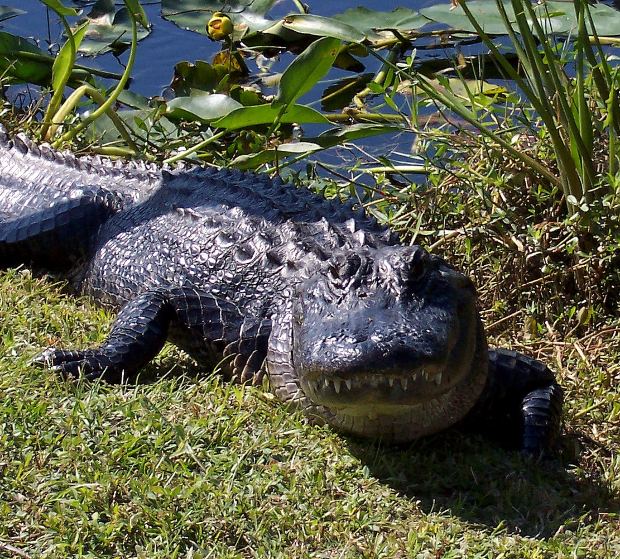
All the horsepower without the sharp teeth or drunk-driving convictions.

Things weren’t looking good for the defendant in State v. Stagno after getting pulled over by a state trooper. With a blood alcohol level of .197 and two DUI convictions in the past ten years, he almost certainly would’ve lost his driver’s license if he’d been driving his friends to the topless bar in his car.

But thanks to a drunken bet made earlier in the evening, the defendant’s mode of transportation on this wild night out was not a car at all—it was a “fifteen-foot 1985 Air Gator airboat, powered by a 455 cubic inch Buick engine.”

Because the applicable statute allowed judges to revoke driver’s licenses only when the vehicle driven required a license, the trial court had to settle for imposing a $1,000 fine, thirty days in jail, and alcohol rehabilitation counseling.

The Alaska Court of Appeals affirmed the lower court’s ruling, agreeing that a fifteen-foot airboat is not a motor vehicle requiring a driver’s license.

State v. Stagno, 739 P.2d 198 (Alaska Ct. App. 1987)

Barbie Gets Her Day In Court (And Loses) (Kozinski)

barbie lawsuit
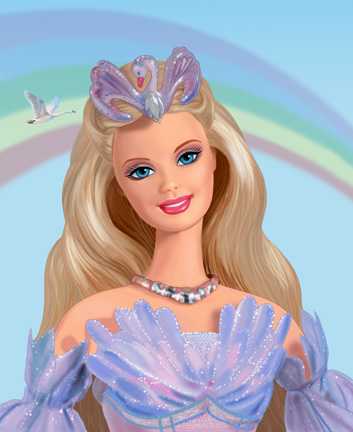
Barbie, looking effervescent despite lawsuit loss.

In 1997, the Danish band “Aqua” released a parody of America’s favorite thin plastic girl, Mattel’s Barbie®, called “Barbie Girl.” Mattel sued for trademark infringement and dilution. The federal district court in California granted summary judgment against the plaintiff, ruling the song was protected parody.

The U.S. Court of Appeals for the Ninth Circuit affirmed in an opinion by Judge Alex Kozinski. Judge K opened by posing the case as an epic battle between free speech and intellectual property rights. In his words, “[i]f this were a sci-fi melodrama, it might be called Speech-Zilla meets Trademark Kong.”

In ruling against Mattel, Kozinski opined that Barbie is much more than a mere product in the American conscious. She also had a more colorful past than you might realize:

Barbie was born in Germany in the 1950s as an adult collector’s item. Over the years, Mattel transformed her from a doll that resembled a “German street walker,” as she originally appeared, into a glamorous, long-legged blonde. Barbie has been labeled both the ideal American woman and a bimbo. She has survived attacks both psychic (from feminists critical of her fictitious figure) and physical (more than 500 professional makeovers). She remains a symbol of American girlhood, a public figure who graces the aisles of toy stores throughout the country and beyond. With Barbie, Mattel created not just a toy but a cultural icon.

It’s true. Barbie is a myth, a legend, and, for better or worse, represents the dreams of little girls everywhere. My daughter used to own probably a dozen Barbies. At what point, if any, can a product image become part of the public domain because it has become woven into the fabric of culture itself?

As Kozinski said in discussing Mattel’s trademark-infringement claim:

The problem arises when trademarks transcend their identifying purpose. Some trademarks enter our public discourse and become an integral part of our vocabulary. How else do you say that something’s “the Rolls Royce of its class”? What else is a quick fix, but a Band–Aid? Does the average consumer know to ask for aspirin as “acetyl salicylic acid”? Trademarks often fill in gaps in our vocabulary and add a contemporary flavor to our expressions. Once imbued with such expressive value, the trademark becomes a word in our language and assumes a role outside the bounds of trademark law.

Don’t remember Aqua’s one-hit wonder novelty song? No worries. The court attached the lyrics as an appendix. Here’s the chorus to refresh your memory:

I’m a Barbie girl, in my Barbie world

Life in plastic, it’s fantastic

You can brush my hair, undress me everywhere

Imagination, life is your creation

Come on Barbie, let’s go party!

Here’s the Official YouTube video.

Mattel, this is more humor. Don’t sue.

Mattel, Inc. v. MCA Records, Inc., 296 F.3d 894, 898, 909 (9th Cir. 2002).