Justice Scalia Nineteen Times Funnier Than Justice Ginsburg

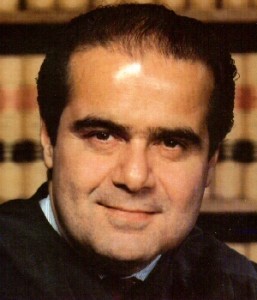
study shows Scalia is funniest supreme court justice
Justice Ruth Baeder Ginsburg – Not that funny according to study.

Boston University Law Professor Jay D. Wexler conducted a study of the relative funniness of U.S. Supreme Court Justices. His results were published in The Green Bag and reported in the New York Times.

Wexler’s methodology was to count and tabulate the insertions of “[Laughter]” in transcripts of oral arguments during the 2004 term, when argument transcripts began including the Justices’ names. The results include the conclusion that Justice Antonin Scalia is the Chief Comedian on the High Court, nineteen times funnier than Justice Ruth Bader Ginsburg. Scalia, the study showed, is good for at least one laugh per oral argument. On the other hand, Justice Clarence Thomas, who rarely speaks during oral arguments, received no laughs.

As the New York Times article pointed out, the baseline for laughter in the solemn Supreme Court is fairly low. It’s not likely the same comments would generate guffaws on Comedy Central.

Here are some Supreme Court rib-ticklers quoted in the New York Times article:

[After a lightbulb exploded in the courtroom:]”It’s a trick they play on new chief justices all the time,” Chief Justice John G. Roberts Jr., who joined the court that month, said of the explosion.

“[Laughter.]”

“Happy Halloween,” Justice Scalia retorted.

“[Laughter.]”

And then, the kicker. “We’re even more in the dark now than before,” Chief Justice Roberts said.

“[Laughter.]”

On the other hand, in a January argument in a statute-of-limitations case, Justice Anthony M. Kennedy made an amusing observation about the absurdity of modern life.

“Recently I lost my luggage,” Justice Kennedy said. “I had to go to the lost and found at the airline, and the lady said has my plane landed yet.”

“[Laughter.]”

That’s gold. Let’s see a sitcom based on the madcap lives of U.S. Supreme Court Justices.

— Adam Liptak, So, Guy Walks Up to the Bar, and Scalia Says …, N.Y. Times, Dec. 31, 2005.

Motion for Fist Fight

legal motion to fist fight
Lawyers at work?

A Montana criminal defense lawyer filed a motion for the court to order a fist fight between the defense team and the prosecutors in a case in which the lawyer’s client allegedly killed someone who was bullying him or his friend or both.

The motion is not exactly a model of clarity, but the lawyer apparently was trying to make the point that, in prosecuting his client for killing in apparent self-defense while being attacked with fists, the state was condoning fist fights. Here’s how the motion starts out:

COMES NOW counsel for Defendant, through his [sic] and respectfully requests this Court to Order a fist fight between Shaun Donovan and John Connor on one sided [sic] and Kirk Krutilla and Bill Buzzell on the other side.”

The lawyer then argues that the prosecutors had taken the position that it was “perfectly right, legal and moral” for the deceased to have attacked the defendant and states that the defense team would love to give Donovan and Conner a chance to stand up for the principle they stand for; i.e. the brutal humiliation and beating up of weaker human beings is the most cherished principle in life. Therefore, the defense moves that before the hearing April 17, 2006 that the state be given a chance on what they cherish in a resolution of dispute and that there be a fist fight [between the prosecutors and the defense lawyers].

Not surprisingly, the prosecutors took issue with the defense’s characterization of the state’s position in the State of Montana’s Response to ‘Motion for Fist Fight,’ and requested “that the Court deny the same.”

The prosecutors insisted they were not standing up for a legal and moral right to beat up people. Instead, “the State has asserted from the outset that the infliction of thirteen lethal stab wounds on an unarmed aggressor by [the defendant and his friend]” was an excessive use of force in self defense.

The prosecutors argued the defendant’s motion was “ill conceived” and that humor should not extend to filed court pleadings in a case which has lead to the death of one young man, serious and possibly permanent injury to others and the specter of long imprisonment and community strife for others.

After condemning the defense lawyer’s motion, the prosecutors puffed up and essentially insisted they could kick the defense lawyers’ butts if the proposed fight were to ensue, or as they put it in a more lawyerly fashion, they were “confident they could acquit themselves respectably if it were necessary to settle any part of this matter by means of a physical contest.”

— Motion for Fist Fight, Montana v. Mauher, Case No. D2005-8, Mont. 4th Judicial Dist. Ct., Mineral County, filed Mar. 27, 2006. Thanks to Donna Mustard.

Palsgraf Curse?

Palsgraf curse
Cardozo wrote the famous majority opinion in Palsgraf.

Several lawhaha visitors sent in Mark Fass’s article in the New York Law Journal about an alleged curse on the family of Helen Palsgraf, the most famous torts plaintiff in history. Every lawyer remembers Mrs. P from law school. To test this theory, visit an elderly, dying lawyer in a coma and shout “Palsgraf!” Immediately, he will recite: “A man carrying a box wrapped in newspaper boarded a train at the Long Island Railroad Station … cough, cough … ack.”

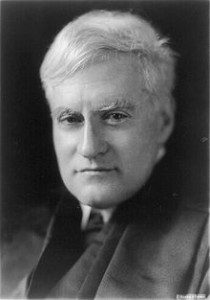
The box contained fireworks. When it was dislodged by employees of the Long Island Railroad trying to help the man on the train, the fireworks exploded, allegedly knocking a scale onto Mrs. P. Mrs. P’s saga led to the legendary, and incredibly confusing, opinions by Judge Benjamin Cardozo (that’s Cardozo in the picture–handsome fellow he was) and Judge William Andrews studied by students year in and year out at law schools great and small.

Now Fass reports that Mrs. P’s accident began a curse on the Palsgraf family, at least that’s what some of her descendants believe. One descendant fell off a ladder in 1965 and sued the manufacturer, but never made it to trial because the ladder was stolen. Another lost her thumb when a ping-pong table collapsed. A lawsuit led to a small settlement. Another descendent tripped while jogging over a broken curb, but was discouraged by lawyers from filing suit.

The most intriguing Palsfraf mishap reported by Fass involves a descendant who lost control of his truck on an icy hill in 1968. The truck slid towards the edge of cliff. Guess what saved the life of Mrs. P’s closest living relative? The truck’s wheels got caught on a track of … you guessed it, the Long Island Railroad. (Cue Twilight Zone theme.)

— Mark Fass, Palsgraf Railroad Injury Proximate Cause of Family Curse?, New York Law Journal, Dec. 10, 2004.

Mrs. Palsgraf is Alive, in the U.S. Supreme Court

PalsgrafAs a Torts prof, I loved this tidbit sent in by Elise Hendrick. Good old Mrs. Palsgraf. You can try, but you can’t keep her down.

Elise was listening to oral arguments before the U.S. Supreme Court in Exxon Co. USA v. Sofec, 116 S.Ct. 1813 (1996), and came across the following exchange between George Playdon, counsel for Sofec, and Justice Scalia. The two were engaged in a colloquy about the maritime supervening cause doctrine:

Scalia: I’m not sure that you need a “doctrine of supervening cause.” Is a doctrine of supervening cause anything other than Palsgraf? When you say, you know, that the negligence … the causality … had long since terminated. Once you say you’re out of the scope of the risk, what do you need a doctrine of supervening cause for? And isn’t that basically your case?

Playdon (chuckling): I smile—I never envisioned thirty years ago that I’d have the opportunity …

Scalia: Of arguing Palsgraf!

Playdon (stammering, laughing): Obviously, Palsgraf is a foreseeability doctrine, just like Hadley v. Baxendale is a foreseeability problem.

Elise speculates that this may have been the first time the implausible case of Mrs. P has been mentioned in court since Palsgraf was decided in 1928.

— Thanks to Elise Hendrick.

Patent: Breath of Fresh Air? Not!

patent for getting fresh air from a toiletU.S. Patent No. 4,320,756 appears to be a useful and quite ingenius invention that could prevent deaths from smoke inhalation in the event of fire by allowing trapped occupants in proximity to a toilet an alternative source of air.

The illustration shows a man with a tube in his mouth. The tube runs into a toilet and back into the toilet sewage pipe, where breathable air apparently exists. But the inventor oversells the invention a bit by naming it the “Fresh-Air Breathing Device and Method,” and repeatedly extolling the “fresh air” one can access while waiting for help from firefighters.

Fresh air? Not too sure about that. The breathing tube connects to “a sewer line or soil pipe for draining waste materials and water upon flushing of the toilet.” It does contain a filter to help deal with the “residual sewer gases.” I guess that would help.

By the way, an excellent part of the invention claimed is “the step of flushing said toilet” prior to inserting the breathing tube. Leave it to those inventors. They think of everything.

— U.S. Patent No. 4,320,756, Mar. 23, 1982. Thanks to David Barman.

What’s Next? No Splitting Hairs?

law bans tongue splittingFrom University of Illinois law librarian Paul D. Callister came news of an Illinois law, House Bill 3086, that would amend the Illinois Criminal Code to ban the “splitting of tongues” except by licensed physicians or dentists and then “only if there is a therapeutic or clinical procedure for performing the procedure.”

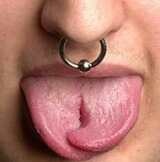
What is “tongue-splitting”? Pretty much what it sounds and looks like. According to the statutory definition, it “means the cutting of a human tongue into 2 or more parts.” Why this procedure is so popular that legal sanctions are required to prevent its apparently rampant medically unnecessary use is mysterious. Seems understandable the legislature wouldn’t want people cutting other people’s tongues into parts unless there was a “therapeutic or clinical” need for it. On the other hand, citizens arguably have a constitutional liberty interest in splitting their tongues just for the heck of it (assuming they’re competent and sober when the procedure is performed).

Paul wryly observed that “[a]pparently, politicians may still speak with forked-tongues, but it is illegal to facilitate the practice among the general population without proper licensing and establishing medical necessity.”

— Illinois House Bill 3086.

Patent: Coitus Interuptus Via a Recording Vibrator

patent for audio recording vibratorGood old American ingenuity and entrepreneurship. Just when you think everything worth inventing has already been invented, someone comes up with a great invention like the one described in U.S. Patent No. 5,928,170: the “audio-enhanced sexual vibrator.”

The ultimate gift for multi-taskers, this is a vibrator with a built-in “audio signal processor for recording and playing back personalized messages, before or after sexual interplay for enhanced aural stimulation.”

The main object of the invention is “to enhance the pleasure or satisfaction of a person during sexual intercourse, sexual simulation, or orgasmic therapy by providing a vibrating device which can record intimate or personalized messages, music or other sound effects ….”

However, “a further object of the invention is to provide a vibrator that can capture spontaneous thoughts or ideas occurring during a sexual situation, whereby those thoughts or ideas may otherwise be lost or forgotten if not recorded during the emotional or passionate state of sexual arousal.”

Suppose, for example, in the middle of sex, the user remembers they forgot to pick up the dry cleaning.  Just make a quick memo to self and no worries.

If they could only build a smart phone into it, they’d really have something going.

— U.S. Patent No. 5,928,170

Patent: A Talking Head of the Worst Kind

patent for talking toiletYou’d think the bathroom would be the one place you could escape to for some quiet time, but no.

U.S. Patent No. 6,417,773, issued July 9, 2002, is for a talking toilet. This invention allows one to record audio messages that are delivered to toilet users when a microphone hears the sound of the toilet flushing. The purpose of the invention is to promote good hygiene by reminding toilet users to wash their hands, but since users can record any message they want, there’s no reason the device couldn’t be put to other good uses like practical jokes or even political commentary. “There goes the economy” with every flush could have your guests in stitches.

For more toilet humor, check out U.S. Patent No. 5,829,068, issued Nov. 3, 1998, which could prove to be the greatest invention ever for promoting peace in the war between the sexes. The invention is a hydraulic toilet seat raising and lowering device. No more, “Honey, you didn’t put the seat down.” Let this baby do it for you.

— Thanks to David Barman, the Patent Man.


Patent: The Amazing Patented “Stick”

patent for dog toyOkay, maybe it’s a little fancier than a stick, but it’s still pretty funny that someone could get a patent for “[a]n apparatus for use as a toy by an animal, for example a dog, to either fetch, carry or chew; includes a main section with at least one protrusion extending therefrom that resembles a branch in appearance.” U.S. Patent No. 6,360,693.

Included in the invention are the “OBJECTS AND SUMMARY OF THE INVENTION,” such as: “It is an object of the present invention to provide an animal toy that a dog may carry in its mouth.” Wow, that is like, almost Edison-esque.

And this one: “It is also an important object of the invention to provide an animal toy that is easy for a dog to pick up off of the ground.” Well, of course, that’s important. Dogs have a rough enough life as it is without having to suffer the annoyance of fetching a toy that’s hard to pick up off the ground. Think how aggravating that must be.

This must-have toy for your canine friends also floats, glows in the dark and is flavored.  You can see how wistful the doggie in the picture looks, stuck with that large tree limb instead of a coveted patented stick.

— U..S. Patent No. 6,360,693, issued Mar. 26, 2002. Thanks to David Barman.


California Ordinance Bans “Boobie Pillows”

California law banning boobie pillows
Not a "boobie pillow" (Lawhaha.com is family friendly.)

Patrick Strader reports that he came upon this California ordinance banning “boobie pillows” accidentally, while searching under “B” in the code index for something more mundane–“Bills of Lading” or perhaps “Boards or Commissions.” Of course, he had to stop and look it up.

9.12.010 Public sales of articles depicting female breasts.

A. Finding of Fact Leading to Enactment.

Residents of the county have petitioned the board of supervisors of the county to prevent persons who display, sell or offer to sell upholstered or stuffed articles depicting, simulating or caricaturing female breasts from vending such articles at sites adjacent to and near county highways. …

The petitioners have represented, and the board of supervisors finds, that (unlike indecent and vulgar displays in movies, newspapers, television and other places, the offensiveness of which can be prevented or controlled by turning off the set, canceling a subscription, declining to purchase, or nonattendance) the hawking of those articles named by its vendor and sold as “boobies pillows” along the public highways is a species of indecency and vulgarity which cannot be ignored or controlled by passersby, which assails the eyes and minds of all who are required to use county highways, and which should be barred and controlled for the peace, safety and welfare of the unincorporated areas of the county.

B. Display and Sale Banned Within One Thousand (1,000) Feet of Highways.

No vendor shall vend stuffed articles depicting the female breasts (sold as “boobie pillows”) within one thousand (1,000) feet of any county highway.

C. Regulation of Display More Than One Thousand (1,000) Feet from Highways.

No vendor shall vend stuffed articles depicting the female breasts (sold as “boobie pillows”) anywhere in the unincorporated area of the county unless: [elaborate conditions are enumerated]

Violations are a misdemeanor punishable by a fine of not more than five hundred dollar ($500.00) or imprisonment in the county jail for not more than ninety (90) days, or both. Each day of violation constitutes a separate offense. Residents can now sleep easily.