That’s Entertainment! (Gardner)

Seems as though colorful California Court of Appeals Judge Robert Gardner, a Lawhaha.com Hall-of-Famer, had to deal with more than his fair share of bawdy subjects. But to resolve them, he consistently applied his excellent writing with good old common sense, leaving memorable opinions for the rest of us to enjoy.

In People v. Sarong Gals, the owners of “Sarong Gals,” a bar featuring live nude dancers, appealed an injunction entered against them under California’s Red Light Abatement law, a 1913 statute declaring to be a public nuisance any place used for the purpose of lewdness, assignation or prostitution.

Defendant’s primary argument was that the Red Light Abatement statute can not be lawfully applied to “entertainment.”

Judge Gardner disagreed. He began his opinion with a long list of what he called “hilarious highlights” of the “entertainment” observed at Sarong Gals through police surveillance. The judge’s descriptions of these highlights are a bit too graphic for Lawhaha.com, but one of them had something to do with a customer’s sunglasses. Use your imagination or go look up the opinion for details.

With regard to defendant’s argument that the statute could not be constitutionally applied to restrict “entertainment,” Judge Gardner opined that just about any activity, including people getting devoured by lions, appeals to the “entertainment” wishes of some audience somewhere:

Lewdness is lewdness and covering it with a patina of “free expression” is a fiction which the law will not tolerate. Masturbating on stage, causing customers to openly masturbate, allowing patrons to peer into females’ innards, simulating sexual intercourse and in other ways titillating the customers sexually amounts to lewdness—even though it may be entertaining.

Presumably, the Romans of the First Century derived entertainment from witnessing Christians being devoured by lions. Given the right audience, the spectacle of a man committing an act of sodomy on another man would provide entertainment value. However, neither this spectacle nor the activities described in the instant case are invested with constitutionally protected values merely because they entertain viewers.

People v. Sarong Gals, 27 Cal. App. 3d 46, 50–51 (1972). (Thanks to Frank Zotter.)
Kozinkski in Judge Gardner’s Fan Club

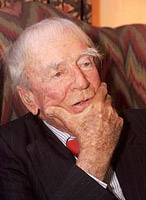
Judge Robert Gardner
Lawhaha.com Hall of Fame Judge Robert Gardner

U.S. Court of Appeals Judge Alex Kozinski, a Lawhaha.com Strange Judicial Opinions Hall-of-Famer, took time to send in his praise for another judge who dared to be different: California Court of Appeals Judge Robert Gardner.

Judge K said Gardner is one of his heroes, and included his favorite Gardner quote, from People v. Benton. Although it involves profanity, as Judge Kozinski said, it’s for a good cause:

Mrs. Barnhill and her daughter, Sainna Okeson, were seated at the kitchen table in Mrs. Barnhill’s apartment on Keel Street in Anaheim on the evening of August 2, 1976. Around midnight, a … man entered. With pistol in hand, he said, “Don’t say a word, don’t say a mother-f****** word.” [Fn.1]

[Fn.1] It is a sad commentary on contemporary culture to compare “Don’t say a word, don’t say a mother-f****** word” with “Stand and deliver,” the famous salutation of Dick Turpin and other early English highwaymen. It is true that both salutations lead to robbery. However, there is a certain rich style to “Stand and deliver.” On the other hand, “Don’t say a word, don’t say a mother-f****** word” conveys only dismal vulgarity.

The speech of the contemporary criminal culture has always been a rich source of color and vitality to any language. Yet, when one compares the “bawds,” “strumpets,” “trulls,” “cut-purses,” “knaves,” and “rascals” of Fielding and Smollett to the “hookers,” “pimps,” “Narcs,” “junkies,” and “snitches” of today’s criminal argot, one wonders just which direction we are traveling civilization’s ladder. “Hooker,” at least, has traceable historical antecedents—although the descendants of General “Fighting Joe” Hooker would probably prefer that their famous ancestor be remembered for something other than his army’s camp followers—such as the slaughter at Chancellorsville.

Judge Gardner used the full term without the asterisks, making it viscerally funnier, but Lawhaha.com tries to stay family friendly.

People v. Benton, 77 Cal. App. 3d 322, 324 & n.1 (1978).

1920s Judge Rules Men are “Cave Men in the Pleasures of the Bed”

In 1920, a New Jersey chancery judge was faced with a wife’s suit for marriage annulment on the ground of the husband’s alleged impotency during their five years together. The husband “vigorously protested his virility, but admitted the nonconsummation of the marriage.” The husband asserted he refrained from intercourse with his wife because he did not want to hurt her.

Interestingly, given the date, the judge thoughtfully considered whether the husband’s condition was psychological, especially since he had “submitted to an examination by one of his wife’s physicians, who testified that he was structurally a male, normal in the parts, and to all appearances capable of coition.”

The judge forged new legal ground in the U.S. by adopting from the English common law a rebuttable presumption of impotency after three years of marriage without sexual intercourse. In finding that the husband failed to overcome the presumption, the judge explained:

[T]he question comes to one of belief in his story of forbearance for five years, under most trying circumstances, simply because sexual intercourse was painful and distressing to her. I have misgivings. Such solicitude of a groom is noble, of a husband, heroic. Few have the fortitude to resist the temptations of the honeymoon. But human endurance has its limitations. When nature demands its due, youth is prodigal in the payment. Men are still cave men in the pleasures of the bed. The sex may be more temperate, but none the less passionate, and heedless of the penalty. They do not shirk the initiation nor shrink from the consequences. The husband’s plea does not inspire confidence. Common experience discredits it.

Tompkins v. Tompkins, 111 A. 599, 601 (N.J. Ch. 1920). Thanks to Senior Judge Jim Barlow.

Product Warning: Federal Supplement Contains Raunchy Adult Content

Federal Senior U.S. District Judge Kane of the District of Colorado offered curious readers of judicial opinions an excursion into the world of adult-oriented judicial opinions in Martin v. Cuny. In a case involving a copyright dispute over a photograph of a man and a woman engaging in oral sex, Judge Kane, in a footnote, provided a bibliography of judicial opinions that have titillated law students for decades:

Given its subject matter, this opinion may join certain cases with obscure citations found in well-thumbed volumes in law school libraries. These cases are favorites of second year law students imprisoned in libraries and seeking diversion from the boredom of yet another year of highly touted and low-yielding case method of instruction. Having known a law professor, now thankfully of emeritus status, who assigned students to locate these cases as an exercise in legal research, I list a few to bring them into the age of computers and political correctness through the back door.

[The list of citations is omitted. Some of the cases are gross, including the one my classmates and I all tracked down wa-aa-ay back when we were 2Ls.  Lawhaha.com is much more family friendly than the Federal Supplement. At the end of the citation list, the judge said:]

If you find each of these cases you are entitled to join the law review; if your law school library doesn’t have all of them, you should transfer at once.

A professor actually assigned these cases? No surprise he was an emeritus.

Martin v. Cuny, 887 F. Supp. 1390, 1392 n.1 (D. Colo. 1995). Thanks to Richard McKewen.

Does Defecating Qualify as an “Excited Utterance”?

The lawyer who sent in this opinion wrote that it will “make you pee in your pants laughing.” Maybe he was just caught up in the spirit of the opinion, which begins:

This case decides the heretofore undecided question of whether the act of defecating in one’s pants upon being informed of a pending criminal charge is a relevant fact for the jury.

That’s a heckuva way to get your reading audience’s attention. Here’s what happened:

The prosecutor elicited testimony from the arresting officer that, upon being informed he was under arrest for sexual child assault, the defendant defecated in his pants (although he denied doing so at trial). Defense counsel objected on relevancy grounds and the judge sustained the objection. The judge told the jury to disregard the comment. Oh yeah, I’m sure the jurors were able to just completely forget that little tidbit.

The defendant appealed, asserting a mistrial should have been granted. On appeal, the prosecutor argued that the defendant’s unseemly accident was admissible as an “excited utterance” under the rules of evidence.

“Excited utterance” is an exception to the rule the bars the introduction of hearsay testimony. Hearsay–that is, statements made outside of court–are, subject to many exceptions, barred because they are deemed untrustworthy. The basis for admitting an excited utterance into evidence is the belief that statements made under shock or surprise are likely to be trustworthy.

Judge Hardberger, writing for the Texas Court of Appeals, did an admirable job of fairly identifying the conflicting inferences that could be drawn from the alleged act by the defendant. After rejecting defendant’s argument that the act had no relevance, he wrote:

On the other hand, defecation in one’s pants upon arrest does not necessarily indicate guilt. Such an act could be evidence of the innocence of a man accused of a heinous crime he didn’t do … Granted, it could also be the act of a guilty person being found out. Or it could simply be the act of a man sick to his stomach.

The court determined that the trial judge’s instruction to the jury to disregard the testimony cured any possible error.

Marles v. State, 919 S.W.2d 669, 670–71 (Tex. Crim. App. 1996). Thanks to David Keller.

“Motion to Kiss My ***”

Anyone who has ever worked as a staff attorney or law clerk to a federal judge or magistrate knows all too well the burdens of dealing with pro se inmate complaints (prisoners representing themselves).

In Washington v. Alaimo, the pro se inmate plaintiff pushed his luck too far when he filed a “Motion to Kiss My Ass,” in which he moved “all Americans at large and [the judge in one of his cases] to kiss my got [sic] damn ass.”

Other motions filed by the inmate included:

“Motion to Behoove an Inquisition”

“Motion for Restoration of Sanity”

“Motion for Publicity”

“Motion for Psychoanalysis”

“Motion to Invoke and Execute Rule 15—Retroactive Note: The Court’s School Days are Over”

“Motion for Skin Change Operation”

“Motion for Catered Food Service”

 The court imposed restrictions on all future filings by the inmate.

Washington v. Alaimo, 934 F. Supp. 1395 (S.D. Ga. 1996). Thanks to Lihwei Lin.

This Judicial Humor Resulted in Censure

The Kansas Supreme Court publicly censured a rhyming judge in a 1975 case for a tasteless piece of doggerel in which he publicly humiliated a woman arrested for prostitution. His poetic order was deemed to be in violation of the judicial ethical canon that “[a] judge should be patient, dignified, and courteous to litigants, jurors, witnesses, lawyers, and others with whom he deals in his official capacity.”

We won’t  perpetuate the misdeed by setting forth the offending rhyme here. Suffice it to say the judge repeatedly called the young woman a “whore” (in addition to showing bad judgment, he should be chastised for being a lousy poet; that’s what he came up with to rhyme with “1974” — the year of defendant’s arrest).

The most interesting aspect of the case was the Kansas Supreme Court’s commentary on judicial humor. In defense to the disciplinary proceeding, the censured jurist cited to several poetic judicial opinions and argued he should not be censured for following in this grand judicial tradition. The court observed:

Judges have long been enjoined from the use of humor at the expense of the litigants before them for reasons which should be apparent. Under the heading of “Ancient Precedents” in the canons of judicial ethics adopted in 1924 by the American Bar Association this appears:

“Judges ought to be more learned than witty; more reverend than plausible; and more advised than confident. Above all things, integrity is their portion and proper virtue ….”

“Patience and gravity of hearing is an essential part of justice; and an over speaking judge is no well-tuned cymbal ….” — Bacon’s Essay “of Judicature.” (198 Kan. xi.)

In 1967 a long time member of the supreme court of Arkansas in advising new judges on opinion writing had more to say on the subject. We quote:

“. . . Judicial humor is neither judicial nor humorous. A lawsuit is a serious matter to those concerned in it. For a judge to take advantage of his criticism-insulated, retaliation-proof position to display his wit is contemptible, like hitting a man when he’s down.” (Smith, A Primer of Opinion Writing, For Four New Judges, 21 Ark. L. Rev. 197, 210.)

Judges simply should not ‘wisecrack’ at the expense of anyone connected with a judicial proceeding who is not in a position to reply. … Nor should a judge do anything to exalt himself above anyone appearing as a litigant before him. Because of his unusual role a judge should be objective in his task and mindful that the damaging effect of his improprieties may be out of proportion to their actual seriousness. He is expected to act in a manner inspiring confidence that even-handed treatment is afforded to everyone coming into contact with the judicial system.

In re Rome, 542 P.2d 676, 685 (Kan. 1975). Thanks to Lihwei Lin.