Judge Enters “Order Denying Motion for Incomprehensibility”

Several grounds exist for a judge denying a lawyer’s motion.  Now we have a new one: incomprehensibility.

Displeased with a lawyer’s inartful motion-drafting, U.S. Bankruptcy Judge Leif M. Clark (W.D. Tex.) entered an order captioned “Order Denying Motion for Incomprehensibility.” The judge couldn’t figure out what the heck the defendant was requesting in a motion titled, “Defendant’s Motion to Discharge Response to Plaintiff’s Response to Defendant’s Response Opposing Objection to Discharge.”

Judge Clark said: “The court cannot determine the substance, in any, of the Defendant’s legal argument, nor can the court even ascertain the relief that the Defendant is requesting. The Defendant’s motion is accordingly denied for being incomprehensible.”

Perhaps worried that the defendant might miss his point, Judge Clark appended a footnote in which he invoked the following quotation from the Adam Sandler movie, Billy Madison:

Mr. Madison [Sandler’s character], what you’ve just said is one of the most insanely idiotic things I’ve ever heard. At no point in your rambling, incoherent response was there anything that could even be considered a rational thought. Everyone in this room is now dumber for having listened to it. I award you no point, and may God have mercy on your soul.

Order Denying Motion for Incomprehensibility, In re King, Case No. 05-56485-C, Feb. 21, 2006. Thanks to Sharee Moser.

Trial Judge Woes: No Submissions, No Tears, No Wigs

You don’t have to be a famous judge or blessed with a crazy case to write a Hall of Fame Strange Judicial Opinion. Here we have a low-level New Zealand trial judge trying to educate his appellate court masters about life down in the “real world” trial court-trenches, and a good-humored, self-effacing reply from the appellate court.

In New Zealand, an appeal over a $100 fine for failure to register “a handsome German Shepherd named Ben” apparently irritated the overworked trial judge. In a memorandum, the judge sought to educate the high court about the process for administering justice in his humble court at the bottom of the judicial hierarchy:

Your honour may not be familiar with the manner in which “Minor Offences” are dealt with in this Court. Notices of Prosecution . . . are surreptitiously placed in the Judge’s “In Tray” at frequent and irritating intervals, usually in his or her absence. They come in stacks and bundles … [The trial judge proceeds to describe the variety of matters crying out for his daily attention, including applications for Massage Parlor licenses, truancy notices, underage drinking citations, etc.]

The Judge peruses the mountain of files with great care and then imposes whatever he or she deems appropriate. No hearing is held. No defendant or counsel are present. No submissions are made. No tears are shed. No howls of derision are heard from the gallery. … No anxious mother suckles a fretful child. There are no sideways glances or rolling back of eyes from counsel’s table and certainly no titters are heard to run around the Court.

The Judge sits alone in his chambers and affixes his facsimile signature to the Information Sheet perhaps muttering silent curses to himself as he does so. …

I hope this short memorandum may assist Your Honour in dealing with this appeal.

High Court Justice Grant Hammond (pretty sure this is him–please correct if wrong), chragined, contrasted the trial judge’s mundane existence with the grandeur of his much more regal appellate court, describing how on the day of the hearing over the hundred-dollar appeal, “[i]n full High Court regalia we processed bewigged and black-robed through several levels” of the court building.

It was clear Justice Hammond felt awkward  about “tinkering” with the trial judge’s work. He quoted political philosopher Jeremy Bentham’s description of court systems as “a fathomless and boundless chaos, made up of fiction, tautology, technicality and inconsistency, and the administration of it a system of exquisitely contrived chicanery which maximises delay and the denial of justice.”

In the end, Hammond’s court reduced the fine to $20 because the appellant didn’t have the money to pay the higher fine.

Lowe v. Auckland City Council (High Court, Auckland, AP44/93, 12 May 1993, Hammond, J.). Thanks to Lina Lim.

Was Judge Too Late in Slamming Lawyers for Trial Misconduct?

U.S. District Judge Richard P. Matsch awarded attorneys’ fees and costs in a patent infringement case against a pair of high-echelon lawyers and their clients for trial misconduct “reflecting an attitude of ‘what can I get away with?’” and a “winning is all that is important approach” to litigation. A media report estimated the fees and costs could run several million dollars. Judge Matsch had previously thrown out the plaintiffs’ $51 million verdict in the case based on the same conduct.

The case raises interesting questions about the extent of a judge’s obligation to control attorney conduct it finds objectionable during the course of a trial.

The facts are complicated and readers interested in the full story should consult the judge’s order. But basically, the judge was ticked off that the plaintiffs’ lawyers pursued a trial strategy that the judge considered legally untenable, including attempting to establish a patent infringement by showing substantial similarity between the plaintiffs’ product and the defendants’ product.

Judge Matsch opined (paragraph breaks inserted):

Upon reflection, this Court finds and concludes that the rulings on the claims construction issues adjudicated the fairly debatable issues in this case and that the manner in which plaintiffs’ counsel continued the prosecution of the claims through trial was in disregard of their obligations as officers of the court.

The fairness of the adversary system of adjudication depends upon the assumption that trial lawyers will temper zealous advocacy of their client’s cause with an objective assessment of its merit and be candid in presenting it to the court and to opposing counsel.

When that assumption has been contradicted by a trial record of conduct reflecting a winning is all that is important approach to the trial process, the court has a duty to redress this resulting harm to the opposing party.

Judge Matsch essentially took the position that the plaintiffs’ claims were frivolous. However, he had previously denied the defendants’ motion for summary judgment and the jury returned a verdict in the plaintiffs’ favor. Defendants argued that these events showed the claims had merit, but the judge disagreed.

Perhaps most interesting was the defendants’ argument that if the judge found the trial conduct to be objectionable, he should have done something about it during the trial. In the judge’s words, the plaintiff’s lawyers “argue that they should not be held responsible for what they were able to get away with during the trial presentation.”

The argument does carry some persuasive force, particularly since the judge apparently denied objections by defendants’ counsel to some of the misconduct.

But Judge Matsch took the position that counsel were already aware of the court’s admonitions regarding the trial strategy, so he didn’t have any obligation to restrain it during the trial.

Medtronic Navigation, Inc. v. Brainlab Medizinische Computersystems GMBH, No. 98-cv-01072-RPM, 2008 WL 410413 (D. Colo. 2008).

Must-Read Musmanno (Musmanno)

Michael Musmanno
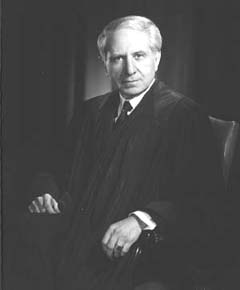
Justice Michael Musmanno, a Lawhaha.com Hall of Famer

Any fan of judicial opinion writing needs to study the opinions of the Honorable Michael A. Musmanno (1897-1968). He led a remarkable life. Before joining the Pennsylvania Supreme Court, Justice Musmanno enjoyed an illustrious career as a lawyer, U.S. Congressman and author. Highlights of his career include serving as the presiding judge at the Nuremberg war crime trials and as a defense lawyer in the Sacco & Vanzetti trial.

His opinions are marvelous concoctions of deep-hearted passion and brutal common sense, delivered in highly literate and often hilarious prose.

U.S. Ninth Circuit Court of Appeals Judge Alex Kozinski, another notable opinion-writer,  reported to Lawhaha.com that Musmanno has been his model since law school and that he consciously tries to emulate Musmanno’s writing. He laments that today’s law school graduates have never heard of Musmanno and return only blank stares when his name is mentioned.

Here are a couple samples of Musmanno’s writing sent by Chris Nace:

In Bosley v. Andrews, a woman sued a neighbor whose cows trespassed on her farmland to eat her crops. After being chased away in the morning, the “bovine buccaneers,” as Musmanno called them, returned for lunch. “This time they came, eight of them, with reinforcements. They brought along their boy friend, a 1500-pound Hereford white-faced bull.” The bull took chase after the plaintiff, causing her to suffer a heart attack.

A majority of the Pennsylvania Supreme Court rejected the woman’s claim for negligent infliction of emotional distress damages, following the traditional rule that such a claim cannot be maintained in the absence of a “physical impact” with the plaintiff (the bull never actually touched the plaintiff).

In dissent, Musmanno skewered the majority for what he saw as an unjust result, closing his opinion by stating that the majority’s approach “is unsupportable in law, logic, and elementary justice – and I shall continue to dissent from it until the cows come home.”

In Pennsylvania Society for the Prevention of Cruelty to Animals v. Bravo Enterprises, Inc., the plaintiff sought to enjoin a bullfight, but the majority held that the organization lacked standing. Musmanno began his impassioned dissent:

If there is one commodity of which there is no need for a further supply, it is violence. If there is one school that the world can afford to miss, it is one for the tutoring of methods of violence, brutality and cruelty. … [W]e can well do without a bullfight which is nothing less than an open air lyceum in the art of torturing helpless animals.

Add Justice Musmanno to your list of “four dead people with whom you would most like to have dinner.”

Bosley v. Andrews, 142 A. 2d 263, 267–68, 280 (Pa. 1958) (Musmanno, J., dissenting); Pa. Soc’y for the Prevention of Cruelty to Animals v. Bravo Enterprises, Inc., 237 A. 2d 342 (Pa. 1968) (Musmanno, J., dissenting). Thanks to Chris Nace.

Ode to Screwing Up (Musmanno)

The classic dilemma of the law. Which is more important: following the rules or dispensing justice? Being faithful to precedent or willing to bend technical legal rules to reach the correct result?

We struggle with these issues from the time we’re first-year law students. Rules won out in ugly fashion in In re Estate of Pavlinko.

Vasil Pavlinko and his wife, Hellen, immigrants who spoke little English, went to a lawyer to have separate wills drawn up. Both wills left their residual interest to the same person: Elias Martin, the brother of Hellen Pavlinko. Unfortunately, when it came time to sign the wills, the wills got mixed up and Vasil and Hellen each signed the other’s will.

After the couple died, Elias Martin—the sole residuary legatee under both wills—offered Vasil’s will for probate. Although conceding that the result was “unfortunate,” the Pennsylvania Supreme Court rejected Martin’s petition because Vasil had mistakenly signed Hellen’s will.

Judge Michael Angelo Musmanno, a Strange Judicial Opinions Hall of Famer for his intelligent prose, dissented, in an impassioned Ode to Screwing Up:

Everyone in this case admits that a mistake was made: an honest, innocent, unambiguous, simple mistake, the innocent, drowsy mistake of a man who sleeps all day and, on awakening, accepts the sunset for the dawn.

Nothing is more common to mankind than mistakes. Volumes, even libraries have been written on mistakes: Mistakes of law and mistakes of fact. In every phase of life, mistakes occur and there are but few people who will not attempt to lend a helping hand to the person who mistakes a step for a landing and falls, or the one who mistakes a nut for a grape and chokes, or the one who steps through a glass so clear that he does not see it. This Court, however, says that it can do nothing for the victim of the mistake in this case, a mistake which was caused through no fault of his own, nor of his intended benefactors.

 … I know that the law is founded on precedent and in many ways we are bound by the dead hand of the past. But even with obeisance to precedent, I still do not believe that the medicine of the law is incapable of curing the simple ailment here ….

We have said more times than there are tombstones in the cemetery where the Pavlinkos lie buried, that the primary rule to be followed in the interpretation of a will is to ascertain the intention of the testator. Can anyone go to the graves of the Pavlinkos and say that we do not know what they meant? They said in English and Carpathian that they wanted their property to go to Elias Martin.

 — In re Estate of Pavlinko, 148 A. 2d 528, 532 (Pa. 1959) (Musmanno, J., dissenting). Thanks to Frank Zotter.

A Kozinski DISS-sent (Kozinski)

In U.S. v. Ramirez Lopez, the defendant was convicted of smuggling aliens into the U.S. from Mexico. One died during the journey due to inclement weather. When border patrol agents interviewed fourteen members of the group, two of them said the defendant was the guide of the expedition while the other twelve exculpated him, denying he was the guide.

The government deported nine of the twelve exculpatory witnesses back to Mexico prior to trial and the trial judge denied admission of the government’s interview notes with them.

It’s fair to say Judge Kozinski was unimpressed by the fairness of the procedure. He began his dissent from the affirmance of the conviction with a satirical, fictional post-trial conversation between the defendant and his lawyer:

Lawyer: Juan, I have good news and bad news.

Ramirez-Lopez: OK, I’m ready. Give me the bad news first.

Lawyer: The bad news is that the Ninth Circuit affirmed your conviction and you’re going to spend many years in federal prison.

Ramirez-Lopez: Oh, man, that’s terrible. I’m so disappointed. But you said there’s good news too, right?

Lawyer: Yes, excellent news! I’m very excited.

Ramirez-Lopez: OK, I’m ready for some good news, let me have it.

Lawyer: Well, here it goes: You’ll be happy to know that you had a perfect trial. They got you fair and square!

[Colloquy continues in which the defendant questions the fairness of the trial and the judge explains the harmless error rule as “No harm, no foul.” The defendant takes issue with the “no harm” part, pointing out he had twelve witnesses who said he wasn’t the guide, but the government sent nine of them back to Mexico. The lawyer assures him the government talked to all of them and took good notes about what each one said.]

Ramirez-Lopez: No kidding, man. They did all that for me?

Lawyer: They sure did. Is this a great country or what?

Ramirez-Lopez: OK, I see it now, but there’s one thing that still confuses me.

Lawyer: What’s that, Juan?

Ramirez-Lopez: You see, the government took all those great notes to help me, just so we’d know what all those guys said.

Lawyer: Right, I saw them, and they were very good notes. Clear, specific, detailed. Good grammar and syntax. All told, I’d say those were some great notes.

Ramirez-Lopez: And twelve of those guys all said I wasn’t the guide.

Lawyer: Absolutely! Our government never hides the ball. The government of Iraq or Afghanistan or one of those places might do this, but not ours. If twelve guys said you weren’t the guide, everybody knows about it.

Ramirez-Lopez: Except the jury. I was there at the trial, and I remember the jury never saw the notes. And the officers who testified never told the jury that twelve of the fourteen guys that were with me said I wasn’t the guide.

Lawyer: Right.

Ramirez-Lopez: Isn’t the jury supposed to have all the facts?

Lawyer: Not all the facts. Some facts are cumulative, others are hearsay. Some facts are both cumulative and hearsay.

Ramirez-Lopez: Can you say that in plain English?

Lawyer: No.

Ramirez-Lopez: The jury was supposed to decide whether I was the guide or not, right? Don’t you think they might have had a reasonable doubt if they’d heard that twelve of the fourteen guys in my party said it wasn’t me?

Lawyer: He-he-he! You’d think that only if you didn’t go to law school. Lawyers and judges know better. It makes no difference at all to the jury whether one witness says it or a dozen witnesses say it. In fact, if you put on too many witnesses, they might get mad at you and send you to prison just for wasting their time. So the government did you a big favor by removing those nine witnesses before they could screw up your case.

Ramirez-Lopez: I see what you mean. But how about the notes? Surely the jury would have gotten a different picture if they had just seen the notes of nine guys saying I wasn’t the guide. That wouldn’t have taken too long.

Lawyer: Wrong again, Juan! Those notes were hearsay and in this country we don’t admit hearsay.

Ramirez-Lopez: How come?

Lawyer: The guys writing down what the witnesses said could have made a mistake.

Ramirez-Lopez: You mean, like maybe one of those twelve guys said, “Juan was the guide,” and the guy from Immigration made a mistake and wrote down, “Juan was not the guide”?

Lawyer: Exactly.

Ramirez-Lopez: You’re right again, it probably happened just that way. I bet those guys from Immigration wrote down, “Juan wasn’t the guide,” even when the witnesses said loud and clear I was the guide-just to be extra fair to me.

Lawyer: Absolutely, that’s the kind of guys they are.

Ramirez-Lopez: You’re very lucky to be working with guys like that.

Lawyer: Amen to that. I thank my lucky stars every Sunday in church.

Ramirez-Lopez: I feel a lot better now that you’ve explained it to me. This is really a pretty good system you have here. What do you call it?

Lawyer: Due process. We’re very proud of it.

This is the kind of intelligent humor–using humor or satire as a rhetorical device to make a point–that Lawhaha.com values, and a reason Judge K is in the Strange Judicial Opinions Hall of Fame.

United States v. Ramirez Lopez, 315 F.3d 1143, 1159–62 (9th Cir. 2003) (Kozinski, J., dissenting). Thanks to Steven Druckenmiller.

Ninth Circuit Annoyed When Drug Agents Talk Like Joe Friday

court condemns police talk
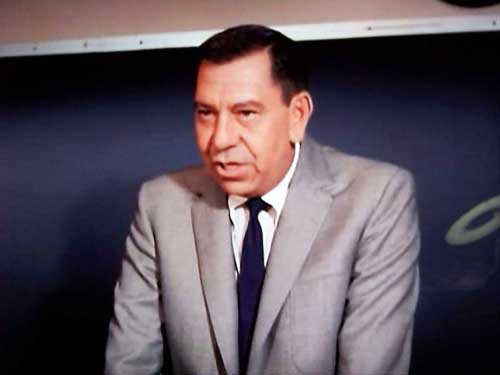
Appellate court doesn't like drug agents talking like this guy.

In suppressing evidence in a drug case, the U.S. Court of Appeals for the Ninth Circuit had some harsh words for the federal drug agents who were involved.  The Court also did not take kindly to the trial judge threatening to put one of the lawyers in jail for failing to answer phone calls from the court reporter about a disputed bill.

But first, the court’s indictment of Dragnet-ese. The court did not like the way the drug agents talked, as it explained in a footnote (paragraph breaks inserted):

1. The agents involved speak an almost impenetrable jargon. They do not get into their cars; they enter official government vehicles. They do not get out of or leave their cars, they exit them. They do not go somewhere; they proceed. They do not go to a particular place; they proceed to its vicinity. They do not watch or look; they surveille. They never see anything; they observe it. No one tells them anything; they are advised.

A person does not tell them his name; he identifies himself. A person does not say something; he indicates. They do not listen to a telephone conversation; they monitor it. People telephoning to each other do not say “hello;” they exchange greetings. An agent does not hand money to an informer to make a buy; he advances previously recorded official government funds.

To an agent, a list of serial numbers does not list serial numbers, it depicts Federal Reserve Notes. An agent does not say what an exhibit is; he says that it purports to be. The agents preface answers to simple and direct questions with “to my knowledge.” They cannot describe a conversation by saying “he said” and “I said;” they speak in conclusions. Sometimes it takes the combined efforts of counsel and the judge to get them to state who said what.

Under cross-examination, they seem unable to give a direct answer to a question; they either spout conclusions or do not understand. This often gives the prosecutor, under the guise of an objection, an opportunity to suggest an answer, which is then obligingly given.

As a side issue, the opinion contains a lengthy discussion of an incident in which the trial judge humiliated one of the defense lawyers in court and threatened to send him to jail for raising questions about the court reporter’s fee. The court reporter, who charged by the page, indented the text on each page so it began in the middle of the page, used only 25 lines of type per page instead of the standard 28, and used a font that was larger than normal. The lawyer tried to present an affidavit establishing that the transcript was twice as long as it needed to be, and thus twice as costly. The judge’s response? Here’s a snippet:

MR. LANGER (defense counsel): You say you spoke to me?

THE REPORTER: No. [TO JUDGE:] He wouldn’t even answer my phone calls.

MR. LANGER: Your Honor–

THE COURT: I know it. That is another thing. I ought to throw you in jail for not doing that, for not answering the phone calls of the reporter.

The Ninth Circuit disapproved of the trial judge’s conduct.

United States v. Marshall, 488 F.2d 1169, 1171 n.1, 1200 (9th Cir. 1973). Thanks to Frank Zotter.