Divinity Student Has Bone to Pick with A Yale Dog

strange judicial opinions dog puns
It's a dog-eat-divinity student world.

A dog-bite case against the dean of the Yale Divinity School by a divinity student gave U.S. District Judge Gerard Goettel a chance to “let the dogs out” in an opinion leaving no possible wordplay on dogs unpenned or unpunned.

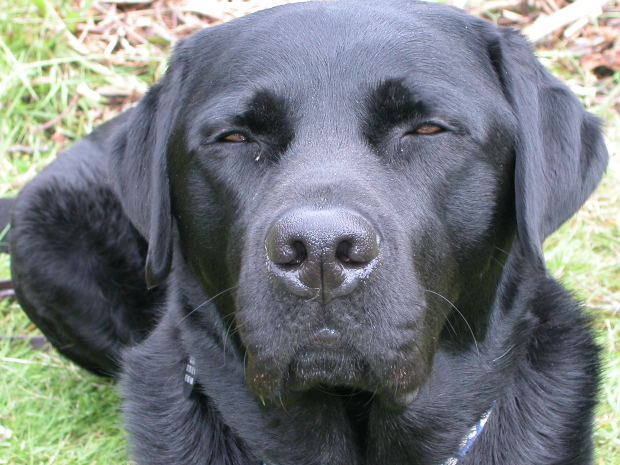
The main issue was whether the Yale Divinity School could be held strictly liable under the Connecticut dog-bite statute as a “keeper” of the dean’s offending canine, Rocky, a Labrador, because the dog was permitted to roam free in common areas of the divinity school residences and chapel.

The court held the dean strictly liable, but let the school off because it didn’t “control” the dog’s activities.

Here’s a compendium of Judge Goettel’s fun canine puns:

“In this dog eat dog world, anything is fair game for litigation in the federal courts.”

“As compensation for her injuries, plaintiff seeks to take a bite out of the defendants’ pocketbooks.”

“[The plaintiff], now an Episcopal priest with her own ministry, obviously has a bone to pick as her injuries required substantial medical care, and Rocky is clearly in the doghouse.”

“In dogged pursuit of damages for her trauma, she filed this suit ….”

“Hounded by Connecticut’s [dog-bite statute] ….”

“The [individual defendants] do not deny that they were keeping Rocky who apparently was not licensed to anyone but had a nose for trouble.”

 “Plaintiff’s analysis is essentially the tail wagging the dog.”

“Rocky’s having access to common areas, without more evidence indicating an intent to give refuge to the dog or to control the dog’s activities on the part of the School is not a sufficient basis to collar the Divinity School.”

As for Rocky, we don’t know his fate, but the judge did offer a weak defense for the nice face-biting doggie in a footnote:

1. There is no indication that Rocky, like the dog in Oliver Goldsmith’s Elegy on the Death of a Mad Dog, “to gain some private ends, went mad and bit the [wo]man.”

Post v. Annand, 798 F. Supp. 189, 190–91 & n.1, 192 (S.D.N.Y. 1992). Thanks to Lillian Gustilo.
The Hard Life and Times of Nutkin the Squirrel

nutkin the squirrel
"Am looking for a good lawyer. Can pay in acorns. Hit me up."

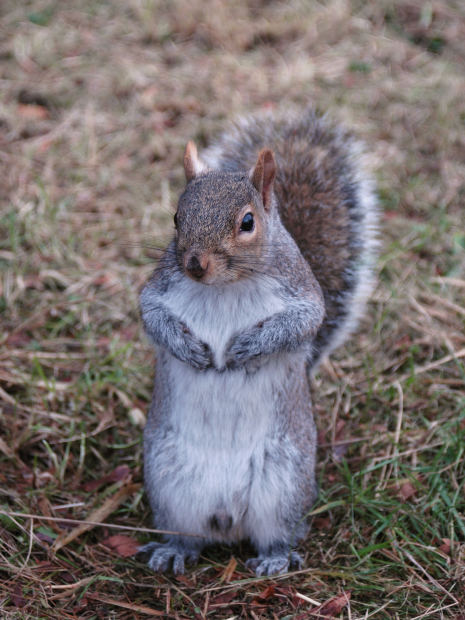
Appellate Judge Joseph Hudock of the Superior Court of Pennsylania treated us to a classic in a case involving a poor little persecuted squirrel named Nutkin.

For an alleged questionable motive (explained in the opinion), the state decided to prosecute Nutkin’s owner for keeping the squirrel as a family pet in violation of Pennsylvania wildlife laws. The good news is that Nutkin and the owner won. The better news is Judge Hudock’s opinion. This one is worth reading in full. Here are the opening paragraphs to give you a taste:

1. This appeal revolves around the life and times of Nutkin the squirrel.

2. Nutkin’s early life was spent in the state of nature ferrae naturae, in the state of South Carolina, and, as far as we can tell, in a state of contentment. She apparently had plenty of nuts to eat and trees to climb, and her male friends, while not particularly handsome, did have nice personalities. Life was good.

3. Then one day tragedy struck: Nutkin fell from her tree nest!

4. But fate was kind. Nutkin was found and adopted by Appellant and her husband who, at that time, were residents of South Carolina. Appellant lovingly nursed Nutkin back to health, and Nutkin became the family pet. . . . Life was good again.

5. Nutkin’s captivity and domestication were perfectly legal in South Carolina, possibly a reflection of that state’s long tradition of hospitality to all.

6. In 1994, Appellant and her husband moved to Pennsylvania and brought Nutkin with them. Life was full of promise.

7. Dark clouds began to gather, however … [when the mean old state of Pennsylvania came into the picture and tried to take Nutkin away].

. . .

9. Nutkin would then learn the shocking truth that the cheery Pennsylvania slogan “You’ve got a friend in Pennsylvania” did not apply to four-legged critters like Nutkin.

If you track down the full opinion, keep an eye out for the funny analogy Judge Hudock draws between old squirrels and old appellate judges.

Commonwealth v. Gosselin, 861 A.2d 996, 997–98 (Pa. Super. Ct. 2004). Thanks to Ryan Kriger.

Sad, Weird Tale of an Executed One-Eyed Horse

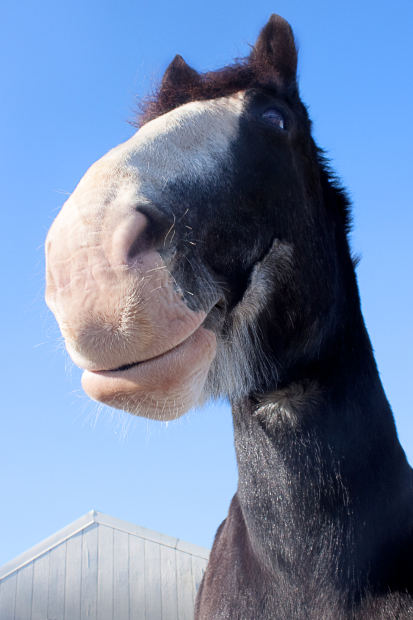
City of Canadian v. Guthrie is a sad, strange tale of a one-eyed horse ordered by the town mayor to be executed by one Panhandle Pete, who took the mare’s life “by shooting her between the bad eye and the one not so bad.”

In an opinion that makes you wonder whether someone dosed the town’s water supply with LSD (although it wasn’t yet invented), Chief Justice Hall explained “when Panhandle Pete’s pistol popped, she petered, for which the poundkeeper paid Pete a pair of Pesos.”

The owner of the horse sued for damages, claiming she was a prize mare. The court took issue with that assertion, describing the horse as follows:

From the record, we conclude that although she may not have had a skin you would particularly love to touch (though she had seen only fourteen joyous summers), yet she had a skin which clung like ivy to her rafters with a beautiful corrugated effect upon the sides of her lithe and spirituelle form.

The horse got in trouble for wandering onto neighboring property and eating the foilage, or as Justice Hall put it (paragraph breaks inserted):

The record shows that upon at least two occasions “When night drew her sable curtain down And pinned it with a star,” and “Silence like a gentle spirit Brooded o’er a still and pulseless world,” the time lock on her corral mysteriously went off and so did she, in search of tulips, dahlias, and gladioli in the neighboring lawns and flower beds …

Although she had only one eye, appellant contends she could find more edible shrubbery in a single night than an experienced landscape gardener could replant in thirty days. We may assume that in her midnight excursions she had been thrown with porch climbers, joy riders, orchard raiders, and other nocturnal prowlers, which may account for her waywardness and utter disregard for the property rights of other. …

It was not denied that she had “went hence” and was cut down in the heyday of her young and fitful life … [because the mayor] personally ordered her gentle soul sent to the great beyond and the remainder to the municipal dump ground.

The court finally dismissed the case for lack of jurisdiction.

City of Canadian v. Guthrie, 87 S.W.2d 316, 317–18 (Tex. Ct. App. 1932). Thanks to John R. Thomason.

Poor Poor “Poopi” the Poodle

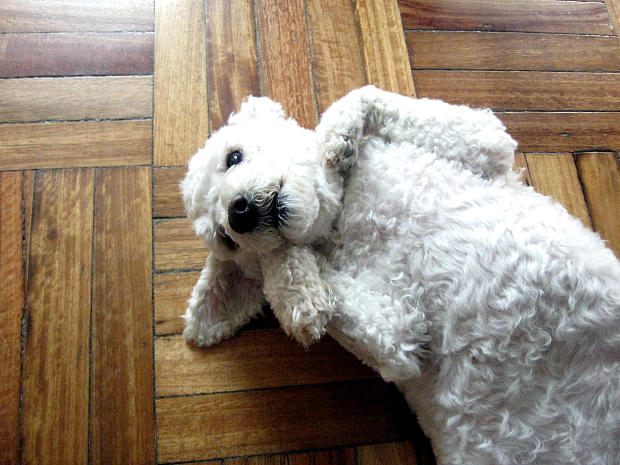
pet malpracticePoopi the poodle and her owners sued their veterinarian after Poopi underwent anesthesia for teeth cleaning and woke up with a three-inch scar on her abdomen. The vet mistakenly tried to spay Poopi, even though she had already been spayed as a puppy.

Poopi’s owners sought emotional distress damages for themselves as well as for Poopi, including expenses for Poopi’s psychological care. Plaintiffs conceded that under Ohio law dogs are considered to be personal property, but argued that the court should “do the right thing” by distinguishing pets from inanimate objects. They quoted from a law review article that equated the death of a “companion animal” to “the wrongful killing of any other family member.”

The Ohio Court of Appeals affirmed the trial judge, which had rejected the claim, although one member of the appellate panel concurred “reluctantly” and suggested that the legislature consider allowing damages for tortious injuries to pets.

Now that the suit has been wrapped up, perhaps Poopi should consult independent counsel about the possibility of pursuing emotional distress of having to go through life named “Poopi.”

— Oberschlake v. Veterinary Assoc. Animal Hosp., 785 N.E.2d 811 (Ohio Ct. App. 2003).