During a Torts class last semester, we were discussing various applications of Judge Learned Hand’s formula for negligence, when a student asked, “Why isn’t it negligent to hold pinata parties?” To which I replied, “It probably is!”
Judge Hand’s formula, explained in a famous case called United States v. Carroll Towing Co., is that if the burden of avoiding a risk is less than than probability of the risk resulting in harm multiplied by the potential severity of the harm, it is negligent to engage in the conduct.
As applied to pinata parties, the only burden to avoiding the risk is to choose a different, safer game to entertain kids at a party, compared to the risk that a blindfolded kid swinging a bat could whack some other kid in the head and cause serious injury.
Some students thought I was just being, as usual, overly cautious Tortman, but then I came across this sign at a picnic area while bike-riding in Shelby Farms. Vindicated.
But wait, what is up with that prohibition on metal detecting?
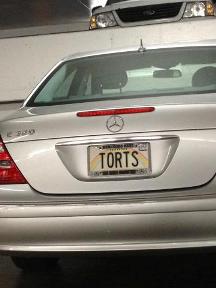
A former student from Golden Gate law school who lives and practices in Hawaii sent this picture of a true torts-loving person’s car.
We will engage in outrageous speculation that it belongs to a plaintiffs’ personal injury lawyer. If you think about it, who else would get a “TORTS” license plate? Maybe geeky law professors with nicknames like Tortman or pattisiers who can’t spell, but really no one else. Insurance defense lawyers wouldn’t do it because it would violate the industry position that torts do not actually exist.
The car owner obviously loves tort law, but any challenger to the “Most Crazy in Love with Torts” still has to contend with the guy who got Judge Learned Hand tattooed on his arm. On the other hand, that guy may have simply loved Judge Hand or even barges.
People sometimes (infrequently, slightly more often than “not ever”) ask how I got started writing legal humor.
It was a steaming summer afternoon back in 1995. I sat in my law school office sweating footnotes. Frustrated by the strictures of law review writing requiring that every sentence be documented in a–preferably lengthy–footnote, I snapped. Exiting the article, I dashed off The World’s Greatest Law Review Article, a heavily footnoted parody of real law review articles.
Not knowing what to do with it, I sent it to the American Bar Association Journal. They published it (Oct. 1995, pp. 84-85) and The World’s Greatest Law Review Article struck a chord. Someone spotted it posted on the wall of a law school in Hong Kong. A law review editor wrote to say, “Thank you for helping me make it through life.” A managing partner at the law firm I worked at before joining academia wrote, “I never realized you were mentally ill.”
The parody led to Harmless Error, my monthly column in the A.B.A. Journal.
Question. In 2003, the American Film Institute (AFI) released its list of the top fifty heroes in movie history. How many of those top fifty movie heroes were legal professionals (lawyers or lawmakers) or common citizens who used the law to achieve progressive objectives?
A. 1
B. 4
C. 8
D. 12
E. 15 Answer: C. The eight legally inclined top fifty movie heroes include, in the number one spot, Atticus Finch (Gregory Peck), the Southern lawyer who fought for justice in a racially charged case in the screen adaptation of Harper Lee’s book, To Kill a Mockingbird. Mahatma Gandhi, who was trained as a lawyer, came in #21 for Gandhi (Ben Kingsley). Andrew Beckett (Tom Hanks), the AIDS-afflicted corporate lawyer from Philadelphia, made the list at #49. Jefferson Smith (Jimmy Stewart)—the protagonist in the Frank Capra classic, Mr. Smith Goes to Washington—reached the #11 spot. Stewart played a character appointed to fill a vacancy as a U.S. Senator, where he confronted and fought political corruption. Erin Brockovich (Julia Roberts), a down-and-out paralegal whose sleuthing led to a class action against a toxic waste-dumping corporation in the movie of the same name, checked in at #31. At #28 we have Juror #8 (Henry Fonda) from 12 Angry Men, the lone juror who refused to vote guilty in the trial of a teenager accused of murdering his father. The final two characters were workers who became labor union activists fighting for fair, safer working conditions: Norma Rae Webster (Sally Field), from Norma Rae, at #15, and Karen Silkwood (Meryl Streep), from Silkwood, at #47.
If you come here often, you know we love pictorial product warnings. Pictorial warnings are intended to explain product dangers in a universal symbol or picture that can be universally understood even by people who cannot read or who speak and read a different language.
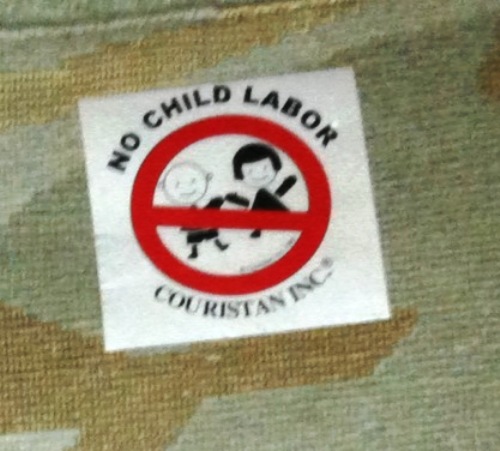
Here we have a pictorial product announcement on the back of a rug indicating the company uses no child labor. Very commendable.
The test for a pictorial symbol is whether it communicates its intended message without textual explanation. So take away the “No Child Labor” words and what do you see? A “No Happy Children” warning.
Not quite sure why the manufacturer felt it necessary to include a pictorial symbol in the first place, unless universal pictorial warnings have been transmuted into marketing tools–which will further dilute their already limited uility as product-risk warnings.
Or, maybe the manufacturer really is warning consumers not to use child labor. I can see some kid whose allowance includes vacuuming balking to mom and dad, “You’re violating this warning! I’m calling the labor department!”
Question. While some people purport to “hate” lawyers, the public remains fascinated by them, as evidenced by all the attention the legal profession receives in the entertainment world. Since the 1960s, more than fifty television series about lawyers have been produced. Well over 100 “lawyer movies” have been brought to the big screen and lawyer novelists such as John Grisham sell hundreds of millions of books. What about musical entertainment? Which of the following is not a real song by a popular artist?
A. I Fought the Law (and the Law Won)
B. Lawyers in Love
C. Sue Me, Sue You Blues
D. My Lawyer Bit My Doctor
E. Lawyers, Guns & Money
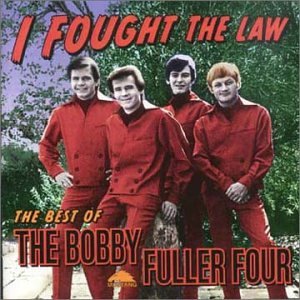
Answer: D. “My Lawyer Bit My Doctor” is not a real song, although it sounds like it could be a hit. The Bobby Fuller Four made I Fought the Law (and the Law Won) into a top 10 hit in 1964. Sadly, Fuller was found dead in his car shortly after he tasted fame. The death was ruled a suicide/accident, although some suspected Fuller was murdered. John Mellencamp paid homage to Fuller in his song, R.O.C.K. in the U.S.A. (“There was Frankie Lymon, Bobby Fuller, Mitch Ryder (they were rockin’).” Jackson Brown’s Lawyers in Love reached the Top 40 in 1983, while his album of the same name made it all the way to #8 in the charts. The sardonic Sue Me, Sue You Blues appeared on former Beatle George Harrison’s second solo album, Living in the Material World, released in 1973. Like many rock stars, Harrison had been embroiled in more than his fair share of litigation, including lawsuits over the breakup of the Beatles. The song contained biting lyrics such as, “Bring your lawyer, and I’ll bring mine; get together and we could have a real bad time.” Lawyers, Guns & Money was a typically over-the-top, hilarious tune from the late Warren Zevon that appeared on his 1978 album, Excitable Boy. It includes the classic refrain line, “Send lawyers, guns, and money; the s*** has hit the fan.”
Okay, that’s probably not the original message of this crosswalk sign, found on the University of Florida campus, but a sense of urgency was added when someone doctored the sign by adding a can of Red Bull … and angel wings?
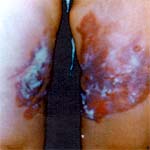
One of the milder pictures of Stella Liebeck’s coffee burn injuries.
Any mention of lawsuits and hot coffee invariably invokes the grossly misunderstood “McDonald’s coffee spill” case of Stella Liebeck, a 79-old-woman who suffered third-degree burns after spilling a stryrofoam, takeout cup of McDonald’s coffee on her legs.
I apologize for the gruesome picture, but a large part of the misunderstanding of this case comes from people not appreciating that Ms. Liebeck suffered extremely severe injuries. There are much worse pictures of her injuries available on the internet. There is also a ton of information, and misinformation, out there about the McDonald’s case. Here (scroll down to “Public Perceptions: The McDonald’s Coffee Spill”) and here are a couple accounts of the facts. You might also want to check out the movie, Hot Coffee, which explores the McDonald’s case and, more generally, the tort reform movement.
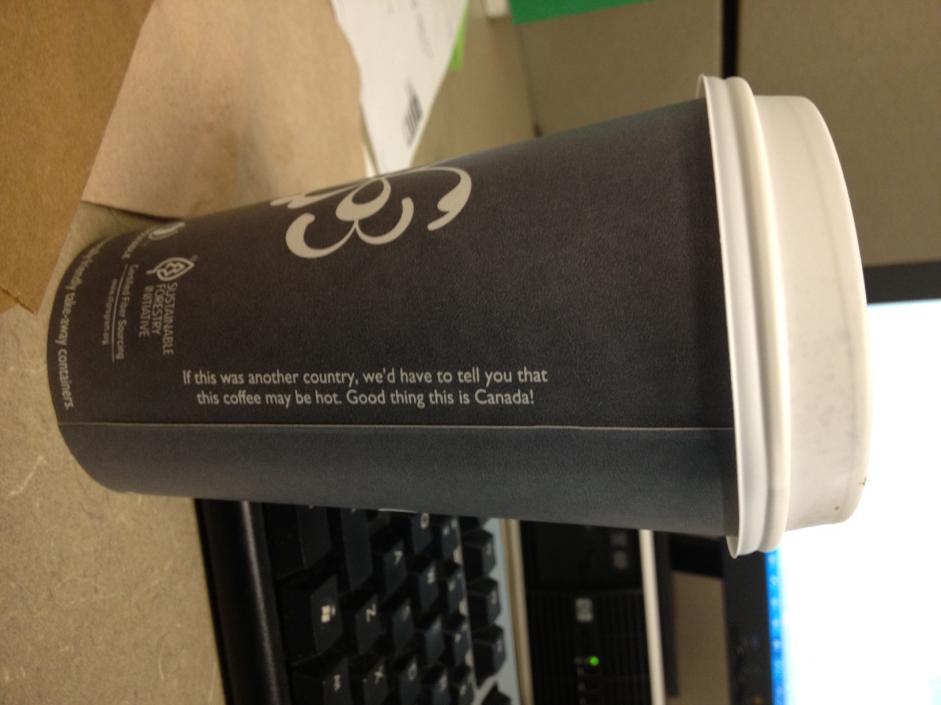
Sideways on purpose. Click to expand.
At least one Canadian coffee seller found the idea of warning consumers about hot coffee to be hilarious:
“If this was another country, we’d have to tell you this coffee may be hot. Good thing this is Canada!”
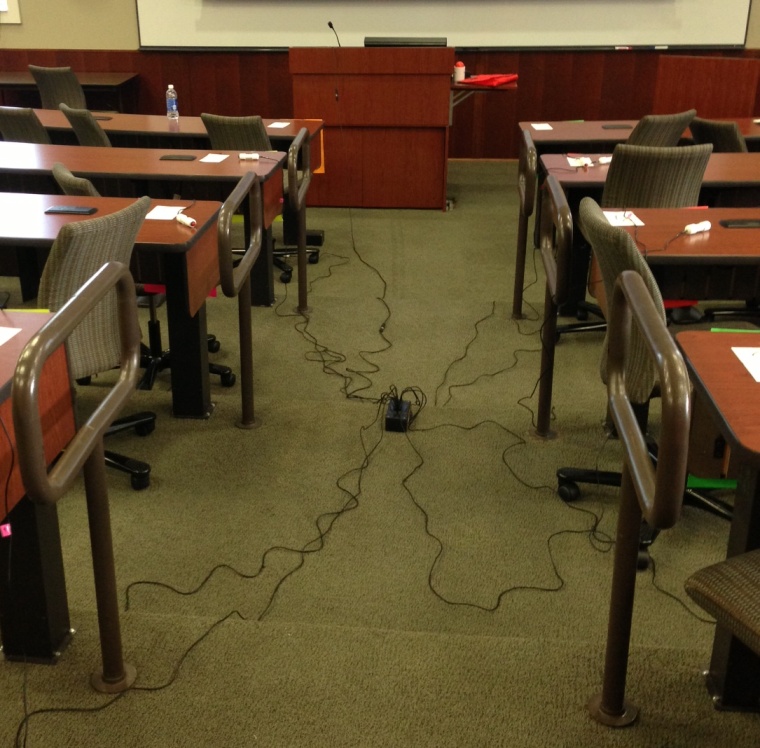
Law schools, filled as they are with lawyers and law students, are pretty safe places, but they sometimes present their own dangerous premises issues, as here in a University of Memphis classroom where students were trying out some new technology that has not reached the wireless stage. The result: a spider web of trip and fall possibilities. Thanks to Rachel Cade.
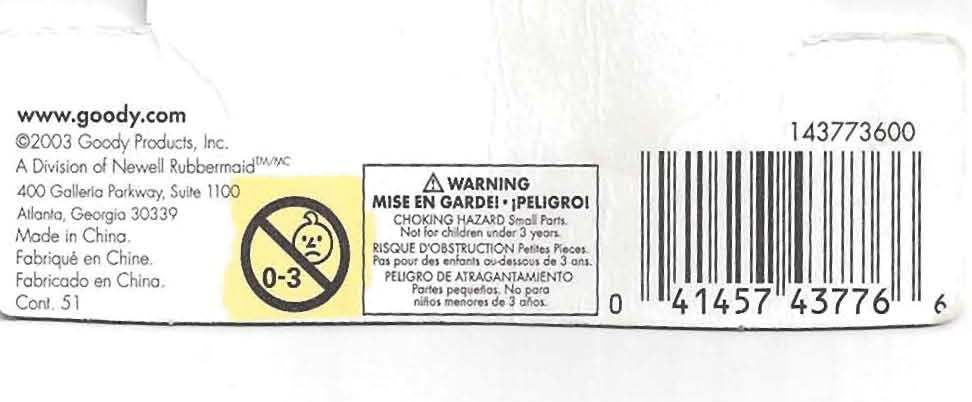
Pictorial warnings are intended to explain product dangers in a universal symbol or picture that can be universally understood even by people who cannot read or who speak and read a different language.
Unfortunately, coherently explaining product risks usually is hard to do in a single image. A picture may be worth a thousand words, but product warnings can be better explained in words (unfortunately, many litigation risk-averse product makers insist on using the full thousand or more, but that’s a different issue).
Here we have a pictorial warning about hair rubberbands. As the written part of the pictured warning shows (all thumbnails are expandable), they can present a choking hazard to young children. But what if one can’t read the printed warning? That’s where the symbol warning against use by children under three comes in.
But wouldn’t it be easy to do and more effective to create a symbol that looked more like a child and less like a melancholy pumpkin?
 During a Torts class last semester, we were discussing various applications of Judge Learned Hand’s formula for negligence, when a student asked, “Why isn’t it negligent to hold pinata parties?” To which I replied, “It probably is!”